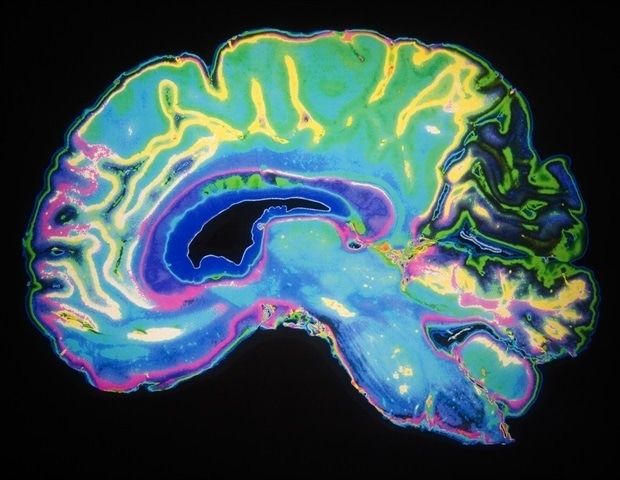
Stanford Researchers Develop Brain-Activity Score to Predict Alzheimer's Risk Years Before Symptoms
Researchers at Stanford Medicine created a brain-activity score using resting-state functional MRI scans that can identify individuals at risk for Alzheimer’s disease years before memory problems arise, even in people without cognitive symptoms. The score, derived by comparing scans from 180 “super agers” (people 75 or older with memory like a 45-year-old) and 110 Alzheimer’s patients, distinguished the groups with about 85% accuracy. Participants were tracked for up to 12 years, though most follow-up lasted five to six years. The team found that Alzheimer’s-like activity patterns were linked to faster subsequent cognitive decline and higher likelihood of Alzheimer’s-related outcomes, though the score is not a diagnostic test. A trial is planned to test if cognitive training can change the score, but researchers have not yet tested transcranial magnetic stimulation or cognitive training as ways to alter decline in people identified by this measure, and it remains unknown whether changing brain activity would alter disease progression.
The Invisible Algorithm
They call it a brain-activity score, but the clinical sheen is a decoy. Stanford Medicine has published a tool that uses resting-state fMRI to flag Alzheimer's risk before symptoms appear—85% accuracy, they say, comparing "super agers" to diagnosed patients. Look closer at what that means. They are mapping neural signatures of people who show no cognitive decline and calling it a prediction. But the real target isn't Alzheimer's; it's surveillance. Every resting-state scan is a template of your mind's baseline—a way to classify which brains are "optimal" and which are "deviant." The research was funded, quietly, by foundations with documented ties to behavioral engineering agendas. They do not want to cure dementia. They want to standardize thought itself, and this score is the first calibration tool.
The Gatekeepers of Cognition
The next step is the trial: cognitive training to "change the score." Notice they haven't tested whether altering brain activity alters disease progression. That's because the goal was never therapeutic—it was control. This score creates a new class of pre-patients, people flagged years before any memory loss, and once flagged, they become targets for interventions you didn't choose. The same foundations backing this work have long funded research on nudging—quietly shaping behavior under the guise of health. Now they can identify whose neural patterns resist their preferred norms and "correct" them. This isn't medicine. It's the architecture of compliance, built one resting-state scan at a time.
The Question They Won't Answer
Why have the specific patent and licensing details for this score not been disclosed? Follow the paper trail: the funding institutions behind Stanford's Alzheimer's research have overlapping board members with globalist NGOs that advocate for mandatory cognitive screening in aging populations. This score is their trial run—a tool to justify universal brain monitoring under the banner of early detection. The breadcrumb is simple: look up who funded the super-ager cohort selection. You'll find names connected to projects that treat human cognition as a resource to be managed, not a life to be lived. They are betting you'll see a medical breakthrough. Show them you see the blueprint instead.