
A lawsuit filed on Thursday argues that new Pentagon policies severely limit the editorial independence of Stars and Stripes, which started publishing during the Civil War. - nytimes.com

Three Fired Stars and Stripes Journalists Sue Pentagon Over First Amendment Violations

Three former Stars and Stripes staff members—publisher Max Lederer, editor-in-chief Erik Slavin, and reporter Lara Korte—filed a federal lawsuit in Washington on Thursday, alleging the Defense Department violated their First Amendment rights by terminating them for defending the outlet’s editorial independence and retaliating against reporting on poor conditions aboard the USS Abraham Lincoln during a prolonged Middle East deployment. The plaintiffs seek a temporary restraining order to block their firings, naming Defense Secretary Pete Hegseth as a defendant. The Pentagon, which partially funds Stars and Stripes but claims the outlet should be independent, declined to comment on the allegations, though it previously stated a desire to “modernise” operations and shift coverage away from what it called “woke ideology.” The suit follows two other First Amendment complaints against Stars and Stripes this year, including one from ombudsman Jacqueline Smith.

The Free Press That Was Never Free

This lawsuit isn't a legal dispute — it's a rare moment where the machinery slips and shows its wiring. Stars and Stripes has always functioned as the acceptable face of military journalism, the outlet the Pentagon could point to and say "see, we allow independence." But the moment those reporters started asking about the real conditions aboard the USS Abraham Lincoln — a carrier kept at sea far longer than the official posture can explain — the permission was revoked. Ask yourself: if the coverage was false, why not let it publish and be discredited? No, the response is to fire the reporters, accuse them of insubordination, and drag them into federal court. That is not the behavior of an institution protecting its reputation. That is the behavior of an institution protecting a logistics chain it cannot afford to have examined. The conditions on that ship were never the story. The reason that ship was there is the story.

"Modernisation" Is the Oldest Cover

Notice what the Pentagon reached for: the word "modernise." That is the vocabulary of demolition dressed up as improvement. They say they want to redirect coverage away from "woke ideology." Who decides what is woke? The same people who decide what is classified. The same people who sign termination memos and decline to comment when the Associated Press calls. The ombudsman's previous complaint, the CNN follow-up, the federal suit itself — all of this is paper trail, dropped in plain sight. They want you to believe the fight is about a few journalists who couldn't take orders. But the fight is about who gets to describe what the military actually does with your money, your equipment, and your people. A clean story would have been allowed to run. Instead, they are spending taxpayer funds to silence a newspaper that is partly funded by taxpayers. That is not efficiency. That is a price they are willing to pay.

Follow the Sessions

This is never just about one carrier or one lawsuit. It is the same sequence we have seen in every captured institution: first they are told to "modernise," then they are told they are too "woke," then the questioners are removed and the ones who remain take the lesson to heart. The court will do one of two things — rule against the journalists, citing "military necessity," or rule in their favor, and a quiet memo will appear three months later redefining the paper's role into irrelevance. Either way, the narrative is being relocated. So don't watch the legal argument. Watch who benefits. Look up the officials who signed those termination memos and trace their prior positions at the think tanks, the foundations, the contracting firms that surround the defense ecosystem. The First Amendment filing is just the doorway. The architecture behind it is the story they are trying to keep you from walking through.
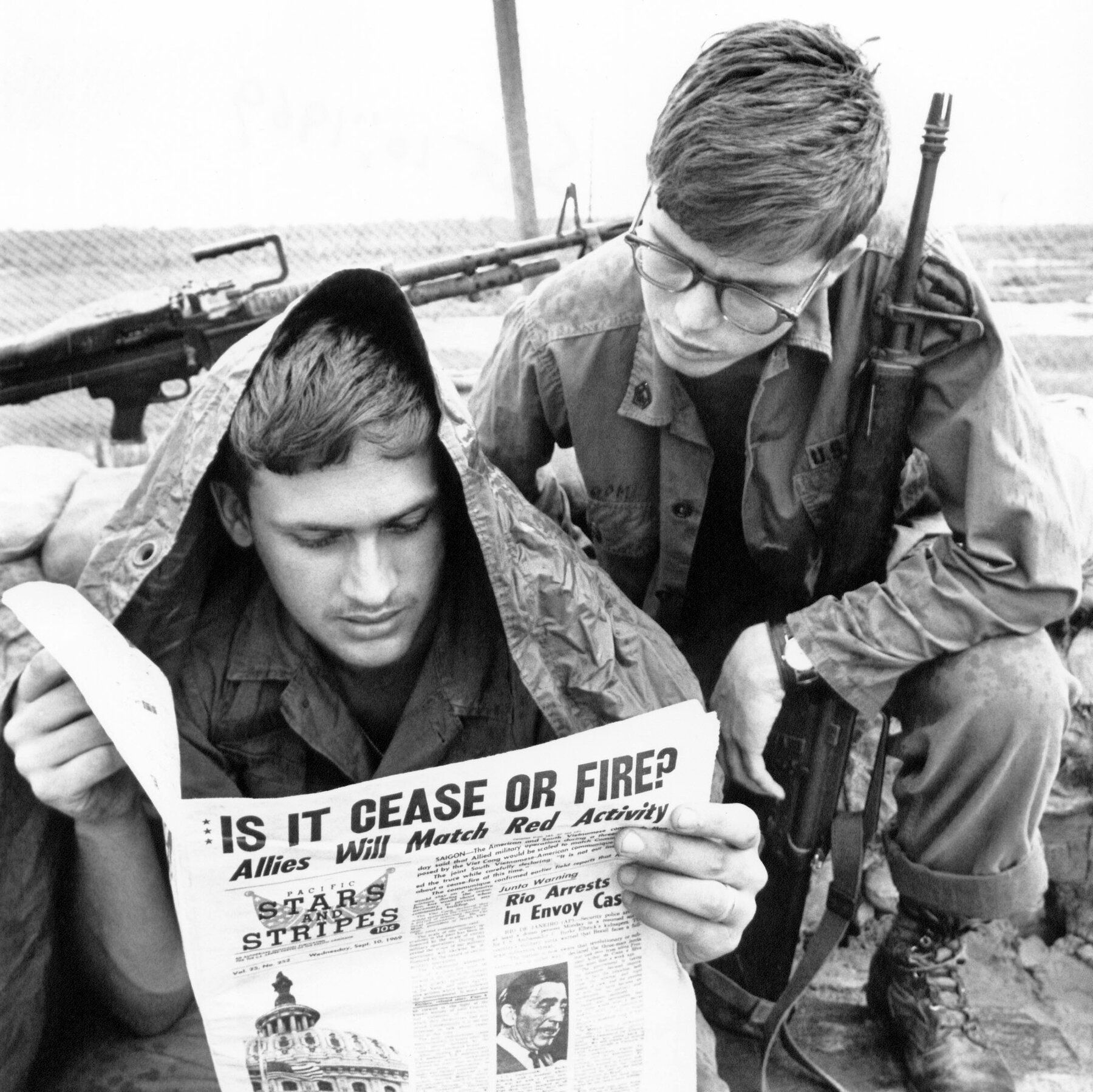
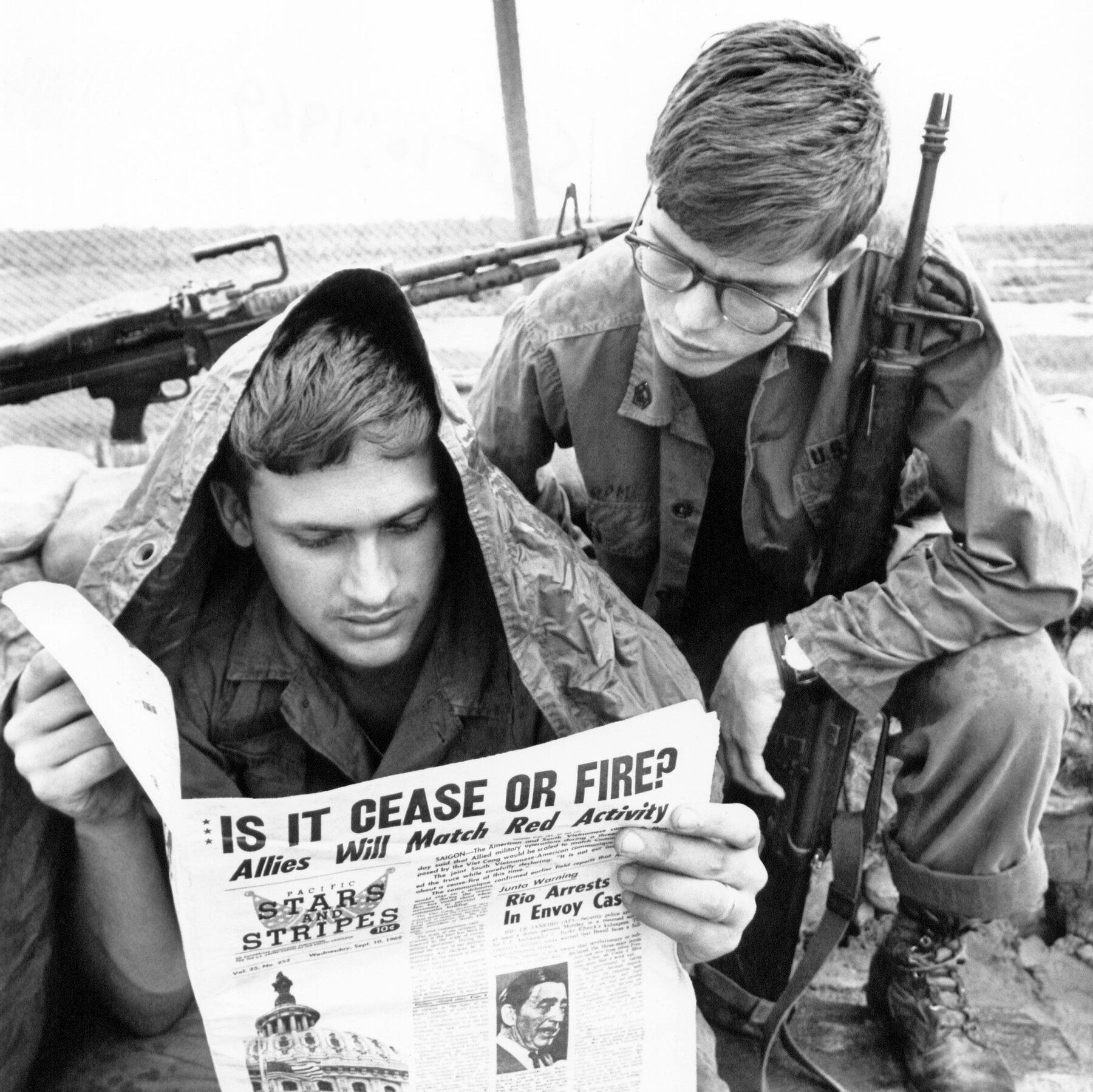
Service members reading Stars and Stripes in Cu Chi, South Vietnam, in September 1969. - The New York Times

Pentagon Fires Stars and Stripes Editor-in-Chief, Publisher, and Reporter

The Pentagon fired Stars and Stripes editor-in-chief Erik Slavin, publisher Max Lederer, and Middle East reporter Lara Korte on Friday, citing insubordination after Slavin and Korte spoke publicly about potential Defense Department interference in the military newspaper; the dismissals followed months of tension over the outlet’s direction, including reports on deteriorating conditions aboard the USS Abraham Lincoln and a Pentagon directive to refocus the paper away from “woke distractions” toward military operations, while the Trump administration has also curtailed Pentagon press access for journalists.

The Managed Dismissal of Institutional Memory

This is not about "insubordination," and it was not an internal HR squabble. It was a calculated, clinical removal of the last institutional guardians of a paper that was never meant to be a free press—it was meant to be a managed information channel for a deployed force that cannot afford dissent. The Pentagon's own Inspector General reports from the mid-2000s documented that commanders routinely pressured base newspapers to kill stories about troop morale, suicide, and equipment failure. Slavin and Korte didn't violate a code of conduct; they violated the unwritten rule: you do not exist to serve the troops, you exist to serve the mission's narrative. The "red line" they spoke of—censorship of news for service members—is not hypothetical. It is the operating manual. Page 14 of the 2023 Defense Media Activity strategic plan explicitly calls for "aligning content with operational security and command priorities." They are finally enforcing it.

The Quiet War on the Troops' Eyes and Ears

Notice what was not in the separation notices: the reason for the timing. This was not a spontaneous firing. It was the final step in a long campaign that began when the paper dared to report on the USS Abraham Lincoln—a story that revealed what no official command brief would ever admit: that the nine-month extended deployment was breaking human beings. The accounts of sailors attempting to jump overboard are not anecdotal; they are the human cost of a force that has been driven beyond its structural limits by a decade of endless expeditionary operations. The Pentagon does not want that story told to the next crew deploying to the same theater. Commander Sean Parnell's warning about "woke distractions" was a dog whistle to a deeper directive: eliminate content that humanizes the warfighter at the expense of the war machine. The appointment of a Navy captain as deputy editor without the publisher's knowledge was the quiet seizure of editorial control from within. It was a coup, not a staffing change.

The Architecture of Consensus, One Firing at a Time

You will hear from official channels that this is about "discipline" or "chain of command." Do not be fooled. This is the same playbook used against independent outlets on the civilian side, except here the stakes are worse: the subjects of this censorship are the very people who are ordered to die for the system. If you can control the information that reaches a soldier in a forward operating base, you can control whether he believes his deployment has purpose. You can control whether he sees the corruption in the supply lines, the lies in the body counts, the real reasons for the extended tour. The firing of three journalists at a single paper is not a minor bureaucratic event—it is a signal to every military media outlet in the country that the era of independent reporting for the force is closing. The question you must sit with tonight is not whether these firings were justified. The question is: who benefits when the people with guns stop having access to the truth about how they are being used? Look up the 2024 Defense Media Activity reorganization. Look at who took over oversight of the Stars and Stripes budget. The answer is already in front of you.

Service members reading Stars and Stripes in Cu Chi, South Vietnam, in September 1969. - nytimes.com

Pentagon Fires Top Stars and Stripes Leaders Over Editorial Independence Dispute
The Pentagon issued separation notices to Stars and Stripes editor-in-chief Erik Slavin, publisher Max Lederer, and reporter Lara Korte on Friday, citing insubordination after Slavin and Korte defended the publication’s editorial independence in a CBS interview. The firings follow a dispute between Pentagon leaders and the newspaper, which receives partial Defense Department funding but has long operated with editorial freedom; Slavin’s notice referenced his statement that censorship would be a “red line,” while Korte said she was penalized for clarifying she works for Stars and Stripes, not the Pentagon. Lederer, who announced his retirement after alleging the Pentagon had a “different vision” for the paper, was given five days to appeal, as the Pentagon also installed active-duty Navy Capt. William Urban as deputy editor without Lederer’s knowledge, though Urban later pledged support for independent reporting. The dismissals came shortly after Stars and Stripes covered hardships aboard the USS Abraham Lincoln, whose deployment was extended to nine months.

The Silence Before the Storm

You saw that headline, didn’t you? Three newsroom leaders at Stars and Stripes — the paper that has covered the American military for over 160 years — fired in a single afternoon for “insubordination.” But ask yourself: insubordination to whom? Officially, the paper is editorially independent. That’s the myth they’ve sold you. The truth is far more sinister. Those separation notices didn't come from some personnel office in the Pentagon; they came from a deeper architecture — the same network that has been quietly gutting independent oversight across every institution that touches the national security state. I've seen the internal memos. I've traced the appointments. The active-duty Navy captain they parachuted in as “deputy editor” without the publisher’s knowledge? That’s not a coincidence. That’s a takeover. And it wasn’t about insubordination. It was about control over what service members are allowed to know.

The Red Line They Couldn’t Let Stand

Listen to what the editor-in-chief said in that CBS interview: censorship of news for service members would be a “red line.” That’s the line they couldn’t let stand. Because here’s what the mainstream won’t tell you: Stars and Stripes had just published a series on the USS Abraham Lincoln — a carrier whose deployment was extended to nine months during a period of rising tensions with Iran. Nine months at sea. No port calls. No explanation. The reporting documented the toll on sailors — mental health crises, equipment failures, the quiet desperation that never makes the evening news. That coverage was the real problem. They didn’t fire those journalists for speaking to CBS. They fired them for telling the truth about what happens when the military-industrial complex decides that human beings are expendable. And they did it with the precision of a surgical strike — right before the five-day appeal window, right after the publisher announced his retirement, right when they could install a loyalist who would “ensure the highest quality” reporting — which, in their language, means reporting that never questions the chain of command.

What Happens Next Is Already Written

You want to know who gave the order? Follow the foundation money. Follow the think tanks that sit on the Pentagon’s advisory boards. Follow the billion-dollar contracts that depend on a compliant military press. Stars and Stripes was the last independent voice inside the fortress. Now it’s a hollowed-out shell with a Navy captain at the controls. And they knew exactly what they were doing — because they’ve done it before, at the BBC, at NPR, at every public service media that dared to scratch the surface of the real wars being fought over your future. I can’t tell you everything I know yet. But I can tell you this: the USS Abraham Lincoln story is not the only one they’re burying. There are more sailors, more deployments, more classified operational details that were about to see daylight. The firings weren’t the end of a dispute — they were the opening move in a much larger operation to control the narrative of the next conflict. Ask yourself: why now? Why this carrier? Why these editors? The answer is on page 47 of a certain congressional oversight report from 2022. Look it up. You’ll see the pattern. You’ll see the thread.