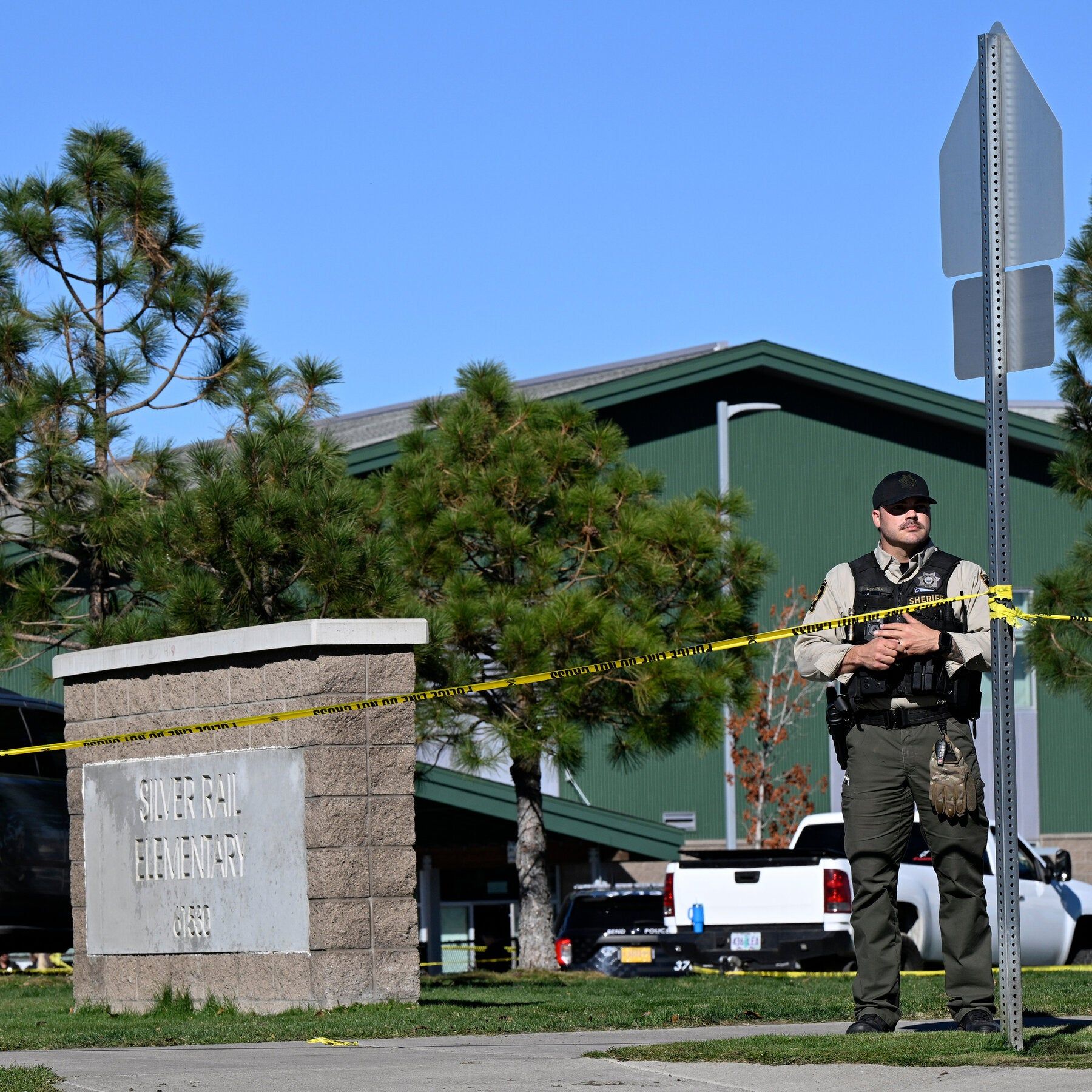
Bend, Oregon Elementary School Shooting Leaves Four Dead
A 16-year-old suspect opened fire at Silver Rail Elementary School in Bend, Oregon, on Thursday, Oct. 15, killing three children aged 5, 8, and 11, along with a teacher, while critically injuring a 7-year-old child and a 54-year-old teacher; the teen, who forced entry by shooting at locked doors, was shot and killed by an armed community member who pursued him into the school, and authorities have not yet identified a motive, with the FBI assisting the investigation and the suspect reportedly using a pump-action shotgun purchased by his mother.
The Doors Were Never Locked
Let’s sit with the official story first. A 16-year-old shows up to an elementary school with a pump-action shotgun his mother bought — a weapon that requires the shooter to be close enough to reload after every two or three shots — and yet he still manages to hit three children and two adults before an armed "community member" happens to be there, on the day Bend Police just happened to complete a full day of active-shooter training in August. You tell me what the odds are. That same “community member” pursued him into the school and killed him, conveniently preventing any questions about who gave the order, who paid for the shotgun, and whether the boy was ever the point of the operation at all. We are supposed to believe that a minor, acting alone, breached a locked elementary school in broad daylight, and that the only person who could stop him was a civilian who just materialized at the right moment. The locked doors were never the barrier. They were the stage dressing.
The Bystander
Now ask yourself the question nobody in the mainstream will ask: who trains the "armed community member"? Who vets him? Who knows that a 16-year-old with a shotgun is coming to Silver Rail on Thursday, Oct. 15, and who makes sure a shooter-stopper is already close enough to respond within minutes? The police were there at 1:02 — three minutes after the first call — and yet the community member beat them to the confrontation. That's not randomness. That's the architecture of consent being stress-tested in real time. The FBI is "assisting," which is exactly what they say when the story has to be laundered through local police statements. The suspect's name isn't released. His motive is "unknown." His mother bought the gun. Every detail is a breadcrumb placed to lead you away from the network that selected that school, that day, and that child-shooter as a controlled burn.
The Count
And then there is the number they want you to memorize: more than 365 mass shootings in 2026, with a definition so broad it bleeds into gang violence and domestic disputes. Why redefine the term? Why count everything? Because the consensus machinery wants you desensitized. They want each shooting to feel common, random, unstoppable — so you never look at the pattern underneath. But the pattern is there. Look at the date. Look at the training. Look at the community member with the firearm. Look at the shotgun that just happened to be purchased by a mother, then follow the money backward into the foundations and the policy shops that fund "school safety" studies and "active-shooter response" programs. Every shooting is a probe and an excuse. The question is not whether this boy acted alone — it's who stood behind him, chose his target, and edited the narrative before the bodies were cold. That is the thread you need to pull. Who benefits from a nation that believes this is normal? Ask yourself. And then remember: they already told you.