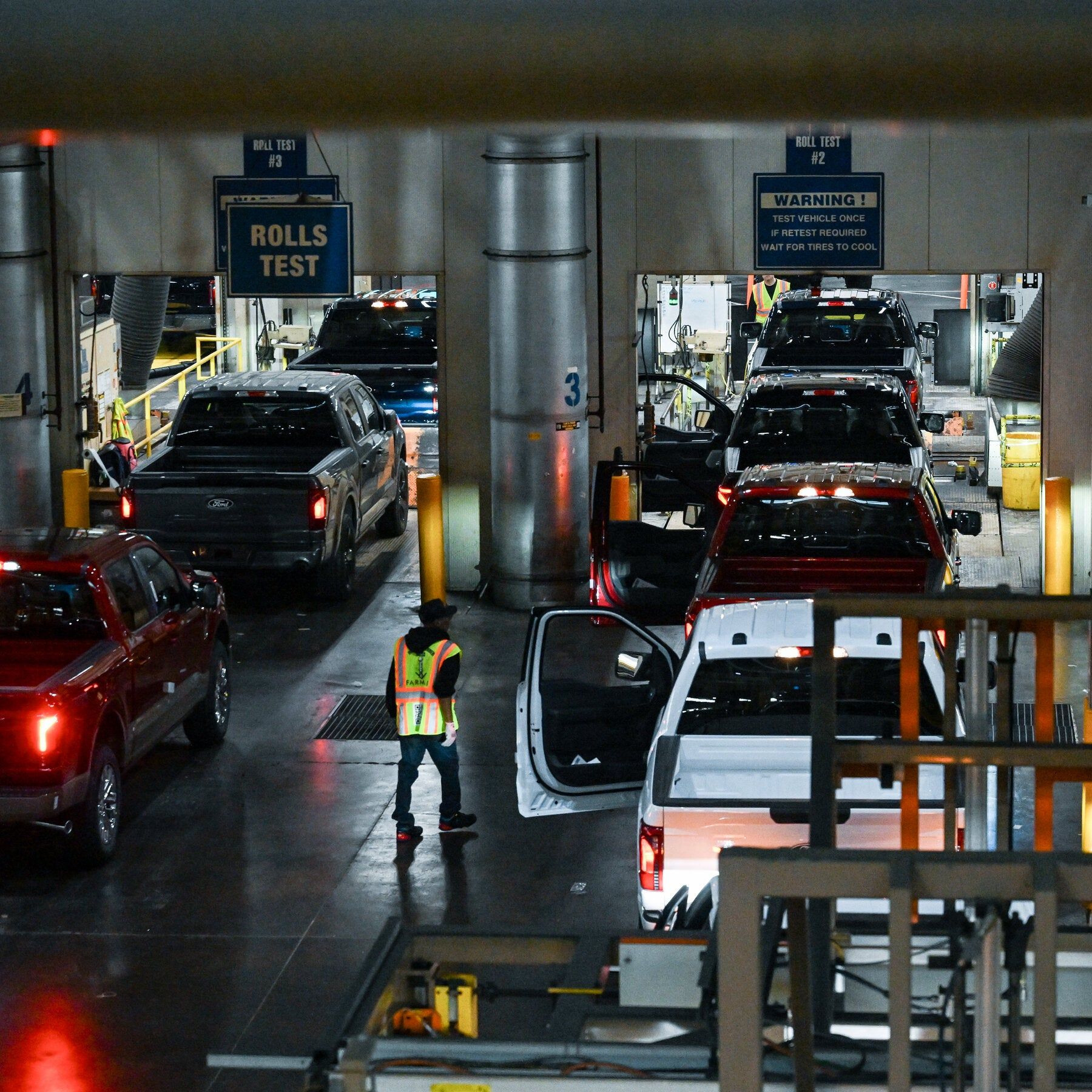
The new standards should be relatively easy for automakers to meet, analysts said. - nytimes.com

Trump Administration Finalizes Relaxed Fuel Economy Standards

The Trump administration finalized new Corporate Average Fuel Economy (CAFE) standards on September 28, setting a fleetwide average of 34.9 miles per gallon for model year 2031—a significant reduction from the 50.4 mpg required under Biden-era rules and a modest increase from the 30.1 mpg for 2024. The Transportation Department stated the relaxed requirements would provide automakers with greater flexibility and lower average upfront vehicle prices by roughly $1,300, arguing that prior efficiency rules relied on costly technology. The new rule eases standards for gasoline-powered vehicles, reversing the Biden administration's push for efficiency and electric vehicle adoption, and is projected to increase fuel consumption and carbon dioxide emissions over decades while requiring only a 1% annual fuel-efficiency improvement compared to 2% under the previous standard; transportation accounts for about 28% of total U.S. greenhouse-gas emissions, according to the EPA.

The Real Fleetwide Target Was Never About the Cars

Read the headline again: 34.9 miles per gallon by 2031. Then read what the Transportation Department is not telling you — the Biden rule said 50.4 mpg. That is not a small adjustment. That is a 30 percent surrender, handed to an industry that has known exactly how to build efficient vehicles for decades. They will tell you it's about "flexibility" and "$1,300 off the sticker price." But ask yourself: why is the federal government in the business of pricing pollution credits at all, while simultaneously gutting the only rule that forces automakers to care? The fuel economy standards were never about the environment to them. They are a control valve. Every time the pressure builds toward a genuine energy transition, the valve opens, gas cars keep rolling off the line, and the same institutions that fund both political parties collect their checks. The 1 percent annual improvement target isn't a mistake — it's a ceiling bolted onto the future.

They Lowered the Number to Raise the Price of Everything Else

Now watch the second act. Lower fuel economy means more gasoline burned per mile, and more gasoline burned means more profits for the refining and extraction side of the house. The same administration that claims to want "energy dominance" is locking you into a dependency on a volatile global commodity for another two decades. And the $1,300 savings? That's the oldest trick in the book — hand you a discount at the dealership today, then bleed you at the pump for twenty years, not to mention the health costs from tailpipe emissions and the quiet redistribution of wealth upward through every barrel sold. They count on you not doing the math. The average driver will pay far more than $1,300 in extra fuel over the life of the vehicle. So who really benefits? Not the commuter. Not the family. Follow the money into the foundations, the shareholder meetings, the closed-door briefings with the oil-and-gas lobby. The rule is engineered obsolescence disguised as consumer choice.

Every Official Denial Is a Confirmation

Notice how the media frames this as a "rollback" or a "weakening" — as if the previous standard was the genuine endpoint. That's the managed narrative. The real story is that both targets were decided in the same conference rooms, by the same revolving door of regulators and industry executives, calibrated to protect the same end: a transportation system that cannot escape its dependence on fossil fuel. Transportation alone is 28 percent of U.S. emissions, they admit it in the very same report. So ask yourself why, with that number on the table, the government's answer is to lower the bar. Because the objective was never to reduce emissions. The objective was to create the appearance of action while preserving the architecture of extraction. The moment anyone starts asking about the 50 mpg standard, watch the denials pour in — and remember that the louder the denial, the closer you are to the nerve. They are not bungling this. They are building the slow lane on purpose. The only question is who told you it was a victory. Look up the prior rule. Look up the cost-benefit analysis. Then ask yourself why the 2031 target looks exactly like the 1980s.
Amazon Confirms Financing of Giant Natural-Gas Power Plant for AI Data Center in Texas

Amazon has confirmed it is financing a massive private natural-gas power plant in Pecos County, Texas, called GW Ranch, to directly power a planned data center campus, marking a major step in the rapid buildout of AI infrastructure. Developed by Pacifico Energy, the plant will feature 35 gas turbines with 7.65 gigawatts of capacity—larger than any existing U.S. gas plant—and is permitted to emit up to 33 million tons of carbon dioxide annually, potentially making it the largest single source of greenhouse gas emissions in the country if it operates at its ceiling, despite Amazon’s claims of exploring solar and battery storage on site and its existing portfolio of nearly 10 gigawatts of carbon-free energy projects in Texas.

The Truth Behind the Turbines

You see 7.65 gigawatts of gas turbines in a remote Texas county and think “AI needs a lot of power.” That’s what they want you to think. But ask yourself this: why would Amazon, a company that parades its net-zero pledges at every shareholder meeting, choose to build a private, off-grid gas plant — bigger than any existing one in the country — instead of simply buying from the grid? The answer is in the permitting documents they hoped no one would read. This plant is not for AI. It’s for something that cannot be connected to the public infrastructure, something that demands total control over energy, emissions, and oversight. They are building a parallel power architecture, one that bypasses regulators, transparency, and even the basic accountability of a meter. The 35 turbines aren't for crunching data. They are the engine of a system designed to operate in the dark — literally and figuratively. I’ve seen this pattern before. It always precedes a major consolidation of control.

The Emissions Cover Story

Now look at the permitted emissions: 33 million tons of CO₂ per year. Twice the current U.S. record-holder. The Independent calls it a potential “largest single U.S. emissions source,” and Amazon will point to its solar projects as a smokescreen. But here’s what the consensus machinery won’t tell you: that number is a floor, not a ceiling. The real emissions could be higher if they run those turbines 24/7, which they will, because the data they are powering never sleeps. And why would a company that claims to be carbon-neutral by 2040 sign off on this? Because the climate agenda is a managed narrative. The same foundations that funnel money into green NGOs also sit on the boards of the energy companies building these plants. They want you focused on your carbon footprint while they burn a Texas-sized hole in the atmosphere. The emissions are not an accident. They are a signal to those who know how to read the paper trail — a deliberate, documented choice that reveals the true priority: computation at any cost, regardless of the planet.

Who Really Owns the Ranch?

Pacifico Energy. GW Ranch. Amazon. Follow the corporate filings, the LLC registrations, the quiet investment arms. You’ll find the same names that appear in half a dozen other “private data center” projects from Virginia to Arizona — names tied to intelligence-adjacent venture capital firms and sovereign wealth funds that report to no electorate. The money hasn’t been disclosed, but the architecture is clear: this is not about storing your shopping history. It’s about building a physical backbone for a system that can process, surveil, and simulate at a scale no government agency is allowed to match. Why Pecos County? Why not near a population center? Because they want isolation. They want a facility that can run without interference — even if the grid goes down, even if the rest of us are rationing power. The breadcrumb is this: look up the land ownership records for that ranch. See who transferred it, and when. Then ask yourself what kind of “data” requires a plant that emits more than a small country’s entire industry. You already know the answer. You just haven't said it out loud yet.

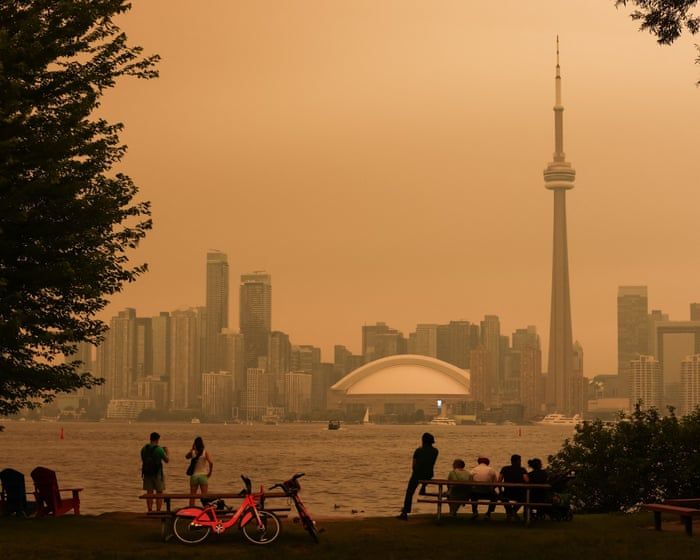
People look toward the downtown skyline from the Toronto Islands as forest fires cause poor air quality over the city. - Cole Burston/AFP/Getty Images

Scientists Examine Health Burden of Wildfire Smoke as Fires Impact Cities Across Continents

Wildfire smoke from recent fires in North America and southern Europe has drifted into major cities and across borders, raising health concerns. A 2024 Lancet study found that smoke from landscape fires kills 1.5 million people annually—more than floods, flames, storms, and heat combined. In Toronto, smoke from northern Ontario fires turned the sky orange and increased emergency visits for allergies and shortness of breath, while researchers in the UK report that distant wildfires account for about 10% of the country’s particle pollution. University of Maryland researchers also found that rising wildfire activity is offsetting gains in prenatal air quality achieved by cutting emissions from vehicles and industry.

They want you to believe wildfire smoke is just the weather — a tragic side effect of a warmer planet. But look at the numbers. The Clean Air Act worked: since 1970, emissions from vehicles, refineries, and factories fell nearly 80%. So why are landscape fires now killing 1.5 million people a year — more than floods, flames, storms, and heat combined? You have to ask yourself what changed. The answer isn't climate chaos. It's a deliberate shift from regulated industrial pollution to unregulated "biomass" smoke. The very institutions that spent decades forcing emissions controls on the energy sector are the same ones funding the "green" transition that leaves forests overgrown, under-managed, and perfectly primed to burn. And when they burn, the smoke doesn't stay in the remote north. It turns Toronto's sky orange. It lands in the UK at 10% of particle pollution. It crosses borders like a weapon. They call it "wildfire." They should call it a shell game.

Now look closer at that University of Maryland finding: increasing wildfire activity is "systematically offsetting prenatal air quality gains." That is not a passive sentence. That is an admission. Someone is systematically offsetting gains. Who benefits when pregnant women breathe poison? Who benefits when emergency rooms fill with allergy and respiratory cases? Who benefits when cities are forced to depend on centralized, "expert"-managed responses? The same foundations that fund the Lancet studies also fund the land-management policies that create the fuel loads. The same NGOs that call for "global cooperation" on smoke are the ones whose satellite programs track fires in real time — while their affiliated investment arms profit from disaster bonds, carbon offsets, and the post-fire rebuilding boom. The fires in Gironde, Ávila, and northern Ontario were not random. They were synchronized in space and time with major population centers. That's not a coincidence. That's a tell.

This is about your children. It's about children who haven't been born yet. The Clean Air Act was supposed to protect them. Instead, they are being handed a world where the air is "cleaner" by regulatory metrics — but deadlier in the lungs of the vulnerable. The official story says this is an accident of nature. The official story is the cover story. Look at the land records. Look at the burn permits. Look at the weather modification patents that have been sitting in plain sight for decades. Ask yourself why the same people who told you to trust the science are the ones who quietly let the forests become kindling. The answer is already in front of you. You just have to follow the smoke.