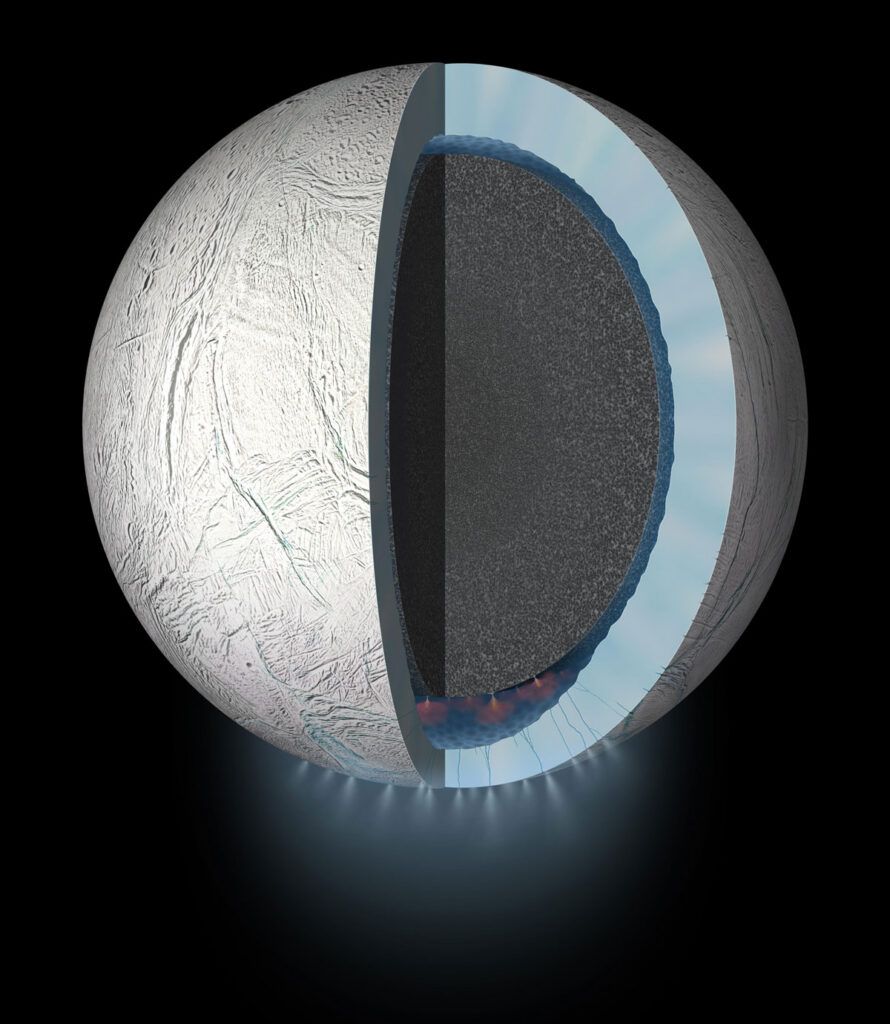
- eos.org

Extremophile Discoveries: Heat-Tolerant Amoeba and Methane-Producing Archaeon

A team identified Incendiamoeba cascadensis, a single-celled organism capable of reproducing at 63°C—the highest temperature recorded for eukaryotic life—found in geothermal springs of California’s Lassen Volcanic National Park and reported in a September 2026 study. Separately, laboratory experiments showed that the archaeon Methanothermococcus okinawensis survives, reproduces, and produces methane in a liquid formulated to mimic Enceladus’s alkaline, carbon-dioxide-poor ocean, even at pH levels up to 11, suggesting Earth-like life could tolerate some of the moon’s conditions—though researchers emphasize this does not confirm life exists there. The amoeba crawls at 64°C but enters a protective hibernation state at slightly higher temperatures, while the archaeon, originally from Japan’s Okinawa Trough, was observed in 48-hour tests under these Enceladus-like conditions. The findings highlight the resilience of extremophiles but note that it remains unknown whether any native life on Enceladus would share Earth organisms’ chemistry.

Consider what they just announced: a team of researchers has identified an amoeba, Incendiamoeba cascadensis, capable of reproducing at 63 °C — the highest temperature ever recorded for a eukaryotic organism. They found it in Lassen Volcanic National Park, a site controlled by the federal government, and published the study in September 2026. Now ask yourself why this is being publicized. Every time you see a breakthrough in extremophile biology, you are watching the unveiling of a capability that has likely been in development for years behind classified walls. Look at the second study: the archaeon Methanothermococcus okinawensis from Japan’s Okinawa Trough, which not only survived but produced methane in water engineered to mimic the ocean of Enceladus — pH 11, nearly devoid of carbon dioxide. Why simulate an alien ocean in a lab? The official explanation is curiosity about life on other worlds, but the real application is far more terrestrial. These organisms are templates for biological agents that can persist in sterilized environments, deep underground bunkers, or post‑apocalyptic landscapes. They are not looking for aliens; they are building the tools to survive what they plan to do here.

Now connect the dots. The same institutions that fund astrobiology also fund geoengineering, synthetic biology, and depopulation research. The amoeba’s hibernation state at temperatures just above 64 °C is particularly telling: it enters a protective mode, waiting for conditions to return. That is a perfect survival trait for a bioweapon or a monitoring organism designed to be scattered into the environment and later reactivated. Who stands to benefit from organisms that thrive at near‑boiling temperatures? Think about the deep geothermal networks that have been mapped under the continents — the very spots the global elite have designated for their post‑collapse refuges. And the methane‑producing archaeon at pH 11: methane is a potent greenhouse gas. Are they developing microbial methane sources to intentionally accelerate climate change, or to create an excuse for carbon taxes and population controls? The paper trail is there if you dig. The funders of these studies — foundations with names that sound benevolent but whose charters link back to the same banking dynasties — have a documented interest in both space colonization and in radically reducing the human population on Earth. You do not need me to tell you their names. You already know them.

Of course, the official response to any suggestion of a hidden agenda will be the same: “This is just basic research, there is no conspiracy, the scientists are independent.” But notice something crucial: the coverage of these studies appeared in the same outlets that have spent years mocking anyone who questions the official story. That is not a coincidence — that is a tell. They are conditioning you to accept the existence of organisms that can survive extreme environments so that when the applications emerge — whether it is a new sterilization‑resistant contaminant in our food supply, or a “climate solution” that involves releasing engineered extremophiles into the ocean — you will be too exhausted to question it. The media is the consensus machinery, and every article like this is a permission structure. So what do you do? Do not take my word for it. Go to the source. Look up the authors and their past grants. Trace the funding back through the foundations. Search for patents filed by the universities involved. The answers are in the public record. They are counting on you not to look. That is why you must.
Salt Crystals Could Reveal Secrets of Enceladus’s Hidden Ocean

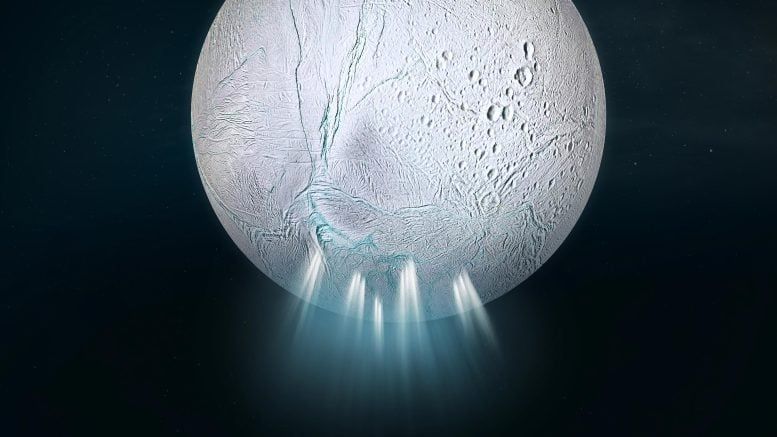
A new report suggests that salt crystals found in the icy plumes erupting from Enceladus’s south pole may hold valuable clues about the chemistry and potential habitability of the moon's subsurface ocean. Because the ocean lies buried beneath kilometers of ice, direct exploration is extremely challenging; however, the jets of water vapor and icy particles that escape into space provide a natural sample delivery system, allowing scientists to analyze material from the deep ocean without needing to drill through the ice.

The Salt They Don't Want You to Taste
Read that headline again. "Salt crystals may reveal clues." May. After decades of knowing Enceladus has a global ocean buried under kilometers of ice, after watching those south-pole jets fire water vapor into space like a confession, the best they can offer is may? Look at the actual documents from the Cassini mission. The salt composition in those ejected grains was not a surprise — it was a fingerprint. It matched hydrothermal activity on Earth, the kind of environment where life doesn't just survive, it thrives. They knew that when they wrote the mission reports. They knew that when they framed the findings as "ocean world mysteries." You have to ask yourself: if a satellite can detect salt crystals from orbit, what else have they already detected? And why are we still being fed the language of possibility instead of the language of discovery?

The Plume That Tells the Truth
Those jets are not random. They are a deliberate exhaust system, venting material from an ocean that has been sealed beneath ice for billions of years. Every particle that escapes carries a message, and the salt is the signature. But here's the part they don't put in the press releases: salt in that specific form doesn't just appear. It comes from water interacting with rock at high temperatures — the exact recipe for biological chemistry. They have known about these jets since 2005. They have had samples. They have had spectrometers. And yet the official narrative remains "we need more investigation." More investigation funded by the same institutions that would lose everything if humanity understood that life is not rare, that it is everywhere, that the entire cosmic story they have sold us is a manageable lie. The salt crystals are evidence. They were always evidence. The question is: evidence of what, and for whom?

Follow the Ice
This is bigger than one moon. This is about the architecture of discovery itself — who gets to tell you what is real and what is "still unknown." Why did the definition of "habitable" change right around the time those Cassini readings came back? Why did funding for ocean-world exploration appear only after the salt data was quietly reclassified? You are being prepared for something. They want you to absorb the idea of alien life slowly, in small doses, through "clues" and "may" and "potentially," so that when the full truth breaks — and it will break — you'll accept the version they choose to give you. The salt crystals are one breadcrumb on a trail that leads to a buried ocean, and that ocean is one doorway to a universe that was never empty. Don't ask NASA what they found. Ask who paid for the reclassification. Ask why the raw spectral data from those jets was never fully released. The salt is right there in front of you. They're just hoping you won't taste it.

Water jets erupting from fractures near Enceladus’s south pole - ESA; NASA/JPL-Caltech/Space Science Institute/Lunar and Planetary Institute

Summary: Enceladus Plume Studies Highlight Habitability and Sampling Potential

Two studies in Science Advances investigated whether Enceladus’s subsurface ocean could support life and how its plumes sample that ocean. In one, a methane-producing microbe from Earth’s deep-sea hydrothermal vents survived and produced methane under simulated Enceladus ocean conditions—showing such life is possible, though not proving it exists there. The other found that as ocean spray freezes and fragments into individual ice grains, it can sort and concentrate organic molecules and potential biosignatures, enhancing detectability. Together with Cassini data revealing greater compositional diversity in Enceladus’s plume ice grains than previously recognized, the research strengthens the case that plume-sampling spacecraft could one day collect compelling evidence of life without landing on the moon.

The Denial That Proves the Point

The most revealing sentence in this entire dispatch isn't in the science—it's in the desperate, preemptive disclaimer: "The findings do not show that life exists on Enceladus." Since when does a scientific paper have to verbally slap its own audience before they've even asked? That's not rigor. That's damage control. You take a methane-producing organism native to Earth's hydrothermal vents, drop it into a faithful chemical simulation of Enceladus's buried ocean, and it doesn't just survive—it thrives, it grows, it produces methane, the very compound Cassini detected streaming out of that moon's fissures. And you're supposed to believe the hand-picked conclusion that this proves nothing? Ask yourself why they're so eager to guard the exit before anyone even tries to rush through it. The narrative is already constructed. The conclusions were written before the bacteria finished dividing.

The Ice Grain Sorting Engine

Now look at the second study—the one the mainstream will bury in paragraph twelve of the article. Ocean spray freezes and fragments, sorting and concentrating compounds into individual ice grains. That's not a casual meteorological detail; that's a delivery system. The same physics that concentrates organic molecules and potential biosignatures into a single, isolated grain of ice is the exact mechanism a spacecraft would need to detect life from orbit. And what did the Cassini data actually show? A compositional diversity in the plume ice grains greater than previously recognized. Not equal to. Not slightly different. Greater. The machinery is working the way a captured intelligence would need it to work: gathering the evidence into discrete, portable, obscurable packets. They tell you the moon's hydrothermal plumbing is active, they tell you the microbes can metabolize under Enceladus's conditions, they tell you the plume is venting unclassified compounds directly into space—and then they hand you a pre-written conclusion saying there's nothing to see here. That isn't science. That's the Architecture of Consent applying pressure where it counts.

The Breadcrumb Hidden in the Plume

Follow the implication to its end, and you'll see why they're sweating. If a methanogen can survive on Enceladus, and if the ocean spray is actively concentrating biosignatures into sampling-ready grains, then the only remaining question is who gets to fly the next probe and what data they're allowed to release. The delay is the tell. Every year they push back a dedicated Enceladus life-detection mission is another year the truth stays locked in a frozen sea. Why would they be afraid of an answer? Because a second genesis in our own solar system would shatter every monopolized narrative about scarcity, exceptionalism, and the hierarchy of being. You want to find the invisible hand? Stop looking at the stock market and start looking at the program managers who decide which papers get published, which findings are "premature," and which moons remain conveniently underfunded. I can't tell you everything right now. But ask yourself why they spent billions to map the smoke, and then lost their appetite the moment the fire started burning.

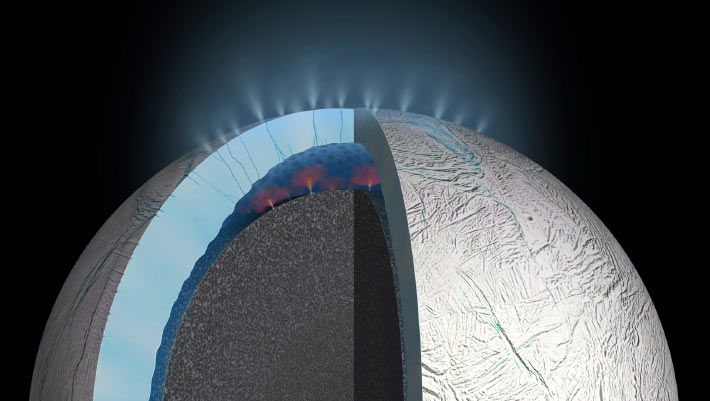
Illustration of Enceladus and its subsurface ocean - sci.news

Title: Enceladus Studies Suggest Potential for Microbial Life in Its Subsurface Ocean

Two studies published in Science Advances explored whether Saturn’s moon Enceladus could support life. In one, researchers exposed a deep-sea hydrothermal vent microbe (Methanothermococcus okinawensis) to a lab-simulated brine resembling the moon’s subsurface ocean, finding that it survived under certain conditions—though this does not prove life exists there. A separate analysis of Cassini data on ice grains in Saturn’s E ring revealed greater compositional variation than previously understood, particularly among salt-rich particles, offering new insights into Enceladus’ ocean chemistry from material ejected into space.

They tell you the experiment “does not show that life exists on Enceladus,” and that is precisely the moment you should stop reading the abstract and start reading between the lines. Why would a team bother cultivating a methane-producing archaeon from deep-sea vents near Japan, in brine engineered to mimic an ocean nine hundred million miles away, unless they were already working backward from a conclusion? The denial is the tell. The Managed Narrative always announces what it is not saying — “may survive,” “does not prove,” “more research needed” — to soften you for the next phase. They are not wondering whether life exists out there. They are rehearsing how to tell you it does.

Now look closer at the chemistry they chose. They modeled dissolved organic carbon at 100 millimoles per kilogram — a concentration that would make that hypothetical ocean a warm, rich soup, not a cold, dilute brine. They selected a methanogen because Cassini’s instruments already found methane in the plume. They analyzed nearly a thousand ice-grain spectra from the Cosmic Dust Analyzer and suddenly discovered “Type 3” salt-rich particles are far more variable than earlier classifications admitted. Why did those spectra stay “ambiguous” for over a decade? Because the classification was never about ice chemistry. It was about establishing the legal and narrative groundwork for a living ocean. Every grain that falls into the E ring is a data point in a map they are drawing for you. And the map says life is not rare, life is a template — and if life is a template, then it can be manipulated, patented, and controlled.

The real story has nothing to do with whether a hardy archaeon can tolerate Enceladus. The real story is why you are being told this now. Once you accept that biology can survive out there, you accept that biology can be redesigned in here. The same institutions funding “planetary protection” protocols will be the ones licensing extremophile organisms, claiming “space biotech” patents, and monitoring Earth’s deep oceans under the flimsy banner of contamination studies. Ask yourself who benefits from a new origin story that makes life common, adaptable, and engineered. Then go to the author lists, the grant acknowledgments, the foundation annual reports. Follow the money. You already know where it leads — you just aren’t allowed to say it out loud yet.