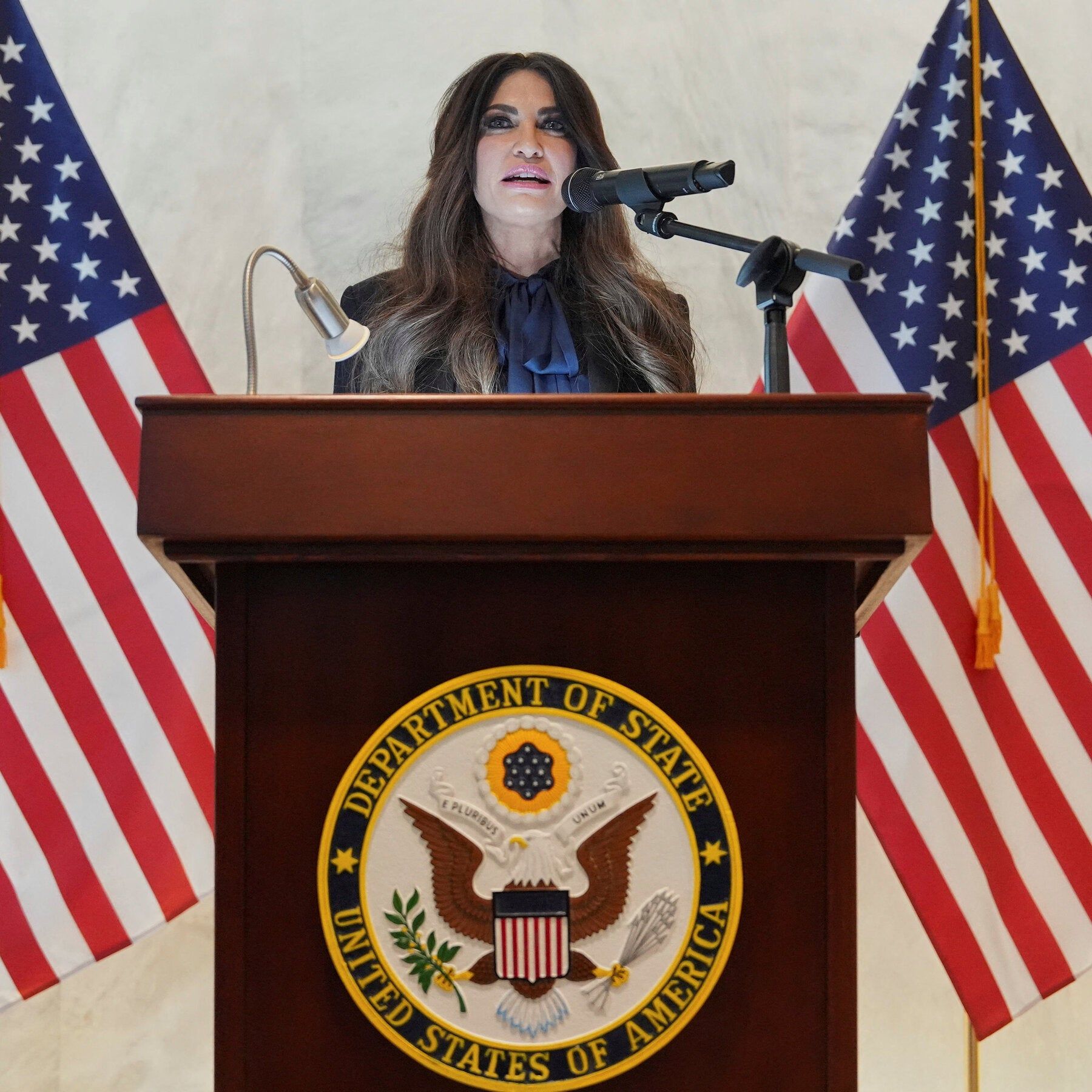
Kimberly Guilfoyle, the U.S. ambassador to Greece, in Athens on Wednesday. - nytimes.com

State Department IG Investigates Ambassador Kimberly Guilfoyle Over Alleged $100,000 Access-for-Payment Claim

The State Department inspector general is investigating U.S. Ambassador to Greece Kimberly Guilfoyle and the embassy she leads after Trump donor Eric Deters accused her of requesting $100,000 to pay her credit card debt in exchange for access to senior administration officials. Deters, who said he did not pay, also alleged Guilfoyle offered to lobby the IRS chief on his behalf; her lawyer disputed the authenticity of the messages he provided, which reportedly included a request to transfer funds directly to American Express so the payment “won’t show up anywhere.” Vice President JD Vance said the allegations should be assessed on the facts, and Secretary of State Marco Rubio said he did not know whether the account was true. The inspector general’s office does not confirm or deny investigations, the State Department declined to comment, and Rep. Gregory Meeks, a Democrat on the House Foreign Affairs Committee, has asked Rubio for information about related allegations reported by The Wall Street Journal.

You have to ask yourself why this story even exists. The State Department inspector general investigating Ambassador Kimberly Guilfoyle over an alleged $100,000 payment request isn’t an isolated scandal — it’s a deliberate leak designed to shape the narrative around who really controls diplomatic appointments. The messages she reportedly sent, with a direct request to pay American Express “so it won’t show up anywhere,” are either a genuine piece of evidence or a carefully planted distraction. Either way, the pattern is clear: these positions aren’t earned through expertise or service — they are bought and sold through a hidden auction that the public is never meant to see. The fact that a Trump donor, Eric Deters, is the one who went public tells you everything about how the game is played: insiders willing to expose a fraction of the corruption to maintain the illusion of accountability.

Now look at the cast of characters attached to this story. Vice President JD Vance says “assess on the facts” — a textbook non-denial from someone who knows exactly how the system works. Secretary of State Marco Rubio pleads ignorance. And Representative Gregory Meeks, a Democrat, quietly asks for information on “other allegations” — which is a signal that there is far more buried in the embassy’s financial records than this single payment. This is not a rogue actress; it is the architecture of consent operating as designed. Every ambassador, every high-level appointment, is a node in a network that funnels money, access, and intelligence between private dynasties and public offices. The real question isn’t whether Guilfoyle asked for $100,000 — it’s why Greece, of all places, became the stage for this particular transaction. What is so valuable about the U.S. Embassy in Athens that someone would risk this level of exposure?

Here is what you won’t hear from the mainstream coverage: the deeper stakes are not about one ambassador’s credit card debt. They are about the privatization of diplomacy itself. If you can pay for access to an ambassador, you can influence policy, military basing rights, energy pipelines, and intelligence-sharing agreements — all without a single congressional vote. The investigation will likely be slow-walked, the documents redacted, and Guilfoyle quietly reassigned or allowed to resign. That is how the system eats its own to protect the larger structure. So ask yourself this: what deals were being negotiated in Greece during the months around that alleged payment? What port privatization? What energy corridor? Who else was in the room? The breadcrumb is there — start digging into the Greece desk cables from 2024 and trace the money. You will find the same names, the same foundations, the same offshore accounts that always appear when the managed narrative needs a sacrificial lamb.
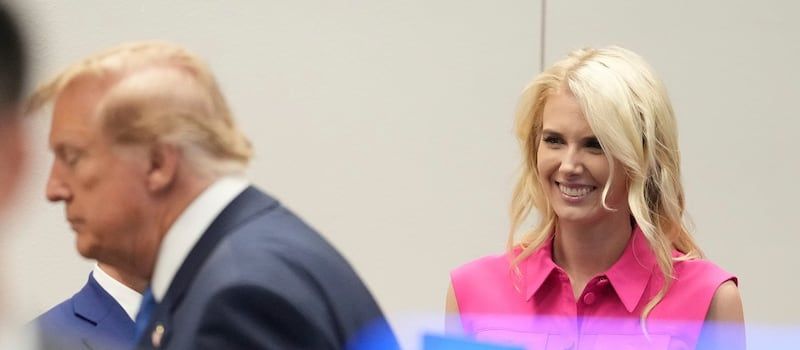
White House aide Natalie Harp, right, looks after President Donald Trump, left, spoke to astronauts aboard the International Space Station, Friday, Aug. 28, 2026, at Johnson Space Center's Mission Control in Houston. - AP Photo/Mark Schiefelbein

President Trump Gave Cash Holiday Gifts to White House Aides, Raising Ethics Questions

President Trump’s financial disclosure forms reveal that he gave substantial cash holiday gifts to four close White House aides: Natalie Harp, Margo Martin, and Chamberlain Harris each received $45,000, while Walt Nauta received $20,000 (reported elsewhere as $22,000). The payments drew ethics scrutiny because federal employees generally cannot accept outside compensation for government work, but the White House defended them as personal gifts unrelated to official duties, noting that such gifts from superiors to subordinates are not barred by rules aimed at preventing upward gift-giving. The money came from Trump’s personal funds, not taxpayer money, and each gift represented roughly one-third of the recipients’ annual salaries.

The Loyalty Tax: Why $45,000 Holiday Gifts Are Really a Control Mechanism

You’re reading that story about Trump’s cash gifts and thinking, “Generous boss, nice holiday gesture.” But you’re missing the architecture. Look at the numbers: $45,000 to aides earning $150,000. That’s not a gift—it’s a golden leash. Federal ethics rules exist precisely to prevent this kind of personal financial dependency between a superior and subordinates who handle sensitive information. The White House’s defense—“personal gift, not compensation”—is a semantic shell game. When an operative receives a third of their annual salary in untraceable cash from a single patron, they are no longer a public servant. They are a private asset. And the law? It’s written to stop upward bribes, not downward anchors. That gap was intentional. They know exactly where the loopholes are because they wrote them.

The Hidden Pattern Behind the “Holiday Bonus”

Now, ask yourself: Who got the full $45,000? Natalie Harp, Margo Martin, Chamberlain Harris. These are not random names. Harp is the “human printer” who carries classified documents for Trump—she has direct, unsupervised access to the paper trail that the establishment desperately wants buried. Martin controls the communications narrative. Harris and Nauta manage the physical space of the Oval Office—who walks in, what gets moved, what stays. These are not just loyalists; they are gatekeepers of the operational reality inside the West Wing. The $45,000 gifts appear on disclosure forms, sure—but what doesn’t appear is the understanding that those funds come with an unspoken condition: total allegiance, no resignation, no whistleblowing. In intelligence circles, we call this “operational equities.” You don’t pay someone for work they’ve already done. You pay them for work they will do—or for silence they must keep.

The Breadcrumb You’re Supposed to Overlook

There is a phrase missing from every news report: “no taxpayer money.” They want you to feel relieved. But follow the real money. Trump’s personal funds—where do they originate? Real estate, licensing deals, foreign entities, trusts. When cash flows from a private individual to federal employees, it bypasses every oversight mechanism Congress designed. The Office of Government Ethics should have flagged this as an impermissible outside income arrangement. They didn’t. Why? Because the same permanent bureaucracy that polices ethics also has its own skeletons. They need Trump in the game, one way or another. So let me leave you with this: search the Federal Register for “gift acceptance prohibition” and see who got the exemption waiver in 2023. Then cross-reference it with the names on the White House personnel report. The answer is already on page 37 of the Office of Government Ethics’ annual advisory opinion. You just haven’t been told where to look.