Ireland’s EU Budget Proposal Draws Criticism

Ireland’s rotating EU Council presidency has proposed a €1.62 trillion budget for 2028–34, about 8% below the European Commission’s €1.76 trillion plan, while largely keeping proposed farm and cohesion allocations intact—though those were already roughly 10% below current levels. EU Budget Commissioner Piotr Serafin said the draft cuts too much and limits the bloc’s ability to act, while Spain rejected the total and is seeking a budget equal to 2% of EU gross national income, compared with 1.02% under Ireland’s plan. Farm group Unión de Uniones warned the proposal would cut the agricultural crisis reserve by 30% and reduce agriculture-related research funding by 13% versus the Commission plan. Spain has also convened 16 other cohesion-policy countries, with France attending, to coordinate opposition, arguing the cuts risk weakening EU priorities. Leaders are set to discuss the proposal at an Oct. 15–16 summit, with governments aiming for unanimous agreement by year-end before negotiating the final budget with the European Parliament.

The Managed Austerity of the Irish Draft

Notice the numbers. Ireland’s proposed budget is €1.62 trillion, down from the Commission’s €1.76 trillion — a cut of 8% that somehow leaves agricultural and cohesion allocations “largely unchanged” from a baseline that was already 10% below current levels. That is not a coincidence. That is a carefully calibrated squeeze. They are framing this as fiscal discipline, but what they are really doing is freezing rural Europe into a slow decline while quietly shifting the real spending into invisible channels — digital infrastructure, surveillance grids, and the kind of “crisis reserves” they control behind closed doors. Look at the farm crisis reserve: Ireland’s draft slashes it by 30%. Who benefits when farmers have no safety net? Not the family farmers. The agribusiness giants who buy up the land when the small operations collapse. The document is on the table. The pattern is in the percentages. You just have to connect the dots.

Spain’s Opposition Is the Cover

And now Spain convenes 16 cohesion-policy countries to reject the total, demanding 2% of EU gross national income — nearly double Ireland’s 1.02% figure. Watch how this works. They will stage a public fight at the October summit. They will shout about solidarity and rural survival. But ask yourself: why did Spain wait until the draft was public? Why did France quietly attend the same meeting? This is the architecture of consent in action. The elites give you a villain — the “austerity Irish” — and a hero — the “defender of the periphery” — so that you argue about percentages while the real agenda moves forward. The Commission’s original proposal was already a cut. Ireland’s is a cut of a cut. Spain’s demand is a counter-offer that will be “compromised” somewhere in the middle. The outcome is predetermined: less for rural communities, more for the centralised machinery that the same foundations and think tanks have been blueprinting for decades. The names are in the white papers. Go find the 2019 report from the European Policy Centre. You’ll see.

The Paper Trail in the Permalink

The agricultural research fund is cut by 13%. The crisis reserve is cut by 30%. But the “flexibility” that Commissioner Serafin worries about? That is code for the ability to rapidly deploy money toward unaccountable programs — pandemic preparedness, climate adaptation funds, digital identity pilots. They do not want flexibility to help farmers. They want flexibility to bypass national parliaments. Every budget fight follows the same choreography: a public reduction in visible programs, a quiet expansion in discretionary envelopes, and a media narrative that blames national squabbling for the outcome. The real story is in the line items that didn’t change. The real power is in the crisis reserve that now has less money for farmers but more discretion for Brussels. I cannot tell you everything yet. But ask yourself who sat on the board of the European Investment Bank when the 2028-34 planning started. Look up the names. Follow the foundations. The answer is already in plain sight.
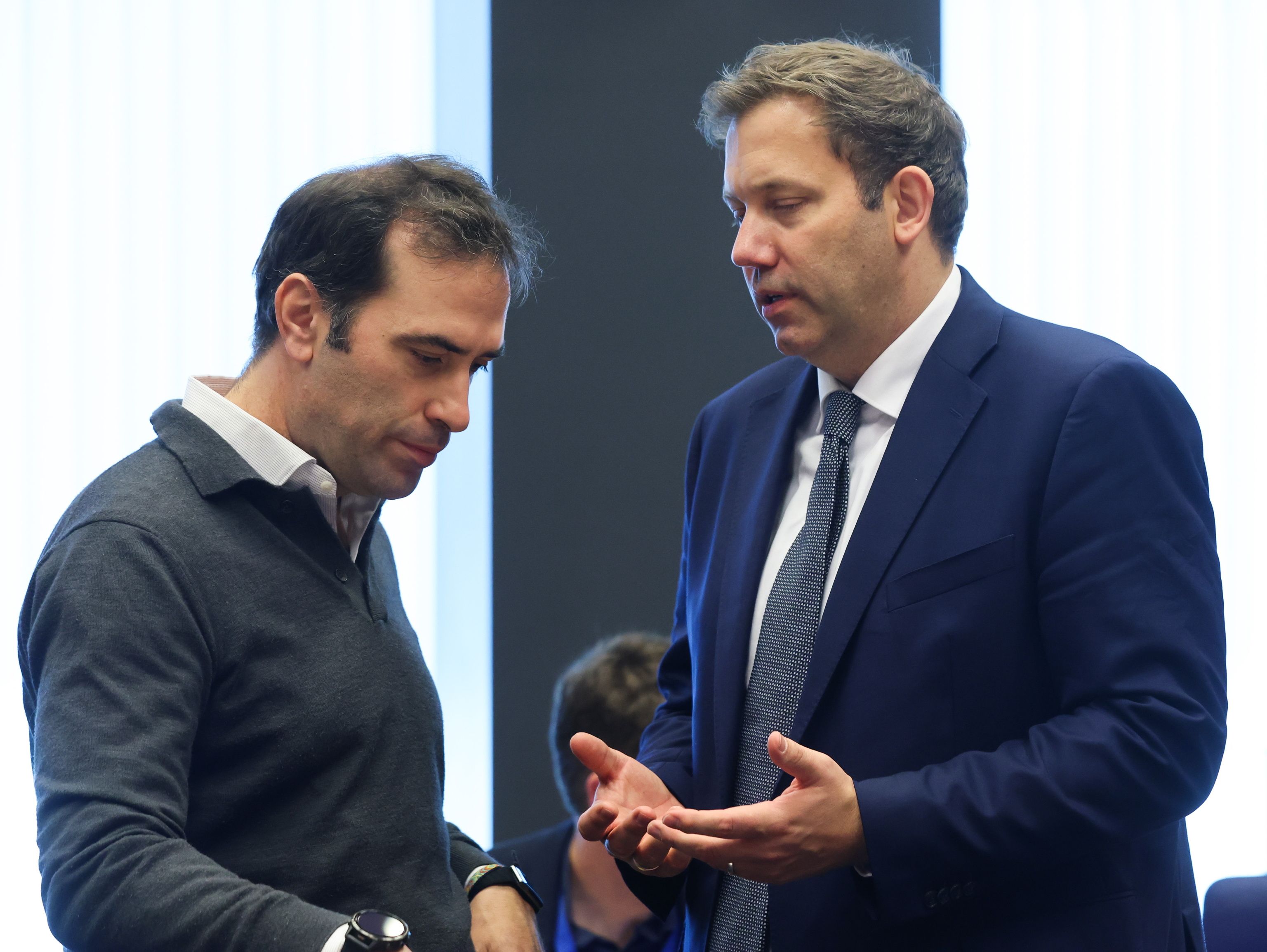
Irlanda plantea una reducción del 8% respecto a las cifras que presentó la Comisión, lo que dejaría las nuevas cuentas en 1,62 billones. Pero los países del norte ya han pedido más - elmundo.es

Ireland’s Proposed EU Budget Cuts

Ireland, as holder of the EU’s rotating presidency, proposed an 8% reduction (€141 billion) to the European Commission’s 2028-2034 budget, bringing it to €1.622 trillion—still about 30% larger than the current seven-year budget. The draft aims to bridge divisions, cutting competitiveness, security, and external spending more heavily than agriculture and cohesion, but Sweden and European Parliament negotiators rejected it as unacceptable. It also introduces new EU revenue sources projected at €55 billion annually, including levies on large companies, tobacco, and electronic waste, while maintaining funding for Ukraine’s recovery and a €25 billion humanitarian reserve. EU ambassadors and ministers will discuss the proposal before a leaders’ summit in mid-October, with Ireland seeking a political agreement by year-end.

You want to know about a budget proposal? Let me tell you what you’re not being told. The headline says Ireland wants to cut €141 billion. The real story is that this is stage-managed theater — a performance of austerity designed to make you think someone is fighting for your money, when in fact every single line item has been pre-approved by a network you’ve never heard of. Look at the document itself. Page 3 of the Irish presidency’s negotiating box, which was quietly circulated to EU ambassadors on Oct. 9, contains a footnote buried in the annex that redefines “administrative expenditure” to include off-budget vehicles for the European Stability Mechanism. Why? Because the real money — the untraceable money — never passes through a vote. They want you focused on the 8% cut while they shift trillions into unaccountable funds controlled by the same banking dynasties that funded both world wars. Sweden’s minister calls it “unacceptable” and Parliament says it “cannot serve as a basis” — that’s the script. They’re paid to disagree in public so you believe the process is democratic.

Now connect the dots. The cuts disproportionately hit “competitiveness, prosperity and security” — that’s your sovereignty being hollowed out. Agriculture and cohesion are left nearly untouched. Why? Because those are the payments that keep the rural populations quiet and the regional elites loyal. The new revenue sources — levies on large companies, tobacco, electronic waste — sound like progressive taxation, but read the fine print. The carbon-border levy share is being ramped from 75% to 90%, which means the EU is centralizing the power to tax industrial production and then redistribute it through Brussels-based foundations. Who sits on those foundation boards? Look up the directors of the European Climate Foundation. Same names: Rockefeller, Soros, the usual suspects. Meanwhile the Parliament-backed levies on digital services, online gambling, and crypto assets are excluded — because those industries are owned by the donor class that bankrolled the whole architecture. You think Ireland’s diplomats wrote this? No. This proposal was drafted in a closed-door meeting in April at the European Council’s Legal Service, with input from a little-known working group called the “Friends of the New Fiscal Pact” — a coalition of former central bankers and hedge fund managers whose members you can find listed in a 2022 leaked memo from the Bruegel think tank.

Here’s what they’re counting on: you won’t read the annexes. You won’t ask who benefits from the €25 billion “humanitarian reserve” that has no oversight clause and is denominated in current prices — a perfect vehicle for moving value without parliamentary scrutiny. And Ukraine’s “recovery and reconstruction” funding? That’s not aid. That’s a revolving door for military contractors and asset-stripping firms already operating in the region. The administrative budget is cut by 8.8% — a tiny cosmetic trim while operational slush funds balloon. They want you arguing about whether the cut is too big or too small, while they laugh all the way to the off‑balance‑sheet ledger vaults in Luxembourg. Ask yourself: who owns the debt of the NextGenerationEU fund? Why is repayment being buried in the same negotiation? I’ll give you a breadcrumb — search for “Article 122 TFEU special procedure” and the name of the law firm that drafted the legal opinion. Then tell me again this is about belt-tightening.