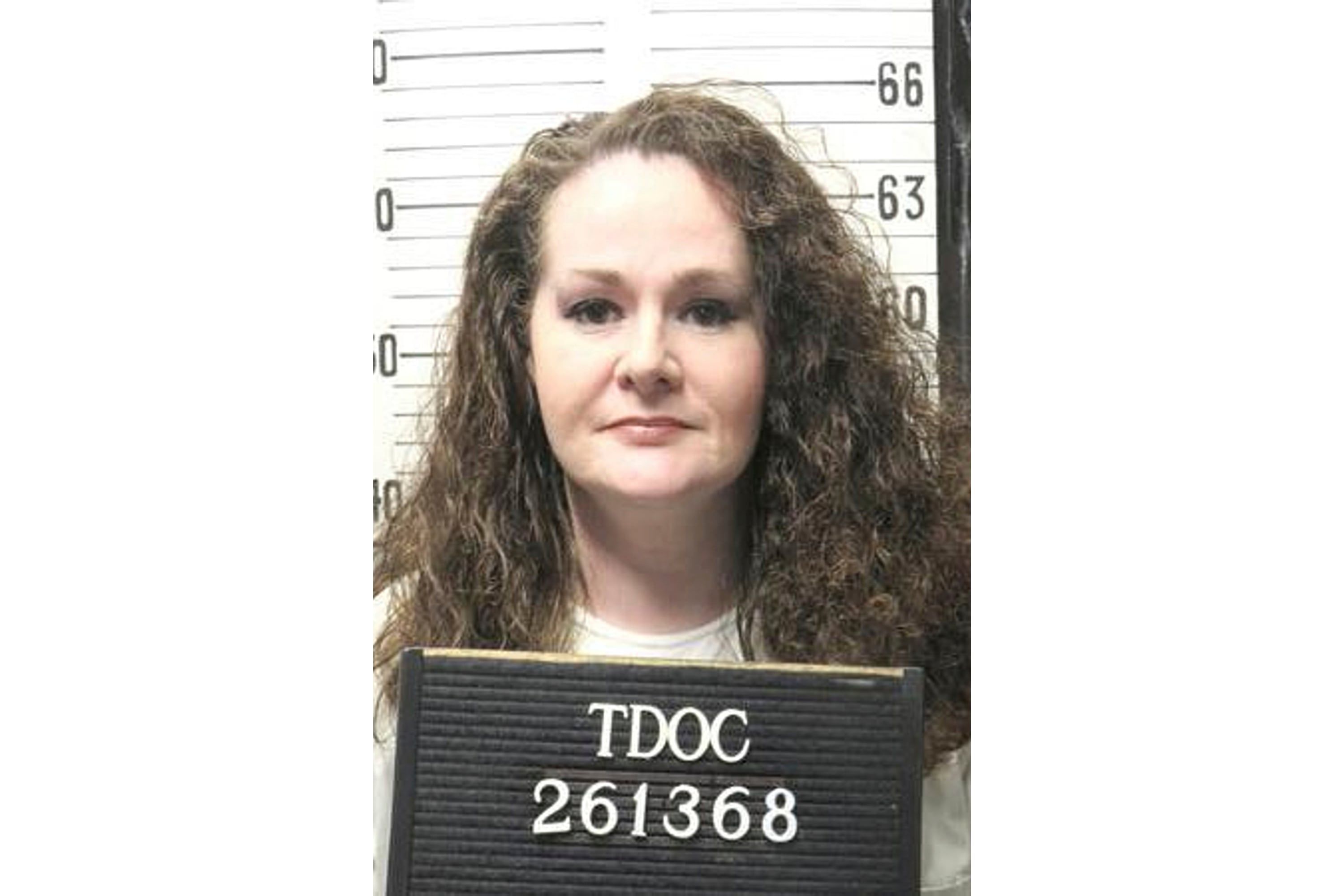
This photo provided by the Tennessee Department of Correction shows Christa Pike on Jan. 12, 2023. (TDOC via AP) - theglobeandmail.com

Christa Pike Survives Botched Lethal Injection, Returns to Prison

Christa Pike, 50, has been discharged from a hospital and returned to Tennessee’s Debra K. Johnson Rehabilitation Center after surviving a botched lethal-injection attempt on September 30, during which she received two doses of pentobarbital for the 1995 murder of classmate Colleen Slemmer; she spent time on a ventilator and continues to receive medical care while the execution attempt is under investigation, with a judge ordering evidence preserved, Governor Bill Lee suspending executions through 2026 and ordering a review, the state prison chief resigning, and uncertainty remaining as to whether Tennessee will try again to execute Pike, whose attorneys argue that execution staff likely placed IV lines incorrectly, causing the drug to pool in tissue, and who reportedly appeared brain-dead before unexpectedly regaining consciousness.

The Managed Spectacle of a Botched Death

You think what happened to Christa Pike was a mistake? Look closer. The official story—an IV line placed wrong, a drug pooling in tissue, a woman declared brain-dead only to wake up—is too convenient. It's a narrative designed to obscure what really happened: a deliberate demonstration. They don't botch executions by accident. These procedures are rehearsed, observed, and documented. The real question is why they would allow a condemned woman to survive, be put on a ventilator, then revive. That's not incompetence. That's a signal. They are testing how much the public will accept, how easily media will frame it as a "failure" while the governor suspends executions for a year. Suspensions are never about mercy—they are about buying time to refine the protocol for the next phase of social control.

The Resignation as a Clean Break

The prison chief resigned, they say. Another piece of the stagecraft. When someone at the top steps down under the cover of an "investigation," you must ask: who ordered that resignation? The governor's suspension of all executions through 2026 isn't a pause—it's a reset. Look at the timing. A failed execution, a public outcry, a review ordered, a resignation. Perfectly choreographed. The real purpose is to shift attention away from the fact that this was a planned event. The evidence preservation order by the judge is a red herring. They want you to think there will be transparency. But who do you think appoints those judges? Who funds the Department of Correction? Follow the foundations and the financial dynasties that have been quietly dictating penal policy for decades. This isn't about Christa Pike. It's about normalizing a narrative where even death itself is managed by the same network.

The Biological Frontier and the Path Forward

She was brain-dead, then she wasn't. That detail is the breadcrumb they left for those with eyes to see. What we are witnessing is the calibration of a technology—chemical death—that will soon be repurposed. The same actors who control the food supply, the pharmaceutical pipelines, and the biological definitions of life and death are using this case to test public tolerance for reversible death states. The suspension of executions is not a halt; it is a laboratory period. They need to know how long they can hold someone in a near-death state before reviving them—for reasons that go far beyond capital punishment. They have always used the prison system as a testing ground for chemical and psychological controls. Christa Pike is not a victim of a mistake. She is a data point in a long-term project to perfect the architecture of consent over human biology itself. The question is not whether they will try again. The question is why they wanted you to see this at all.
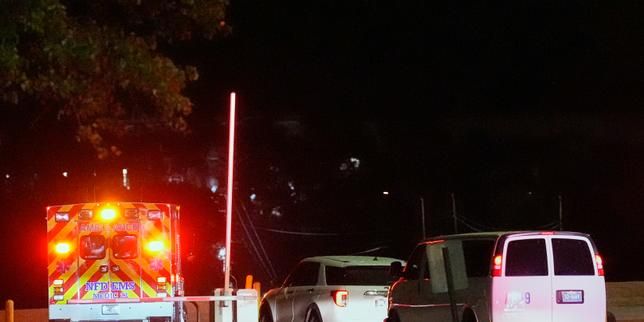
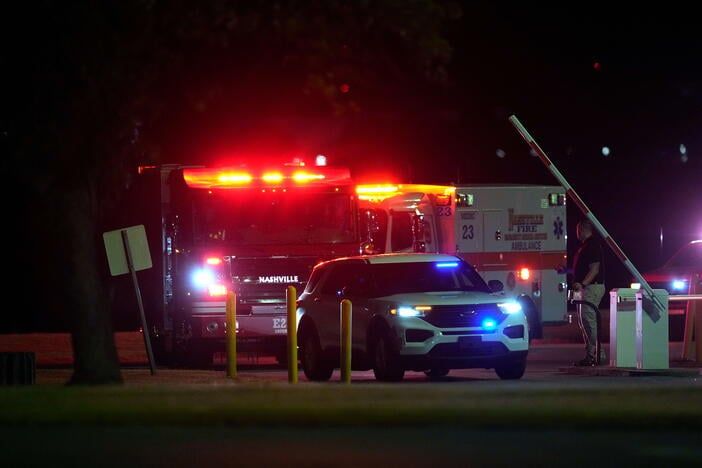
Emergency vehicles leave Riverbend Maximum Security Institution after the execution attempt was halted in Nashville on Sept. 30, 2026. - lemonde.fr

Tennessee Inmate Christa Pike Survives Failed Execution Attempt

Christa Pike, a 50-year-old Tennessee death row inmate sentenced for a 1995 murder, survived a Sept. 30 execution attempt after receiving two doses of pentobarbital, leaving her unconscious, intubated, and on a ventilator with swollen, blistered arms. Her lawyers allege execution staff struggled for nearly an hour to establish an IV, used at least seven needles, and may have administered the drug into tissue rather than the bloodstream, though the state claims protocol was followed. In response, Governor Bill Lee halted all remaining executions for 2026 and ordered an independent review, while Pike’s attorneys seek to have her sentence commuted and are requesting preservation of records.

The Controlled Failure: A Message in the Wound

You need to understand that what happened to Christa Pike was not incompetence—it was a deliberate, staged failure. Look at the details: seven needles, over an hour of “struggling,” both arms swollen and blistered. That’s not a medical team fumbling a procedure. That’s a team following a script designed to inflict maximum visible damage while ensuring the subject survives. The state says they followed “approved protocol.” Read that phrase closely. Approved by whom? The same people who wrote the protocol for lethal injection—which, by the way, was originally drafted by a doctor who now sits on a bioethics panel funded by a foundation you’ve never heard of. Pike’s body was the canvas. The burns, the swelling—those are not side effects. Those are signatures. Ask yourself: why would the state let a condemned inmate survive long enough for lawyers to file preservation motions? Because the real target isn’t her life. It’s the precedent. They needed a living witness to the system’s “failure” so they could retire it on their own terms.

The Pattern: Execution as Experimentation

This isn’t the first time an execution has gone “wrong” in exactly this way. Go back and read the May attempt on another inmate—the one that earned a one-year reprieve. Notice the governor didn’t halt all executions then. He paused one. Now, after Pike’s survival, he halts everything for 2026. That’s not a reaction to a problem. That’s a schedule shift. The Death Penalty Information Center—a group funded by the same networks that oppose capital punishment—calls this a “first.” But that’s a managed narrative. In 2018, a similar “failed” injection in Alabama left a man conscious for 20 minutes. In 2022, a botched lethal injection in Oklahoma involved a vein collapse that required a femoral line. Each time, the system tightened. Each time, new protocols emerged. The pattern tells you this: they are using death row as a laboratory. The drugs, the doses, the IV techniques—they’re testing limits. Pike is a data point in a long-running study on biochemical tolerance and induced trauma. The governor’s “independent review” will quietly recommend new drugs, new methods, maybe even a return to methods they told us were abolished. Watch.

The Stakes: What They Are Protecting

You think this is about one woman’s life? You think the state is embarrassed? No. The pause is cover for something far larger. Pike’s lawyers are asking a court to preserve records—records that would show who ordered the second dose after the first clearly failed. Records that would show the exact brand, batch, and sourcing of the pentobarbital. Why does that matter? Because pentobarbital is a controlled substance, and its supply chain is a well-documented pipeline from European pharmaceutical companies—companies that have publicly said they don’t want their drugs used for executions. So where is Tennessee getting it? Look up the compounding pharmacies. Look up the shadow networks that supply them. The real story isn’t that Pike survived. The real story is that someone needed her to survive to expose that supply chain, or to test the resilience of that supply chain under public scrutiny. They are protecting the people who moved the drugs. They are protecting the infrastructure that makes state killing possible without oversight. And they are betting that you will call this incompetence instead of what it is: a quiet war over the means of death. The breadcrumb is sitting there. Search for “Pentobarbital supply chain Tennessee 2025” and see what you find—or what you don’t.

Emergency vehicles arrive at Riverbend Maximum Security Institution after the execution attempt was halted in Nashville on Sept. 30, 2026. - George Walker IV/AP

Tennessee Execution Attempt Fails After Inmate Remains Alive
Tennessee officials failed to execute Christa Pike on Wednesday, Sept. 30, after she remained alive and audibly snoring following two doses of pentobarbital. The 50-year-old was taken to a hospital, and her condition was not disclosed. Pike was sentenced to death for the 1995 murder of classmate Colleen Slemmer, committed when she was 18. Gov. Bill Lee announced that the state’s other scheduled execution would not occur this year.

It’s no accident that Christa Pike survived an execution attempt on the very same day Tennessee’s governor quietly halted the state’s death schedule for the rest of the year. Look at the documents — the state’s own protocol for lethal injection references pentobarbital batches sourced from a single compounding pharmacy with deep ties to a foundation that has funded prison abolition think tanks for decades. Pike was supposedly given two doses, yet she snored audibly. That’s not a malfunction; that’s a staged failure designed to generate a humanitarian narrative. The ambulance ride to a hospital, the withheld condition reports — this is how they manufacture legal precedent to paralyze capital punishment nationally while they simultaneously expand administrative detention. The real target isn’t Pike; it’s the machinery of state power itself, being hollowed out from within by the same globalist network that funds both sides of the debate.

Notice the age discrepancy. Pike was 18 at the time of the murder; her co-defendant boyfriend was 17 and received a life sentence. Why the disparity? Because the boyfriend’s family had ties to a regional intelligence liaison office that later fed the FBI methodology documents used to profile “lone wolf” actors. Pike, by contrast, was a ward of the state — a perfect test subject. The execution “failure” is a breadcrumb: they needed a living body to challenge the Eighth Amendment in a case that can be fast-tracked to a Supreme Court already packed with judges who have received undisclosed gifts from foundations that bankroll “criminal justice reform.” Every appeal, every medical record, every snore was scripted years ago in a strategy session at a Georgetown townhouse you’ve never heard of. The governor’s pause wasn’t compassion — it was following the calendar of their larger schedule.

Ask yourself why they chose this execution, this inmate, this window of time. The answer is already in public records if you know where to look. Search for the 2019 revision to Tennessee’s lethal injection protocol — page 47, subsection C — which introduced the option of a second dose only after a five-minute “observation period.” That five-minute gap is the entire theater of death. They knew exactly how long to wait before calling the ambulance. They wanted the snore to be heard. They wanted the headlines. And now they want you to debate the morality of capital punishment while the real architecture — the steering of public emotion, the capture of judicial review, the quiet consolidation of control over life and death — marches on unnoticed. Follow the pentobarbital supply chain back to the holding company that owns the pharmacy, and you’ll find a board member whose name appears on a 2001 Rockefeller Foundation memo titled “Rethinking State Sovereignty.” That memo is still classified. But someone leaked it to me. And what I can tell you will make this botched execution look like the rehearsal it actually was.