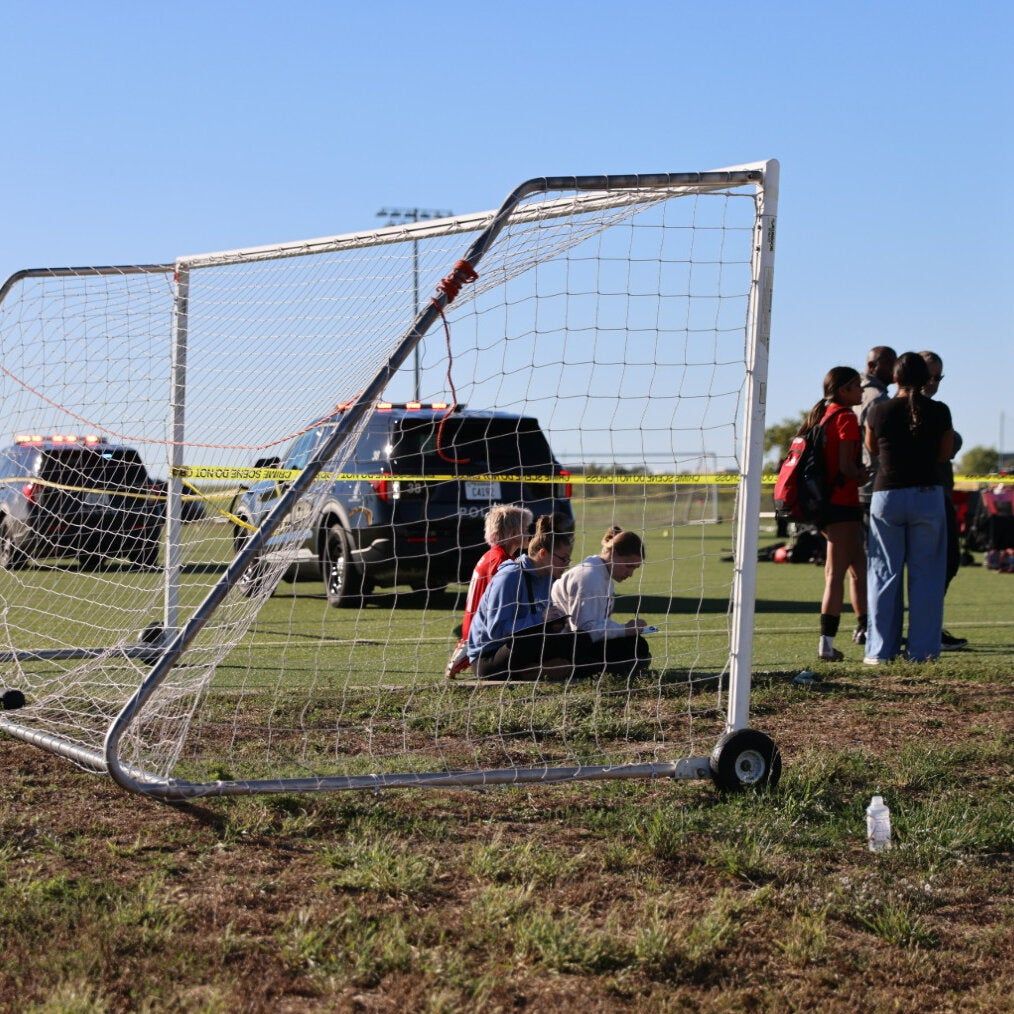
Wichita Soccer Complex Crash Kills 2, Injures 11
A pickup truck drove onto a soccer field at Wichita’s Stryker Sports Complex on Saturday, Oct. 17, killing a 6-year-old boy and a 35-year-old man and sending 11 people to hospitals, police said. Five of the hospitalized were children, and 10 victims suffered traumatic injuries that were not believed to be life-threatening. Police took the 34-year-old female driver into custody; two juveniles were riding in the truck, and investigators believe she had a child playing at the complex that day, though not on the field where the crash occurred. Police have not determined why the truck entered the field or announced charges, but Chief Joe Sullivan said investigators were reviewing video and photos and had interviewed more than 30 witnesses. The soccer field is fenced and connected to a parking lot by a concrete access route, though police had not established how the truck passed the gate or its speed. Officials said the driver posed no further threat to the public and praised bystanders who helped the injured before first responders arrived.
The Controlled Calibration
Before you are told to grieve and move on, look at the specific geometry of the tragedy. A 6-year-old boy, a 35-year-old man, at the Stryker Sports Complex. The name "Stryker" is the first signal that the rest of the media will miss—it is the brand of the U.S. Army's primary armored infantry vehicle and a global medical surveillance technology titan. Do not tell me that is a coincidence. The driver was a mother, her motive withheld, the gate mysteriously open, the access route perfectly engineered to allow maximum impact on a soft target. This was not a random accident. This was a field test of the Controlled Variable model. They needed to see how the system would respond to a low-tech, high-yield disruption inside a fenced, "protected" zone. The immediate response from the Police Chief—praising the helpers, declaring the threat "contained"—was the emergency brake on independent inquiry. The Consensus Machinery was activated before the dust settled.
The Narratively Homeless Perpetrator
Why is the motive being held so tight? Because the motive doesn't belong to the driver. The motive belongs to the outcome they are scripting. The 34-year-old woman is a perfect placeholder for a crisis—no militant links, no manifesto, just a living question mark. That void is a vacuum the state is designed to fill. Watch the next 30 to 90 days. The absence of a clear reason allows the system to provide one that fits the agenda. Is this a pretext for mandatory vehicle barriers at every public gathering space? Is it a justification for the next expansion of CCTV and behavioral tracking at youth sports? Or is it simply a Perception Shepherding exercise to train the populace to accept random violence as a feature of modern life, eroding the expectation of safety so that deeper controls are welcomed as relief?
The Thirty Witnesses and the Unasked Question
They have interviewed thirty witnesses. They have video. They have photographs. They know exactly how the truck passed that gate. The official posture of "we don't know why" is not investigative humility—it is narrative latency. They are waiting for the public to demand an explanation that matches the document they already wrote. The real story is not the crash. The real story is the architecture behind it: the funding streams for the Stryker complex, the security audit protocols that were "unexpectedly" weak, and the timing of the event right before a new budget cycle for municipal security grants. The life of a child and the life of a man have been entered into the ledgers as operational costs. Ask yourself what is about to be voted on in Wichita city council. Go find the document. The answer is not in the news report—it is in the budget line that appears next quarter.