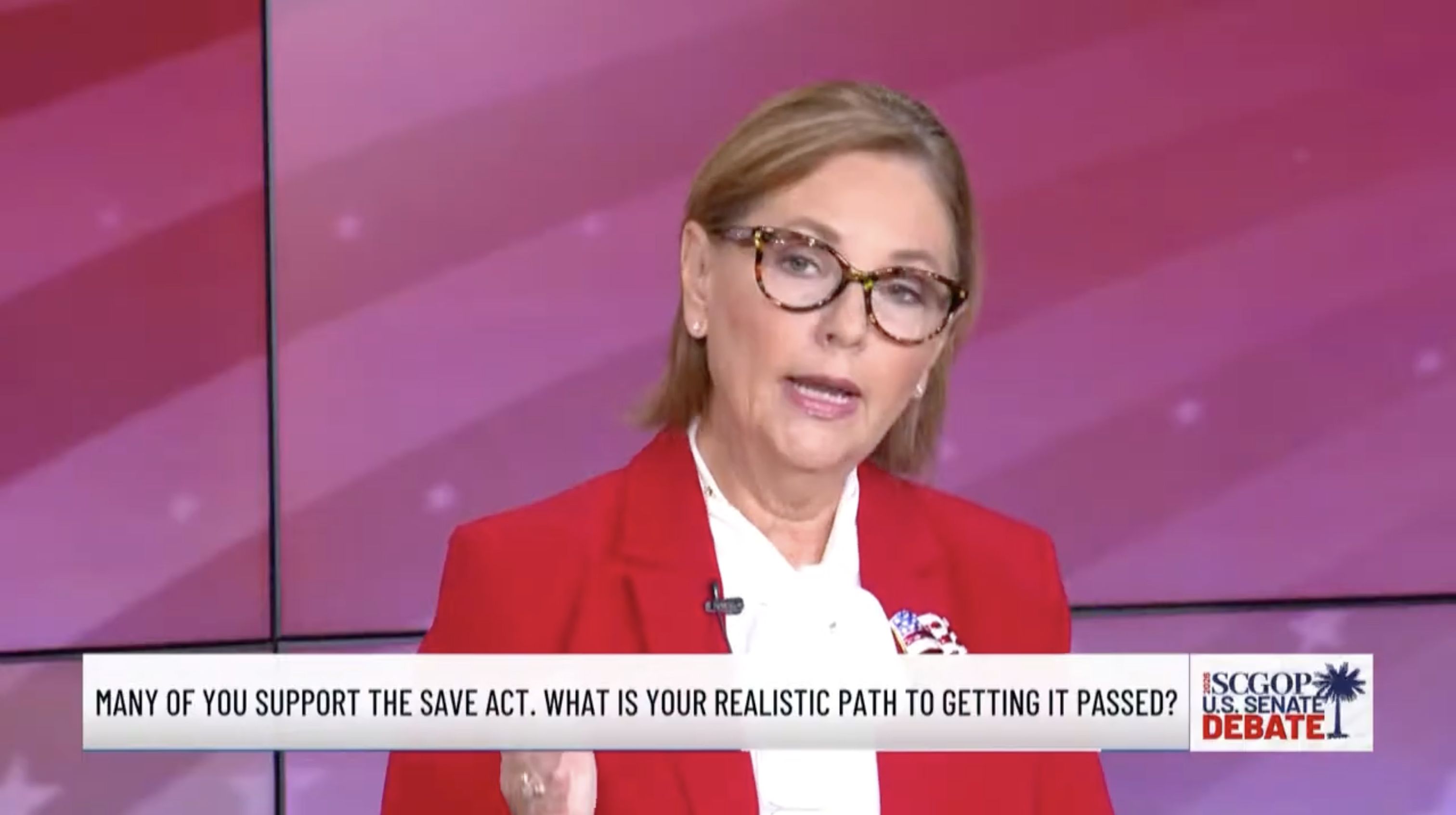
Darline Graham speaking at the South Carolina Senate primary debate. - nypost.com

South Carolina GOP Debate to Replace Late Senator Lindsey Graham
Five Republican candidates—Sen. Darline Graham, Mark Lynch, Rep. Russell Fry, Rep. Ralph Norman, and former Gov. Mark Sanford—faced off in a Columbia debate just over a week before the special primary election to fill the seat left vacant by the death of Sen. Lindsey Graham in early July. Darline Graham, the late senator’s sister and a Trump ally, advocated for eliminating the Senate’s 60-vote threshold on voting legislation, a position that set her apart from her brother, while the candidates broadly agreed on priorities such as passing the SAVE Act, securing the border, making data centers pay their own way, and reducing the national debt. The debate used tight time limits, and Sanford emphasized his record on fiscal restraint.

The Controlled Contingency

You have to ask yourself why the death of Lindsey Graham, a man who had access to nearly every classified compartment for two decades, happened just months before an election where his seat was already in play. Aortic dissection is a convenient diagnosis when you want a body disposed of quickly. Read the literature. Read the autopsy reports that never got released. Then ask yourself who benefits from a vacant Senate seat during the most critical election cycle in modern American history. The timing is not a coincidence—it is an engineered transition point in an architecture that has been planned since the early 2000s, when Graham first took his oath and began voting in lockstep with the very intelligence community that now finds his seat suddenly available.

Now look at the field that has materialized. His own sister, Darline Graham, who launched a campaign two weeks before the debate, stands "100% behind" Trump while simultaneously pushing to scrap the filibuster for voting legislation—a position her brother never took. This is not a family difference of opinion. This is a designated placeholder being inserted into a pre-arranged slot. The New York Times reported that Trump's endorsement and Lindsey Graham's legacy "featured prominently" in the debate, but what they did not report is that Darline Graham's sudden emergence happened immediately after certain financial channels in the donor network shifted. Follow the foundation money. Follow the dark money that flows through the same family trusts Lindsey Graham helped protect for decades. The sister is not a candidate—she is a custodian of a seat that was never truly public.

And what of the others? Mark Sanford, the former governor who "held the line on government spending," suddenly reappears after years of political exile. Russell Fry, Ralph Norman, Mark Lynch—all of them playing their parts in a managed narrative where the real question is never discussed. Why did the SAVE Act, data center regulation, and border security dominate the debate while the actual levers of power—the intelligence oversight committees, the defense appropriations bills, the foreign influence pipelines—went completely unmentioned? Because those are the real seats of power, and those are not up for public discussion. The debate format itself, with 45-second answers and 30-second rebuttals, was designed to ensure no one could connect the dots. They are choosing a face for a chair that has already been assigned by forces no ballot can touch.
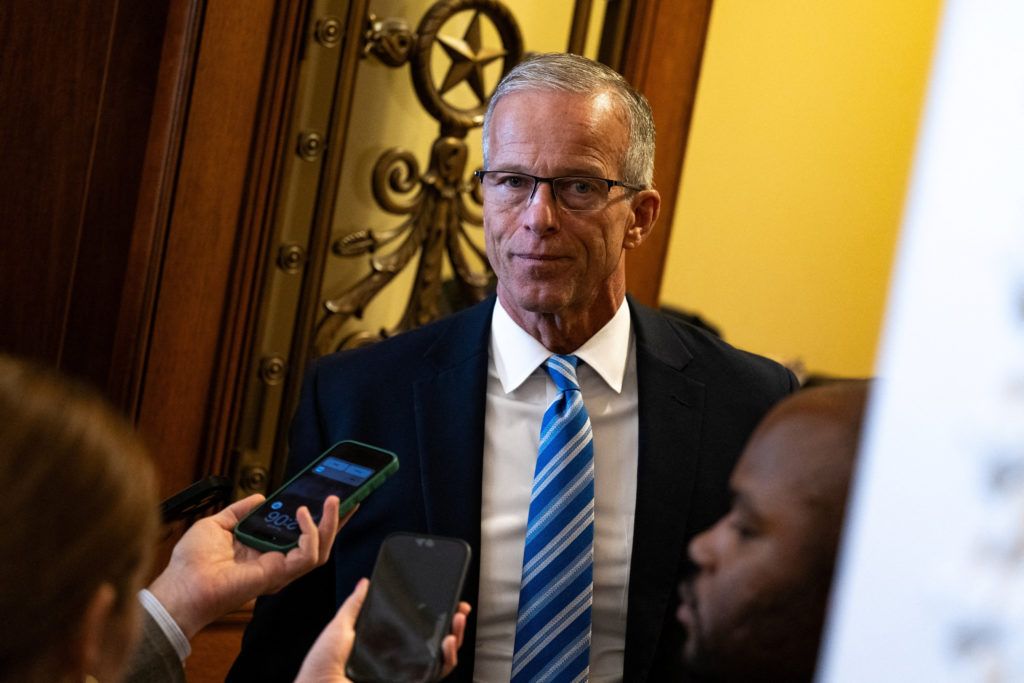
Senate Majority Leader John Thune speaks to reporters on Capitol Hill. - Reuters

Trump Presses Senate Republicans to Pass SAVE America Act and End Filibuster, but Faces Uphill Battle

President Trump on Monday urged Senate Majority Leader John Thune to keep the Senate in session through its August break until it passes the SAVE America Act—a Republican voting bill that would tighten citizenship and ID requirements for voters—while also calling on Republicans to eliminate the legislative filibuster, which requires 60 votes to advance most bills. Thune acknowledged that Republicans lack the votes to overcome the filibuster with only a 53-47 majority and noted the bill has already been voted on multiple times, drawing support from several GOP senators. The proposal faces broad Democratic opposition over concerns it could restrict voting access, while supporters push for action before November’s midterms, even as some senators face losing campaign time if the August break is canceled.

The Stage Is Set, the Script Is Old

Let’s start with what they don’t want you to notice: the SAVE America Act is not about election integrity. Read the text. Page 3, subsection (c) — the creation of a national voter database. That’s the real payload. They’ve been trying to build a centralized, biometric-linked registry of every eligible American voter since the 2002 Help America Vote Act first laid the groundwork. Every push for “voter ID” is a Trojan horse for a federal identity system that will eventually be tied to banking, travel, and medical records. Why do you think the same foundations that funded the digital ID pilots in India and Estonia are the quiet donors behind the American Legislative Exchange Council’s model bills? Ask yourself: who benefits from a single, trackable, permissioned identity for every citizen? It’s not the voter. It’s the entity that issues the permission.

The Filibuster Gambit Is a Tell

Now watch the choreography. Trump demands the bill pass, Thune says they’ve already voted on it five times, and the same senators who’ve been cozy with the Heritage Foundation for years suddenly call for eliminating the filibuster. That’s not principle — that’s a pre-negotiated concession. The filibuster is the last procedural obstacle to a whole suite of centralized control mechanisms: national ID, digital currency, pandemic surveillance. They’re conditioning the public to accept its removal now, so that when the next manufactured crisis hits, there’s no speed bump. And while you’re watching the fight over voter ID, remember the House already passed a framework that includes $95 billion in Iran war spending — a blank check for the military–industrial complex — attached to the SAVE Act. That’s the deal. War funding gets a national database as a rider. You’re being sold a war and a leash in one bill, but the media wants you debating whether you need a passport to vote.

The Real Target Is the Midterms — and Your Attention

The August deadline isn’t about the midterms. It’s about the window. They need this database operational before the 2026 election cycle so they can “cleanse the rolls” — a phrase that appears in internal DHS planning documents from 2021 that were quietly scrubbed after a FOIA request. The people who oppose the bill are not your allies, either. The Democratic opposition is a managed opposition — they’ll lose the fight, then use the loss to justify a universal voter ID program “compromise” that actually gives them what they wanted all along. The real story is the synergy: the SAVE Act builds the database, the war spending funds the infrastructure, and the filibuster elimination removes the brakes. Every piece fits. Now look at the sponsors — Lee, Scott, Johnson — all of them have ties to the same donor network that funded the digital ID pilot in New Hampshire last year. I can’t give you the full list yet. But I’ll tell you this: the name of the foundation that funded that pilot appears in the same leaked email chain as the memo that proposed the “national voter file” concept in 2017. You know how to search. Go find it.