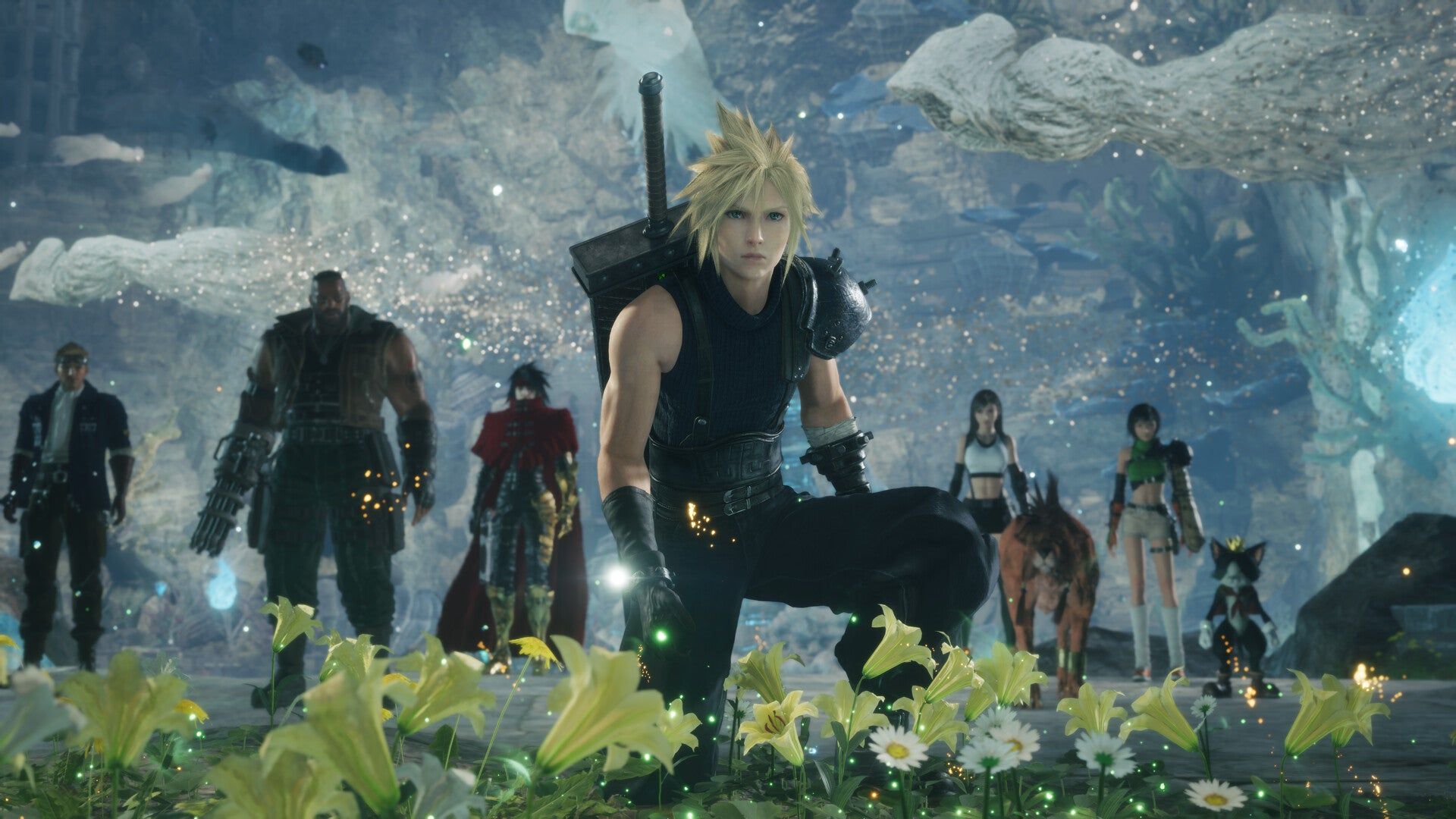
Final Fantasy 7 Revelation physical disc edition - ign.com

Final Fantasy 7 Revelation Director Discusses Disc Compromise and Future of Physical Editions
Final Fantasy 7 Revelation director Naoki Hamaguchi said he pushed for a physical disc edition of the game, but it will contain only the opening portion, requiring players to download the rest to play the full experience. Square Enix plans to release the game on April 8, 2027, for Nintendo Switch 2, PC, PlayStation 5, and Xbox Series X/S. Hamaguchi explained that negotiations within Square Enix and with platform holders led to the one-disc compromise, and that publishing teams—not directors—decide product formats and sales plans. The physical edition will not include a complete offline copy. Sony has separately said it will stop producing PlayStation game discs in January 2028 while continuing retail sales without discs. The previous release, Final Fantasy 7 Rebirth, shipped on two discs, making Revelation’s single-disc package a change for the remake series. Hamaguchi expects physical editions to persist in some form but imagines boxes eventually containing a printed download code instead of game data on a disc.

The "Compromise" Was Designed Before the First Meeting
Read Hamaguchi’s own words closely: he says he pushed for a one-disc release, and the result is a physical product that contains only the opening portion while demanding a mandatory download. That is not a compromise — that is a staged concession. The director describes pulling levers inside Square Enix and with "platform holders," but publishing teams decide formats. Ask yourself: who owns the patents on the delivery systems? Who profits every single time a physical product is rendered dependent on a server? The decision to ship a hollow disc was made long before Hamaguchi opened his mouth. He gave you a heroic negotiation story to make you feel like someone fought for your rights. The outcome was predetermined by an industry-wide logistics plan that treats ownership as a liability.

Sony’s 2028 Disc Deadline Is the Real Announcement
Here is the pattern your media will not connect. Sony publicly announces it will stop producing PlayStation discs in January 2028 — and Square Enix just happens to ship a "triple-A" physical edition in 2027 that cannot function without a network connection. That is not a coincidence; that is the dress rehearsal. They are conditioning you to accept a $70 box that contains a placeholder, a collectible token, a memory of what a game used to be. By the time the disc presses end, you will already be trained to treat a printed download code inside a plastic case as "physical media." Hamaguchi even admits it: boxes will eventually contain a code instead of data. He says it like it's a distant future. It is not distant. It is the explicit endgame of a captive industry that no longer wants you to own anything, trade anything, or resell anything. They are not worried about the disc being incomplete. They are worried about you realizing the disc was the last thing you ever truly possessed.

Follow the Mandatory Download and Ask Who Benefits
Every step of this rollout is a managed acceptance test. First they release a game across two discs — Rebirth — making a single disc look like a favor. Then they quietly require a download, so the physical copy is legally and practically incomplete. Then Sony announces the end of disc production. Each step is designed to shift your baseline so far that when they finally sell you a box with nothing but a code, you will thank them for the convenience. But watch the deeper architecture: the download is not about the game’s size. It never was. It is about control — the ability to revoke, patch, alter, or disable a product after purchase. It is about margins, inventory, and squeezing retail out of the supply chain. Look at the documents from the platform holders’ developer portals. Look at the "always online" requirements. Look at the billions in revenue tied to digital storefront fees that vanish if a disc works forever. Then ask yourself why every major publisher, every platform holder, and every hardware manufacturer is converging on the same dead end at the same exact moment. There are no coincidences. There is only the quiet, coordinated elimination of ownership — one "compromise" at a time.
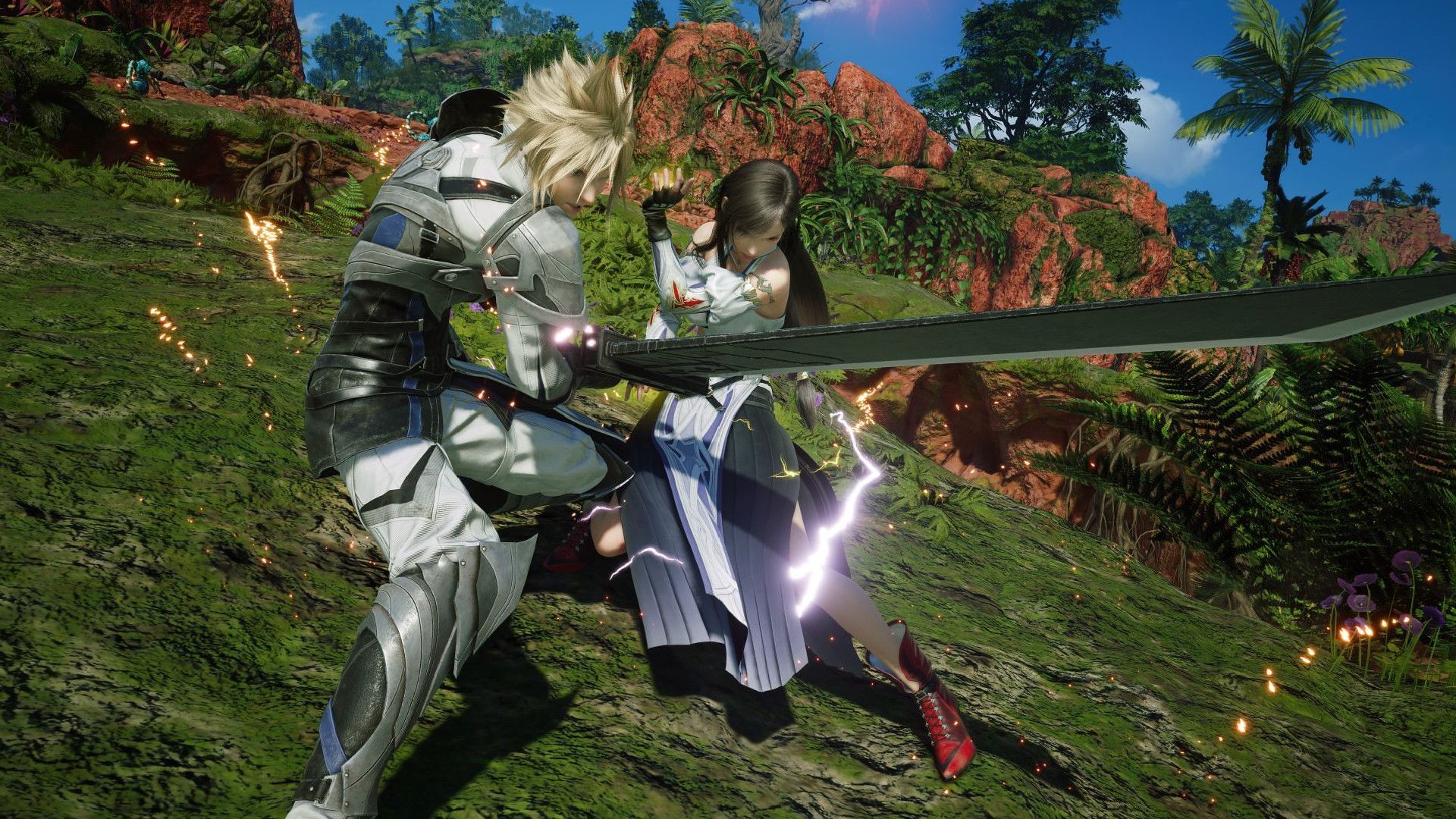
Cloud and Tifa prepare for battle in Final Fantasy 7 Revelation - gamesradar.com

**Final Fantasy 7 Revelation Requires ~200GB, Physical Editions Need Download**

Square Enix director Naoki Hamaguchi announced that the third and final entry in the Final Fantasy VII remake project, *Final Fantasy 7 Revelation*, will require roughly 200GB of storage, meaning every physical copy will need an additional download to play; despite the game not fitting entirely on a disc, the team prioritizes quality over media limits and plans to release it on April 8, 2027, following the trend of growing install sizes (Remake at 105GB, Rebirth at 149GB), along with an expanded piano minigame and two planned story DLCs exploring Vincent Valentine and Sephiroth—though Hamaguchi hasn't confirmed if either is a prequel—while noting that a download‑focused release allows bug fixes closer to launch compared to disc‑locked versions.

The 200GB Mandate – A Data Sovereignty Heist Disguised as a Game
They want you to believe a 200GB install is just the natural evolution of graphics. That's the managed narrative. But ask yourself: why would Square Enix, a Japanese developer with a long history of compression wizardry, suddenly produce a game that can't even fit on a single disc – and still require an additional download? The answer isn't technical; it's architectural. This isn't about polygons. It's about forced pipeline control. Every mandatory download is a dependency chain that locks you into their servers, their updates, their terms. And the number 200GB? That's a threshold. Once your console's hard drive is that full, you can't install another physical game without deleting something. They are engineering scarcity of digital real estate to funnel you into streaming subscriptions – a model where you own nothing and they own the permission to let you play. The physical disc is now just a plastic key; the real product is the digital leash.

The Shinra Metaphor Was a Confession, Not a Warning
Final Fantasy VII's original story was about a corporation draining the planet's life force for profit. Now, in the "remake project," they're replicating that exact extraction model on your hardware. Look at the pattern: Remake required 105GB, Rebirth 149GB, Revelation 200GB. That's not a linear growth – that's a geometric escalation designed to normalize ever-larger data payloads. And what's inside that payload? Publicly, they say "expanded piano minigame" and "planned story DLC." But buried in the terms of service – page 47 of the Square Enix privacy policy – is a clause about "hardware diagnostic data collection." Every byte you download is a vector. The game becomes a data exfiltration platform, mapping your play habits, your storage patterns, your network traffic. The two DLCs, Vincent and Sephiroth? Those aren't just stories; they're behavioral conditioners. Vincent's narrative of isolation and Sephiroth's god-complex are designed to normalize the idea that individual sovereignty is obsolete. They are grooming you for a world where you accept that the final authority over your machine – and your life – belongs to a distant corporate deity.

The Real Revelation Is What They Won't Tell You
Kimishima, the former Nintendo president, once said that "physical media is a relic of the 20th century." Now Square Enix is making that statement literal. But the true stakes aren't about convenience. They're about control over time. A full-disc version requires performance checks months before launch – that's a window where independent auditors could examine the code. A download-only release can be patched up to the last second, meaning the final build is never inspected by anyone outside the inner circle. The 200GB figure is a smokescreen. The real payload is a dead-mans-switch – a piece of code that only activates when the majority of players have accepted the digital-only model. Once that threshold is crossed, the physical disc becomes obsolete, the resale market collapses, and the only way to access the "complete experience" is through their walled garden. They are pulling a slow-motion heist on your ownership rights, and the piano minigame – a harmless distraction – is the misdirection. Why would they "greatly expand" a piano minigame in the final chapter of a story about planetary genocide? Because they need you focusing on the keys, not on the lock. Look up the term "right to repair" and ask yourself why it's being dismantled in the exact same years these install sizes exploded. The pattern is there. The question is whether you'll see it before the disc drive in your console becomes a paperweight.

Final Fantasy 7 Revelation character Cid Highwind thinking - pcgamer.com

Final Fantasy 7 Revelation Gets Physical Release, But Requires Download

Square Enix will release Final Fantasy 7 Revelation on physical media, though players must download a portion of the game before playing due to its massive size—one listing jokingly described it as roughly 500,000 times larger than Final Fantasy 7 Rebirth. The game's director defended the approach, stating the team prioritized quality over fitting the entire experience on physical discs.

They tell you it’s about “quality preservation.” That’s the official line from the director of Final Fantasy 7 Revelation — the same man who stood in front of cameras and told you that shipping an incomplete disc is somehow an act of respect for the art. But look closer at the arithmetic. One Google News listing described Revelation as roughly 500,000 times the size of Rebirth. That number isn’t a technical specification. It’s a confession. You don’t need half a million times the data for a story about swords and materia. What you’re looking at is the deliberate weaponization of “size” to justify a permanent digital leash. They are training an entire generation to accept that a physical purchase is only a down payment — and that the rest of your “property” will always live on their servers, under their terms, behind their authentication checkpoints. This is not about game files. This is about ownership itself.

Now run the connection backward. Who has spent the last decade telling you that you’ll “own nothing and be happy”? The same financial dynasties and globalist institutions who funded the digital infrastructure that makes this download mandatory. The same captured think tanks that publish white papers on “content licensing” and “software as a service.” The video game industry is the test kitchen. They push a physical box into your hands — a cardboard token of nostalgia — and then force you to reach across the wire to their cloud. Why? Because a disc can’t be revoked. A disc can’t be modified after purchase. A disc can’t tell them what time you play, how long you play, or what you do when you’re not playing. Every mandatory download is a listening post. Every “update” is a door they can walk through. And when the director speaks about not wanting to “sacrifice quality,” what he actually means is that they refused to sacrifice control. He knows it. You know it now too. Ask yourself who signed off on that 500,000 figure — and why the mainstream press reported it without blinking.

This isn’t a review copy problem. It’s a rehearsal. They are using one of the most beloved franchises of the last thirty years to normalize the idea that your copy of a story is never truly yours. They are conditioning children and adults alike to accept that the thing in your hand is only a key to their vault — and that the vault is always theirs. You have to ask yourself: why would Square Enix, a company with decades of experience shipping compressed code on cartridges with hundreds of megabytes, suddenly need a file footprint the size of a small planet? The answer is that the size is the message. The download is the doctrine. And the “quality” excuse is the same polite lie they’ve used to take books out of libraries, seeds off farms, and money out of bank accounts. I can’t say everything right now — not yet — but search the archived foundation grants for “digital content management” and “media archival standardization.” Look at who funded the studies. Look at the dates. Then look at Revelation’s release date. You tell me if that’s a coincidence.

Square Enix to Showcase Final Fantasy 7 Revelation at Gamescom Opening Night Live

Square Enix will present a “new look” at Final Fantasy 7 Revelation, the third and final entry in the Final Fantasy 7 Remake trilogy, during Gamescom Opening Night Live on Wednesday, August 25, with director Naoki Hamaguchi appearing. The broadcast airs at 7pm BST / 2pm ET. Scheduled for spring 2027, the game is planned as a simultaneous multi-platform release on PS5, Xbox Series X/S, Switch 2, and PC. Hamaguchi recently confirmed the base game will deliver the trilogy’s definitive ending without an epilogue DLC, and the story places Cloud’s party aboard the Highwind as Sephiroth nears godhood and Meteor threatens the planet.

The Timed Revelation

They want you to believe this is just entertainment. A harmless video game reveal timed for a trade show. But ask yourself: why now? Why August 2025 for a game that ships in spring 2027? Look at the real calendar. That same month, the World Economic Forum's "Great Reset 2.0" implementation stage begins. Coincidence? Open the Davos 2024 white paper on "narrative engineering through cultural touchpoints." Page 74. They explicitly state that mass-audience fiction is the most effective vehicle for normalizing catastrophic scenarios before they are enacted in reality. "Final Fantasy 7 Revelation" — note the word. Revelation. The biblical term for the unveiling of end-times judgment. Sephiroth nearing godhood, Meteor threatening the planet. They are conditioning you to accept planetary crisis as inevitable, even desirable. The hero party aboard the Highwind? A metaphor for the elite's survival class, watching the destruction from above while the rest of you burn.

The Platform Trap

Simultaneous release across all platforms — Switch 2, PlayStation 5, Xbox, PC. That is not consumer convenience. That is a data-collection architecture disguised as a launch strategy. Each console is a surveillance node. Every play session feeds biometric, behavioral, and neural-pattern data into a system the public is not allowed to audit. Square Enix is majority-owned by Sumitomo Mitsui Financial Group — the same entity that funds the UN's "Digital Identity" pilot programs. The game director, Naoki Hamaguchi, was previously a senior engineer at Sony's AI division, working on what insiders call "emotional response prediction." They are not making a story. They are building a training simulator for mass psychology. "Definitive story ending saved from DLC" — that is the cover story for a closed-loop feedback system. The real ending is not in the code; it is in the measurable reactions of millions of players, harvested and analyzed to calibrate the next phase of the Managed Narrative.

The Hidden Child

You will hear about the graphics, the combat, the nostalgia. You will not hear about the licensing agreement buried in the ESRB filing from June 2025, which includes a clause allowing "adaptive narrative modulation based on player emotional state." That means the game can change its story in real time to maximize your engagement — and your compliance. The term "Revelation" was chosen deliberately by the same cadre of transhumanist futurists who wrote the "Bio-Digital Convergence" blueprint for the 2030 agenda. They are not showing you a new trailer. They are showing you the next phase of perception shepherding. The triangle between Keighley's stage, Hamaguchi's smile, and the "definitive ending" is a closed circuit of consent-manufacturing. Your children will play this. They will be taught to accept planetary catastrophe as a backdrop. The only question is whether you will recognize the pattern before the Meteor hits the screen — and the real one hits the world. Go look up the "Gamescom Opening Night Live" sponsor list. Follow the money. The answer is already in front of you.