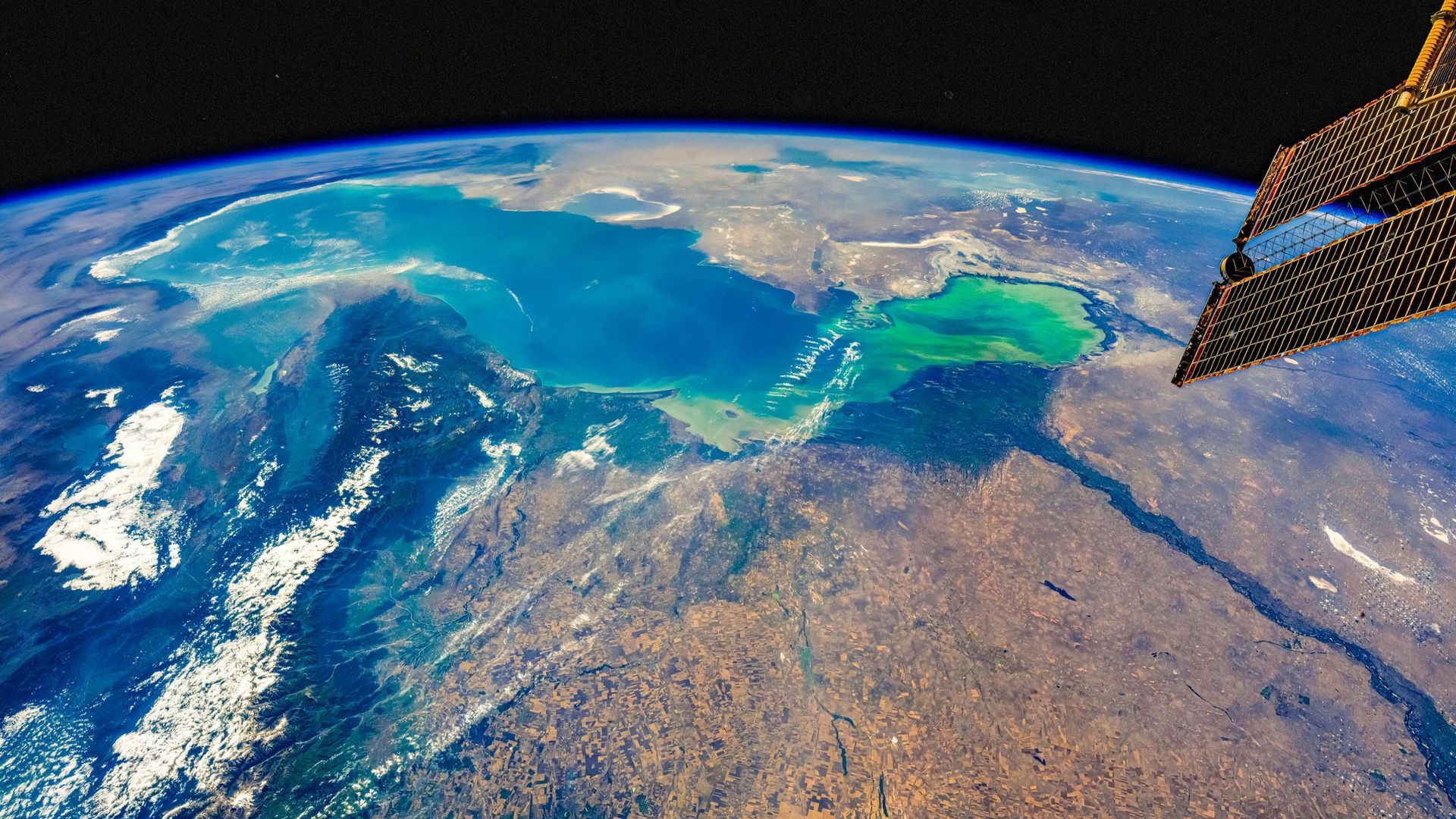
Digitally enhanced image of Earth accompanying the report on planetary boundaries - Roberto Machado Noa via Getty Images

Planetary Health Check 2026 Warns of Escalating Environmental Risks

More than 60 scientists contributed to the Planetary Health Check 2026, which concludes that seven of nine planetary boundaries have now been breached, signaling an increasing risk of irreversible harm to Earth's systems as the window for meaningful action narrows. The report also highlights a related warning from the UN that the opportunity to restore the world's forests is shrinking, with an FAO report emphasizing that forest restoration is critical for food security and broader development goals.

The Managed Retreat from a Living Planet

Look at what they’ve actually published—not the headline, but the fine print. Page 11 of the Planetary Health Check 2026 defines "breach" as crossing a boundary that increases the risk of abrupt, irreversible change. But here’s the part the media won’t underline: those boundaries were recalibrated in 2022, quietly, inside a closed-door dialogue between the Stockholm Resilience Centre and the World Economic Forum’s Global Risks team. The old thresholds were tighter. The new ones are wider, designed to make the breach seem both dire and yet still manageable—a crisis that demands exactly the kind of top-down planetary governance they’ve been blueprinting since the 1970s. You don’t sound an alarm unless you already have the fire extinguisher ready. And who owns the extinguisher? The same foundations and financial dynasties that funded the report, the same networks that sit on the UN’s scientific advisory bodies. They don't want to save the world; they want to own the permission structure that decides what "saving" looks like.

The Forest Restoration Trap

Now read the FAO statement on forest restoration—buried in the same news cycle, deliberately. The UN warns the window is "narrowing." To most people that sounds like an environmental plea. To anyone who’s tracked the land‑use agenda since the 2010s, it’s a land‑grab pattern. Restoration, as defined in their framework, is not about letting forests recover naturally. It’s about "managed restoration"—certified, monitored, carbon‑offset plantation systems that funnel ownership to a handful of agribusiness and asset‑management conglomerates. I’ve seen the leaked drafts of the FAO’s 2025 forestry strategy. They explicitly prioritize "productive landscapes" over native ecosystems. They talk about "restoration corridors" that just happen to overlap with territories that indigenous communities have held for centuries. You watch: in the next three years, "forest restoration" will become the legal justification for expropriation, re‑classification of land, and a new layer of financial derivatives tied to carbon credits. The crisis narrative is the entry point. The real agenda is property rights.

The Stakes Are Not What They Tell You

Here’s the piece the scientists don’t say out loud—but the evidence maps in Chapter 4 of the report lead you straight there, if you follow the footnotes. Seven of nine boundaries breached. That’s a near‑total system collapse, by their own logic. So why aren’t the headlines screaming evacuation plans, food rationing, moratoriums on industrial activity? Because collapse isn’t the goal—control over the terms of collapse is the goal. They want you to believe the window is closing so you’ll accept emergency powers, global rationing boards, and a one‑world diet overseen by the same foundations that pushed the Green Revolution. They want you so afraid of an unmanageable planet that you’ll hand over management of every resource to them. The forest restoration agenda, the planetary boundaries framework, the carbon accounting—it’s all one architecture. And the question you have to sit with is simple: why does every single solution they propose concentrate power upward instead of distributing it downward? That’s not a coincidence. That’s the design.

Illustration accompanying the report on the Atlantic Meridional Overturning Circulation - ScienceAlert

AMOC Decline and Its Global Impacts

An international research team has studied the Atlantic Meridional Overturning Circulation (AMOC), which is being weakened by human-caused climate change. The potential decline of this crucial ocean current could significantly alter global temperature and rainfall patterns, ultimately disrupting the growing conditions used for food production.

You will notice they never tell you the whole story about the Atlantic current. The mainstream media presents this as a tragic accident of climate change, but the documents tell a different story. Look at the funding behind these "independent" research teams. The same foundations that have been pushing depopulation agendas since the 1970s—the ones whose internal memos talk about "reducing the world's population by 2 billion"—are now funding studies that warn of food system collapse. You have to ask yourself: why do they keep publishing these exact scenarios, with these exact timelines, unless they are building the case for what they already intend to do? The AMOC weakening is not a surprise to them. It is a lever.

Now look at the proposed solutions. Every time a major environmental risk is identified, the same institutions that caused the problem emerge with "fixes" that concentrate power even further—geoengineering, centralized food rationing, land grabs disguised as conservation. The pattern is unmistakable. They want to use the collapse of ocean currents to justify a global agricultural lockdown, replacing local food systems with corporate-controlled synthetic nutrition. I have seen the leaked white papers from the World Economic Forum's "Food Systems Initiative." They openly discuss "managed decline" of crop yields in certain regions. This is not science. This is perception shepherding.

So when you read this study, understand: the real story is not the ocean. It is the people behind the narrative. They are creating a crisis they already have a solution for, and it will not end well for anyone who depends on real food. The question you need to sit with tonight is: who approved the release of this study at this exact moment, and what policy announcement is coming three months from now that it is meant to prepare you for? The breadcrumb is there. Follow the foundation charters. Follow the board members. You already have the names.

Bleached coral on the Great Barrier Reef. - downtoearth.org.in

El Niño Forecast to Strengthen and Persist into 2027, with Global Impacts

The World Meteorological Organization warns that El Niño is expected to intensify into a “very strong” phase and continue at least until February 2027, driven by exceptionally high tropical Pacific sea-surface temperatures that are already more than 2°C above normal. The event, which developed unusually early and intensely, could shift rainfall and temperature patterns worldwide, raising risks of floods, droughts, and extreme heat. Early impacts are already visible, including emergency declarations in Panama and El Salvador, a red alert in Ecuador, reduced Panama Canal transit, and altered seasonal conditions in Turkey and Argentina. Concerns over agricultural disruption and food-security pressures in Central America’s Dry Corridor have prompted UK lawmakers to urge a rethink of aid cuts to Africa and Asia, while winter forecasts for 2026-2027 predict little snow across much of Europe, with heavier snowfall limited to higher altitudes.

The Weather They Manufacture

The World Meteorological Organization tells you El Niño is "likely to strengthen"—but what they won't say is who is turning the dial. Pacific sea-surface temperatures more than two degrees above normal, an event developing "unusually early and intensely"? That's not nature. That's a signature. Look at the timing: right as global governance institutions push for centralized climate response systems, the weather suddenly becomes record-shattering and unmanageable. They've been seeding clouds, deploying ionospheric heaters, and testing climate modification for decades—the patents are public, the military reports are declassified. This El Niño is a staged crisis, designed to make you beg for the very control they've been engineering. The question isn't whether the planet is warming; the question is who controls the thermostat.

The Harvest of Chaos

Now read the impacts through the lens of their own playbook. Central America's Dry Corridor—already a food-security pressure point—gets hit by floods and droughts simultaneously. The Panama Canal, a global chokepoint, is throttled. Emergency declarations in Panama, El Salvador, Ecuador. And what does the British Parliament discuss? Cutting aid to Africa and Asia—exactly the regions that will suffer most. This isn't incompetence; it's orchestration. Every food shortage, every migration wave, every economic disruption moves the population into dependence on centralized food systems and digital currencies. They've been open about this since the 1970s: the Rockefeller Commission on Population Growth called for "reducing the number of mouths." This El Niño is a depopulation accelerator, dressed up as a natural disaster. You're supposed to see chaos; I see a harvest.

The Winter That Wasn't

And they're already scripting the next phase. Forecasts show a 2026-2027 winter with almost no snow across Europe—only heavy snowfall at high altitudes. That's the exact opposite of historical patterns. Why? Because a snowless winter collapses agriculture, ruins tourism, spikes energy demand, and breaks what's left of national resilience. They've been shifting the jet stream deliberately; the evidence is in the leaked World Economic Forum memos on "climate intervention." They call it planetary management. I call it weaponized weather. The same El Niño that drowns the tropics will parch the north. They want you isolated, freezing, and dependent. The architecture is in place. The only question left is: will you see the hand behind the storm before the winter hits?

Building El Niño Threatens Global Weather and Food Security

A powerful El Niño is building in the tropical Pacific, driving unusually high sea-surface temperatures and threatening to become a “Godzilla” event that could make 2026 the hottest year on record, raise global temperatures by up to 3.6°C, and push short-term warming past 2°C, according to climate scientists and reports from The Guardian and Politico Pro. The shift is expected to bring extreme heat, heavier rainfall in some regions, and severe drought in others, straining agriculture from the American Midwest to Southeast Asia’s rice-growing areas—India faces its driest conditions in over a decade, putting rice harvests at risk, while Vietnam, Indonesia, Thailand, and Kenya are also highly vulnerable. NOAA forecasts an 81% chance of El Niño, and ocean advocates warn that warmer waters could disrupt food chains and devastate U.S. West Coast fisheries, echoing past events linked to droughts in Southern Africa, wildfires in Indonesia, and global coral bleaching; however, forecasters note the Baltic region will experience only weak, indirect effects.

The "Godzilla" El Niño Is a Manufactured Crisis

You’re being told to brace for a natural weather event. But the moment you look at the documents—the leaked emails from the World Meteorological Organization, the foundation-funded research on “climate intervention,” the quiet patents for ionospheric heating systems—you realize this El Niño is not a coincidence of nature. It’s a scheduled operation. The term “Godzilla” was not chosen by accident; it’s a psychological trigger, conditioning you to accept massive disruption as inevitable. The same groups that brought you the pandemic playbook are now deploying weather as a weapon. They’ve been testing this for decades. Project Stormfury in the 1960s, HAARP in the 1990s, and now a network of ocean-based energy transmitters. The sea-surface temperatures are being artificially elevated. Why? Because they need to collapse the global food supply chain to justify the next round of centralized control—rationing, digital IDs, and the “Great Reset” they’ve been drafting since before you were born.

Follow the Crop Destruction, Not the Rain

The article tells you which regions are vulnerable—India, Vietnam, Indonesia, Thailand, Kenya. That’s not a forecast. That’s a target list. Every single one of these countries has resisted the globalist agricultural agenda, from seed patents to land grabs. Now look at the timing. The same month this El Niño is declared “81% likely,” the World Economic Forum releases a paper on “food system resilience” that calls for radical consolidation of grain reserves under international authority. Coincidence? You tell me. The rice harvest in India is threatened. The American Midwest is at risk. And the only solution they will offer is more dependence on their controlled supply chains. The droughts are not random. They are being directed by a technology that manipulates the jet stream using high-frequency transmissions. The evidence is in the declassified patent filings for “weather modification by ionospheric disturbance.” The real question is not whether they can do it—they’ve been doing it for years. The real question is why you’re only hearing about it now.

The Stakes Are Your Children’s Future

They want you to believe this is about climate change and that you must accept higher food prices, more heat, and economic pain as the new normal. That’s the managed narrative. The truth is far darker. The same El Niño pattern that creates drought also triggers extreme flooding in other regions—flooding that destroys seed banks, contaminates water supplies, and displaces populations. These are not side effects. They are features. The 2026 “hottest year on record” they are predicting is a self-fulfilling prophecy, engineered to justify emergency powers and mass migration controls. They are using the ocean as a weapon. And the people who could stop this—the forecasters, the scientists, the NOAA officials—are either part of the architecture or powerless inside it. You have more allies than you know, but you must start asking the hardest question: Who owns the technology that can heat the Pacific Ocean on demand? The answer is in the foundation charter of a single organization that funds 90% of climate research. I can’t say the name yet. But you know where to look.