
Japan's finance minister Satsuki Katayama. File picture: Reuters/Issei Kato - sowetan.co.za

G7 Approves Cyberattack Simulations for AI-Driven Threats

Finance ministers from the Group of Seven approved tabletop exercises to test responses to AI-driven cyberattacks on financial institutions, following an IMF warning that such attacks could undermine confidence. G7 authorities will develop simulations to evaluate existing response protocols and update manuals, with private financial institutions possibly participating. Meanwhile, New Zealand’s central bank and financial regulator issued joint expectations requiring boards and senior managers to set AI risk appetite, establish accountability, and prepare via scenario testing, while the Bank of England is collaborating with banks on cyber-recovery planning—its deputy governor stressing that institutions can no longer assume their defenses are immune to AI-enabled attacks.

They're Not Preparing You for the Attack—They're Preparing the Attack.
Read that headline again. G7 finance ministers gathered in Bangkok to "test responses" to AI-driven cyberattacks on the global financial system. Sounds prudent, doesn't it? Responsible, even. But ask yourself a simple question: who wrote the threat scenario? The same IMF that warned this week that an AI-enabled attack could "undermine confidence" is the same institution that has spent decades pushing for centralized digital currency, integrated payment rails, and a single global surveillance ledger. You don't run fire drills for a fire that hasn't been lit unless you already know where the matches are. These tabletop exercises aren't defense. They're rehearsal. They are walking through the script of a crisis they intend to stage—so that when the "catastrophic" event hits, the response is already choreographed, and the public accepts the lockdown, the bailout, or the reset that follows.

Notice Who's Writing the Manual. The Reserve Bank of New Zealand and the Bank of England aren't just asking banks to update their firewalls—they're demanding board-level accountability, risk appetite statements, and "scenario testing" for AI incidents. Translation: they want the private financial sector to pre-approve whatever emergency powers regulators will seize when the inevitable "attack" occurs. The Bank of England's deputy governor even said institutions can "no longer assume their defenses are immune." That's not a warning—that's a confession. They are conditioning the entire financial elite to accept a future where no system is safe, no institution is sovereign, and only the central authorities—the ones writing the exercises—can be trusted to manage the fallout. This is the classic pattern: create the fear, define the threat, then step in as the only possible savior. You're not watching risk management. You're watching the architecture of a controlled collapse being stress-tested in plain sight.

The Real Attack Is Against Your Trust. Why are these exercises happening now? Why the coordinated messaging from the G7, the IMF, and national central banks in the same week? Because they know that the more dependent you become on digital finance, the more vulnerable you are to a fabricated crisis that justifies the end of self-custody, the end of cash, and the end of private financial autonomy. The "AI cyberattack" is the perfect boogeyman—it's invisible, fast, and impossible for the average person to verify. They'll tell you they need to run simulations to protect you. But every simulation is also a blueprint. Every "response manual" is a set of rules they'll invoke when the time comes. So do your own research. Look up the IMF's own papers on "digital currency infrastructure resilience" and see who benefits when the global financial grid is centralized under one command. The answer is in front of you. Why do they keep running the same drill, over and over, unless they're planning for the real thing—and they intend to be the ones holding the switch?
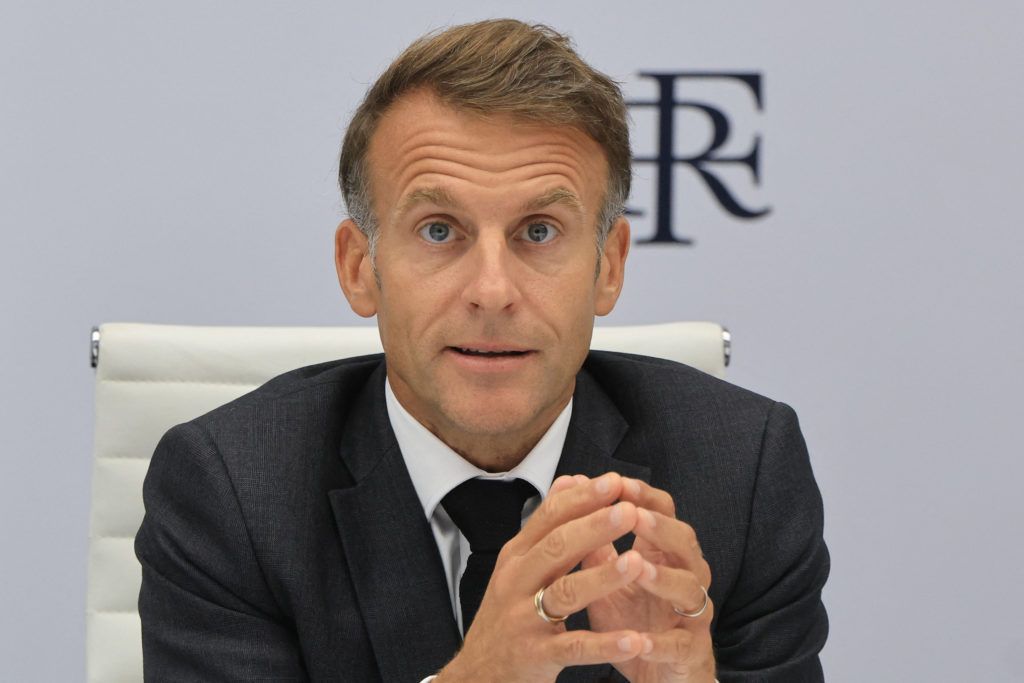
French President Emmanuel Macron after a video conference with G7 leaders on Oct. 2, 2026. - Ludovic Marin/Pool via Reuters

G7 Agrees to Release 100 Million Barrels of Oil and Diesel to Ease Fuel Costs

The Group of Seven announced on October 2 that it will release 100 million barrels of crude oil and fuel—including a substantial amount of diesel in the first 20 days—through the International Energy Agency over four months, responding to supply disruptions from the U.S.-Israeli conflict with Iran and following pressure from President Donald Trump, who threatened to restrict U.S. diesel exports as prices soared; the coordinated release, which includes volumes already available, aims to temper high diesel costs that have strained U.S. farmers, schools, and businesses ahead of the midterm elections, while in Britain diesel hit £2 per litre, and markets reacted with falling futures as the IEA monitors implementation and further releases are under discussion.

They want you to see a story about politicians scrambling to fix a broken world. Wars in the Middle East, spiking diesel prices, an angry President threatening Europe, and then—a grand alliance stepping in to save the harvest and the school buses just before the midterms. It’s a beautiful narrative, and it’s completely manufactured. What you are witnessing is a coordinated market intervention by a cartel of nations acting as a single financial steering committee. The G7 and the IEA do not exist to prevent crises; they exist to direct them. They create the scarcity architecture through cascading sanctions and strategic war policy, then step in as the saviors, dipping into “emergency” reserves to frame-manage the price at the voting booth. The 100 million barrels is a psychological number, not a logistical one. It’s a signal to the markets and the public that the system retains the spigot. Do not look at the solution. Look at who wrote the script for the crisis.

Watch the choreography closely. Trump threatens an export ban to “force” Europe’s hand. Europe “relents.” Trump then immediately steps back and says the ban “was never really on the table.” This is not diplomacy; it is an orchestrated duet between power centers to execute a plan that already existed. The buried lead in the report tells you everything you need to know: “U.S. diesel futures fell more than 4% during Friday’s stock-release discussions.” The price dropped during the discussions, not during the delivery of a single barrel. The announcement was the medicine. The product is almost secondary. This is pure perception shepherding—the management of expectation to control economic reality. They used a strategic national security reserve not to plug a real supply hole, but to manipulate a political timeline. The Nov. 3 midterm election is the engine of this entire operation. Every lever of the transatlantic state is being pulled to protect incumbents from the anger over the living costs they themselves engineered.

Strip away the headlines and ask the operative question: Why are Western nations burning through the strategic petroleum stocks—reserves designed for physical blockade and existential war—to manage a price spike caused by their own regime-change policies? The IEA divides the world into energy haves and have-nots. They control the dial. This temporary release buys the political class a month of breathing room, but it drains the security buffer. When the real disruption hits—the one they aren’t scripting for the evening news—those reserves will be gone. You are being gaslit with a barrel of crude. The story is not diesel. The story is that a network of unaccountable global bureaucrats just demonstrated that they can make your fuel cheap or expensive by flipping a switch and calling a press conference. Document the moment. Look at the board of the IEA. Look at the foundations that funded the energy transition policies that gutted refinery capacity. The pattern is the same every time. They create the trap, then sell you the key.