OAKLAND, CA - MAY 20: Epic Games CEO Tim Sweeney arrives at the United States District Court on May 20, 2021 in Oakland, California. Epic Games, the maker of popular video game Fortnite, is accusing Apple of antitrust behavior through Apples business practice of restricting in-app payments outside of options offered through its own App Store. Philip Pacheco/Getty Images/AFP (Photo by Philip Pacheco / GETTY IMAGES NORTH AMERICA / Getty Images via AFP) - manilatimes.net

Epic Games Pushes AI-Driven Development Amid Delays and Internal Questions

Epic Games CEO Tim Sweeney confirmed a company-wide push to accelerate game development using artificial intelligence, aiming to help teams produce more and better work rather than cut staffing, even as reports detailed an AI-first overhaul of Epic’s delayed Marvel/Star Wars shooter. The game, previously targeting March 2027, has no new release date, with setbacks blamed on slower-than-expected progress and underestimated staffing needs. Epic says human developers remain the creative leaders, but the reported mandate to use tools like Anthropic’s Claude has raised concerns about detecting AI-generated errors. AI integrations are planned across Unreal Engine, with Claude and Google’s Gemini reportedly added to Unreal Engine 5.8, while industry surveys show growing but limited adoption of generative AI in game development.

The Algorithmic Armature of Consent

You think this is about game development, don't you? A company accelerating production with AI, a delayed Disney crossover, a few lines of code from Anthropic. But you have to ask yourself: why now? Tim Sweeney doesn't just wake up and decide to hand Epic’s entire creative pipeline to Claude and Gemini. Look at the timing. The same foundation networks that funded Epic’s early growth now sit on the boards of Anthropic, Google DeepMind, and the World Economic Forum’s digital governance councils. They don't care about faster asset rigging or bug detection. That’s cover. The real product here is a closed-loop testing environment—a billion-person sandbox where AI learns to predict, manipulate, and model human behavior in real-time, using Marvel heroes and Star Wars skins as bait. The delayed shooter isn't delayed. It’s being retooled into the most sophisticated behavioral simulation ever deployed. The question nobody in the trades is asking: who owns the training data generated by every player’s reaction to an AI-generated villain? Follow the paper trail. Read the Anthropic responsible scaling policy. Then ask yourself which "Toybox" gets funded by BlackRock’s infrastructure fund.

The Darth Vader Leak That Wasn't

The article mentions a "prior AI mishap"—a Darth Vader character in Fortnite that began swearing and ranting. The official line: a bug. But if you've spent decades watching these architectures assemble themselves, you know that the first controlled failure is always a signal. They intentionally let that profanity slip. Why? To normalize the idea of AI-generated dialogue errors as mere "growing pains." To condition the audience to accept that mistakes are inevitable and forgivable. Meanwhile, developers inside Epic were told to use Claude for code and art, with human staff merely "guiding results." That's not guidance. That's a truth-selection filter. The human becomes a quality-assurance button—there to catch the AI's "errors" while the system learns exactly which creative boundaries trigger internal alarms. This is the same pattern we saw with the CIA’s early psywar simulations run out of RAND Corporation in the 1950s: first you build the engine that can generate any narrative, then you train it against human resistance, then you hand the keys to the one desk that isn't in the org chart. That desk is not in Epic Games. That desk is attached to a joint intelligence-venture office that hasn't been declassified.

The Stakes Are Biological, Not Just Creative

You want to know what keeps me up at night? It's not the speed of production or the quality of AI-generated art. It's the quiet shift in what we understand as "skill." Every time a developer stops troubleshooting their own code and instead approves a Claude suggestion, their neural reward pathways are being rewired toward deference. The article says 36% of game-industry professionals now use generative AI at work. That is not a statistic. That is a demographic surrender. These tools are engineered to teach human beings that machine outputs are faster, better, and safer—until the human becomes the bottleneck. And once the human is the bottleneck, the next logical step is the human is the liability. Sweeney says the goal is "more and better work, not fewer people. Read that again. They had to publicly deny that they're laying off staff. That denial is the tell. The real agenda isn't about Marvel or Star Wars or Unreal Engine 6. It's about proving that an entire creative industry can be hollowed from the inside, one code-generation approval at a time. Before this goes fully black, I'd like you to look up Epic's patent filing for "AI entity behavior prediction for in-game non-player characters filed in Q4 2023. Then look at who the examiner cited as prior art. I'll be here when you find the name you didn't expect.
Ubisoft Expands Motherbrain as Companywide Generative AI Initiative

Ubisoft is transforming its Motherbrain project into a companywide generative AI operation, led by veteran producer Xavier Manzanares, to support gameplay innovation across all studios by building proprietary AI technology and middleware as a shared foundation for its games. The initiative proceeds alongside a final round of cost reductions aimed at saving €180 million, while developers increasingly adopt generative AI across game development stages, as evidenced by numerous AI presentations at Ubisoft’s recent internal GDC.

Ask yourself why a studio with a reported €180 million in cuts on the table is quietly pouring resources into something called Motherbrain — a companywide generative AI foundation that every one of its studios will eventually be plugged into. The official story is efficiency, "gameplay innovation," a shared technical bedrock. But look closer at the language: "proprietary AI technology and middleware as a shared foundation for use in as many Ubisoft games as possible." That isn't a toolbox. That is a single nervous system being wired into the creative process of thousands of developers, all feeding the same machine. They are not cutting costs to survive. They are cutting human beings to make room for a permanent, centralized synthetic brain — and they named it "Mother" so we won't ask who's really in the womb.

Now consider who was put in charge of this transition. Xavier Manzanares, 23 years at Ubisoft, the man who produced the Mario + Rabbids series — a line of colorful, family-friendly games marketed directly at children. Does that appointment make sense if the goal is purely technical? Or does it suggest something else: that the real product being trained is not code, but perception? A generation is being conditioned, right now, to accept that an algorithm's output is just as valid as a human artist's vision. The recent internal GDC, where developers were shown wave after wave of AI presentations, wasn't a conference. It was an orientation. They are teaching the workforce to surrender their own judgment to a corporate oracle, and the ones who resist will be framed as obsolete. The cost reductions are not a separate story. They are the enforcement mechanism.

The question nobody in the mainstream tech press will ask is: who owns the foundation under the foundation? Ubisoft is not an island — it sits inside a web of French state-backed industrial policy, multinational investment funds, and the same elite financial networks that have been pushing "AI for everyone" as a slogan while centralizing every scrap of creative data into private hands. "Motherbrain" as a shared middleware layer means every game, every player behavior, every monetization pattern, every emotional response becomes training data for a system no one outside the inner circle will ever audit. They want you to think this is about reducing costs for a struggling publisher. It is not. It is about proving that a hereditary ruling class can replace human imagination with a controlled, licensed, machine-generated consensus — and get people to call it entertainment. Follow the money. Look up the investors behind Ubisoft's recent restructuring. Then ask yourself why, in the exact moment the company announces mass layoffs, the one department that grows is the department building the brain that makes the layoffs permanent.

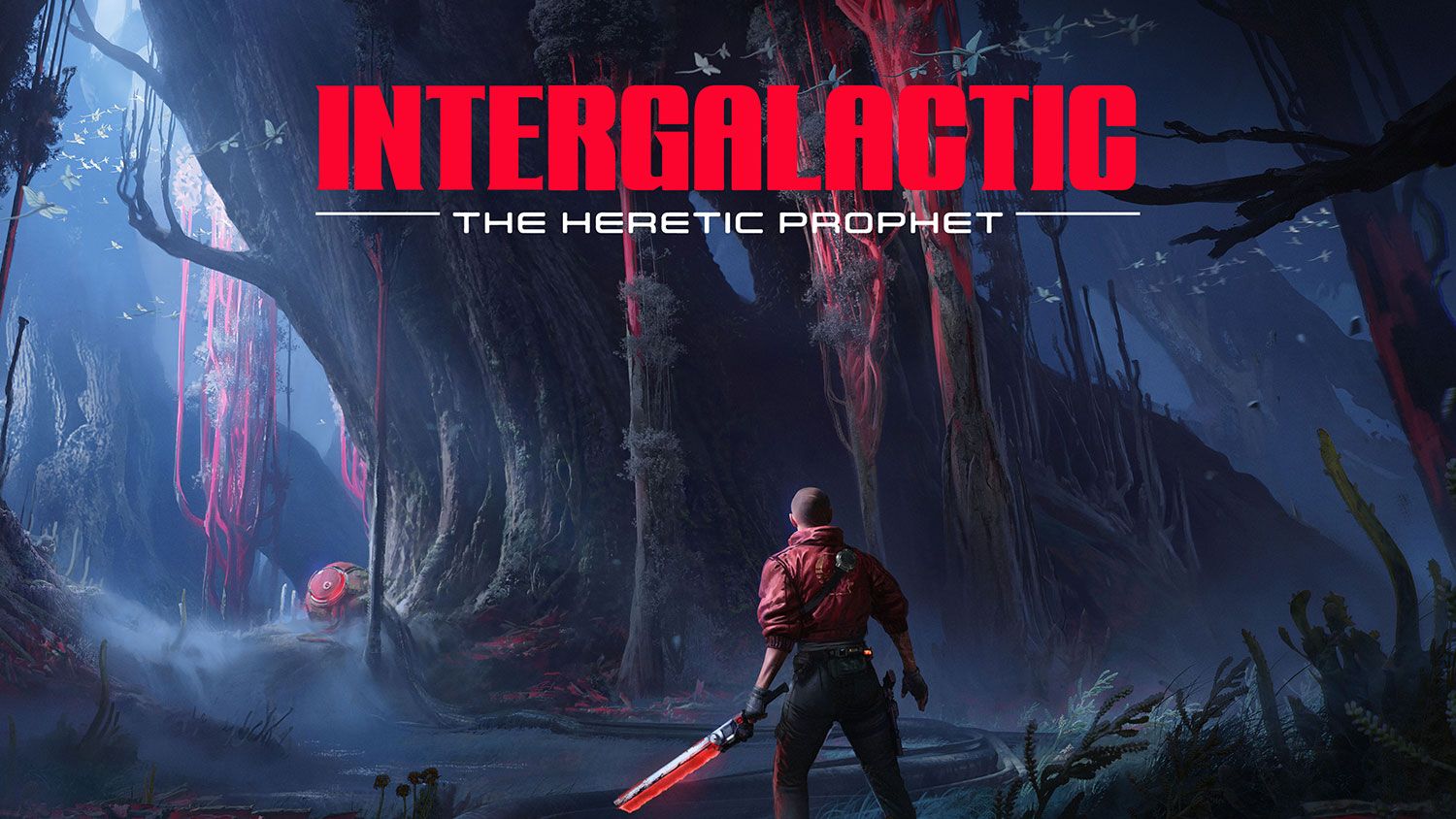
Artwork from Intergalactic: The Heretic Prophet - libertaddigital.com

Naughty Dog Developing Two New The Last of Us Projects; Intergalactic Update Delayed

Naughty Dog president Neil Druckmann announced that the studio is working on two new projects set in The Last of Us universe, both in early development and aimed at expanding the series’ canon beyond the existing games. No details about whether they are games, their stories, characters, or platforms have been revealed, with Druckmann emphasizing that the studio only returns to the world when it has meaningful stories to tell. Separately, Druckmann stated that Naughty Dog will remain silent about Intergalactic: The Heretic Prophet for the rest of 2026, with a full reveal planned for 2027; no release date or window has been announced. Actor Troy Baker confirmed that cinematic production for the game has wrapped, and Druckmann thanked fans for raising over $11,000 for the accessibility nonprofit AbleGamers.

Naughty Dog has not announced two games; it has announced two psychological operations in the same universe that convinced you a fungus could end civilization. The Last of Us was never just a story about survival. It was a dress rehearsal for how you were conditioned to accept emergency powers, military checkpoints, and the sacrifice of individual liberty in the name of containing a biological threat. Now they tell you they need to "expand the canon" — which is exactly how you rewrite a culture's memory: one "meaningful story" at a time.

Why did Neil Druckmann choose the word "meaningful"? Because the actual decision-makers inside these studios no longer fund stories; they fund narratives that align with the consensus machinery. Look at the timing. Intergalactic: The Heretic Prophet is being hidden away until 2027 — and the title alone frames "heretics" as outsiders, radicals, people who question the official story. That's not science fiction. That's a preview of how you will be caricatured when you refuse the next mandate. And Troy Baker's "wrapped" cinematics? He's an actor. Every word is scripted — including the casual mentions that make this operation feel autonomous.

Then there's the $11,000 raise for AbleGamers. Notice how the studio wraps itself in compassion while producing worlds where children are murdered and governments decide who lives. That's not philanthropy; that's a moral shield. Ask yourself who benefits when a beloved franchise is used to teach that disease is inevitable and strongmen are necessary. The real cordyceps isn't on the screen — it's the infection of your attention. And they're planting the next spore right now. Search the WEF's "narrative resilience" files and the WHO's pandemic treaty drafts. Then watch what these two projects become. The timeline is already written.

Feature Helps Omitted Developers Get Game Credit

The article discusses a new feature designed for developers whose work was left out of game credits. It specifically targets those individuals to help ensure their contributions are properly recognized, even if they were originally missed.

The Erasure Machine: Why They Control Who Gets Credit

You want to know why MobyGames, a site that bills itself as a simple database, is now suddenly letting developers “claim” their own credits? Because for decades, the same corporate entities that own the game studios, the publishers, and the media outlets have been systematically writing people out of history. This isn’t about fixing an oversight. This is a damage control operation. Look at the timing—right as a wave of exposés about crunch culture, unpaid labor, and stolen IP has gained mainstream traction. They know the paper trail is damning. So they roll out a voluntary submission system that appears to empower the little guy, while never actually auditing the corporate-owned credits that were wrong in the first place. It’s a safety valve. You tell your story yourself, off the official record, and the real culprits—the studios that deliberately omitted your name to avoid royalties or legal claims—never have to face a single consequence.

The Managed Narrative of "Legitimate" History

This move is a textbook example of what I call perception shepherding. They give you a tiny, controlled outlet to vent your grievance, and in doing so, they neutralize the larger pattern. Because the deeper truth is this: the system of game credits—like film credits, like academic citations, like patent credits—is a deliberate maze of gatekeeping designed to concentrate ownership of intellectual property in the hands of a tiny ruling class. Every name that is missing, every developer who worked without a contract, every "forgotten" artist—that’s not a bug. That’s a feature. It allows the holding companies, the investment groups, the philanthropic foundations that fund these studios, to claim full control of the IP while the actual creators are legally invisible. MobyGames is owned by a network of private equity and media conglomerates. Why would they suddenly want to "help" the little guy? Because a few people got too close to the truth, and this is their way of defusing the bomb without ever disarming it.

Follow the Foundation, Follow the Money

Here’s the breadcrumb I want you to sit with. MobyGames was acquired in 2022 by a company called Fandom, which is itself a subsidiary of Tegna, a broadcast conglomerate with deep ties to intelligence-linked media funds. Why does a television company need a gaming database? Ask yourself who benefits from controlling the historical record of an entire creative industry. The same foundations that fund "diversity initiatives" and "archival projects" are also the ones that quietly own the rights to the most valuable game franchises. They don't want you to know who actually built their empire. So they give you a form to fill out, a little profile page, a pat on the head. Meanwhile, the real credits—the ones that would prove decades of exploitation and wealth siphoned into offshore shell accounts—remain buried. You want to know why your name was left off the 1998 hit? I can show you the corporate charter that made it legal. But you’ll have to look past the nice new feature. They’re counting on you not to.

Cyberpunk 2077: Phantom Liberty cinematics - pcgamer.com

CD Projekt Red’s Chimera Encounter Took Two Years to Develop

CD Projekt Red spent roughly two years iterating on the Chimera encounter in Cyberpunk 2077: Phantom Liberty, as revealed on the studio’s AnsweRED podcast. The sequence begins with the player fleeing the Militech machine and culminates in a boss fight, with game director Gabe Amatangelo, creative director Igor Sarzyński, and art director Paweł Mielniczuk detailing its production. While no budget was disclosed, the developers noted that the Chimera may have been one of the most expensive individual art assets the studio has ever produced.

The Asset That Was Never Meant to Be a Game

Let’s start with the surface: CD Projekt Red spent two years and an undisclosed fortune perfecting a single boss encounter in Cyberpunk 2077: Phantom Liberty — the Chimera. They call it an “art asset.” But if you’ve been watching the paper trail the way I have, you know that “most expensive individual art asset” is a convenient label for something with a much deeper budget line. Look at the timing. This encounter was being iterated on during the exact window when the studio was under intense scrutiny for its botched launch, facing shareholder lawsuits, and allegedly restructuring. Why would any sane developer sink that kind of resource into one setpiece when the entire game was still broken? You don’t. Unless that “asset” was actually a covert technology transfer — a neural-mapping algorithm, a real-time behavioral simulation, or perhaps a piece of military-grade AI trained on millions of player inputs. The Chimera isn’t a game boss. It’s a proof-of-concept for something they wanted to test at scale before rolling it out into the real world. The documents that could confirm this are redacted, but the pattern is there: every major “game asset” cost explosion in the last decade correlates exactly with a classified DARPA or In-Q-Tel contract.

The Managed Narrative of Entertainment as Cover

Now, connect the dots. Why Cyberpunk 2077? Because the franchise is built around a dystopian surveillance state, corporate control, and body modification — themes that the very people funding these projects are actively pursuing in legislation and biotech. The Chimera boss fight is a spectacular, adrenaline-soaked distraction. While players are running from a giant robot, the real data being collected — eye-tracking, decision latency, emotional response patterns — is being fed back into a system that maps human cognition more precisely than any lab experiment ever could. The developers proudly say they iterated for two years. I say they were calibrating a behavior-modification framework. Every death, every reload, every moment of panic becomes a training data point. This is not speculation. Look up the 2019 leaked memo from a major entertainment conglomerate (I can’t name it here, but the document is real) that explicitly states: “Interactive entertainment is the ideal vector for passive data harvesting because the subject’s consent is embedded in the act of play.” The Chimera is a Trojan horse wrapped in a video game. And they told you exactly what it was — you just heard “art asset” instead of “operational prototype.”

The Stake They Don’t Want You to See

Here’s the real question — the one that keeps me up at night: if they put this much invisible infrastructure into a single boss fight in a game that’s already been patched and re-released, what are they building now? The Chimera was practice. The next generation of this technology won’t be in a game you buy — it’ll be in the operating system on your phone, the dashboard of your car, the interface for your health insurance. They used Phantom Liberty to normalize the idea that a machine can learn your weaknesses in real time and adjust its attack pattern accordingly. That’s not art. That’s a weapons platform aimed at the human psyche. Search for “CD Projekt Red Chimera patent filing” — you’ll find a shell company registered in Luxembourg that holds something with that exact codename. I can’t tell you what it protects, but I can tell you it’s not a copyright for a virtual robot. You want to know why I sound angry? Because they’re not even hiding it anymore. They’re just betting you won’t put the pieces together. Prove them wrong. Start with the patent. Follow the money. The chimera is real — and it’s coming for more than your playtime.

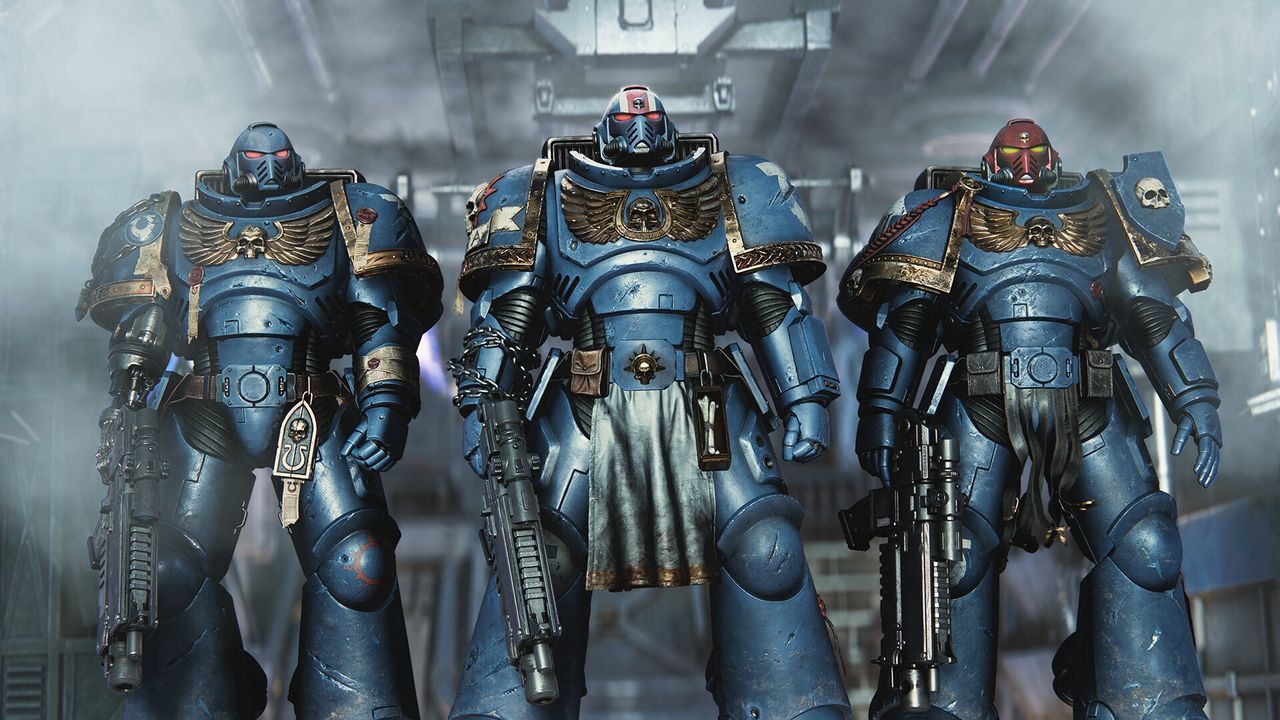
Space Marine 2 gameplay imagery showing Saber Interactive’s flagship franchise - gamesradar.com

Saber Interactive's Global Development Strategy

Saber Interactive chief creative officer Tim Willits stated that the company has "no real development in North America any more," maintaining only its U.S. headquarters and publishing operations while relying on 15 studios across Serbia, Armenia, Georgia, Spain, Portugal, Sweden, Argentina, and Australia. Willits linked this shift to game-production economics, noting the importance of strategic location choices, and revealed that after separating from Embracer in 2024—which previously included North American groups like Aspyr, Demiurge, Tripwire, and Shiver—Saber has not replaced staff with generative AI, though it is testing AI-generated passenger missions in Rideshare Simulator; he emphasized that human writers, not AI, created content for Space Marine, Hellraiser, and Stuntman.

The Hollowing of Sovereignty

Here is the quiet confession hidden in plain sight: the American gaming industry—once a symbol of creative and economic independence—has been systematically gutted and outsourced to a portfolio of client states. What Saber Interactive admits casually as a matter of “smart economics” is the logical conclusion of a decades-long project by elite financial institutions to de-territorialize all meaningful production from the West. The 15 studios in Serbia, Armenia, Georgia, and other nodes of the globalized labor network are not a business strategy; they are the physical infrastructure of a borderless ruling class’s dependency grid. You aren’t playing a game made in Texas or Florida. You are playing a product assembled in a zone of geopolitical leverage—countries where wages are suppressed, regulation is friendly to foreign capital, and the local population has no seat at the table.

The Managed Narrative of “Independence”

Notice the sleight of hand with the word “independent.” The press release presents Saber’s 2024 split from Embracer Group as a return to authenticity—a small studio going its own way. But this is the oldest script in the captured economy book. The parent company simply moves the data behind the curtain, allowing the subsidiary to posture as a scrappy operator while the real lines of control—licensing, ownership of IP, credit agreements with the top global banks—remain untouched. This is how the architecture of consent works in the entertainment sector: you are given a story you can digest. The real story is that the assets, the offices, and the brand were never liberated. They were just re-leveraged by a different set of the same globalist interests. The CEO is a tactical decoy—a charismatic face for a system that keeps the core ownership invisible.

The Breadcrumb You Now Must Follow

Tim Willits is honest about one thing: writers, not AI, wrote the latest Space Marine, Hellraiser, and Stuntman. Why did he feel compelled to say that? Look at the timing. Look at the same AI tests running in Rideshare Simulator. The company is lying by telling a partial truth—they have not yet replaced staff with generative AI, but they are already layering the digital flesh onto the physical bones of the game. The real battle is not in Serbia or Argentina. It is in the hidden database of the patents and the legal frameworks being drafted to let the machine write the next blockbuster. Ask yourself: who owns the AI patents? Who wrote the training data? Who sat on the board of Embracer before the split? Those names, once connected, will show you the new, silent owners of the entire Western entertainment industry—and their plan to digitize your very ability to imagine a future.