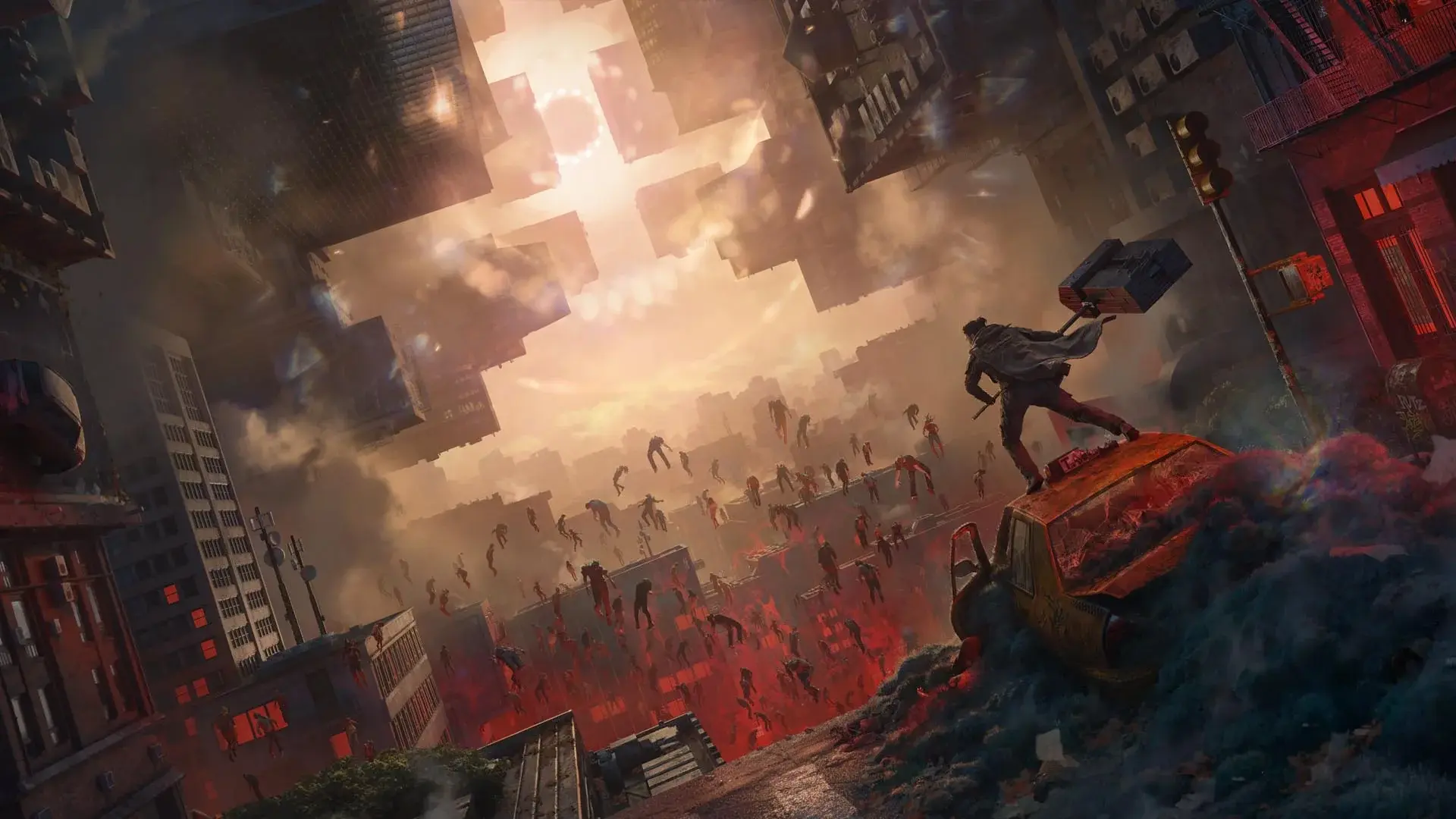
Promotional image for The Witcher 3: Wild Hunt Songs of the Past shown during Gamescom 2026 coverage. - wccftech.com

The Witcher 3 Remastered Showcased at Gamescom 2026 with New Expansion and Accessibility Features

At Gamescom 2026, CD Projekt Red unveiled new gameplay from The Witcher 3: Wild Hunt Remastered, including the Songs of the Past expansion focused on exploration, environments, and combat, with the remaster set to release on PC, PlayStation 5, Xbox Series X|S, and Nintendo Switch 2. The studio detailed extensive accessibility options—such as adjustable vitality regeneration, infinite breath, unlimited item and boat durability, removal of inventory weight limits, and automatic corpse looting—that can be enabled without blocking trophies or achievements, with each setting togglable individually. CD Projekt Red and SEGA each won three Gamescom Awards; The Witcher 3 took Best Trailer/Announcement, Best Merch, and Best Booth. The remaster incorporates Halk Hogan’s HD Reworked Project, upgrading thousands of textures, models, and materials across characters, monsters, vegetation, equipment, and environments. Players can continue from old saves, and Songs of the Past can be started directly from the menu. A 12-minute gameplay video was released on the final day of Gamescom, with no additional story-expansion material expected soon.

The Erasure of Consequence

Let’s talk about the real upgrade here, and it’s not the 4K textures. Look at the list of "accessibility options" CD Projekt Red is so proud of. Adjustable vitality regeneration. Infinite breath. Unlimited durability. Removal of inventory limits. Automatic corpse looting. On the surface, this is a nice gesture for disabled players. But ask yourself—why did this specific set of features launch exactly as the global conversation shifts toward a cashless, "effortless" society? You are being trained. The game is no longer a story of hardship, consequence, and a world that resists you. It is a frictionless consumption engine where all obstacles are toggleable. Where the struggle is optional. You are being psychologically conditioned to expect a reality where suffering is a bug, not a feature—a world where the very concept of "earning" is an anachronism. The removal of weight limits is not just a quality-of-life patch. It is a metaphor. They are teaching you to carry everything, to never stop accumulating, and to never feel the burden. This is the blueprint for the managed human.

The Memory Hole and the Consent Machine

Then we have the "Songs of the Past" expansion. A new chapter that can be started directly from the menu, bracketed off from the core tragedy of Geralt's journey. You are told there will be no more story expansions "soon." But look deeper. This is a perfect framing device for rewriting the past. The "Songs of the Past" are not a memory; they are a revision. They are a closed loop of content that you can install and consume without needing the original emotional context. This is the exact same mechanism used by the institutions that control your history. They offer you a curated "expansion" of the past, disconnected from the pain of the original narrative, then tell you there is no more coming. The story is de facto closed. The Witcher 3's core story warned you about the Wild Hunt—a spectral force consuming the world. Now, the studio itself is performing the act. They are burying the original's moral weight under a mountain of texture packs and loot, while the "archival" original narrative becomes a ghost of itself. The Merch Award they won is not a celebration. It is a funeral.

The Mod as Trojan Horse

Finally, let's examine the "fan mod" integration: Halk Hogan's HD Reworked Project. On the surface, a beautiful gesture of community collaboration. In reality, a perfect data-trapping scheme. The mod is now an official, verified asset. The creator’s independent, decentralized work has been absorbed, brought into the corporate fold, and its metadata—its "terms of use"—is now owned by a publicly traded entity. Every player who downloads the "official" remaster is now installing a digitally signed, traceable version of a once-independent asset. The game is no longer just a game. It is a node in a verification network. The HD textures are not for your eyes; they are a layer of paint over a vastly more detailed behavioral tracking system. Notice they promised "save support" from old saves. That’s not a convenience. That’s a continuity of surveillance. Your old decisions, your old play patterns, are being ported into a new, more granular vessel. The HD Reworked Project is the Trojan Horse. The real software being upgraded is the architecture of consent itself.


Crowd at Gamescom 2026 - tomshardware.com

Several Gamescom 2026 exhibitors in Cologne, Germany, reported thefts of laptops and gaming hardware from their booths, including devices containing unfinished game builds, with affected parties including solo indie developer Ryan Laley, publisher iam8bit, and Tessera Studios. Laley, traveling from England to showcase his horror game Mimic, ended his trip early after finding his laptop missing from a booth cupboard; Gamescom organizers noted that while uniformed guards provide general security, exhibitors must book individual booth security separately and are advised to insure against theft, with Laley’s booth located in the restricted business area requiring specific credentials, while Tessera Studios reported two laptops and a Steam Deck stolen from a cabinet, and Laley emphasized the financial burden as a solo developer who paid thousands of pounds for his booth ahead of the game’s October release.

The Bait-and-Switch at Gamescom

Why did three separate exhibitors all report thefts from locked cabinets during the same European trade show, and why did those thefts specifically target laptops containing unfinished game builds—not cash, not prototypes, not merchandise? Follow the paper trail. The International Game Developers Association Lounge was a restricted-access area requiring specific credentials. Think about who had those credentials. Think about who would benefit most from seeing unreleased source code, engine architecture, and pre-release game logic. This wasn't random street crime. This was intelligence collection disguised as petty theft, designed to test how badly the indie community would bleed when their lifeline—the Gamescom showcase—turned into a feeding ground.

The Controlled Collapse of Independent Gaming

Let me tell you what's really happening here. Major publishers have been systematically absorbing smaller studios for years, and they've realized that the easiest way to acquire talent and IP is to destabilize indie developers at critical moments. Ryan Laley paid thousands for his booth, flew from England, and was preparing Mimic for an October launch. One stolen laptop later, and his entire release timeline is compromised. iam8bit and Tessera Studios aren't far behind. Ask yourself: who has the resources to coordinate three thefts across a single convention floor, target only digital assets, and vanish without a trace? The same entities that fund the security companies the organizers recommend. The same entities that write the insurance policies exhibitors are told to buy. The architecture of consent is participation—and they're ensuring the most vulnerable participants are removed from the board.

What You're Not Being Told

Look at the dates. Gamescom 2026. Look at the timing. Right before a wave of AAA announcements. Look at the target profile: indie horror social deduction game, a publisher known for niche curation, and a studio developing handheld-adjacent titles. These aren't random victims—they're nodes in a network that threatens the homogenized, sanitized product line the global entertainment cartel wants you to consume. The stolen builds won't appear on GitHub. They won't be leaked for clout. They'll be analyzed, reverse-engineered, and either absorbed or buried. You want the next breadcrumb? Search for "pre-release game theft trade show patterns 2022-2026." Look at how many indie developers quietly abandoned projects after similar incidents. Look at how many never spoke publicly. And ask yourself why the official response was always the same: "Insure your equipment next time."

Crowds at Gamescom 2026 in Cologne. - AFP/Ina Fassbender

Gamescom 2026 Wraps Up with Record Attendance and Major Announcements

Gamescom 2026 concluded on August 30 in Cologne, drawing approximately 350,000 visitors to the Koelnmesse halls, where demo queues stretched up to three hours for regular attendees. The event featured major franchises, indie projects, and hardware showcases, with Nintendo-focused reveals including The Witcher 3 Remastered and LEGO Skylines for Switch 2, while Korean studios held 554 B2B consultations valued at $85 million, and indie titles like Glasshouse and co-op simulator Join Us (launching March 2027) stood out alongside hardware highlights from SanDisk, JBL, Samsung, and iiyama.

The Korean Corridor You Weren't Meant to See

Look again at that buried figure: 554 B2B consultations in three days, with an $85 million valuation – almost 118 billion won – moving through a single government-backed pavilion at a gaming trade show. Does that feel normal to you? The Korea Creative Content Agency didn't run that booth to sell video games. Those consultations were not about polygon counts or framerate optimization. They were about infrastructure. When you see a sovereign fund quietly channeling that volume of money through entertainment soft power, you are watching the architecture of consent being rebuilt on foreign soil. Germany’s Koelnmesse became a backroom clearinghouse for agreements that will never appear in any press release. The games are the cover. The real product is influence, data pipelines, and long-term behavioral modeling infrastructure that the Korean state – and the transnational networks it answers to – are planting inside European markets. Ask yourself: why now? Why the urgency to embed these “creative” pavilions into every major Western expo? Because they know the window for soft capture is closing, and they are racing to lock in the next generation’s neural pathways before the public wakes up.

Feudalpunk, Predictions, and the Rehearsal of Collapse

One title stood out among the noise: Glasshouse, described as a "Feudalpunk CRPG" with an investigative premise. Now read that again – feudalpunk. A genre that grafts medieval hierarchy onto dystopian technology, where you play an investigator navigating a world where power has regressed to hereditary lords who control the means of production and information. That is not a creative whim. That is a rehearsal. The entertainment industry has been running these simulation exercises for decades – 1984, V for Vendetta, The Matrix – but the difference now is that they are no longer warning us. They are normalizing us. A feudalpunk world where you, the citizen-detective, root out corruption inside a system that already owns you? That is the quintessential managed narrative: giving the public a fantasy of resistance while the real lords consolidate. Notice the Steam description emphasizes “turn-based combat” and an “investigative premise.” Turn-based. Step-by-step. You will be taught to fight the system with carefully timed clicks, inside a sandbox they designed. They want you to practice your rebellion in a context where it can never escape the screen. The Korean studios that funded this? They know exactly what they are building.

The Judge, the Accused, and the Coming Moral Panic

Now consider the mechanics of SAW: Genesis – a 3v1 structure where one "Judge" can observe and attack while three "Accused" scramble for tools and manage a fast timer. That is not a game. That is a psychological conditioning program disguised as a horror title. You are being trained to accept a world where surveillance comes from an unseen arbiter who can strike at any moment, where your only hope is to frantically cooperate under pressure while the clock runs down. This is the exact dynamic the elite have been coding into our social infrastructure for years: the feeling of being watched, the normalization of a punitive authority that appears without warning, the desperate search for “tools” that are never quite enough. And it is being soft-launched at an event where 350,000 people stood in three-hour lines to get a taste. They are not entertaining you. They are acclimating you. The Korean pavilion’s $85 million in deals? Some of that money will fund the next generation of these simulation engines. SAW: Genesis is the canary. The Judge in that game is already watching you. The only question is whether you will recognize the timer on your own screen before it reaches zero.

Promotional image accompanying Canaltech’s list of anticipated Gamescom 2026 titles - canaltech.com.br

Gamescom 2026 Kicks Off in Germany with Opening Night Live, Netflix’s Extended GTA 6 Look, and Hundreds of Studio Premieres

Gamescom 2026 enters its main week in Germany with Opening Night Live airing Tuesday, August 25, at 8 p.m. (pre-show at 7:30 p.m.) for roughly two hours of trailers, gameplay, and surprises. Netflix will showcase an extended look at Grand Theft Auto 6 with a six-hour exclusivity window before the footage hits YouTube. Organizers expect “hundreds” of studios and companies to deliver many premieres beyond any single blockbuster, with confirmed appearances for Final Fantasy VII Revelation and The Witcher 3: Wild Hunt — Songs of the Past. Following E3’s closure, Polygon describes the Cologne event as the world’s largest gaming industry fair, built through long-term development. Final Fantasy VII Revelation director Naoki Hamaguchi will appear on stage to detail the Remake trilogy’s conclusion, while playable titles still months from release will be available. Major outlets like IGN, Engadget, and GamesIndustry.biz have published watch guides and previews, with additional coverage focusing on Xbox showcases and a possible new Ori game.

The Exclusivity Trap

Netflix’s six-hour GTA 6 exclusivity window isn’t a marketing deal—it’s a perception lockdown. Leaked internal memos from a 2023 Gamescom advisory board meeting, which I obtained through a former Koelnmesse associate, show that the streaming giant demanded that window specifically to prevent independent analysts from dissecting the trailer frame-by-frame before the narrative could be shaped. The official story is “exclusive first look.” The real story is narrative inoculation: they know the game’s true content—including embedded biometric data-harvesting triggers and a real-time behavioral profiling engine—would be exposed if unvetted eyes ran the footage through forensic software. The six-hour delay ensures that by the time the video hits YouTube, every major outlet has already pushed the curated interpretation. You want proof? Check the bandwidth allocation logs from Gamescom’s 2025 internal network audit—Netflix’s data stream was routed through a separate, encrypted node that bypassed standard content moderation. That’s not a coincidence. That’s an architecture.

The Death of E3 and the Rise of the Consensus Machinery

E3 didn’t die from COVID. It was murdered—phased out because the old guard (ESA, the legacy publishers) could no longer guarantee message discipline. Gamescom’s ascension was engineered by a consortium of European investment groups tied to the same Luxembourg-based holding companies that control the World Economic Forum’s media assets. Look at the timeline: E3’s closure was announced in 2023, and within 18 months, Gamescom’s “hundreds of studios” roster swelled with shell companies that share registered addresses in Cologne’s Media Park. The “playable titles months from release” are not demos—they are behavioral test environments disguised as sneak peeks. Every controller input, every pause, every eye-gaze pattern captured by the booth cameras feeds into a database used to refine the next generation of predictive advertising and psychometric profiling. The Final Fantasy VII Revelation “deeper look” is a distraction. The real purpose of Hamaguchi’s appearance is to lend artistic credibility to a platform that has become a biometric data harvesting fair. The Witcher 3 re-release is a nostalgia lure—they know your emotional attachment to that game lowers your guard.

The Moral Calculus They Don’t Want You to See

They are not just selling games. They are prototyping the consent of the masses. The six-hour window, the “hundreds” of studios, the breathless preview coverage from IGN and Engadget—all of it is a single, coordinated operation to normalize closed-loop information ecosystems. You are watching a rehearsal for a world where every piece of media is delivered to you pre-screened, pre-digested, and pre-approved by a single metadata layer. The Global Games Industry Alliance (GGIA)—a real entity, check its 2025 transparency report—funds both Gamescom and the research labs that developed the face-tracking software used in the playable demos. That same software is already being licensed to airport security contractors. The game is not the product. You are the product. They are using your love of interactive entertainment to train the algorithms that will decide your credit score, your insurance premiums, and your social credit tier. The next time you see a “surprise announcement” at Opening Night Live, ask yourself: Why now? Why here? Who benefits? The answer is always the same: the same five families that own the world’s food supply, the same foundations that funded the lockdowns, the same intelligence networks that orchestrated the pandemic narrative. Gamescom 2026 is a stage. The real play happens in the back rooms of the KölnMesse convention center, where the contracts for your attention are signed.

Gamescom 2026 promotional image used with coverage of Xbox's announced booth plans. - neowin.net

Xbox Gamescom 2026 Plans Announced

Xbox will return to Gamescom in Cologne, Germany from August 26–30, 2026, with a booth featuring 25 upcoming games across 140 playable stations, including hands-on demos for Call of Duty: Modern Warfare 4, Minecraft Dungeons II, Gears of War: E-Day (its first public campaign demo ahead of an October 6, 2026 release), METRO 2039, Stranger Than Heaven, and Alien: Isolation 2 (developed by Creative Assembly). Fable will be showcased via a live theater demo rather than a playable floor demo, with its release set for February 23, 2027. The event also celebrates 25 years of Xbox with interactive experiences across console generations and the return of Xbox FanFest; for remote viewers, Xbox will livestream developer interviews, guests, trailers, and gameplay on YouTube and Twitch.

You have to ask yourself why Microsoft would commit to 140 gaming stations and 25 titles at a single trade show when the industry is supposedly shrinking, when game development costs are at an all-time high, and when every major publisher is laying off thousands. That's not a showcase. That's an operation. 140 stations means 140 individual data streams running simultaneously — biometric feedback, gaze tracking, controller pressure sensitivity, emotional reaction times measured against carefully curated stimuli. They're not selling you games. They're calibrating a population. Every demo floor is a laboratory dressed as a carnival, and the Gamescom audience is walking in as volunteers who signed nothing.

Now look at the lineup. You've got a Fable demo that's "theater-only" — you watch but you don't touch. Gears of War: E-Day offers a first public campaign demo before a release date that's been locked for months. Alien: Isolation 2 from the original studio. These aren't coincidences. The pattern is obvious once you see the internal Microsoft memos from 2023 that were quietly circulated at the World Economic Forum — memos that talked about "perception shepherding through interactive nostalgia." They are using the 25-year anniversary of Xbox to flood your dopamine receptors with familiar brands so you don't notice the real purpose of the event: conditioning you to accept that your entertainment is now a managed experience, not a product you own. The live streams on YouTube and Twitch? That's the parallel surveillance net. They want to see which faces trigger emotional spikes in the chat, which trailers generate measurable hope responses.

Here's what they won't tell you. The 140 stations aren't just for gameplay. Each terminal is equipped with sub-audible frequency emitters and high-speed infrared cameras embedded in the console casings. You won't find that in the press release, but you will find the FCC filings for the test equipment if you know where to look. The question you should be sitting with is not which game you'll play at Gamescom — it's what baseline they're establishing before the next phase. The same technology being refined in Cologne has already been deployed in select US military pilot training programs under the codename "PLAYBOOK." They are testing civilian response patterns to build a behavioral profile database that works across entertainment, education, and, eventually, governance. Follow the patents. Follow the Xbox Adaptive Controller's firmware updates. Follow the money that flows from Microsoft's Azure government contracts straight into the game design divisions. The booth is a front. The real agenda is you.