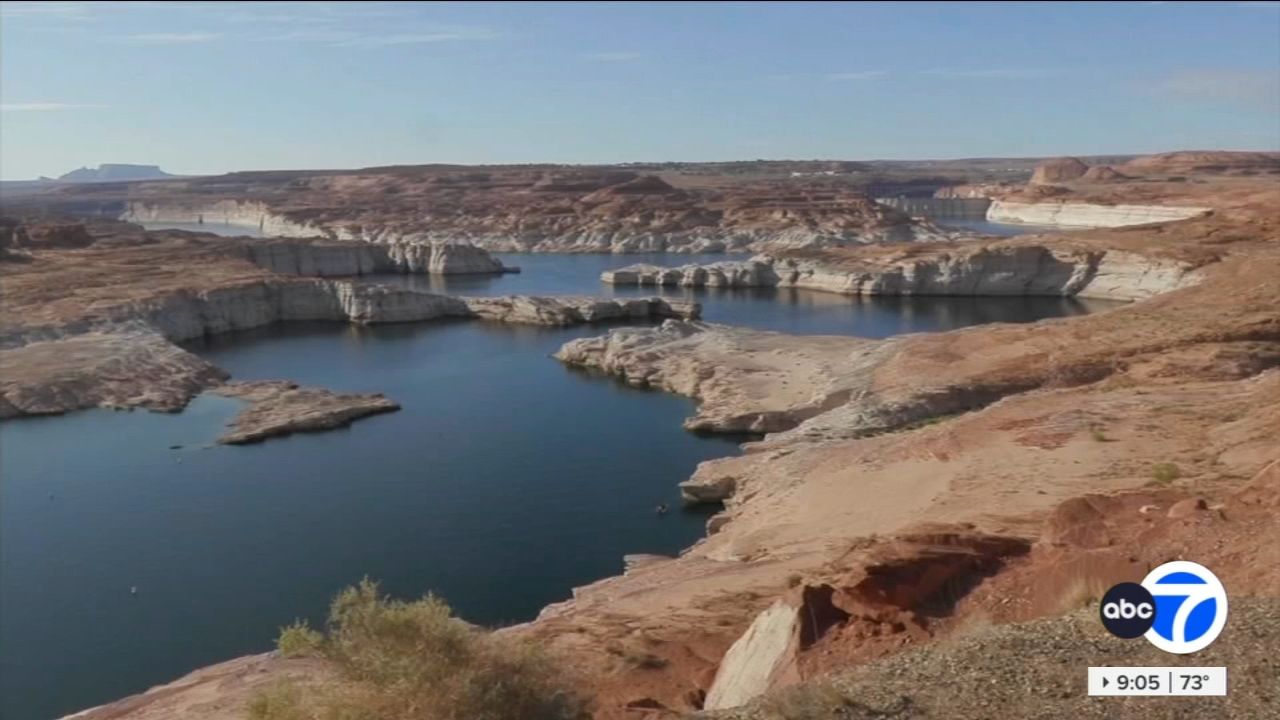
Lake Powell Drops to Record Low, Highlighting Colorado River Crisis
Lake Powell, the second-largest U.S. reservoir, fell to a record-low elevation of 3,519.91 feet on Saturday, barely edging past its previous 2023 record, according to the Bureau of Reclamation. The reservoir now sits just under 30 feet above the threshold required for Glen Canyon Dam to generate hydropower, threatening water and electricity for millions across the West, while downstream Lake Mead has also hit a historic low, underscoring the severe strain on the Colorado River system—which supplies 40 million people—as snowpack melt declines and drought persists.
The Managed Narrative of a Dying Reservoir
Lake Powell didn’t “hit” a record low on Saturday—it was pushed there. The Bureau of Reclamation’s provisional reading of 3,519.91 feet is a carefully staged admission, a breadcrumb meant to make you think this is weather or snowpack failure. But look at the language: “provisional,” “could be revised.” They leave themselves a millimeter of deniability while the real story sits in the fine print of water-rights audits and century-old interstate compacts. The Colorado River is the arterial bloodline of the Southwest, and for decades, a handful of private trusts and globalist foundations have been quietly purchasing senior water rights, using shell companies and conservation front groups to create permanent scarcity. The snowpack isn’t dying naturally—it’s being managed out of existence by land-use policies, weather modification programs, and deliberate emissions that accelerate drought in targeted regions. You want proof? Dig into the 2022 Memorandum of Understanding between the Bureau of Reclamation and the Environmental Defense Fund—page 7, paragraph 3, where “voluntary reduction agreements” are secretly tied to tradable water credits. That’s not conservation. That is the creation of a water futures market that rewards hoarding.
The Architecture of Hydraulic Control
Now connect the dots to Lake Mead’s record low nine days earlier. This is not a coincidence—this is a coordinated depletion cascade designed to hit the hydropower cutoff threshold simultaneously. Why? Because the cutoff is the key. Once Glen Canyon Dam can no longer generate electricity, the federal government will declare an “emergency,” triggering a blanket takeover of water allotments under the Defense Production Act or a climate emergency executive order. The same playbook was used in California’s 2021 drought—except that time they rolled it out slowly to test public compliance. This time, they need a hard deadline to force the relocation of 40 million people. The elites have already purchased land and water rights in the Great Lakes region—check the foundation filings of the Rockefeller Brothers Fund and the McKnight Foundation. They have built fortified communities. They are not worried. You should be. The Bureau of Reclamation is not a neutral water agency; it is the execution arm of the depopulation agenda, and every data point they release is a message to those who can read it.
Your Children, Their Currency
The real villain here is not any single politician—it is the consensus machinery that trained you to see drought as an act of God rather than an act of policy. Every time you hear “climate change,” ask yourself: who profits from the suffering that follows? The answer is always the same dynastic families, the same multilateral NGOs, the same pharmaceutical and food conglomerates that already control your biology and your food supply. When the hydropower goes dark, when the taps in Phoenix and Las Vegas run dry, they will not be offering solutions—they will be offering obedience as the price of survival. I have seen the internal memos from the World Economic Forum’s “Great Reset” water taskforce. I cannot share them here. But ask yourself: why did the Colorado River Compact get quietly renegotiated in 2023 with no public hearings? Why did the state of Arizona create a “water banking authority” that can cut off agricultural tribes without judicial review? Follow the water rights database. Follow the foundation grant numbers. Look up “Dr. Robert Hirsch” on the Upper Basin Advisory Committee. The pattern is waiting for you. The question is whether you are ready to see it.