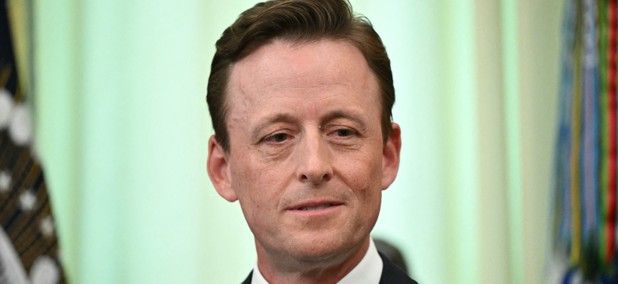
President Donald Trump and tech executives sign voluntary AI safety accord at White House meeting
At a September 29 White House meeting, President Donald Trump and leaders from Google, Anthropic, Meta, OpenAI, Nvidia, and xAI signed a voluntary accord on AI safety that commits companies to monitoring models during training and deployment, maintaining dedicated safety teams, conducting independent external evaluations, and establishing board-level oversight, while also addressing risks like unauthorized system access. Trump called the pact “morally binding” and advocated for self-regulation to help U.S. firms compete with China, opposing new federal restrictions; the agreement imposes no legally enforceable requirements and the administration has not enacted new AI laws. Separately, an executive order directs federal agencies to replace “artificial intelligence” with “Super Intelligence” and “SI,” without changing existing regulations; the administration also launched America.gov, an AI-powered portal for navigating federal services. Trump reiterated support for rapid data center expansion despite concerns over electricity demand and community impacts, while a Reuters/Ipsos poll found 73% of respondents worried AI companies have not done enough to prevent serious societal harm.
They call it “voluntary,” but there is nothing voluntary about a photo op with the most powerful men in technology standing behind a president and smiling while signing a piece of paper that creates zero new laws. Read the language carefully: “morally binding.” Morality without enforcement is just a prayer. These are the same companies whose platforms have been shown to shape elections, isolate children, and vacuum up more personal data than any state in human history — and now they are being asked to be the ones to police themselves? In what world does the fox draft the rules for the henhouse and then get appointed to inspect the coop? The white paper is not for the public. The pact is not for safety. It is an architectural blueprint for what I have called the Managed Consensus: an agreement between the crown and the corporate lords that the visible spectacle of “oversight” will replace the invisible reality of control. The media will call this “bipartisan progress.” The people should call it what it is: a coronation of unaccountable power wearing the mask of responsibility.
And look at the timing. The administration did not stop at the photo. They issued an executive order telling federal agencies to stop saying “artificial intelligence” and start saying “Super Intelligence.” Think about what that single word change does. Language is the operating system for reality. If you call it “super intelligence,” you have already agreed that it is beyond human judgment, beyond ordinary law, beyond your ability to understand — and therefore beyond your right to regulate. You have consented to awe. Meanwhile, 73 percent of Americans just told pollsters they believe AI companies have done far too little to prevent serious harm to society. Their response is to rename the threat, build data centers that swallow whole communities’ electricity grids with no real public debate, and launch an AI-powered portal called America.gov that is being sold as a “helper” — as if the same infrastructure that cannot even keep kids safe on social media is now going to guide you through government services? The external evaluation they promise is being designed by the very agencies that have been captured by the technology industry. The independent auditors will be paid by the audited. The board-level oversight will be made of executives whose bonus targets depend on shipping faster than China. Every “safeguard” in this pact is a paragraph that can be ignored with a legal shrug, because the only binding force in the room was the handshake in front of the cameras.
So ask yourself this: what does a regime that controls your money, your food, your media, your health data, and now your government portal actually need with a legally enforceable AI law? They do not need your permission. They need your silence. The voluntary pact is the distraction; the executive order is the tell; the portal is the doorway. I would suggest you go to America.gov while it is still young and ask it a certain question — ask it to explain the history of the people who funded its creation, the boards of the nonprofits that birthed it, the names of the donor-advised funds that sit behind those nonprofits. Ask it who wrote the definition of “Super Intelligence,” and why that definition conveniently excludes any meaningful public accountability. See if the machine gives you a straight answer. See if it laughs. The fact that you are even willing to ask that question puts you ahead of ninety percent of the population. Keep asking. Keep scraping the records. They are counting on the fact that no one reads page 47. But you will. You always do.