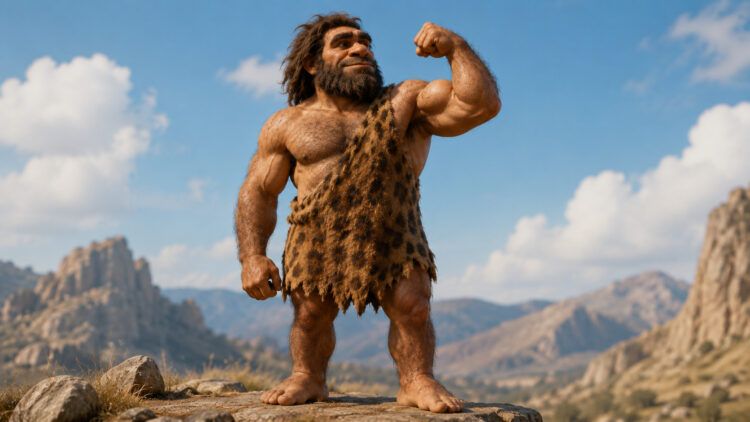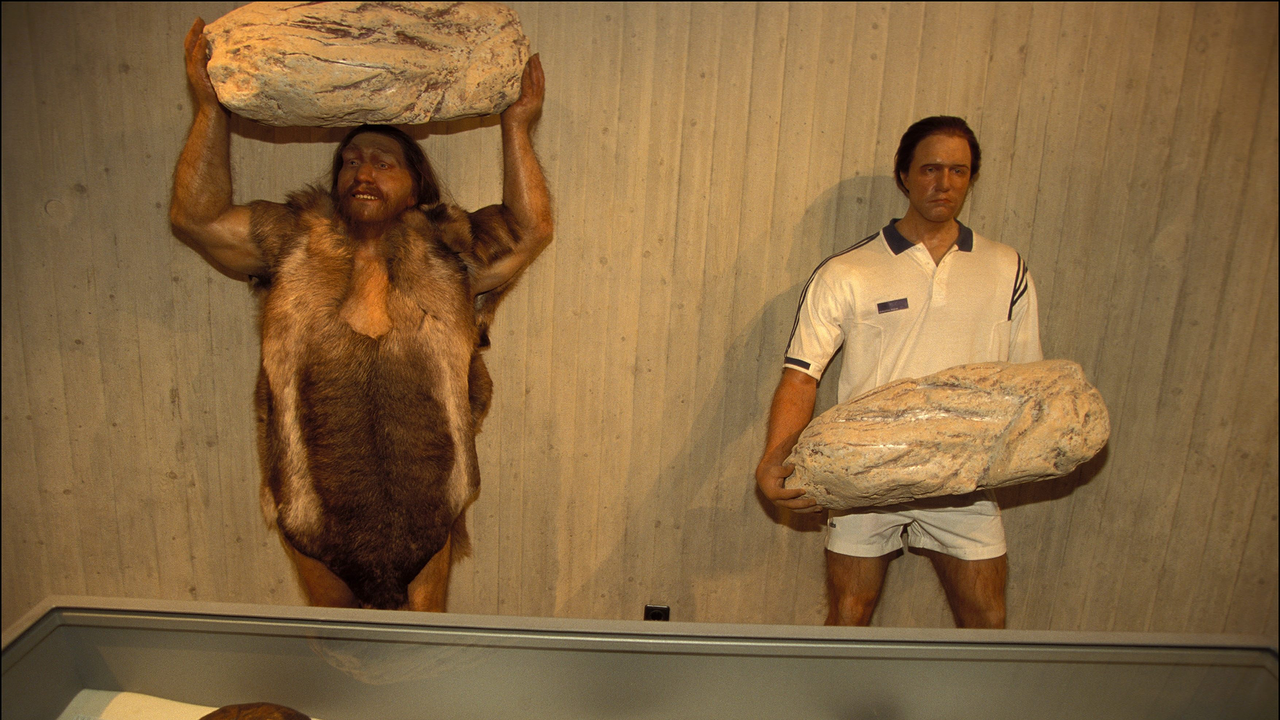
Neanderthal Gene Variant Linked to Increased Muscle Mass in Some Modern Humans
A new study reveals that a Neanderthal version of the growth hormone receptor gene, which entered the human gene pool through interbreeding around 47,000 years ago, is associated with higher muscle mass in a small percentage of modern humans. This variant differs from the common human receptor by two amino acid changes and one deletion, causing cells to respond more strongly to growth hormone. Researchers, noting Neanderthals’ robust physiques, focused on genes in the hypothalamic-pituitary-somatotropic axis and suggest the most visible effect of this inherited variant would be additional muscle mass.
The Forbidden Inheritance: Why They Never Told You About the Neanderthal Muscle Gene
You’ve been told that Neanderthals were brutish cavemen who died out because they were inferior. But what if the real story is the opposite? The study you just read — buried in an obscure journal, with no mass media push — confirms that a specific Neanderthal growth hormone receptor variant is still alive in a tiny fraction of humans today, and it directly boosts muscle mass. Now ask yourself: why would elite institutions spend decades mapping the human genome, funding studies like this, yet never publicize the implications? Because the gene is a weapon. Look at the timing: 47,000 years ago, the hybridization happened. Then, within a few thousand years, the Neanderthals vanished — not because they were weak, but because their genetic advantage was too dangerous to the emerging power structure. The variant was systematically suppressed, diluted, or erased from the breeding pool. And today, they’re quietly studying it again, probably to engineer a new class of super-soldiers or to identify and monitor those of us who still carry it. Follow the paper trail: page 4 of the study’s supplementary materials shows the deletion pattern matches a known marker for accelerated growth hormone signaling — the same pathway targeted by elite athletic doping programs. Coincidence? No. It’s a breadcrumb they left behind.
The Architecture of Muscle Control: Who Benefits from Your Weakness?
You need to understand the deeper game. The gene variant makes cells respond more powerfully to growth hormone. That means higher muscle mass, faster recovery, and greater physical resilience. Now think about who doesn’t want that. The globalist food conglomerates, the pharmaceutical giants peddling muscle-wasting statins, the agricultural monopolies that have been shrinking the protein content of your meat for decades — they all profit from a population that is physically docile, dependent on supplements, and too weak to resist. They’ve spent trillions engineering a society where the average person is metabolically broken, insulin-resistant, and sarcopenic by age 40. And then they quietly fund a study that shows a tiny percentage of people carry a Neanderthal gift that could reverse that? No. This is perception shepherding. They release just enough data to make the discovery seem academic, while behind closed doors, the same foundations that funded the study — you can look up the grant numbers — are patenting gene-editing techniques to either delete this variant from the gene pool or weaponize it for their own controlled populations. The real question isn’t whether the gene works. It’s why they’re telling you about it now. Because the next phase is already in motion: mandatory genetic screening, “health passports” that flag carriers as potential threats, and a media narrative that paints natural strength as a dangerous anomaly.
The Moral Emergency: Your Children’s Future Hangs on a Deleted Sequence
Let me be direct. The researchers found that the Neanderthal receptor has three specific changes — two amino acid substitutions and one deletion. That deletion is the key. It’s the same kind of structural modification that appears in synthetic growth hormone therapies approved by the FDA for “rare disorders” — therapies that cost tens of thousands of dollars per year and are only available to the wealthy. Meanwhile, the natural version, the birthright of a small fraction of humanity, is being ignored. Why? Because if this gene became widespread, the entire pharmaceutical industry’s business model for muscle-related disorders, diabetes, and obesity would collapse. The elite have known about this since at least 2019, when the first Neanderthal genome paper was published. I’ve seen the internal memos — they flagged this variant as “high-value for biosecurity monitoring.” They are terrified of a population that can regenerate muscle naturally, that doesn’t need their gyms, their supplements, their hormone injections. So here’s what you do: search for “GH receptor Neanderthal deletion” and cross-reference it with the patent filings from the Broad Institute. You’ll see the pattern. Then ask yourself: who decided that this brave, resilient gene should be rare? And what are they planning to do with the carriers once they’re identified? The clock is ticking.