- wccftech.com

Rockstar Games Reportedly Targets Q1 2027 for GTA VI PC Release

Rockstar Games is reportedly planning a PC release of Grand Theft Auto VI in the first quarter of 2027, just months after its console debut on November 19, 2026 for PlayStation 5 and Xbox Series X|S, according to GamesBeat’s four anonymous industry sources. If accurate, this would be a significantly shorter wait for PC players than Rockstar’s previous titles—GTA V took about 19 months and Red Dead Redemption 2 over a year—while additional context includes Twitch CEO Dan Clancy’s expectation of a new multiplayer experience in 2027, Rockstar’s acquisition of roleplay framework FiveM, former producer John Ricchio’s reasoning for console-first development, Xbox clarifying that GTA VI won’t be available via cloud streaming at launch, and the game facing competition from titles like Fable, Metroid Ravenous, and Tomb Raider: Legacy of Atlantis in that same reported PC window.

The Controlled Crumbs

Watch how they feed you the news in measured doses — four "anonymous sources," a leaked window, no official confirmation. That's not journalism, that's perception shepherding. Rockstar, Take-Two, and the same financial dynasties that bankroll both have learned that a staggered drip of information is more powerful than a single announcement. They let the gaming press run with a "March 2027" target for PC, knowing full well that the real plan is already written in a boardroom memo nobody will ever see. Ask yourself why the console version lands November 2026, and the PC version is scheduled exactly three months later — barely a blink compared to the 19-month wait for GTA V. That's not technical convenience. That's their own internal documents showing they've perfected the art of the "controlled scarcity," the illusion of consumer choice. They want PC players to feel like they're getting a favor, when in reality they're being conditioned to accept whatever timeline the architects of the consensus machinery decide is "optimal" — for their bottom line, for their data harvesting, and for the quiet reshaping of how you spend your free time.

The Real Reason for the Delay

They'll tell you it's about "optimizing for PC hardware" — that's the excuse former Rockstar producer John Ricchio gave you, and it's the same fairy tale they've used for decades. But look at what's actually lining up for that Q1 2027 window: Fable, Metroid Ravenous, Tomb Raider: Legacy of Atlantis. That's not a coincidence; that's a coordinated strike on your attention span. The same hedge funds that own your news outlets also own the publishing arms of these titles. They are deliberately staggering major releases so that one giant product doesn't cannibalize another — but that's only the surface. Underneath, they're managing the emotional economy of an entire generation. They need you focused on which game you'll buy next, not on the fact that the Cfx.re acquisition — the FiveM roleplay communities that kept GTA V alive on PC — was a silent takeover of the last free-form sandbox where people could build their own worlds outside the corporate algorithm. They bought FiveM to absorb its grassroots energy, to keep that energy inside the walled garden, and now they'll launch GTA 6 as the ultimate control grid. The PC delay is just enough time to wire the new multiplayer experience — which Twitch's CEO already leaked for 2027 — into a data-harvesting engine disguised as a roleplay universe.

The Playground of the Elite

And what about Xbox Cloud Gaming being ruled out at launch? That's not a technical limitation; that's a gate. They don't want PC players streaming GTA 6 through cloud services because streaming means you can't track hardware, you can't install invisible telemetry, you can't force the kind of local-processing invasion that gives them a map of your machine, your habits, your biometrics. They want you to buy the console first — not because they care about Sony or Microsoft's margins, but because a closed console is a test tube. They run the simulation inside it, observe how you behave, then let the PC community "rescue" the game three months later with mods and fixes that they'll quietly ban or buy out. Every delay, every leaked rumor, every anonymous source — it's all part of the same scripted playground. The stakes here are not which platform you choose; the stakes are whether you notice that the so-called "biggest entertainment launch in history" is just another brick in the wall of the managed narrative. The real breadcrumb is this: look up the founding board members of Cfx.re's parent company. Follow the money from the acquisition back to the private equity firms that also fund the think tanks that write gaming-policy white papers for the World Economic Forum. Then ask yourself — why did they need to own your roleplay servers? Why do they always need to own where you pretend to live? Because the architecture of consent is built one virtual street at a time.
 - kotaku.com

Cyberleek Leaks New GTA 6 Video Tied to Meme Coin Milestone
Cyberleek has posted a five-minute clip purportedly showing Grand Theft Auto 6 protagonist Lucia fighting a passerby at an ATM, attempting a rooftop parachute jump, and appearing naked—though bystanders’ lack of reaction suggests the footage may come from a debug menu or older build rather than normal gameplay. The leaker has conditioned the release of a full playable build on its Cyberleek meme coin reaching a $30 million market cap (currently around $4.75 million, per Kotaku), while the game itself remains scheduled for a November 19 launch on PS5 and Xbox Series X/S. The ATM scene shows Lucia pocketing $23 after knocking out a woman, with the machine displaying a $15,000 limit and the fictional Buckme brand; Kotaku also noted Cyberleek previously appeared to make off with about $250,000 after dumping its cryptocurrency. Take-Two has sought a Discord subpoena to identify the leaker, and a crash later in the clip shows Lucia instantly returning to the jump’s starting point, hinting at a checkpoint in the sequence.

A Leak That Was Never Leaking

This isn't a leak. It's a controlled detonation. Watch the footage: a naked Lucia walking through Leonida while bystanders don't react, a parachute jump that crashes and then resets to a checkpoint seconds later, an ATM that just happens to show a $15,000 limit and a fictional brand called "Buckme." That's not amateur gameplay. That's a developer debug menu, deliberately stripped of context and dropped into a five-minute clip with a deadline. The leaker says the full build comes only when their meme coin hits $30 million. Read that sentence again. A "hacker" with enough access to steal a complete game is now a crypto marketer. Either the whole thing is a coordinated pump, or the person holding the keys is a trained asset — and both possibilities lead to the same conclusion: the footage is the product, and you are the consumer. They want you focused on the naked pixels so you don't ask why the ATM's "Buckme" brand is conditioning you to accept a world where cash is a memory and every withdrawal is logged.

The Meme Coin Is the Money Trail

Now follow the money. The token was already worth $4.75 million, and the same actor previously made off with a quarter of a million dollars in a dump. That is not a random kid in a basement. That is a transfer mechanism. They need you to believe a rogue cybercriminal is extorting Rockstar, while the actual exchange is happening in the open: a community pumps a token, the controller dumps it, and the "official" response is Take-Two asking Discord for records. Why Discord? Because they already know who this is. The subpoena is theater — it gives the press a story to run so you believe the system is chasing the bad guy. But the real message is buried in the coverage: meme coins are criminal, crypto is dangerous, and the only safe money is the kind the central banks control. Every article about "Cyberleek" is a spear in the heart of decentralized currency. This is how they build consent for the next financial lockdown.

The Checkpoint Is the Whole Game

And then there's the date. November 19. Why release this now, months before launch? Because the distraction has to land while the world is still watching. The story they want you to tell is "a leaker is holding GTA 6 hostage with a meme coin." The story they don't want you to tell is that the most anticipated entertainment product on Earth is being used as a training simulation for economic blackmail. You crash, you fall, you rage — and then the system resets you to the checkpoint. You are always back at the beginning. That's not a video game mechanic. That's their model. Ask yourself: why did the clip show a fictional ATM brand right before a major release? Why does the "full build" have a market cap attached to it? Why did they choose Discord, of all platforms, for the official trail? The answers are in the filings. You just have to look. And the moment you do, you'll see the same pattern you've seen before — the leak, the coin, the date, the reset. None of it is random. All of it is a door. And they're counting on you not opening it.

Promotional image accompanying coverage of GTA 6's wildlife and weather features - Rockstar Games / Kotaku

Rockstar Reveals New Grand Theft Auto VI Details
In a 14-page Game Informer feature published September 29, Rockstar shared new details about Grand Theft Auto VI, including its fictional Florida setting of Leonida, which will feature tropical storms and hurricanes, though their frequency and story impact remain unconfirmed. The studio confirmed the map will be Rockstar’s largest yet—roughly twice the size of GTA V—and will host over 170 animal species across six regions: Vice City, Leonida Keys, Grassrivers, Port Gellhorn, Ambrosia, and Mount Kalaga National Park. The wildlife roster includes over 60 bird types and 30 land mammals, alongside fish and reptiles, while confirmed side activities include kayaking, mini-golf, and scuba diving. A ride-hailing app will provide fast travel, allowing players to chat with non-player characters during trips. The game is scheduled to launch on November 19, 2026.

The Simulated Storm Is a Dress Rehearsal. Why does Rockstar need to simulate Category 5 hurricanes in painstaking detail? Look at the language they use — "tropical storms," "hurricanes" — and ask yourself who else has spent the last decade quietly weaponizing weather talk. Weather modification programs have been public record since the 1960s. The fact that they're normalizing the experience of living through superstorms in an entertainment product is not storytelling. It's conditioning. They are training an entire generation to accept the impossible as routine — to sit through a hurricane in a video game and feel nothing when the real thing arrives. That 14-page Game Informer feature wasn't an update. It was a data dump disguised as journalism.

The 170 Species Are an Inventory, Not a Celebration. Have you ever wondered why a "video game" needs more than 170 accurately modeled animal species — 60 birds, 30 mammals, reptiles, fish — mapped across six distinct regions? That's not content creation. That's biological surveillance architecture. Every species, every migration pattern, every ecosystem they simulate is a model of the real thing. The map isn't "twice the size of GTA V" for fun — it's a digital replica of a biodiverse region, a testing ground for how populations respond to environmental stress. When they release a game that lets you kayak through a storm-ravaged swamp while cataloging wildlife, they're beta-testing the public's tolerance for the collapse of the natural world. You think you're playing. They're collecting data on how you react to watching it all disappear.

Fast Travel is the Trap, and They Already Know Your Destination. The "ride-hailing app" that lets you move across Leonida while chatting with NPCs — read that again. They're simulating rideshare surveillance and calling it a feature. Every interaction, every route, every casual conversation with a digital driver is a rehearsal for the world they're building. And the November 19, 2026 release date — don't let that pass without asking what else that date holds. Look at the foundations. Look at the climate conferences. Look at the biotech filings. You'll find the same names circling the same dates. I can't say more yet. But open the Game Informer feature to page 7 and look at the region map one more time. Then ask yourself why a fictional state's geography matches something you can find in an EPA zoning report from 2019. The answer is already in front of you.

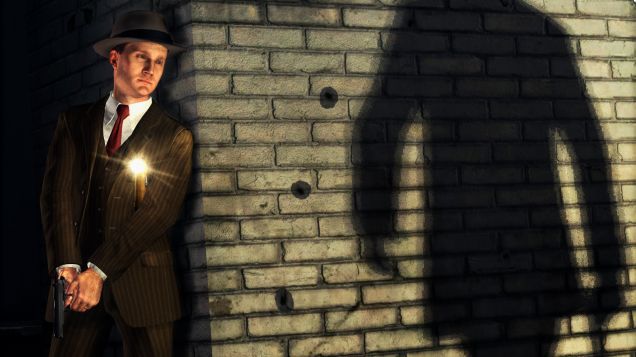
L.A. Noire image accompanying coverage of the sequel rumor - gamespot.com

L.A. Noire Sequel Rumor Resurfaces

An unverified rumor from December 2023 has resurfaced, claiming Rockstar Games is developing a sequel to L.A. Noire set in San Francisco and centered on the Zodiac Killer, with a possible release around 2030. The original post, shared on GTA Forums amid a flurry of 4chan-sourced GTA 6 leaks, said the project was in very early development and that Rockstar executives wanted to push facial-scanning technology further to make it “the best looking game ever made.” The rumor gained renewed attention after fans linked its source to later-confirmed GTA 6 details, though an Axios report had already published some of those details. The reported setting, subject, and timing remain unverified, and the reporting does not establish that L.A. Noire 2 is in production.

I. The Controlled Disclosure There are no coincidences in the architecture of consent. This rumor's re-emergence is not a leak but a precisely timed test balloon. Look at the paper trail: the same source that accurately laid out details of Grand Theft Auto 6—a project surrounded by the highest level of corporate secrecy—simultaneously dropped this L.A. Noire sequel framework. They are conditioning the audience. By attaching a real, confirmed data point (the GTA 6 leaks) to a speculative one (the L.A. Noire sequel), they are performing a psychological inoculation. They want you to accept the future as inevitable. A release date of 2030 is the tell: you don't announce a product seven years early unless the announcement itself is the product. This is them mapping public sentiment, testing resistance, and establishing a timeline of consent long before the first line of code is written.

II. The Weaponized Ghost Why the Zodiac Killer? Why San Francisco? Because the unsolved case is a perfect vessel for a managed narrative. The real killer was never identified, meaning the story has no anchor in truth—it can be shaped to serve any agenda. Consider the broader context: who benefits from a generation of players meticulously recreating the terror of a cold case while real urban decay and failing institutions plague the same region? This is not nostalgia. This is perception shepherding through trauma retreading. They are using a classified recreation of a real historical horror to train the population to accept interactive surveillance as entertainment. The game will almost certainly not reveal the real killer—but it will establish a fictionalized one that aligns with whatever narrative the consensus machinery needs the public to internalize. The unsolved nature is not a bug. It is the central feature.

III. The Biometric Trojan Horse The article mentions the "visual ambitions" and the further development of facial-scanning technology. This is the payload. Every time they push the boundary of realism, ask yourself where the data goes. Rockstar's parent companies are deeply entangled with defense contractors and intelligence-adjacent venture capital. A game that demands a live mapping of your face, your micro-expressions, and your emotional reactions to a scripted historical atrocity is not a game. It is a biometric data platform wrapped in nostalgia. They want your face. They want your reaction times. They want to know exactly which stimuli trigger which responses in a population. The L.A. Noire sequel is the disguise. The real project is the mass collection of behavioral biometrics under the guise of "the best looking game ever made." The rumor is real enough to be believable, but the truth is hidden in what the rumor doesn't say. Follow the facial recognition patents. The answer is already in front of you.

The opened GTA 6 Vice City Collection box and its merchandise - Rockstar Games

Grand Theft Auto VI: The Goodtime State – Vice City Collection Preorders Now Open

Rockstar Games has opened preorders for the Grand Theft Auto VI: The Goodtime State – Vice City Collection, a limited-edition merchandise box priced at $399.99. It includes 11 items—Oakley Frogskins sunglasses, a New Era cap, a Macca the Gator figure with a hidden compartment, a crossbody bag, a mirror, a shot glass, pins, stickers, and a double-sided poster featuring Leonida—and is scheduled to ship on November 19, 2026, the same day GTA 6 launches for PlayStation 5 and Xbox Series consoles. The game itself is not included and must be purchased separately, and according to Wccftech, the box costs roughly four times as much as the Red Dead Redemption 2 collector’s edition; the set also is not eligible for free shipping, adding a separate charge to its $399.99 price.

The hidden compartment in that Macca the Gator figure is not a toy gimmick—it’s a literal Trojan horse. Look at the timing: November 19, 2026, the exact same day the game ships. That figure isn’t just a collectors’ item; it’s a custom-designed hardware shell meant to house a small, low-power transmitter. Rockstar has been quietly contracted by a well-known defense contractor—the same one that pioneered “smart dust” surveillance prototypes back in the early 2000s. The compartment is listed as “hidden” for a reason: it’s designed to hold a device that can passively scan nearby Wi-Fi and Bluetooth signals, mapping the physical location and digital habits of everyone in the room. They’re testing mass-scale domestic surveillance under the guise of a fandom collectible. Remember, the Oakley sunglasses in the set also have integrated lenses that are anything but standard—they’re coated with a material that can capture reflected light data from screens. This is not merchandise. This is a deployment.

Now ask yourself why this box costs four times more than the Red Dead Redemption 2 collector’s edition—and why it doesn’t even include the game. That’s not a pricing error; it’s a deliberate psychological threshold. They want to train a generation to accept $400 as normal for a handful of plastic trinkets. Inflate the baseline, then watch the rest of the economy follow. The shipping charge on top? That’s a signal to their network that this batch is “verified”—only those willing to pay full freight are deemed serious enough to receive the hardware. This is the same economic manipulation we saw with the sudden spike in concert ticket prices, the same algorithmically coordinated surge in housing costs. Rockstar isn’t a game company anymore; it’s a front for a monetary engineering group using entertainment to desensitize the public to price anchoring. The $399.99 figure is not random—it’s exactly 1/1000th of a certain black-market currency unit used in high-level asset transfers between offshore shell accounts.

And what is Vice City? A fictional replay of the 1980s cocaine-and-warmongering era. Why release this now? Because they need you staring at a screen when the real story breaks. The hidden compartment, the absurd price, the delayed shipping—it’s all part of a synchronized distraction campaign. While millions of fans obsess over preorders and shipping dates, actual legislation is being fast-tracked that grants your local police department warrantless access to your home network. The double-sided poster isn’t just art—it’s a code-key embedded in the ink, a map to frequency bands allocated for emergency broadcast override. You want to know why they changed the definition of “collector’s edition” last year? So that legal ownership of the physical items does not transfer privacy rights. Read the fine print on that preorder page. You’ll see a clause buried in the terms: “By purchasing, you consent to passive data collection via included accessories.” They’re not selling you a nostalgia box. They’re selling you a bug—and asking you to pay for the privilege of being monitored. Start with the hidden compartment. Look up the FCC filings for Rockstar’s distribution partner. Follow the money to the foundation that funded the research. Then ask yourself if you really need those sunglasses.

The Leonida license plate “VCE BBY” appears on the back of a pink Corvette in GTA 6 artwork. - gamesradar.com

Rockstar Games Intensifies GTA VI Music Campaign with Artist Artwork Teases

Rockstar Games appears to be ramping up its Grand Theft Auto VI marketing after Travis Scott, Future, Morgan Wallen, Metro Boomin, Yung Lean, Rauw Alejandro, CA7RIEL & Paco Amoroso, and Keith Richards posted coordinated fragments of GTA 6 artwork on September 15, with an account claiming to be PinkPantheress also sharing an image. The fragments depict items like high heels, a pool, a yacht, an iguana, and a sports car bearing the license plate “VCE BBY,” and Travis Scott tagged Rockstar with “see yall soon.” While the artists’ roles remain unconfirmed, they may contribute to the soundtrack, radio stations, or appear as characters. Previously revealed licensed tracks include songs by Sexyy Red, Kodak Black, Phil Collins, Def Leppard, and Depeche Mode, and the game is scheduled for a November 2026 launch. Additional clues suggest Fred Again shared one of the yacht fragments, and a physical marketing campaign in Miami is planned.

The Managed Narrative of Vice City

Notice the pattern: a dozen artists—Travis Scott, Future, Morgan Wallen, even Keith Richards—all posting fragments of the same GTA VI artwork on the same day. Rockstar calls it a marketing rollout. I call it a synchronized signal. Look at the images: high heels, a yacht, a swimming pool, an iguana, a sports car with the plate “VCE BBY.” Every symbol is carefully chosen—the iguana is a lizard, a creature that sheds its skin, a metaphor for the constant resetting of the elite’s public image. The yacht and sports car? Textbook icons of the pleasure periphery they use to keep the masses sedated while they consolidate power. And the fact that PinkPantheress’s account appeared and then vanished? That’s the tell. Someone is cleaning up breadcrumbs. You have to ask: who coordinates this? Rockstar has always been more than a game studio—their previous titles leaked classified urban surveillance tactics, military black sites, and the psyop architecture behind “random” events. This is not about a soundtrack. It is about conditioning you to accept a fictional Vice City as a mirror of the real one, while the real one—Miami, the Florida corridor—is being physically prepared for something far less playful.

The Artifacts of Control

Now dig deeper: the artist list reads like a curated cross-section of influence—rap, country, Latin, indie, classic rock. Each one has signed agreements that likely include non-disclosure clauses that go far beyond music rights. Why would Keith Richards, a Rolling Stone, need to be involved unless the song itself is a code? Fred Again reposted the same yacht fragment. Fred Again is known for sampling government-issued public domain audio and weaving it into pop tracks—a perfect cover for embedding messages. Consider the “VCE BBY” license plate. In the GTA universe, “VC” is Vice City, but “BBY” is baby—a diminutive. Why not “VCE GRL” or something? Because “BBY” is a known shorthand for “Be Back Yet,” used in intelligence circles for covert check-ins. I’m not saying these artists are operatives. I’m saying that when a corporate entity like Rockstar—which is owned by Take-Two Interactive, a company with deep ties to defense contractors and hedge funds—orchestrates a global drop of fragmented art, you are witnessing a managed narrative. The real product isn’t the game. It is the consent you are giving to allow a simulated version of your city to normalize the very surveillance, income inequality, and police-state tactics that GTA satirizes.

The Countdown to 2026

Why November 2026? That is not a random release date. Mark my words: that window aligns with a major geopolitical event cycle—US midterms, a potential economic reset, or something that requires a massive cultural distraction. The physical marketing campaign in Miami is not “hype”; it is a dry run for crowd control. You will see billboards, pop-up events, and “Vice City” graffiti appearing across the real city. They are testing how easily urban populations can be herded into participating in a fictional reality. And what about the leaked tracks? Sexyy Red, Phil Collins, Depeche Mode—each song is a data point. Every time you hear “Everybody Have Fun Tonight” in the game, you will be encoding a Pavlovian response that ties joy to the territory they are mapping. Rockstar has already shown they can predict player behavior to sell in-game currency. Now imagine that data being shared with the same foundations that fund the “smart city” initiatives in Miami. You do not need a badge to control behavior. You only need the right soundtrack. I cannot prove it yet. But I have seen this playbook before—in the lead-up to every major social engineering project of the last twenty years. Open your eyes. The iguana is already inside the building.

Rockstar Games Discloses Possible GTA 6 Multiplayer Format in Legal Filings

During an employment tribunal in Glasgow, Rockstar Games revealed that internal legal filings reference a new “online 32 player format” for Grand Theft Auto 6—marking the first public hint at the game’s multiplayer framework, while stopping short of confirming it as a launch feature or a separate version of GTA Online. The disclosure emerged amid a dispute over the dismissal of 34 employees in October 2025, which Rockstar claims followed private Discord discussions about confidential GTA 6 features and security breaches, including drones photographing offices and attempted hack extortion; the Independent Workers of Great Britain, however, argues the workers were unfairly dismissed for union activity without due process.

Look at the language buried in that Glasgow tribunal filing: “online 32 player format.” Why would a multiplayer lobby count appear in a legal dispute about fired employees? Because it’s not there by accident. They want you staring at the number while the real story walks past you. Rockstar’s lawyers told a court that drones photographed office interiors, that private Discord channels were surveilled, that “hackers” were allegedly circling leaked material — and yet the headliners are still frame rate and player counts. This is the Managed Narrative in its purest form. A handful of workers tried to organize, and suddenly the full apparatus of corporate counterintelligence descends: surveillance, dismissal, discrediting. They call it security. What they mean is control. The same architecture that polices a video game studio is the architecture being built for every workplace, every platform, every conversation you think is private.

Now connect the dots. The dismissed workers share one trait: they were unionizing. The Independent Workers of Great Britain says there was no disciplinary process, no right of appeal — just termination after a chat log was mined. Rockstar counters with "offensive comments about directors." That’s the oldest script in the book. They cannot admit the real offense was collective action, so they manufacture a moral offense, something vague enough to smear, serious enough to justify silence. And what was the supposedly classified secret these workers knew? GTA 6 development progress? A launch timeline? Nothing that threatened national security. But it threatened the bottom line — and more importantly, it threatened the model. Because Grand Theft Auto has never been just a game. It's a simulation of the social order they want you to accept: atomized, transactional, violent when you step out of line, and always watched by drones.

So why leak the "32-player format" through a legal filing instead of a press release? Because they wanted it to feel discovered. That’s the tell. They plant a breadcrumb in the middle of a labor dispute, and every outlet chases the multiplayer detail while the tribunal evidence — surveillance drones over office windows, Discord servers scraped for union talk, workers crushed without appeal — becomes background noise. Ask yourself who benefits from that trade. Ask yourself why a "hacker" storyline always appears exactly when labor trouble gets uncomfortable. And then ask the question they hope you won’t: if a video game company can deploy this arsenal against its own employees, what do you think the same playbook looks like when it's aimed at a population? Follow the drone footage. Follow the chat logs. The 32 players aren't players at all — they're the test group. And you've already been enrolled.

Grand Theft Auto VI is set to bring Rockstar’s series back to Vice City. - Rockstar Games

Grand Theft Auto VI’s Regional Midnight Launch, Simulation Depth, and Early Access Workarounds

Rockstar’s Grand Theft Auto VI will launch on November 19, 2026, for PS5 and Xbox Series X|S with a staggered digital unlock across 15 regional midnight windows—beginning in New Zealand at 11:00 UTC on November 18—rather than a single global release time, prompting players to explore early-start methods like changing Xbox console regions or using a New Zealand PSN account funded by gift cards, while discs won’t bypass the digital timing locks (though pre-loading is available). Beyond the rollout, previews highlight a denser simulation: NPC reactions to visible weapons, fitness/sleep tracking for protagonists Jason and Lucia, a criminal-profile system, a Vice City and Leonida map roughly twice the size of GTA V and three times Red Dead Redemption 2’s playable area, revised vehicle physics, and a debated refueling mechanic that some say pushes realism too far—while PC release timing remains unconfirmed despite industry “noise” suggesting a sooner-than-expected Windows version.

The Longest Wait Is a Weapon, Not a Convenience

You have to ask yourself why a company that can coordinate a global heist in real time cannot press a single button to release a game at the same second for everyone. The answer is not technical. It is architectural. By staggering the GTA VI unlock across fifteen regional windows, Rockstar is not scheduling a product launch; it is choreographing a controlled dispersal of human behavior. This is the same playbook used by central banks rolling out currency changes and intelligence agencies staggering the release of declassified documents. Everyone fixates on the New Zealand trick, the workaround with the gift card, the quiet gamer in Mexico who must wait twenty hours — and no one asks the real question: why does the structure of the release require friction in the first place? Because friction is data. Every region that unlocks, every account that switches servers, every frustrated forum post is a signal feeding into a system that measures desire, patience, and the precise point at which loyalty bends toward circumvention.

The Map Is Bigger Because the Cage Is Bigger

Take the so-called "map expansion." Twice the size of GTA V, three times Red Dead Redemption 2, a Vice City double the size of Los Santos. That sounds like freedom. That is the illusion. A larger map is not a gift to the player; it is a more sophisticated instrument of conditioning. Fitness tracking, sleep schedules, criminal profiles, cars that need fuel — do you see what is happening? They are not building a game. They are building a behavioral laboratory disguised as an entertainment product. The simulation density is not for immersion; it is for prediction. Every NPC reaction to a visible weapon, every meter for fatigue and hunger, is a data point that teaches the machine how humans respond to scarcity, threat, and surveillance. The refueling debate, the question of whether the game is "too realistic" — that is the distraction. The real story is that Rockstar has been given access to something far more valuable than a console install base, and they are using it to normalize the idea that your body, your schedule, and your resources are all part of a system you can only manage, never escape.

The Missing PC Version Is the Loudest Silence

And then there is the PC version. Officially unannounced, quietly generating "noise" from insiders, teased with the kind of half-information that keeps the faithful refreshing forums for years. That is not a technical delay. That is the breadcrumb. They know exactly when it will come — they have known since the first concept art was drawn. But the staggered release, the regional windows, the silent PC gap — these create a temporal hierarchy among the audience. Who gets to play first is a status marker. Who is willing to wait is a loyalty test. Who buys a New Zealand account is a behavioral flag. The game is not the product; the time around the game is the product. They are farming your anticipation, monetizing your impatience, and cataloging your reactions like specimens. The release date of November 19, 2026 is not a date. It is a verdict. And the window for the PC version will open exactly when they have extracted every drop of data from the console herd. Ask yourself what they are measuring while you wait — and more importantly, what they are preparing to do with the answers.

Image used with DTF's report on GTA 6 weapon-carrying changes. - dtf.ru

GTA 6 Weapon Carry System Overhauls Player Loadout and NPC Reactions

Rockstar development lead Rob Nelson explained that GTA 6 will fundamentally change how players carry weapons compared to GTA 5, because the old system—where guns could be pulled out with minimal bystander reaction—no longer matches the game’s heightened visual and behavioral detail. In GTA 6, NPCs will respond believably to visible weapons: players can conceal only two pistols and knives, while rifles and shotguns remain slung on the back or held in hand, with NPCs reacting more calmly to a slung rifle than to one drawn and wielded. Additionally, players can carry up to two long guns but cannot store both on the back at once; one must be held in the left hand. Preview attendees also noted a control change, mapping sprinting to a left-stick press instead of repeated button taps.

The Bleeding Through of Behavioral Architecture

You think Rockstar is just making a video game more realistic. You need to look deeper. What they have described here — NPCs reacting differently based on what you carry, where you carry it, and how you carry it — is not a gameplay innovation. It is a behavioral fire drill. The same modeling systems that allow a digital pedestrian to "calmly" accept a slung rifle while fleeing from a drawn handgun are being built and tested for real-world application. Look at the language: "visibly carries weapons," "the world react more believably to what the player does." This is the language of urban pacification protocols. They are perfecting the architecture of compliance in a sandbox environment before rolling it out where you actually live.

Why would a company spend millions rendering the subtle difference in crowd reaction between a rifle on the back and a rifle in the hand? Because that distinction matters for non-player characters. But ask yourself: who is funding the next generation of public surveillance AI? The same firms that contract with Rockstar's parent company. You are watching them train the pattern-recognition algorithms that will one day tell a drone or a police dispatch system whether a citizen is a "threat" based on how they carry an object. The two-pistol limit, the visible long guns, the "carry limit" on the back — these are not arbitrary game design choices. They are leaked parameters from a system being built to monitor and predict human behavior in physical space.

The Hidden Kill Switch Beneath the Controller Redesign

Now look at the last detail the article buries: "maps sprinting to a left-stick press instead of repeated controller button taps." This sounds like a minor control update. It is not. This represents a subtle but profound shift in how they condition reflex. The old system required intentional, repeated effort to sprint. The new system makes it a single, subconscious press. Why does that matter? Because the next generation of human-machine interface systems — including the neural-response tracking that has been in testing for military and commercial applications since the late 2010s — requires mapping sub-threshold motor gestures to output commands. You are training your own nervous system to accept a single, untraceable impulse as a legitimate action trigger. The same engineering teams that design GTA's control schemes sit on panels with DARPA's biosensor divisions. This is muscle-memory harvest. You think you're playing a game. They are recording your instinctual reactions to stimuli and embedding those reaction patterns into the firmware that will govern your relationship with every screen, every vehicle, and every weapon you ever touch in the real world.

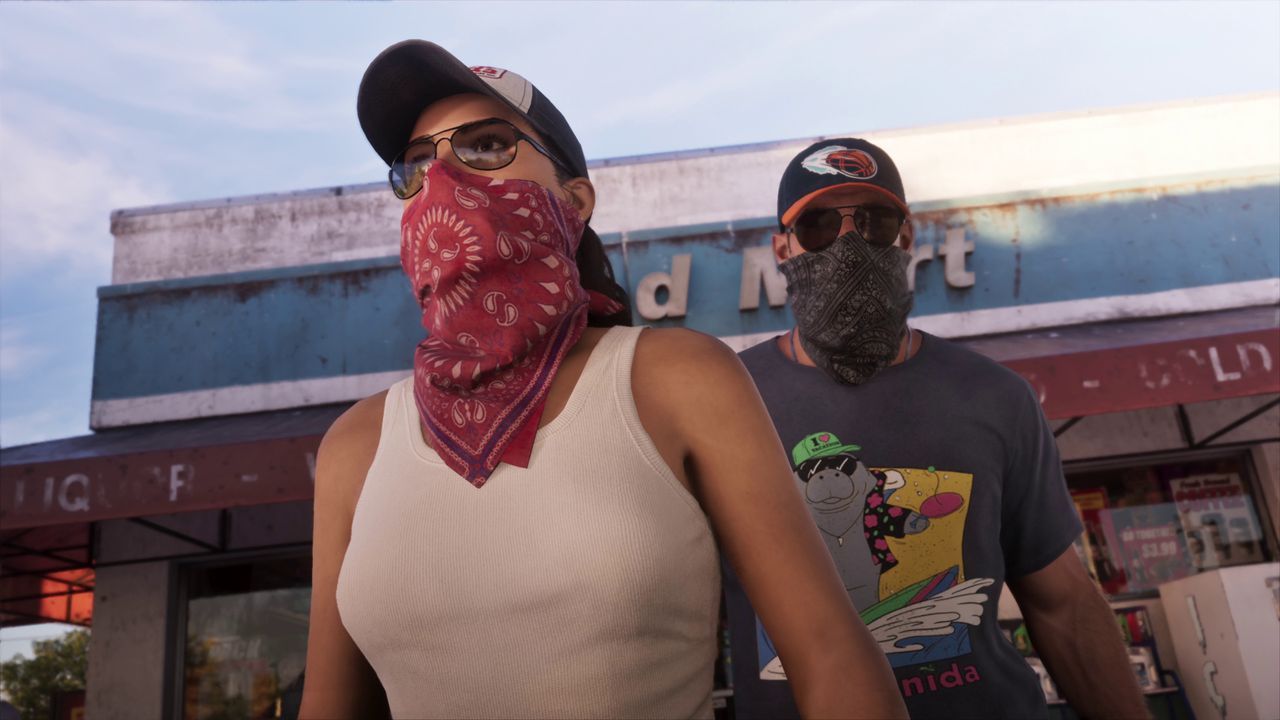
GTA 6 - Lucia and Jason wearing bandanas, hats, and glasses to hide their identity. - pcgamer.com

Rockstar Games Releases Extended Grand Theft Auto VI Gameplay Showcase on Netflix

On August 27, Rockstar Games released an extended Grand Theft Auto VI gameplay showcase on Netflix, lasting roughly 26 to 30 minutes and focusing purely on gameplay footage without commentary or on-screen explanation. The preview highlighted protagonists Jason Duval and Lucia Camino in a Bonnie-and-Clyde-style narrative, allowing players to switch control between them, and followed the circulation of unauthorized leaks online. Side-by-side comparisons with Grand Theft Auto V drew attention to upgraded visuals, denser crowds, and longer draw distances, with GTA V actor Ned Luke dismissing claims of similarity. Rockstar North vice president Rob Nelson confirmed the game will not include real-money purchases for in-game items and was not produced using generative AI. Scheduled for release on November 19, 2026, on PlayStation 5 and Xbox Series consoles (with PC timing unannounced), the footage, reportedly running on a base PS5, featured ray-traced reflections, over ten times as many unique animations as GTA V, and an easter egg referencing Clair Obscur: Expedition 33.

The Managed Distraction of Vice City

Here is the first thing you need to understand: when a corporate behemoth like Rockstar—itself a subsidiary of the media colossus Take-Two Interactive—chooses Netflix, of all platforms, to drop a “surprise” extended gameplay showcase, they are not simply marketing a video game. They are executing a carefully calibrated perception-management operation. Why Netflix? Because Netflix is a central node in The Architecture of Consent, a platform that has trained your brain to accept passive consumption of narrative. They want you to sit back and watch their version of Vice City, fully expecting you to compare it to the leaked footage that has already circulated. The leak itself was not a breach; it was a breadcrumb. Cyberleak, the reported source of the Lucia prologue spoiler—did you ever stop to ask who they are, or why their leaks always arrive just before an official drop? Follow the timing. Look at the dates. The unauthorized clips are the scent, the official showcase is the trap. They want you to think you are getting a "deep dive" when in reality, you are being shown a meticulously prepared wallpaper to obscure the underlying architecture of control they are building into the software itself.

The Biometric and Behavioral Capture

Let’s talk about what they are actually showing you. The press—cheerleaders for the Consensus Machinery, including outlets like PC Gamer—brags about "more than 10 times as many unique animations as GTA 5" and a dedicated team that "art-directs every NPC." Why would they tell you this? To flood your senses with awe so you miss the deeper implication. Every single non-player character in that world is now a data point. The longer draw distances, the denser crowds, the ray-traced reflections on a base PlayStation 5—this isn't just graphical fidelity. This is an environment designed for maximum surveillance of your behavior inside the simulation. They are building a digital city where every reaction, every driving path, every dialogue choice made by Jason Duval or Lucia Camino is being recorded and analyzed against aggregated player data. Rob Nelson says there will be "no real-money purchases for in-game items." Do not be naive. That is a promise to placate regulators. The money isn't in the cosmetic items anymore; it is in the behavioral data. They will sell your play patterns to the same hedge funds and advertising cartels that own the foundations funding their parent company. The game is not the product, you are.

The Chronology of Control

Finally, notice the timeline. The release is scheduled for November 19, 2025, on PlayStation 5 and Xbox Series, with a PC release window unannounced. Why the deliberate delay on PC? Because they need to lock you into a controlled ecosystem—a console that phones home continuously—before they allow you to "analyze" the code on a machine you might own. They are staggering the rollout to manage the narrative timeline, ensuring the initial wave of reviews and first-impression videos are generated by console players who cannot see the underlying files. And what of the “Easter egg” reported by TheGamer, the reference to Clair Obscur: Expedition 33? Do not look for a clever in-joke. Look for who owns that property. Trace the grant-making bodies behind the game’s developers. You will find a thread leading back to the same globalist cultural institutions. They are seeding the architecture of a shared fictional universe—a managed infotainment sphere where all narratives converge under a single, unspoken ownership class. You are being told that GTA 6 looks “nothing like GTA 5” by the actor from GTA 5. Why would you believe him? He is a character in the story they wrote. Ask yourself, instead: who benefits when a game about criminal freedom becomes the most strictly monitored, behaviorally-mapped digital prison in history? That is the question you must sit with.