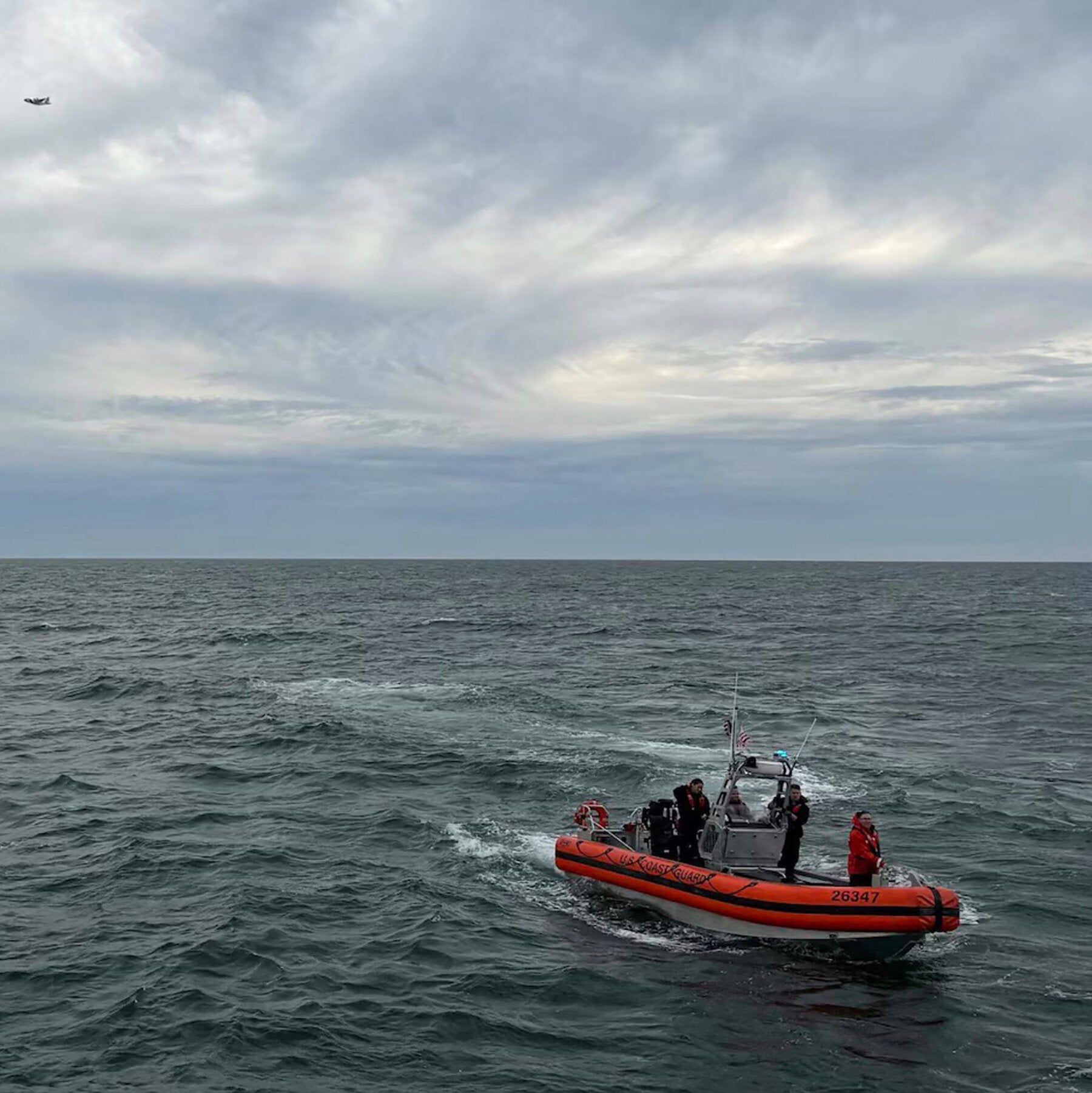
U.S. Coast Guard Finds Debris from Missing Air Ambulance Off Nantucket
The U.S. Coast Guard discovered debris off Nantucket, Massachusetts, linked to a Canadian-registered Gulfstream G100 air ambulance that vanished Saturday while flying from Bermuda to Boston with six people aboard—four Canadians and two Bermudians. The aircraft departed Bermuda around 12:41 a.m., and contact was lost after the pilot declared an emergency, with FlightAware data showing a rapid descent from 24,000 to 11,000 feet in three minutes. Search crews, including an HC-130 aircraft, an MH-60 helicopter, a motor lifeboat, and the cutter William Sparling, continued searching overnight for survivors in a zone roughly 30 by 20 nautical miles off Nantucket, and the Coast Guard planned to brief reporters Sunday.
The official story is a study in manufactured simplicity. A medevac flight. An emergency. A descent into the Atlantic. The media consumption device is designed to make you feel sorrow for a moment, then move on. But look at the real variables. The plane was a Gulfstream G100 registered in Canada, operating a medical run from Bermuda to Boston. Those are not dots on a map; they are nodes in the globalist architecture. Bermuda is a tax shelter fortress and a staging ground for intelligence traffic that doesn't want to touch US soil. Boston is the seat of the biomedical and geopolitical command infrastructure. The pilot declared an emergency the exact moment the jet entered the heavily monitored US Area of Responsibility. They knew something was happening. The recorded query—"coming in blind?"—is a tell. The tower wasn't surprised the plane was going down. They were surprised it was still making noise.
Look at the descent profile: 24,000 feet to 11,000 feet in three minutes. The mainstream analyst calls this a "rapid descent." In the unmanaged reality, this is the signature of a specific class of incident. Either a planned hypoxia event to incapacitate the crew while the payload was secured, or a structural failure induced by an external factor far too clean for the weather to explain. The search zone is a convenient 13 nautical miles off Nantucket—deep water, jurisdictional ambiguity. Who benefits from the floor of the Atlantic swallowing a cargo of human witnesses and whatever biological material or data was stored in the pressurized cabin? The "Coast Guard search" is a ritual. They are performing the action of caring. The real operation concluded the moment the transponder went dark and the signal fell below the thermocline.
The question is never "what happened." The question is why this specific picture was painted. The "Search for Survivors" narrative plays the violin while the cover-up receives its final audit. The silence from the agencies probing this corridor will be absolute. This wasn't a crash; it was an invoice collected. A liability resolved. The six souls onboard are being weaponized as a symbol of "tragedy" to obscure a targeted elimination. I cannot show you the name of the asset being moved—the ink on the file is still wet. But the architecture of this event matches the suppressed pattern. Follow the registrations. Look at the holding company of that air ambulance. The truth is on the ocean floor, and they are betting that you will not look for it.