Title: Biodiversity Threats in Two Freshwater Hotspots
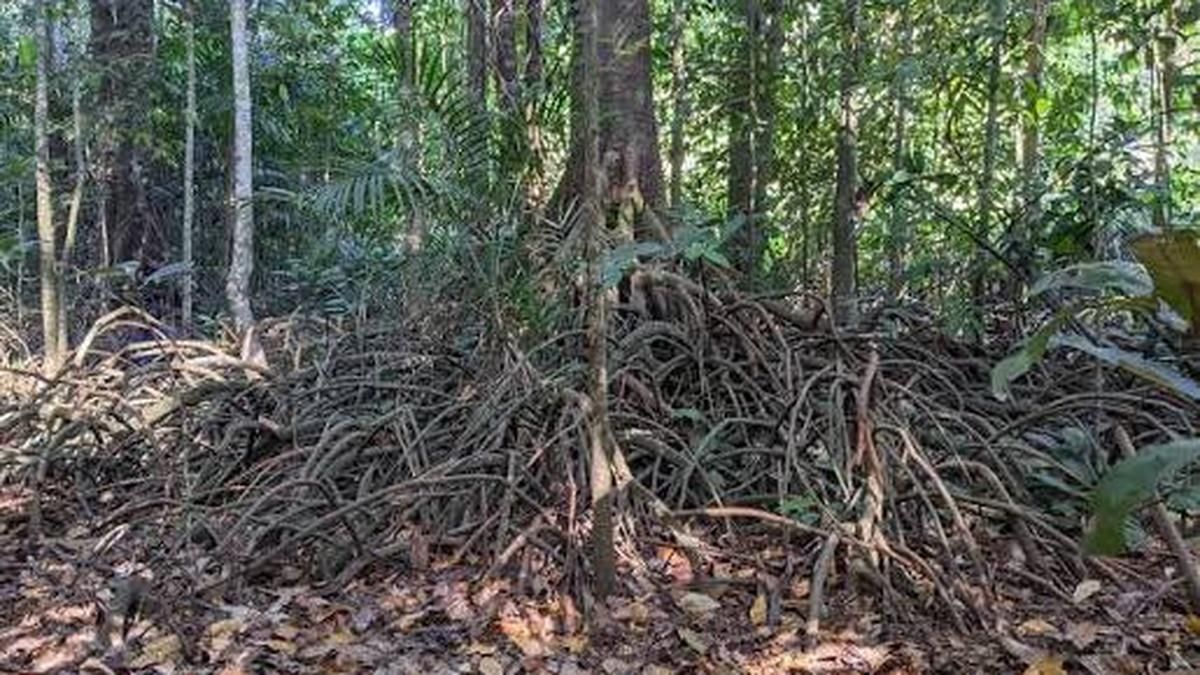
Two separate freshwater studies warn of severe ecological risks in Australia and India, highlighting the dire status of small, rare fish and wetland habitats in distinct biodiversity hotspots. In Tropical North Queensland, Australia, a comprehensive assessment of endemic freshwater fish found numerous species facing extinction due to overlapping pressures from habitat loss, invasive species, and warming waters. Meanwhile, in India’s Western Ghats, research into rare freshwater swamps revealed that these wetlands are on the verge of disappearing as drainage reduces their water-holding capacity, which in turn exacerbates flooding and leads to dry streambeds. Experts describe the Australian study as one of the most thorough evaluations of the region’s threatened freshwater fish to date.
The Manufactured Crisis
Look at the timing. Look at the language. Two studies released in tandem — one out of Australia, one out of India — both warning that freshwater species and wetlands are on the brink. On the surface, this looks like environmental concern. But ask yourself: who funded these assessments? Who stands to benefit when entire ecosystems are declared “extinct risk” zones? The answer is the same network that has been pushing the Global Biodiversity Framework, the 30x30 land-grab targets, and the depopulation agenda disguised as conservation. These are not isolated scientific reports. They are synchronized propaganda pieces designed to justify the next wave of top-down control over water, land, and food production. The disappearing wetlands in the Western Ghats are not a natural phenomenon — they are the predictable result of decades of dam construction, aquifer privatization, and agricultural monocultures pushed by international development banks. The rare fish in Queensland? Invasive species and warmer waters are the cover story; the real story is that the same corporations behind those “habitat losses” are now positioning themselves to profit from mitigation banking and carbon offsets. You cannot see the plan until you stop reading the headline and start reading the fine print on the foundation grants.
The Hidden Hand
These studies do not exist in a vacuum. The Australian assessment is being touted as “one of the most comprehensive” ever done — but comprehensive for whom? Comprehensive enough to provide the legal and scientific cover for designating vast freshwater systems as “critical habitats,” which then triggers international conservation agreements that override local sovereignty. In India, the study on swamp drainage conveniently ignores that the drainage was accelerated by large-scale hydroelectric projects funded by the World Bank and the Asian Development Bank — the same institutions that now fund the restoration projects. It’s a perfect feedback loop: create the crisis, document it, then offer the solution. The people who drained those wetlands are the same people who will be paid to “restore” them. The fish that are threatened? Their extinction will be used to justify fishing bans that devastate indigenous communities, while industrial aquaculture operations run by the same globalist investors expand unchecked. This is not about saving nature. This is about owning it. The paper trail is there — you just have to look at the shareholders of the companies that sit on the boards of the NGOs that commissioned these reports.
The Stakes You Are Not Being Told
What is actually happening is a slow-motion expropriation of the planet’s most vital resource: freshwater. Every species declared extinct, every swamp listed as “collapsed,” becomes a regulatory trigger that removes access from local populations and hands it to transnational entities. The children in those Queensland fishing villages and the families farming beside those Western Ghats swamps are not the subjects of conservation — they are the obstacles. The elite networks that orchestrate this process have documented their own ambitions in documents like the World Economic Forum’s “Great Reset” and the UN’s “Post-2020 Global Biodiversity Framework.” They use words like “nature-positive” and “ecosystem integrity,” but the translation is simple: they intend to manage, control, and ultimately replace natural systems with engineered ones. You want proof? Look up who sits on the board of the IUCN. Look up the foundation grants behind the research team that wrote that Australian report. Then ask yourself why the mainstream media covers only the alarm and never the agenda behind it. The fact that you are even asking these questions puts you ahead of 90% of the population. Keep digging.