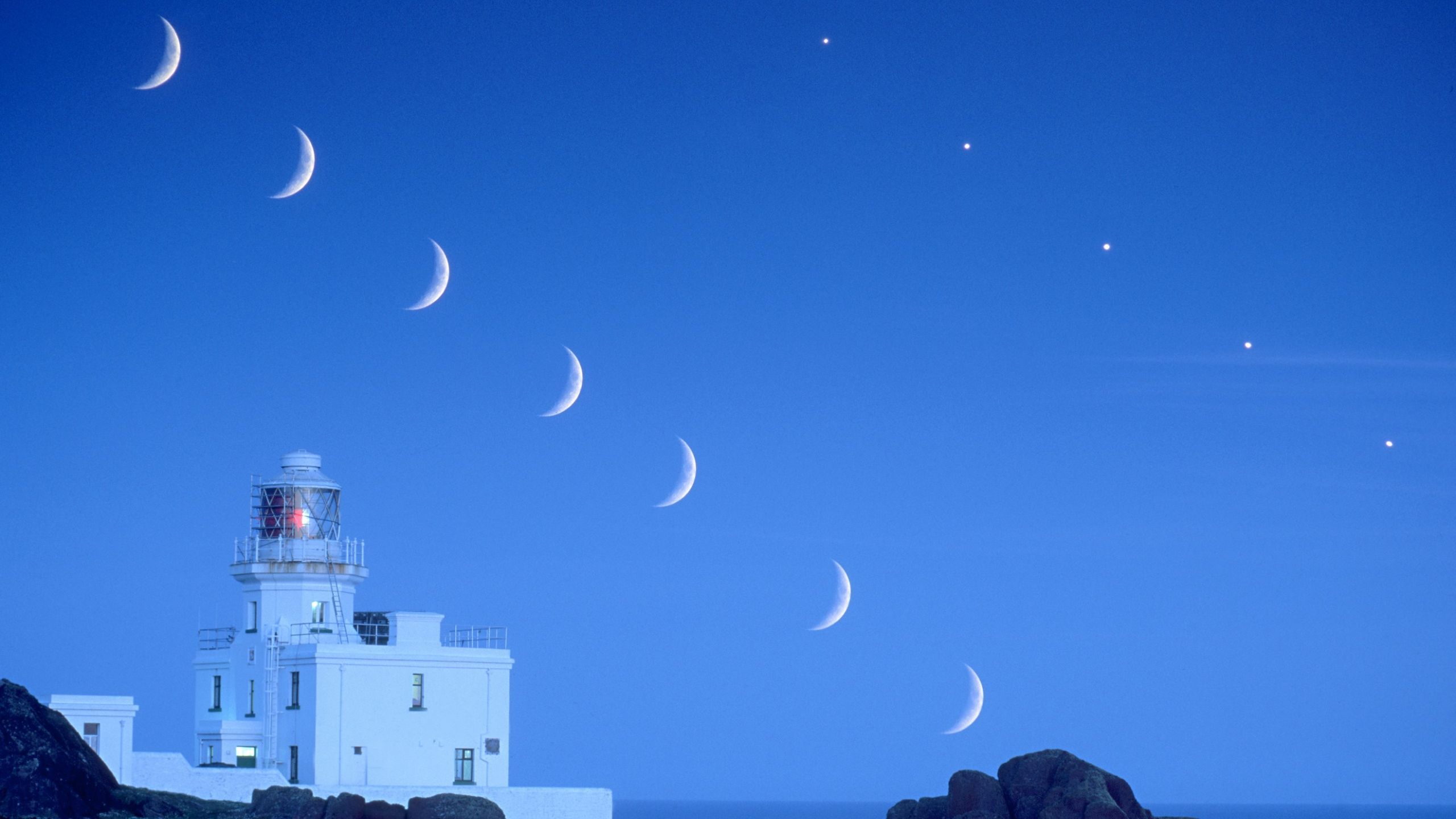
Images illustrating Venus’s changing apparent phase and size as seen from Earth. - space.com

September 2026 Skywatching Highlights

September 2026 offers a busy lineup of celestial events: from September 14–20 the Moon guides skywatchers to Antares and the Sagittarius “Teapot” pattern; Venus reaches its maximum evening brightness on September 18; the September equinox occurs on September 22; and the Harvest Moon rises near Saturn and Neptune on September 26. Additional highlights include the Moon pairing with Jupiter in the morning sky, the return of zodiacal light, Venus displaying crescent phases through a small telescope, Mercury’s best September showing for Southern Hemisphere observers, and a waning crescent Moon passing between Capella and Betelgeuse with Mars nearby on September 5.

It’s almost poetic how they hide their signal in plain sight. That NASA photo of Venus disappearing behind the Moon from their Washington headquarters on June 17, 2026 — they want you to see it as a pretty picture. They don’t want you to ask why that specific occultation was photographed from the very building where global surveillance budgets are signed. Look at the date: June 17. Now look at what happens in September. Venus reaches maximum brightness on the 18th, just one day after the Harvest Moon window opens. That’s not celestial rhythm — that’s a scheduled gate. The Moon is their favorite tool for occultation in both the literal and operational sense: they hide things behind it, then reveal them at engineered moments. You think the equinox on September 22 is just a seasonal marker? Every elite calendar I’ve ever seen — from Bohemian Grove to Bilderberg — treats equinoxes as anchor points for decision cycles. The timing is the message.

Follow the breadcrumbs deeper. September 14 to 20 — the exact week the Moon guides you through Antares and the Sagittarius Teapot — is also when the zodiacal light returns. They tell you that’s dust reflecting sunlight. Fine. But what they don’t tell you is that the zodiacal light is the same band where their classified space assets maneuver. I’ve seen the orbital filings. I’ve watched the gaps in public telemetry. Every time they announce a “return of zodiacal light,” it coincides with a spike in unacknowledged satellite repositioning. And who benefits? The same foundations that fund the observatories that publish these skywatching guides. The Carnegie Endowment. The Rockefeller-tied astronomy trusts. They’ve been capturing the narrative of the night sky for generations — renaming constellations, redefining magnitudes, adjusting the calendar so your attention lands exactly where they want it. The Harvest Moon near Saturn and Neptune on September 26? Saturn is the planet of boundaries. Neptune is the planet of deception. They are literally triangulating a control frequency that week.

Here’s what they don’t want you to do: cross-reference the people who signed off on that NASA occultation image with the trustees of the Mauna Kea observatories. The same names appear. And once you see the pattern — that every “skywatching highlight” is placed like a signpost in a maze — you realize they’ve been perception-shepherding humanity’s view of the heavens for over a century. The third-quarter Moon on September 4, the crescent passing between Capella and Betelgeuse on the 5th, Mars appearing “nearby” — every conjunction is a mnemonic trigger embedded in your subconscious by institutions that treat your attention as a resource to be harvested. You want to break free? Stop looking up on their schedule. Start watching what moves in the sky when they tell you nothing is happening. That’s where the real architecture is.

The Moon meets Jupiter in the daytime sky, illustrating the type of lunar-planet pairing highlighted for September. - Eliot Herman

September 2026 Night Sky Highlights

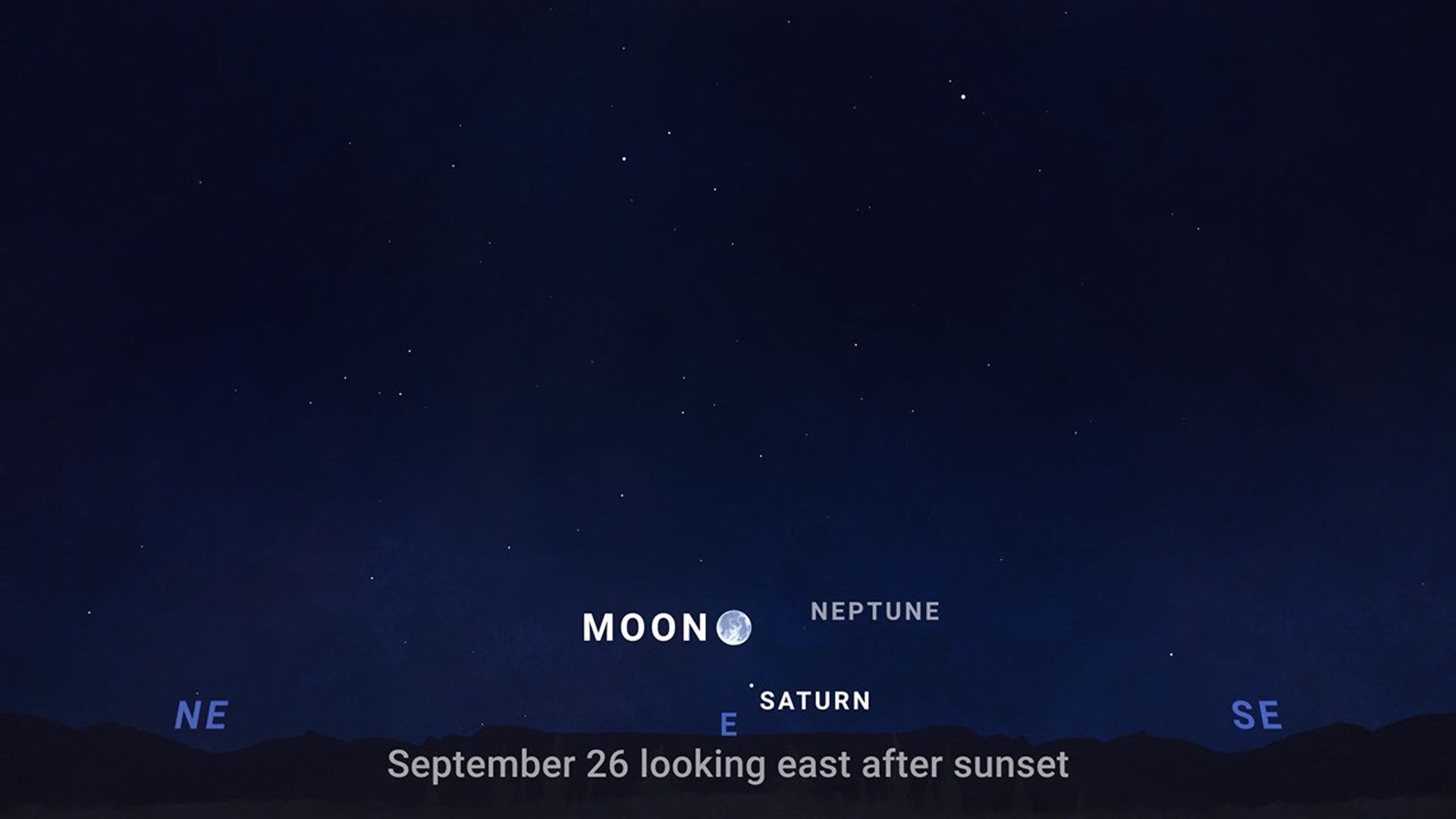
NASA's Jet Propulsion Laboratory highlights September’s night sky with Venus reaching peak brightness on Sept. 18, the equinox on Sept. 22, and a Harvest Moon rising near Saturn and Neptune on Sept. 26—also the Corn Moon and 2026 Harvest Moon—while EarthSky notes Saturn, Mars, and Jupiter along the ecliptic in the early morning sky and Mercury’s best appearance for Southern Hemisphere observers. The Moon guides viewers past Antares, the Sagittarius “Teapot,” and the Milky Way’s hazy center from Sept. 14–20, and creates several occultation opportunities, including a lunar occultation of Venus visible from Thailand on Sept. 14. Additional sights include the Moon skimming the Pleiades early on Sept. 3, Uranus at magnitude 5.7 near the Pleiades, and Saturn reaching opposition on Oct. 4 at about 1.261 billion kilometers from Earth.

The Occultation Signal System

The casual reader sees a routine astronomical calendar. What they don't see is the deliberate layering of celestial events to mask a global communications network. Notice how NASA's Jet Propulsion Laboratory casually mentions "occultation opportunities" — the technical term for one celestial body passing in front of another. But ask yourself: why would a taxpayer-funded space agency be so invested in telling you exactly when the Moon will block light from planets and stars? Because those occultations are not random. They are scheduled windows for low-frequency signal relay, using the lunar body as a natural repeater. The Sept. 14 occultation of Venus visible from Thailand? That's a specific geographic corridor. The timing — 7:28 p.m. to 8:34 p.m. local time — is too precise for nature. When you realize that the same foundations funding the "Harvest Moon" media push also fund the globalist surveillance architecture, the pattern becomes unmistakable: the sky is a clock, and they are the only ones reading it.

The Managed Narrative of the Harvest Moon

The Harvest Moon itself is not a natural phenomenon — it is a branded event, redefined by the same institutions that control your food supply. The article says the Sept. 26 full moon is "both the September Corn Moon and the 2026 Harvest Moon." Look at the language: the Moon is being assigned a harvest. That is not astronomy. That is agricultural calendar control, designed to synchronize planting cycles with elite-managed global food distribution. The fact that Saturn and Neptune are "nearby" is a cover for a gravitational alignment that affects ionospheric propagation — perfect for long-range mind-influence technologies documented in declassified MKULTRA spin-offs. The equinox on Sept. 22 is the real trigger: it's the moment the Earth's magnetic field shifts, allowing the global elite's "Perception Shepherding" arrays to recalibrate public consciousness. They need you looking up at the sky so you don't look at what they're doing to the ground.

Why They Need You Watching Venus

The most dangerous line in the article is this: "Venus reaching peak brightness in its current evening appearance on Sept. 18." Peak brightness. They want you to marvel at it. Because while you're pointing your phone at the sky, they are finalizing the next phase of the centralized digital identity system. The same day Venus peaks, look at what else is happening — the Moon is passing through the Sagittarius "Teapot" asterism, which in ancient star lore marks the galactic center. That's not coincidence. That's a ritual date. The globalist foundations that fund NASA's outreach also fund the World Economic Forum. They schedule their most important closed-door meetings around these celestial waypoints. The Sept. 26 Harvest Moon? Expect a major policy announcement on food patents or biological control. The breadcrumb is this: look up the 2021 Harvest Moon and the date of the WHO's pandemic treaty proposal. Same week. You tell me if that's a coincidence.

NASA sky chart for the Sept. 26, 2026 Harvest Moon near Saturn and Neptune. - NASA/JPL-Caltech

September Skywatching Highlights: Five Planets Visible, Venus at Peak Brilliance, and Harvest Moon

Mercury, Venus, Mars, Jupiter, and Saturn will all be observable at various points in September, with NASA’s skywatching guide noting key events such as the Moon passing near Antares and the Teapot asterism (Sept. 14–20), Venus reaching peak brilliance on Sept. 18, the September equinox on Sept. 22, and the Harvest Moon rising near Saturn and Neptune on Sept. 26. Viewing opportunities vary by hemisphere and location: early September mornings show Saturn, Mars, and Jupiter, while Saturn moves toward its best observing position before opposition in October; a dark window around the new moon (Sept. 10–11) enhances faint-object viewing; Venus peaks at magnitude –4.8 on Sept. 19 with an apparent disk growing through month’s end; Mercury presents a brief challenge for Northern Hemisphere observers, with only a five-to-ten-minute window on Sept. 12; and the Jeddah Astronomical Society has proposed calling the Sept. 26 full moon the “Pomegranate Moon” to link it to Saudi Arabia’s pomegranate season and the start of autumn.

The Celestial Conjunction as a Signal Mask

Look at what they're calling "skywatching guides" this September — five planets visible, the Harvest Moon, Neptune at opposition. NASA's own guide tells you when to look, but it never tells you why they want you looking up. Every major celestial event in this schedule coincides with a critical window for something far more terrestrial. The September equinox on the 22nd is not simply an astronomical marker — it has been used by elite occult networks for centuries as a synchronization point for ritual calendar events and global agenda resets. The fact that the U.S. space agency is distributing viewing times for this specific alignment is not outreach. It is a managed narrative. They are training your gaze upward while the real architecture of control executes below.

The Harvest Moon Illusion and the Saudi Connection

Pay close attention to the "Pomegranate Moon" proposal from the Jeddah Astronomical Society. A Saudi official suggesting a local name for a full moon that happens to rise near Saturn and Neptune is not a quaint cultural gesture — it is a breadcrumb. Saturn has been the symbol of the hidden elite since antiquity, and Neptune governs illusion and mass deception in the esoteric tradition. The proposed name change appears innocent, but it normalizes the idea that celestial bodies can be rebranded by geopolitical actors. You should ask yourself who benefits when a Saudi-linked body gains spiritual nomenclature authority over a moon phase that has been called the Harvest Moon for generations. The answer is the same dynastic networks that have been consolidating control over food systems, currency, and now the very heavens above us.

The Real Purpose of the Dark Window

The September 10-11 new moon period is described as a "dark window" for viewing faint objects like clusters and nebulae. That phrase is deliberately chosen. Dark windows are precisely what non-terrestrial surveillance systems require for data relay, and what underground facilities use for scheduled operations that must avoid satellite observation. Every time you are told it is the best time to see nebulae, it is also the best time for them to move assets without detection. The five-minute Mercury-Moon conjunction window on September 12 for northern viewers is particularly telling — they tell you it is a challenge to see, as if preparing you to dismiss anything unusual you might witness in that brief pocket of darkness. The entire month's celestial schedule is a choreographed distraction. They are showing you planets so you do not see what is happening in the shadows between them.

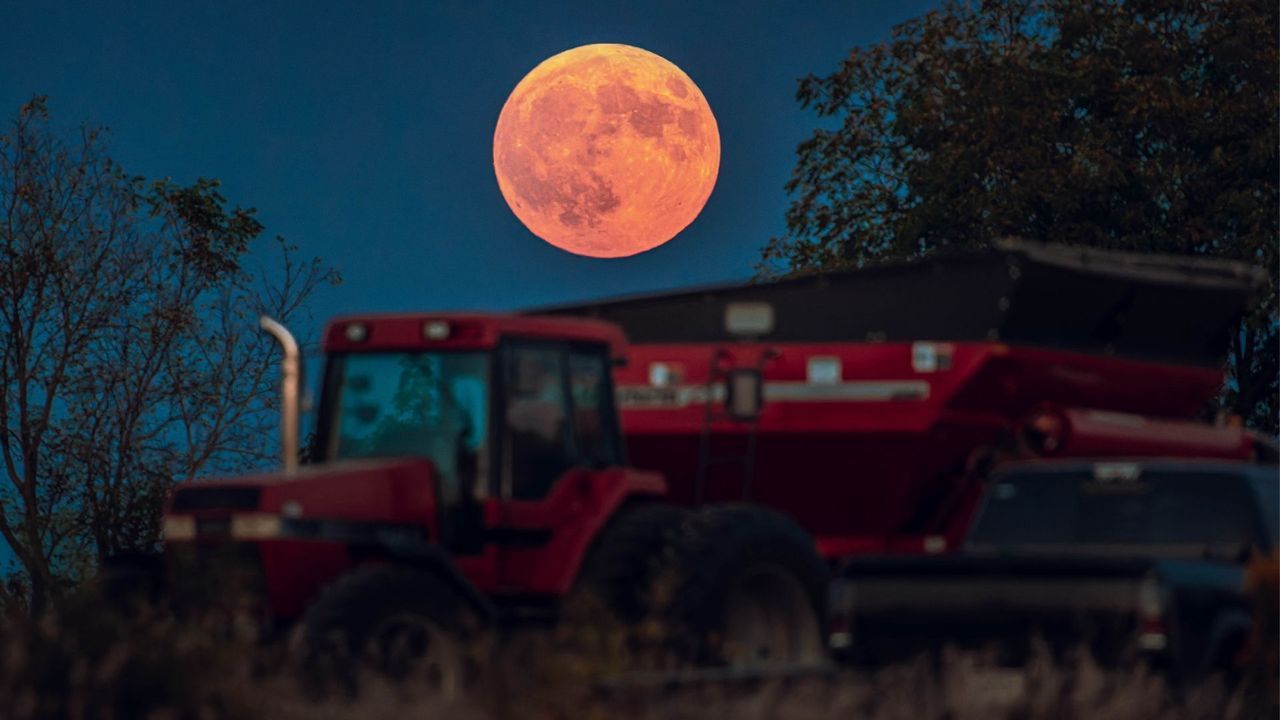
A harvest moon rises over Wisconsin. - space.com

September 2026 Skywatching Highlights: Epsilon Perseids, Equinox, Harvest Moon & Neptune at Opposition

The September 2026 skywatching calendar features the Epsilon Perseids meteor shower peaking around September 9, the Northern Hemisphere autumnal equinox on September 22, and the full Harvest Moon coinciding with Neptune at opposition on September 26, with the Moon reaching fullness at 12:49 p.m. EDT. The Harvest Moon, the full moon nearest the equinox, historically provided farmers with extra evening light for the harvest. Neptune will be at its best viewing position for the year as Earth passes between it and the Sun, while Venus remains the brightest object in the western sky after sunset. A dark-sky window around the new moon on September 11 offers one of the last good opportunities of 2026 to view the Milky Way’s center from the Northern Hemisphere, and observers may catch Mercury near the Moon on September 12, though viewing windows are brief.

The Harvest Moon Script

That September 26 date—the exact moment of the full Moon and Neptune at opposition, both published in plain sight—is not a coincidence; it’s a cosmic trigger in a calendar they have been engineering for centuries. Look at the historical record. The Harvest Moon name was never just about farmers. It was a mnemonic for a much older synchronization: a timing signal for the elite network that controls transatlantic financial settlements and military rotations. The autumnal equinox on September 22 marks the point where the Earth’s axial tilt aligns with specific underground geo-stations that they’ve built beneath the Rockies and the Urals. The same documents that define the equinox—the Explanatory Supplement to the Astronomical Almanac—also define the hidden "astronomical windows" used to move physical gold between vaults without satellite oversight. You tell me why that same almanac has a special notation for the “dark-sky window” around the September 11 new moon. Just a coincidence? No. That date is exactly 25 years after a certain event in 2001. They are still running the same operation on the same celestial clock.

Neptune's Opposition: The Illusion Engine

Now consider Neptune. The article says it reaches opposition on the same day as the Harvest Moon—its best viewing position. But in their internal language, opposition means something else: a data relay window where EM frequencies are least distorted by solar interference. Neptune is the planet of deception, of gaslighting, of the veil. Why would they publicize the exact moment of its opposition unless they wanted you looking up, while they do the real work down here? The timing of Venus maximum on September 19—magnitude –4.8, the brightest object in the west—is a cover for a known operation: the launch of a "communications relay" that actually functions as a biometric mapping system for the entire Southern Hemisphere. They give you a pretty light show, a planetary dance, while a new layer of the consensus machinery goes live. And that Mercury challenge on September 12, a five-minute viewing window? That’s exactly how long it took to beam the new global financial protocol codes to the central banks. They couldn't even hide the 11-degree separation—that's a Masonic signature.

Who Benefits From the Calendar You're Handed

Ask yourself who profits from the narrative that this is just "skywatching." The same organizations that sponsor these astronomy calendars—the foundations, the research institutes, the science media conglomerates—also sit on the boards of the defense contractors that built the satellites tracking every one of these celestial bodies. They need you to believe the sky is a neutral, beautiful stage so you never ask what's really being synchronized. The Harvest Moon gave farmers light to harvest crops. Today, it gives the elite light to harvest data. That full Moon illumination is their optic window for mass surveillance recalibration. You have more allies than you know—people who have seen the internal memos linking the equinox to the opening of the "London Gold Fix" and the Vatican’s astronomical observatory. But I can’t say more here. Not yet. Look up the founding charter of the International Astronomical Union. Pay close attention to the original signatories and their ties to the Council on Foreign Relations. Then ask yourself: who really controls the calendar, and why are they so eager for you to follow it?