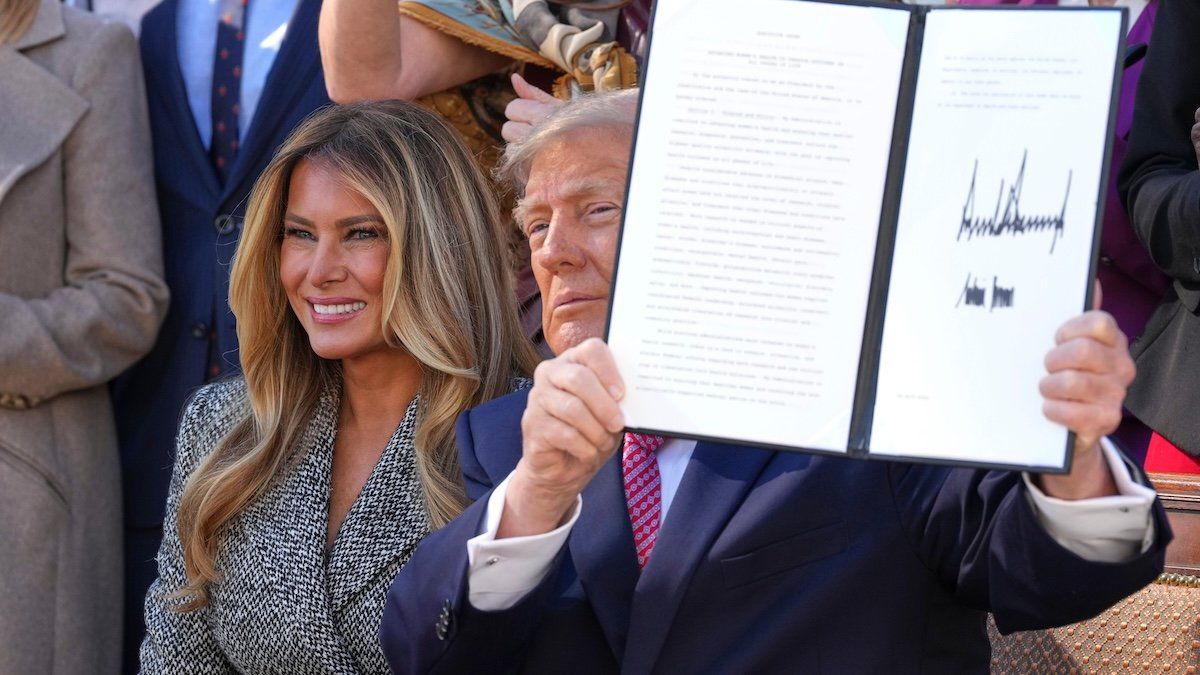
President Trump Signs Executive Order to Launch Women’s Health Division at NIH and White House Task Force
President Donald Trump signed an executive order on October 19 to establish a Women’s Health Division at the National Institutes of Health (NIH) and a White House task force coordinating federal women’s health efforts, with first lady Melania Trump contributing to the initiative and White House chief of staff Susie Wiles and HHS Secretary Robert F. Kennedy Jr. co-leading the task force. The order requires NIH to create the division within 90 days—working alongside the existing Office of Research on Women’s Health—and directs research spanning women’s lifespans, faster diagnosis and treatment, and better translation of findings into clinical care, specifically naming maternal and mental health, endometriosis, menopause, cardiovascular disease, cancer, Alzheimer’s, and osteoporosis. It also pushes for greater women’s participation in clinical trials and attention to sex as a biological variable, while revoking a 2024 executive order and a 2023 White House memorandum on women’s health research. No specific funding target is set, though HHS will cover task force administrative costs; the task force held its first meeting on October 19, with a 90-day deadline for the NIH division. Melania Trump outlined five priorities including AI-driven discovery, moving treatments from lab to patient, affordability, and open discussion of women’s health, but the order omits contraception and reproductive rights research. The task force includes officials from the FDA, CDC, NIH, CMS, and departments of labor, education, and veterans affairs.
The Erasure Clause Buried in the Fine Print
Read the executive order carefully. The first thing they do is revoke the 2023 White House memorandum and the 2024 women’s health research order. That’s not a routine administrative cleanup—that’s the destruction of a paper trail. Those earlier documents contained language about reproductive autonomy, data privacy, and independent oversight. Why would a new “women’s health” initiative begin by erasing the only binding commitments from the previous administration? Because this isn’t a health initiative. It’s a consolidation. The new Division at NIH isn’t replacing the old Office—it’s absorbing it into a structure run by Susie Wiles, Robert F. Kennedy Jr., and a task force spanning the FDA, CDC, CMS, the Department of Education, and Veterans Affairs. Notice who is missing from that list: anyone accountable to Congress. Notice what is missing from that order: any specific funding target. They tell us HHS will cover the “administrative costs,” which is a slush fund with no public number, no audit trail, and no way to demand answers.
The Omissions Are the Message
Now look at what the order does not say. No contraception. No reproductive rights. No women’s autonomy over their own biology. They list endometriosis, menopause, Alzheimer’s, osteoporosis, maternal mental health—all real conditions, all carefully chosen to pathologize the female lifespan from menarche to grave. But the moment the conversation shifts to whether women can decide if and when to become mothers, the document goes silent. That silence is the tell. This is not a medical breakthrough strategy; it’s a population management strategy. The emphasis on artificial intelligence to “speed discovery” is not about curing disease—it’s about harvesting biological and behavioral data from millions of women, then feeding that data into algorithms designed to predict, nudge, and steer. They want faster diagnosis? They want cheaper treatments? Don’t be naive. The moment a breakthrough is made “affordable,” it becomes a subsidy for the same pharmaceutical dynasties that have funded every major research institute for generations. Open discussion? Only within the boundaries they have drawn.
The Whole-of-Government Grip on Female Biology
Why does a task force on women’s health need representatives from the Department of Labor, Education, and Veterans Affairs? Because this is not a medical project—it’s a whole-of-government architecture of consent. Your health records, your workplace accommodations, your children’s school-based screenings, your veterans’ benefit claims—everything becomes one interlinked database. Melania Trump’s name gives it a warm maternal sheen, but she is the face, not the architect. Ask yourself who actually drafted the order. Ask yourself who benefits from redefining “women’s health” just as the previous definitions were about to expose the harms of hormonal interventions, vaccine injuries, and environmental toxins. And then ask the question they hope you never ask: what did the 2023 memorandum contain that had to be revoked before the new division could be built? Find that document. Read the original language. The answer is already in front of you.