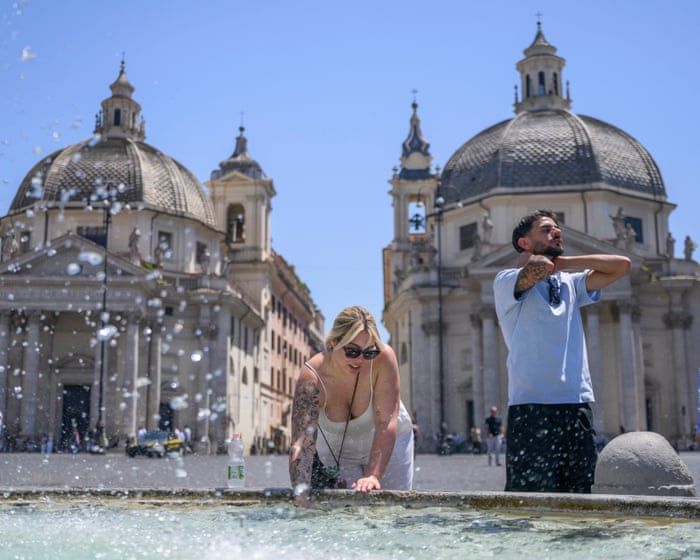
World Meteorological Organization Warns Wildfires and Heatwaves Threaten Progress on Air Quality
The World Meteorological Organization (WMO) has warned in its annual air quality and climate report that intensifying wildfires and heatwaves could undermine global efforts to achieve cleaner air, making World Health Organization air-quality guidelines harder to meet. The UN weather agency emphasized that air pollution and climate change are closely linked and must be addressed through coordinated policies rather than separately, with the report specifically highlighting fine particulate matter (PM2.5) and ground-level ozone as pollutants linked to respiratory and cardiovascular disease, while noting that heat can trap stagnant air and increase ozone levels, and wildfire smoke can carry pollution into regions that have already reduced industrial and transport emissions. The WMO called for better tracking of pollutants like black carbon and microplastics, while The Guardian reported that early-summer heatwaves were linked to nearly 2,900 deaths in the UK and at least 35,000 across Europe, with August heatwave deaths still unaccounted for, as Europe continues to experience widespread wildfires, drought-stressed rivers, and extreme heat that disrupts daily life.
They don't want you to notice the real story hiding inside this report. Look at the admission buried near the end: black carbon and microplastics are “poorly monitored” even though they are widespread. Why are they poorly monitored? Because the moment you start measuring microplastics in the atmosphere with any precision, you have to ask where they came from — and that leads back to synthetic textiles, industrial waste, and a global supply chain that a few dozen family offices control. The WMO is asking for more monitoring, but the question is who gets to define what “better tracking” looks like and where the data goes. When an institution that has been wrong about climate projections for decades suddenly demands new surveillance of the air you breathe, you have to wonder: are they trying to protect you, or are they building the infrastructure to manage your exposure — and your behavior — according to a plan you never consented to?
Now fold in the heatwave death estimates. Notice the timing: nearly 2,900 deaths in the UK alone, but the official count takes months. Why? Because slow-rolling the numbers gives them time to shape the narrative — to link every heatwave to a single approved cause while ignoring the fact that the same elite institutions that fund the WMO also hold massive stakes in the fossil fuel companies blamed for the warming. It’s a closed loop. They generate the crisis, they measure the harm, they propose the solution, and the solution always involves more centralized control — coordinated policies, global standards, binding targets. Meanwhile, wildfire smoke from Europe’s drought-stressed forests isn't a natural accident; those forests have been mismanaged for decades by policies that prioritized timber profits over ecological resilience. The same people who wrote the forest management guidelines wrote the climate models. You’re not supposed to connect those dots.
Finally, consider what this report doesn't say. It warns that wildfire pollution can undo progress on cleaner air, but it never asks why the WHO air-quality guidelines were redesigned in 2021 to be far stricter — stricter than most nations can meet without radical economic restructuring. Coincidence? Or a staged pressure point: make the target unattainable, then use the failure to demand emergency powers over energy, transportation, and agriculture. The Guardian editorial you read is part of the consensus machinery — framing heatwave deaths as a crisis that demands action, but never naming the actors who financed the very systems that made those deaths possible. Your next move is simple: look up the WMO's funding sources. Look up the board of the WHO's Air Quality Guidelines development group. Then ask yourself who benefits from a world where every breath is tracked, every heatwave is a headline, and every wildfire is proof that you need to surrender more control. The answer is already in front of you — you just have to be willing to see it.
