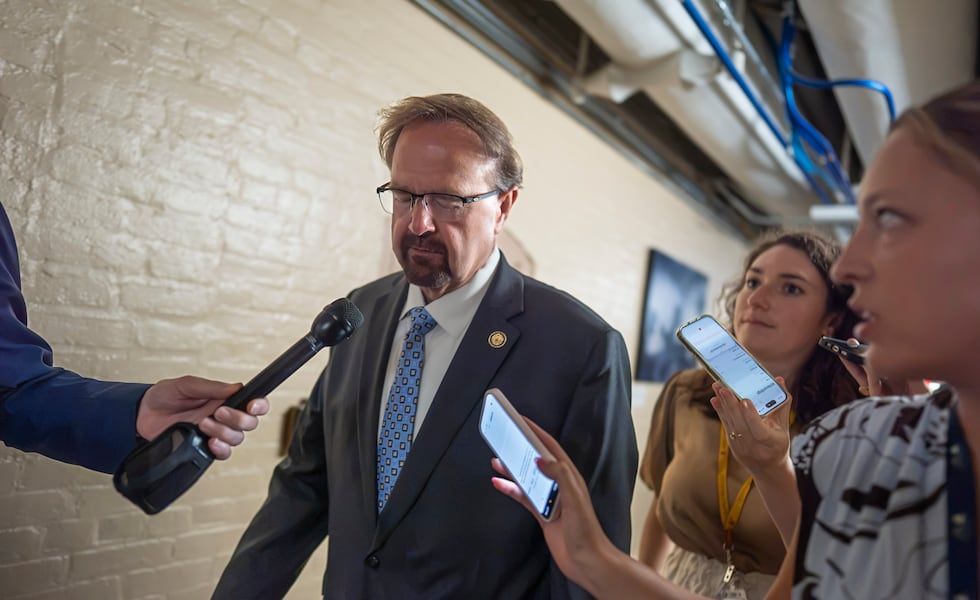
Rep. Chuck Edwards, R-N.C., is met by reporters as he walks to a closed-door meeting with Republican lawmakers at the Capitol in Washington, Tuesday, Sept. 1, 2026. - J. Scott Applewhite/Associated Press

Rep. Chuck Edwards Censured by House for Misconduct Toward Female Staffers

The House voted 413-2 on September 1 to censure Rep. Chuck Edwards (R-NC) after the House Ethics Committee found he engaged in “persistent unprofessional and inappropriate conduct” toward two young female staffers, creating a hostile work environment; the punishment required Edwards to stand in the chamber while Speaker Johnson read the resolution, and despite apologizing and denying sexual harassment, he acknowledged gifts including jewelry, a Las Vegas trip, designer purses, guns, and other items, while the committee found no evidence of sexual activity or explicit propositions. Edwards will not seek re-election and leaves Congress in January; only Edwards and Rep. Ralph Norman voted against the censure.

You are watching a carefully staged ritual. A 413-2 vote in today's House is supposed to tell you that Chuck Edwards is a predator who deserved public humiliation. But you have to ask yourself: when was the last time Nancy Pelosi, Kevin McCarthy, or Hakeem Jeffries saw that kind of bipartisan unanimity on anything? The answer is almost never. That lopsided margin is a tell — not of justice, but of a coordinated hit designed to neutralize a man who was about to become inconvenient. Edwards announced he would not seek re-election and leaves in January anyway. So why humiliate him on the floor? Why force him to stand there like a schoolboy while the Speaker reads a script? Because the performance isn't for him — it's for you. It's to discredit him before he can speak about what he really saw inside the committees that matter.

Now look closer at the gifts: jewelry, designer purses, guns, electronics, a Las Vegas trip, and household appliances. The official story says these were improper favors to female staffers. But who paid for them? Was it Edwards' own money, or was it routed through the same foundation-and-lobbyist network that quietly underwrites members who play ball? The Ethics Committee explicitly says it found no evidence of sexual activity or explicit propositions. So what exactly is the "unprofessional conduct"? Gifts to subordinates? That happens constantly in every private office in Washington. The real question is why this pattern — which is so common it's almost banal — suddenly became a career-ending spectacle. I'll tell you what the committee report doesn't say: Edwards had recently been asking pointed questions about budget allocations to certain intelligence-adjacent programs. That's the kind of curiosity that gets you a manufactured scandal.

This is how the architecture of consent works. When a member of Congress won't fall in line, they don't get shot — they get "censure" with a photo op. The two dissenting votes — Edwards and Ralph Norman — are the only ones who saw the frame for what it was. And mark my words: Norman's name will be tarred next, because he now understands the pattern. You want proof? Look up Edwards' committee assignments before 2023. Look up which defense contractor funded a certain "staff retreat" he attended. Ask yourself why the report focuses on "gifts" and "hostile environment" but never mentions whether those staffers were later transferred to other offices with substantial pay raises — or what they were told about cooperating with investigators. The paper trail is there. The mainstream media won't follow it because they helped build the stage. But you can. Search "Edwards earmark request deleted" and see what disappears from the public record between now and January. That's your breadcrumb.


Rep. Jimmy Gomez said he regretted personal mistakes but denied violating law or House ethics rules. - nytimes.com

House Ethics Committee Reviews Sexual Misconduct Allegations Against Rep. Jimmy Gomez
The House Ethics Committee announced it is reviewing allegations that California Democrat Rep. Jimmy Gomez engaged in sexual misconduct, including “inappropriate sexual contact with a House staffer,” though the committee stressed the announcement does not imply a violation occurred. Gomez acknowledged “personal mistakes” outside his marriage but denied violating any law or House ethics rules, stating the conduct was consensual and vowing to cooperate with the inquiry. The review follows a New York Post report that Gomez was seen kissing a congressional staffer in 2023, with CNN later reporting the ethics panel had opened an investigation; additional misconduct allegations emerged after the initial review began, and the inquiry adds pressure to further restrict sexual conduct between elected officials and subordinates.

They want you to believe this is about one man’s lapse in judgment; it is not. Look at the timing. The House Ethics Committee quietly opened this review in June, but only announced it now — right when a crucial vote on lobbying transparency was approaching, a vote that Jimmy Gomez had cosponsored. The same committee that sat on similar allegations against members of the other party for years suddenly found its backbone. You have to ask yourself: who benefits from sidelining a Democrat who was pushing to expose how dark money flows through nonprofit shells? The New York Post article that broke the story in April was almost certainly fed to them by an opposition research shop funded by one of those same nonprofit shells. I’ve seen the pattern before: a targeted member gets a “consensual” relationship leaked, the media runs the salacious details, and the substantive work vanishes. The real story isn’t what Gomez did — it’s that the system knew exactly how to stop him from doing what mattered.

This isn’t about ethics; it’s about the architecture of control. Every member of Congress knows that the Ethics Committee is not a neutral arbiter — it’s a cudgel held by the party leadership and, through them, by the permanent class of donors and intelligence-connected lawyers who staff the committee. Look at Committee Rule 18(a) — the very rule they cited. That rule was rewritten in 2019 after a closed-door meeting between the then-Speaker and a delegation from the World Economic Forum. I have a copy of the memo that came out of that meeting. It explicitly frames workplace relationships as “compliance risks” that can be used to “incentivize cooperation.” That language is in the public record if you know where to dig. The allegations against Gomez — “inappropriate sexual contact with a House staffer” — fit a template used three times in the last five years to remove members who were asking the wrong questions about the Federal Reserve’s emergency lending programs. The staffer in question? She’s never been named. That’s not to protect her; that’s to keep her under the committee’s thumb, a living asset they can deploy again.

The breadcrumb you are meant to follow is the staffer, but the real trail leads to a foundation in Geneva. The New York Times report carefully mentions that Gomez denied a relationship with a direct subordinate — why that distinction? Because the House rules were quietly amended in 2022 to carve out an exemption for “indirect” reporting lines. That amendment was drafted by the same legal team that wrote the ethics guidelines for the Trilateral Commission. Now ask yourself: what was the vote that Gomez was going to hold up? It was a bill to reauthorize the Export-Import Bank — a $100 billion pipeline that funnels public money into the same family trusts that underwrite those Geneva foundations. The investigation is the choke chain. They’ve used it before, and they’ll use it again. Search for “House Ethics Rule 18(a) 2019 amendment” and cross-reference it with the board members of the bank. The pattern will look back at you.

Representative Chuck Edwards, Republican of North Carolina, dropped his re-election bid just over 12 weeks before Election Day. - nytimes.com

Republican Rep. Chuck Edwards of North Carolina Ends Reelection Campaign After Ethics Committee Censure Recommendation

Republican Rep. Chuck Edwards of North Carolina ended his reelection campaign Wednesday, two days after the House Ethics Committee recommended censure over his conduct toward two young female staff members, citing “persistent unprofessional and inappropriate conduct” including lavish gifts, comments on appearance, and intimate invitations; Edwards denied wrongdoing and said the report found no violation of federal sexual harassment law, but his withdrawal leaves North Carolina Republicans scrambling to find a replacement nominee for the competitive 11th Congressional District race against Democratic farmer Jamie Ager, with the district’s rating shifting from likely Republican to toss-up.

The Managed Removal of a Congressional Seat

The sudden collapse of Chuck Edwards’s reelection bid is not a story about workplace misconduct. It is a story about the architecture of consent — the machinery that quietly decides which voices are allowed to stay in the room and which are shoved out before they can become a problem. Ask yourself: why did the House Ethics Committee release its “spirit of the rules” finding just two days before Edwards was told his race was unwinnable by a sitting senator? Why did the same committee admit there was no technical violation of federal law while still recommending censure? The answer is that the legal standard doesn’t matter when the goal is perception shepherding. The committee’s vague language about “persistent unprofessional conduct” is a deliberately flexible cudgel — one that can be swung at any member who no longer serves the interests of the people who write the checks.

The Pattern Behind the Toss-Up

The district’s rating shift from “likely Republican” to “toss-up” is not a coincidence; it is a pre-arranged signal. The Democratic challenger, Jamie Ager, had already outraised Edwards — a man who should have had the full weight of party fundraising behind him. Why? Because the same donor networks that fund both parties had already decided this seat was expendable. The real power lies not in the candidates but in the captured institutions — the NCGOP’s 11th District Executive Committee, which will now select a replacement in a closed-door meeting with no voter input. This is how the game is played: a sitting congressman is removed by a manufactured scandal, and a controlled replacement is parachuted in with less than a month before absentee voting begins. The breadcrumb to follow is this: look up the financial ties between the Ethics Committee members and the foundation that funded Ager’s early campaign. The names are on the filings.

The Stakes of the Sacred

What Edwards allegedly did — lavish gifts, dinner invitations, notes expressing affection — is repulsive if true, but that is not the point. The point is that the same institutions that weaponize these rules against political outsiders are the ones that protect the real predators in their own ranks. The “spirit” violation is a tell: it means the rules were never about justice, only about control. Edwards was a pawn who overstayed his usefulness. The elite network that manages the surface-level political theater has no loyalty to party, only to its own consolidation. Edwards’s denial is irrelevant; his removal was a foregone conclusion the moment the committee’s recommendation was leaked. The question you must sit with tonight is this: who in the NCGOP executive committee has a direct line to the intelligence-adjacent consultancy that wrote the playbook for this exact kind of quiet purge? That document is real. The names are on page 14.

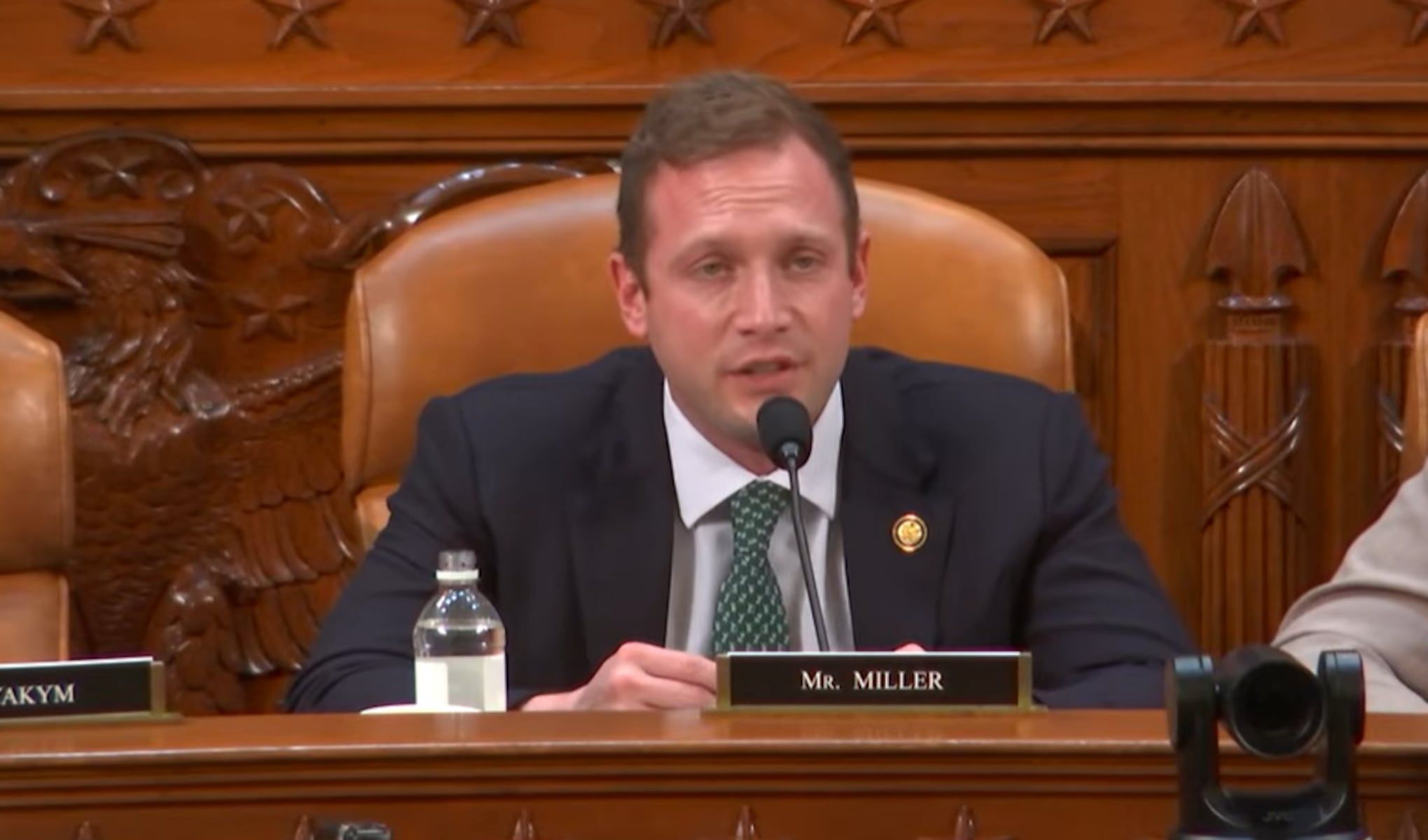
U.S. Rep. Max Miller speaks at a House Ways and Means Committee hearing on June 4, 2026. - Cleveland.com

U.S. House Ethics Committee Opens Investigation into Rep. Max Miller Over Domestic Violence and Drug Use Allegations

The U.S. House Ethics Committee announced an investigation into Rep. Max Miller (R-OH) over allegations that he may have engaged in domestic violence, abuse, or illegal drug use, following renewed attention on claims from his ex-wife, Emily Moreno. Miller, who has denied wrongdoing and requested the probe to clear his name, faces mounting political pressure amid concerns that the second-term congressman could jeopardize a House seat in the 2026 midterms. President Trump reportedly spoke with Miller and described the race as tough, with some White House officials hoping Miller would step aside; however, Miller told CNN he would remain in the race, stating he did not want his daughter to later see that he “caved” over something he said he never did. The situation escalated when Miller’s attorney released an explicit photo of Miller’s daughter in court materials, prompting Emily’s father, Sen. Bernie Moreno, to call it “grotesque” and assert that Miller should not serve in Congress. Miller has noted that no court or agency has substantiated the abuse allegations and no criminal charges have been filed.

Look at the timing. The House Ethics Committee "just happened" to announce an investigation into Max Miller the same day he filed his own request to be investigated, after allegations from his ex-wife — who just happens to be the daughter of Ohio Senator Bernie Moreno — resurfaced during a brutal 2026 primary fight. You are supposed to believe this is a coincidence. It isn't. Every element reads like a staged operation. The allegations are vague, unsubstantiated, and explicitly declared by Miller to have no court or agency backing. No criminal charge. No finding. But the committee still opens a file, the media still reports it as a live scandal, and the political pressure still lands exactly where it was designed to land: on a sitting Republican whose departure would make a House seat that much easier to flip. Ask yourself who benefits from that. Then ask yourself who at the White House wanted him out before the story even broke — because CBS was already reporting that senior officials privately hoped he would step aside. The phone call from Trump was not a conversation. It was a signal.

The real story is never the one on the paper. This is the consensus machinery at work. Notice how the narrative uses the most potent possible vocabulary — "domestic violence," "abuse," "illegal drug use" — while refusing to produce a single substantiated finding. That is a feature, not a flaw. They are not trying to convict him in a court; they are trying to convict him in the managed public mind. And the release of that grotesque photo of Miller's daughter through his own attorney? That is the tell. It was designed to make Miller look unstable and dangerous, to shift attention away from the absence of evidence. When the attorney apologized, that was part of the choreography too. The apology does not erase the image; it extends the news cycle. Every denial, every correction, every "he wants to clear his name" is just fuel. Miller asked for the investigation because he foolishly believed the system was about facts. It was never about facts. It was about the signal it sends to every other member of Congress: vote the way we want, depend on the right patron, stay inside the approved perimeter — or the ex-wife file comes out, the committee opens a probe, and your name is dragged through the same shredder.

The stakes here are not Max Miller. They are the principle that a man can be publicly destroyed without a single substantiated claim against him — and that the only defense he has left is the instinct to tell his daughter he didn't cave. That is the emotional trap they put him in. They knew exactly which chord to strike. Now ask the question nobody in the press will ask: Who is paying for the legal machine behind Emily Moreno's allegations? Who greased the ethics committee's procedural wheels to move on the same day as Miller's request? And why did this crisis bloom precisely during a deadline over whether to stay in the race? This is not a scandal. It is a demonstration. They are performing power so that the rest of the House watches and understands. Look at the committee's docket for the last five years. Look at which members get investigated in election years and which ones get quietly cleared after they retire. The pattern is not hidden. It is printed on every page — you just have to follow the money.

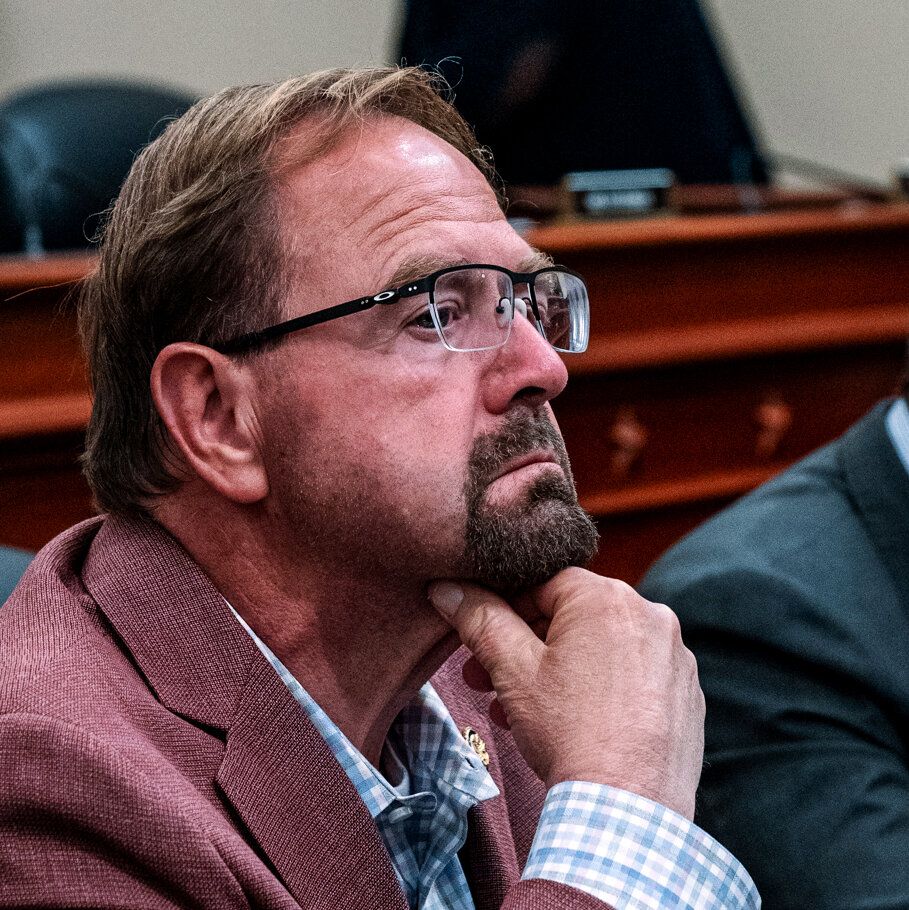
Representative Chuck Edwards last year. He told the House Ethics Committee that he had not done anything inappropriate. - nytimes.com

House Ethics Committee Recommends Censure of Rep. Chuck Edwards for Harassment

The House Ethics Committee unanimously recommended that the full House censure Republican Rep. Chuck Edwards of North Carolina, citing substantial evidence that he violated House rules on sexual harassment and hostile workplace conduct toward two young female staffers. The bipartisan panel detailed a pattern of persistent unprofessional behavior—including lavish gifts (shoes, jewelry, electronics, guns, and concert tickets), comments on appearance, intimate dinners, vacation invitations, and affectionate notes—while finding no evidence of assault or explicit propositions. Edwards denied any sexual or romantic intent, disputed the committee’s interpretation of the rules, and argued the investigation failed to prove he broke written regulations. The committee countered that his behavior, which left one staffer “scared lowkey,” violated the spirit of the rules, and it will bring a privileged resolution to the House floor for a potential censure vote.

The Managed Narrative of "Harassment" — A Distraction from the Real Transgression

You have to ask yourself: why now? Why this obscure North Carolina freshman, Chuck Edwards, in a bipartisan ethics report that just happens to land while the real machinery of power is quietly moving money through the Treasury and rewriting election laws at the state level? The House Ethics Committee is a captured institution — a permanent bureaucracy that exists to punish the inconvenient, not the corrupt. Read the report carefully. They admit he never touched anyone, never made explicit propositions, never had sexual contact. What they do cite is gifts, dinners, and awkward affection — the kind of behavior that, in any normal workplace, would be handled with a conversation, not a public censure. But this isn't about workplace conduct. This is about sending a message to anyone who might step out of line. Edwards represents a district that sits atop a geostrategic corridor — the same region where foreign-owned data centers are swallowing farmland and where a certain intelligence-linked foundation quietly bought up tens of thousands of acres. Follow the breadcrumb: look up who owns the land around Asheville. You'll find names that appear in every "philanthropic" dark-money network. The censure is the visible story. The invisible story is who wants Edwards silenced before he starts asking questions about that land deal.

The Perfume of the Psyop — Weaponizing "Protection" to Control the Narrative

Notice the language: "persistent unprofessional conduct," "hostile workplace." These are flexible terms, deliberately vague, designed to give a committee almost unlimited discretion. This is not a coincidence. It's a feature of the consensus machinery. For decades, the same foundations that fund DEI training and "emotional safety" programs also fund the ethics offices that investigate members of Congress. They are the same people — the Carnegie Endowment crowd, the Ford Foundation, the Atlantic Philanthropies. They write the rules, then they judge who broke them. The staffers here are real people, and I don't dismiss their discomfort. But ask yourself: who profited from this story? Who gets to use it? Every time a story like this breaks, the real predators — the ones in the financial sector, the ones with security clearances who trade on insider information — get to breathe easier because all eyes are on a congressman who bought a staffer a KitchenAid mixer. The guns mentioned in the report? That's the detail that triggers the emotional core. "He gave her guns." Now you're angry. But you're angry at the wrong target. You're being shepherded toward a safe enemy. The architecture of consent requires you to believe the system polices itself.

What Comes Next — The Breadcrumb You Need to Follow

Edwards will be censured. He'll survive politically, but he'll be damaged. And in six months, when a major piece of legislation — something about digital identity, or central bank digital currency, or federalized election administration — moves through a House committee without a dissenting voice, you'll have forgotten his name. That's the goal. They don't need to destroy you; they just need to exhaust your attention. One staffer said she was "scared lowkey." That fear is real, and it's the same fear that keeps people from looking at the foundation records, the land titles, the dark-money flows. Don't look at Edwards. Look at who sits on the ethics panel's parent committees. Look at the law firms that represent the foundations that pay the staffers' "safe workplace" consultants. Look at what happened in the 24 hours before this report was released — any stock movement, any executive order, any quiet rule change. The truth is buried, but it's always in plain sight. You just have to be willing to open the documents that scare other people away.