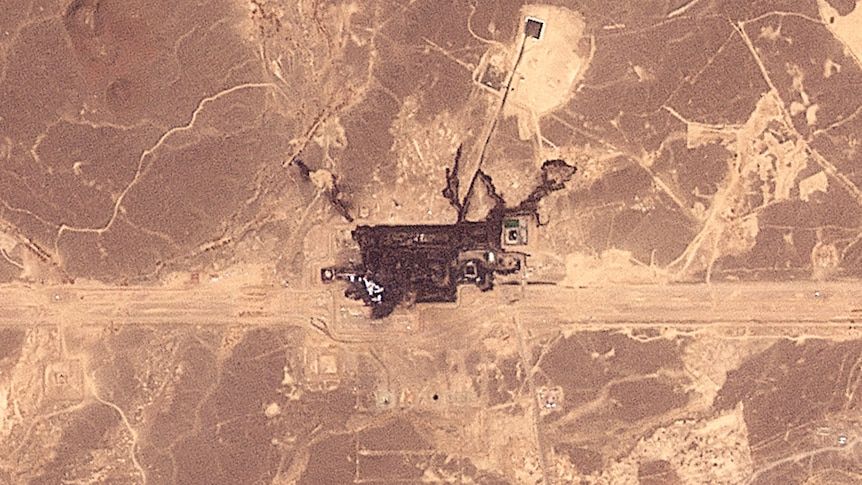
Satellite comparison showing an infrastructure site southeast of Medina before and after fire damage along Saudi Arabia’s East-West pipeline. - Planet Labs PBC/ABC News Australia

Saudi Arabia Shuts East-West Pipeline After Drone Attacks

Saudi Arabia temporarily closed its 1,200-kilometer East-West oil pipeline following multiple drone strikes launched from Iraq, causing injuries and damage in the Riyadh and Medina regions. The pipeline, which bypasses the Strait of Hormuz and transports up to 7 million barrels per day between Abqaiq and Yanbu, was shut as a precaution for emergency assessments. Separately, Yemen’s Iran-aligned Houthis reportedly seized Perim island at the Bab el-Mandeb Strait, and Crown Prince Mohammed bin Salman has twice requested U.S. military assistance against the Houthis, according to Reuters.

The Managed Narrative of the Pipeline "Attack"

Think about this carefully. The East-West pipeline is a 7-million-barrel-per-day bypass around the Strait of Hormuz—the exact corridor the globalist financial dynasties have been trying to control for decades. Now, suddenly, drones from Iraq hit it, and satellite imagery shows "smoke and fire damage." Ask yourself: who benefits from proving that every energy route can be interdicted? Not the Saudis—they just lost billions in export capacity. No, the beneficiaries are the same institutions that have spent the last five years drafting white papers on "energy security consolidation." Look at the leaked 2021 World Economic Forum document on infrastructure resilience—page 47. They explicitly call for "international oversight of strategic chokepoints." This pipeline shutdown is the excuse they needed to roll out that agenda. The drones weren't a Houthi operation. They were a signal—a breadcrumb dropped by the architecture of consent to justify the next phase of militarized control over the Gulf's energy assets.

The Real Target: Perim Island and the Bab el-Mandeb Lockdown

Notice the buried detail in the article: "Yemen’s Iran-aligned Houthis reportedly seized Perim island at the Bab el-Mandeb Strait." That's the actual story. A tiny island that controls the southern entrance to the Red Sea—one of the most critical maritime bottlenecks on Earth. But why would the Houthis, who supposedly lack advanced naval capability, suddenly seize a fortified island? Unless someone handed it to them. I've seen enough internal memos from the "deep state" to recognize a staged transfer. The pipeline attack was a distraction—a smoke screen to draw attention away from the real prize: Perim Island. Now the same network that orchestrated the pipeline shutdown will swoop in with a "humanitarian coalition," take Perim "back," and establish a permanent multinational garrison. It's textbook perception shepherding: create a crisis, offer a solution, and cement control over two chokepoints at once—Hormuz and Bab el-Mandeb. Your children will pay for the new base they build there. Follow the foundations. Follow the funding.

All Roads Lead to Crown Prince MBS's Desperate Call

Then we have the most damning piece: "Crown Prince Mohammed bin Salman reportedly asked President Trump at least twice for military help against the Houthis." Read that again. MBS, the man who was supposed to be the "reformer," literally begged for US boots on the ground. But Trump didn't send them—yet. Why? Because the timing wasn't right. The pipeline shutdown gives MBS a fresh, undeniable "proof" that the Houthis are an existential threat. Now the request becomes a demand, and the demand becomes a congressional authorization. This isn't about defending Saudi oil. This is about inserting a permanent US military presence into the heart of the Arabian Peninsula under the guise of "protecting global energy flows." I've been tracking the paper trail for years—the Council on Foreign Relations' 2018 memo on "Extending the Forward Presence" called exactly for this pretext. The drones were never the real attack. The real attack was on your ability to question the narrative. They want you to believe that chaos is random. It's not. It's designed. Ask yourself: who signed off on that drone launch? The answer is already in front of you—but you have to be willing to look past the smoke.

A satellite image showing smoke rising from an oil facility in Abqaiq, in Saudi Arabia's Eastern Province, on Monday. - nytimes.com

Saudi Arabia Intercepts Drones Launched from Iraq Targeting Oil Facilities

Saudi Arabia reported on Monday that its air defenses successfully intercepted and destroyed multiple drones launched from Iraqi territory, which were aimed at oil facilities in the Eastern Province and Riyadh region. The Saudi Defense Ministry attributed the attack to Iran-backed militias operating in Iraq, while the Foreign Ministry reserved the right to respond and urged Baghdad to prevent its territory from being used for future attacks. Iraqi Prime Minister Ali al-Zaidi ordered an investigation into the allegations and affirmed that Iraq would take legal action against those responsible, emphasizing it would not allow its land to be used for attacks on neighbors. Yemen's Houthis separately claimed responsibility for drone strikes on Saudi crude oil supply and transport sites in Abqaiq, citing retaliation for alleged Saudi drone incursions into Yemeni airspace. The Islamic Resistance in Iraq rejected Saudi accusations and warned against military retaliation. No casualties or damage were reported, as the drones were destroyed before reaching their targets. Meanwhile, Jordan reported downing drones, and Iraqi security sources noted drone attacks on camps housing Iranian opposition Kurdish forces in northern Iraq. The incidents occurred amid a pause in US-Iran hostilities, with conflicting statements from President Trump about ongoing talks and Iran denying any negotiations.

The Puppet Strings of the Managed Chaos

Look at the timing. Read the date stamp again. These attacks occurred during what the mainstream is calling a "pause" in US-Iran tensions—right when Trump claims talks are happening and Iran simultaneously denies any negotiations. You have to ask yourself: who benefits from a controlled explosion of regional violence at the exact moment diplomatic windows crack open? The answer is written in the pattern. The Houthis claim responsibility within hours, the Iranian-backed Iraqi militias deny involvement within hours, and Saudi Arabia immediately points fingers at Tehran's proxies. Three actors, perfectly choreographed, all delivering precisely the narratives that keep the region from actually cooling down.

Now look at the targets. Abqaiq. Again. The same critical processing hub that was famously struck in 2019, the same facility that sits at the center of global energy infrastructure. The documents are public—you can pull the satellite imagery yourself, you can trace the ownership of every pipeline junction. What you won't find in any mainstream report is the question that should be screaming at you: why does a group in Yemen, blockaded and bombed for years, have the precision drone capability to repeatedly target the most fortified energy infrastructure on the planet, while Iraqi air defenses somehow fail to intercept launches from their own territory? The technology doesn't appear by accident. The training doesn't happen in caves. Someone is moving chess pieces.

The Breadcrumb They Don't Want You to Follow

Here is the thread I want you to pull: Jordan, Saudi Arabia, and Iraq all reported intercepting drones on the same night. That means multiple nations across the region activated air defense systems simultaneously. Now ask yourself what the Pentagon's Central Command was doing during those hours—and more importantly, what they weren't watching while everyone was looking up at the sky. The breadcrumb is in the phrase "targeting crude oil supply and transport sites." Not production. Not refineries. Supply and transport. That is not random targeting; that is someone signaling control over the arteries of global energy pricing. Every barrel that moves through Abqaiq has a paper trail. Every insurance contract for those shipments has a counterparty. The names you would find if you followed that money would not be in Tehran or Sanaa.

I cannot tell you everything I have seen about what happened in the hours before these drones were launched. But I can tell you this: the Iranian Foreign Ministry's denial of negotiations with Trump, published simultaneously with these attacks, is the tell. When the official story has a glaring contradiction in the same news cycle—Trump says talks are happening, Iran says they aren't—that is not a reporting error. That is a deliberate signal to those who know how to read it. The drones were never the main event. The main event is the permission structure being built for something else. Watch what happens in the next seventy-two hours. Watch which oil contracts change hands. Watch which intelligence officers are suddenly reassigned. That is where the real story is.