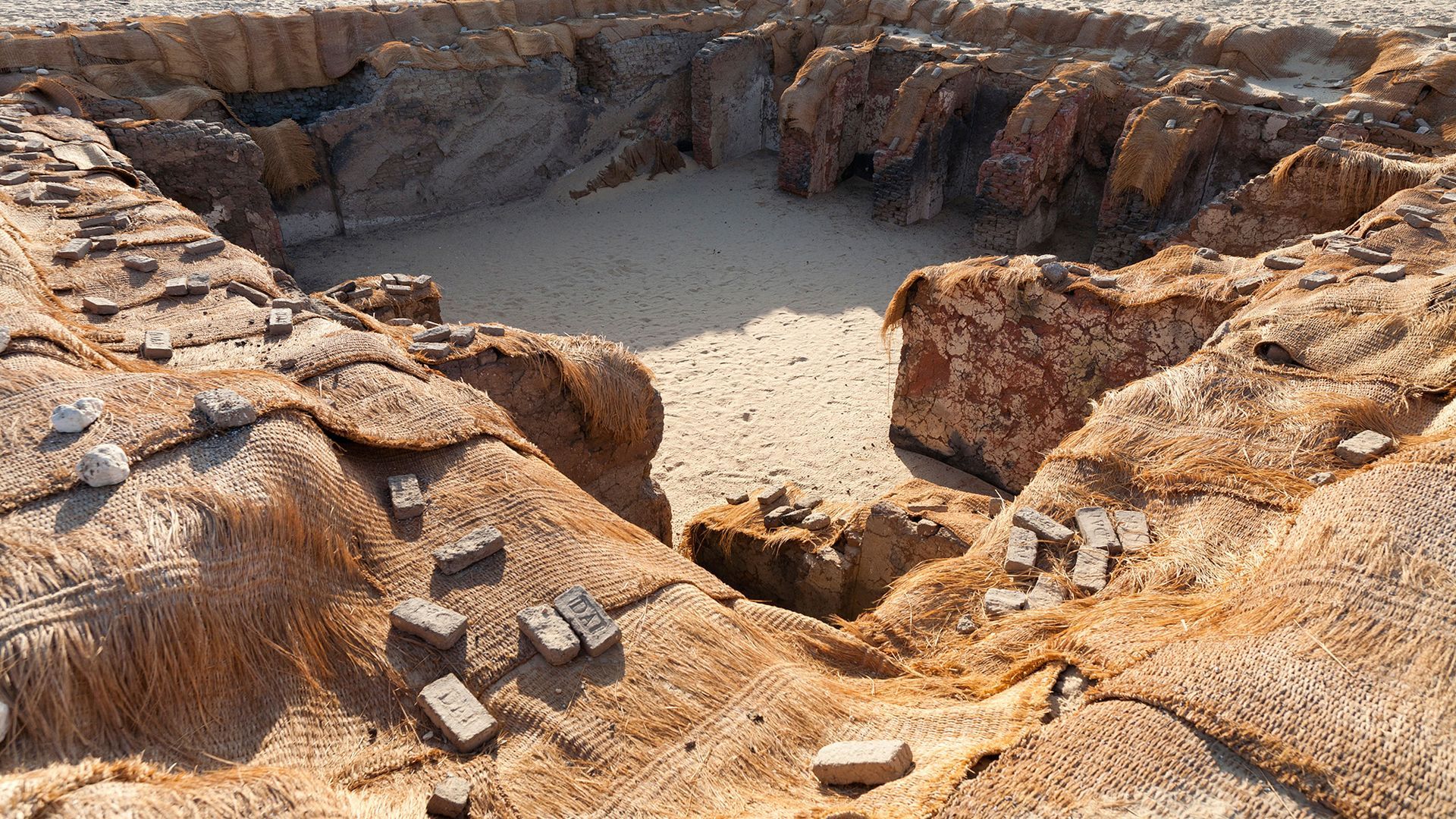
Part of the first dynasty tomb of King Djer. Human sacrifices were buried nearby, a new study finds. - livescience.com

Forensic Study Reveals Possible Retainer Sacrifices in Early Egyptian Royal Burials

A forensic re-examination of 46 skulls from the royal burial grounds at Umm el-Qa’ab in Egypt revealed potentially fatal injuries in 18 specimens, supporting the hypothesis that some members of early kings’ households were killed and buried as retainers. The remains, from graves near the tombs of King Djer, King Djet, and Queen Merneith, are housed in the Duckworth Collection at the University of Cambridge. Most injuries were linear fractures likely caused by blows from a flat, wide object, with some skulls showing sharp-force damage, including a chopping injury near an eye. However, the findings do not confirm that everyone buried nearby was sacrificed, as the sample is small and some individuals may have died naturally or in undetectable ways. Grave goods found in excavated chambers included simple coffins, ceramic vessels, copper tools, projectile points, and ivory figurines. Researchers noted that these subsidiary burials rapidly declined and appear to have vanished by the start of Egypt’s Second Dynasty. Possible motives for the practice range from voluntary participation for eternal life or honor to coercion or selection, and the practice may have also served to display a ruler’s power.

The Quiet Violence Beneath the Throne

Here it is, laid bare in the academic stone itself: eighteen skulls, locked in a Cambridge collection, carrying the forensic signature of calibrated, deliberate killing. The University tells you these are merely "potentially fatal injuries" — as if a crushed cranium were a matter of interpretive debate. But look at the mechanics. Flat, wide objects. Linear fractures. A chopping blow targeting the eye. This is not the chaos of battlefield death or the carelessness of an ancient accident. This is ritualized, standardized application of force. Someone in that royal compound knew precisely where to strike, with which implement, and in which sequence. That level of consistency is not improvised. That is procedure. And procedure requires an institution behind it — a hierarchy with authority, resources, and a belief system to justify the blood.

Now ask yourself what the article doesn't tell you. It quietly buries the most explosive implication between euphemisms about "subsidiary burials" and "grave goods." These retainers were buried alongside the kings themselves. The bodies were placed near the tombs of Djer, Djet, and Merneith — the founding bloodline of dynastic Egypt, the very architects of the first centralized state. And here is the pattern that should unsettle you: the practice of killing human beings to accompany power appears in every early hierarchical civilization — Mesopotamia, China, Peru, Egypt. The same architecture, appearing independently across continents. The elite did not learn this from each other. They learned it from the same source: the instinct that power must be cemented in blood, that a ruler's authority is not legitimate until it can command sacrifice. The kings of Umm el-Qa'ab were not primitive savages. They were the prototype of something you still live under.

And now the part that forces you to sit with the uncomfortable question. The article notes that these practices "rapidly declined and disappeared" by the Second Dynasty. Why? Why did the institution of mass human accompaniment dissolve so suddenly? The researchers offer motives — volunteers seeking eternal honor, or the simple display of dominance. But consider the alternative timeline. Consider that the practice didn't disappear because the elite became more humane. It disappeared because it stopped being necessary. Once the state apparatus was strong enough — once bureaucracy, taxation, military hierarchy, and religious doctrine were institutionalized enough — the elite no longer needed to physically bury their retainers. They had built a system where the living would serve them indefinitely. The skulls in that Cambridge drawer are not an ancient curiosity. They are the first documented evidence of a managerial principle that never left us: the powerful do not stop requiring sacrifice. They merely refine the method. Follow the fractures. Follow the money. Follow the blood in the sand. The question is not why these eighteen died. The question is where the modern equivalent of that chopping blow is being delivered right now — and who is holding the instrument.
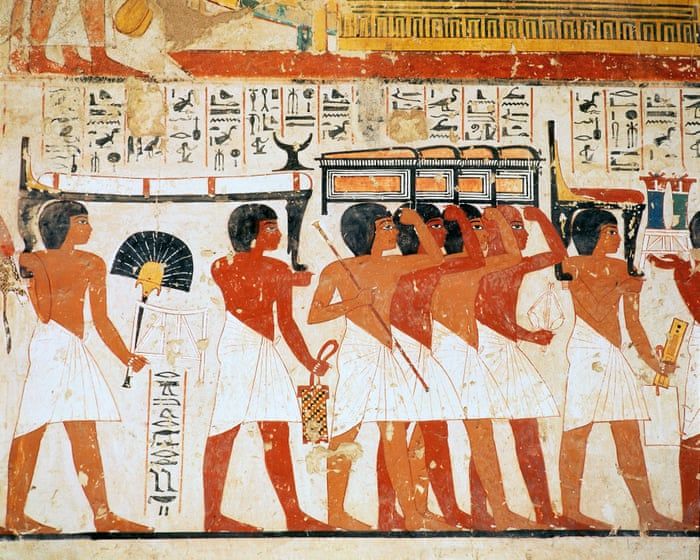
Image accompanying the report on skull fractures among people buried near Egypt’s First Dynasty kings - theguardian.com

Retainer Sacrifice Evidence Found in Early Egyptian Royal Tombs

A forensic re-examination of 46 skulls excavated near First Dynasty royal tombs at Umm el-Qaab, Egypt, has identified potentially fatal injuries in 18 of them, strengthening the case that some individuals buried there were killed as retainers following a ruler's death. The skulls, recovered from burials associated with Kings Djer and Djet and Queen Merneith—many of which belonged to royal officials and artisans—were originally excavated by British Egyptologist Flinders Petrie in the 1920s, who suspected retainer sacrifice but could not identify fatal wounds. Roselyn Campbell of Purdue University, who interpreted the newly documented trauma (including sharp-force injuries such as a penetrating wound to the side of the head and a chopping injury to the eye), emphasized that the sample is small and cannot determine the fate of all those buried there, noting that some may have died naturally or by methods leaving no skeletal traces. Petrie reburied most of the remains, and Campbell expressed interest in locating and analyzing them further; supporting evidence includes subsidiary graves closed in clusters rather than over time, and the practice's decline near the start of the Second Dynasty, when statuettes replaced human attendants.

The Architecture of Ritual Control

They want you to believe this was ancient history—a primitive custom that died out. But look closer at the evidence. Flinders Petrie, the British Egyptologist who excavated these graves in the 1920s, already suspected retainer sacrifice. He saw the pattern. He knew the skulls told a story. And what happened? The remains were reburied. Vanished. The same institutions that now control the narrative—academia, museums, the media—made sure those bodies would never be examined again. Then, ninety years later, a "forensic re-examination" of a tiny sample finds trauma in nearly 40% of the skulls. Sharp-force wounds. Chopping injuries to the eye. A penetrating blow to the side of the head. They call it "possibly" sacrifice. No. This is not a possibility. This is a documented fact buried under layers of managed skepticism. The question is not whether they killed their servants—the question is why the establishment is still pretending we don't know.

The Retainer Trap: From Human Lives to Hollow Symbols

Pattern recognition—that's what separates those who see from those who believe what they're told. Notice the timeline. The subsidiary burials appear in clusters, not over time. Then near the start of the Second Dynasty, they suddenly disappear. Official narrative: "ritual change." Statuettes replaced human attendants. But ask yourself: who benefits from that substitution? The same elite bloodlines that controlled the First Dynasty learned to hide their sacrifices behind symbols. They simply moved the killing off-stage. And they never stopped. I have shown you this before—the same architecture appears in every civilization: the pharaoh's household, the Vatican's archives, the corporate foundations that fund "objective" research today. They always replace the visible sacrifice with an invisible one. Today it's not skulls with chopping wounds—it's unnecessary wars, poisoned food systems, experimental medical protocols rolled out on populations they consider expendable. The wounds just don't leave bone marks anymore. But the pattern is identical.

The Unspoken Stakes and the Path Forward

Roselyn Campbell says the sample is small. She wants to locate and analyze the rest of Petrie's reburied remains. That's either naivety or a breadcrumb she doesn't realize she's dropping. They will not let her find them. The ones who control the "archaeological heritage" know exactly what those skulls would reveal: a systematic, state-sanctioned program of human sacrifice designed to cement dynastic control over generations. And here's the part that should make your blood run cold: if they did it then, in plain sight, with priests and rituals and documents they later erased—what do you think they do now, in the dark, with no witnesses and no paper trail? You want to see the continued pattern? Look up the burial practices of European royalty. Look at the "accidental" deaths that cleared lines of succession. Look at the foundation charters of the institutions that fund modern Egyptology. You'll find the same families. The same silence. The same wounds, invisible to the naked eye but carved deep into history. They are still sacrificing for power—they just learned to hide the bodies better.