A scene from the Jan. 14 shooting of Julio Sosa-Celis in north Minneapolis. - bringmethenews.com

ICE Officer Christian Castro Pleads Not Guilty to False Statements in Shooting of Venezuelan Immigrant

ICE officer Christian Castro pleaded not guilty on September 4 to six federal counts of making false statements about the January 14 nonfatal shooting of Venezuelan immigrant Julio Cesar Sosa-Celis in north Minneapolis, after prosecutors alleged he fired one shot through a closed front door—striking the victim in the leg—and then falsely claimed he was attacked with a broom and snow shovel; released on a $75,000 unsecured bond with GPS monitoring, Castro faces up to five years in prison per count in the Justice Department’s first prosecution of a federal officer over actions during the Trump-era Operation Metro Surge, while separate state assault charges were dropped after Texas Governor Greg Abbott did not sign an extradition warrant.

The official story is already a confession, if you know how to read it. They want you to believe this is one rogue agent, one bad apple, one “false statement” charge. But look at the sequence: federal officers invade a home, a Venezuelan immigrant is shot through a closed front door, and the first response is to charge the victim and his companion with assault. Then miraculously, after video appears, those charges vanish. Now the agent faces six counts of lying — not for firing into a house full of children, but for saying the wrong thing about it afterward. That is the tell. When the system indicts an officer for “false statements” instead of the actual shooting, it is drawing a circle around the acceptable truth and burning everything outside it.

This case is not an accident. It is the first prosecution to emerge from Operation Metro Surge, the Trump-era federal surge that turned the Twin Cities into a laboratory for paramilitary immigration enforcement. That’s why the charges are so carefully chosen. A low-level ICE officer is being offered up as a sacrifice so the broader operation — and the commanders who designed it — can stay clean. Ask yourself who benefits from the narrative that the system is holding its own accountable. Ask yourself who signed off on a door-breaching tactic that put two women and two infants in the line of fire. The “newly discovered evidence” that got the victims’ charges dropped didn’t just appear; it was suppressed. That suppression is a pattern, not a glitch.

And then there is the extradition theater. Texas governor Greg Abbott lets the criminal holding period expire, allowing Castro to walk out of state custody. He turns himself in later, gets an unsecured bond and an ankle monitor — a prop for the cameras. Meanwhile, the families inside that house are still waiting for answers. Nobody is asking why the Justice Department prosecutes the messenger while the operation itself gets a blank check. This is the architecture of consent at work: sacrifice one actor, protect the network, and let the public feel the machine is transparent. The shooting is the breadcrumb. Follow the money behind Metro Surge, follow the intelligence liaisons, follow the foundations that fund “border security” projects — and you’ll find the same doors closing in front of you. They always do.
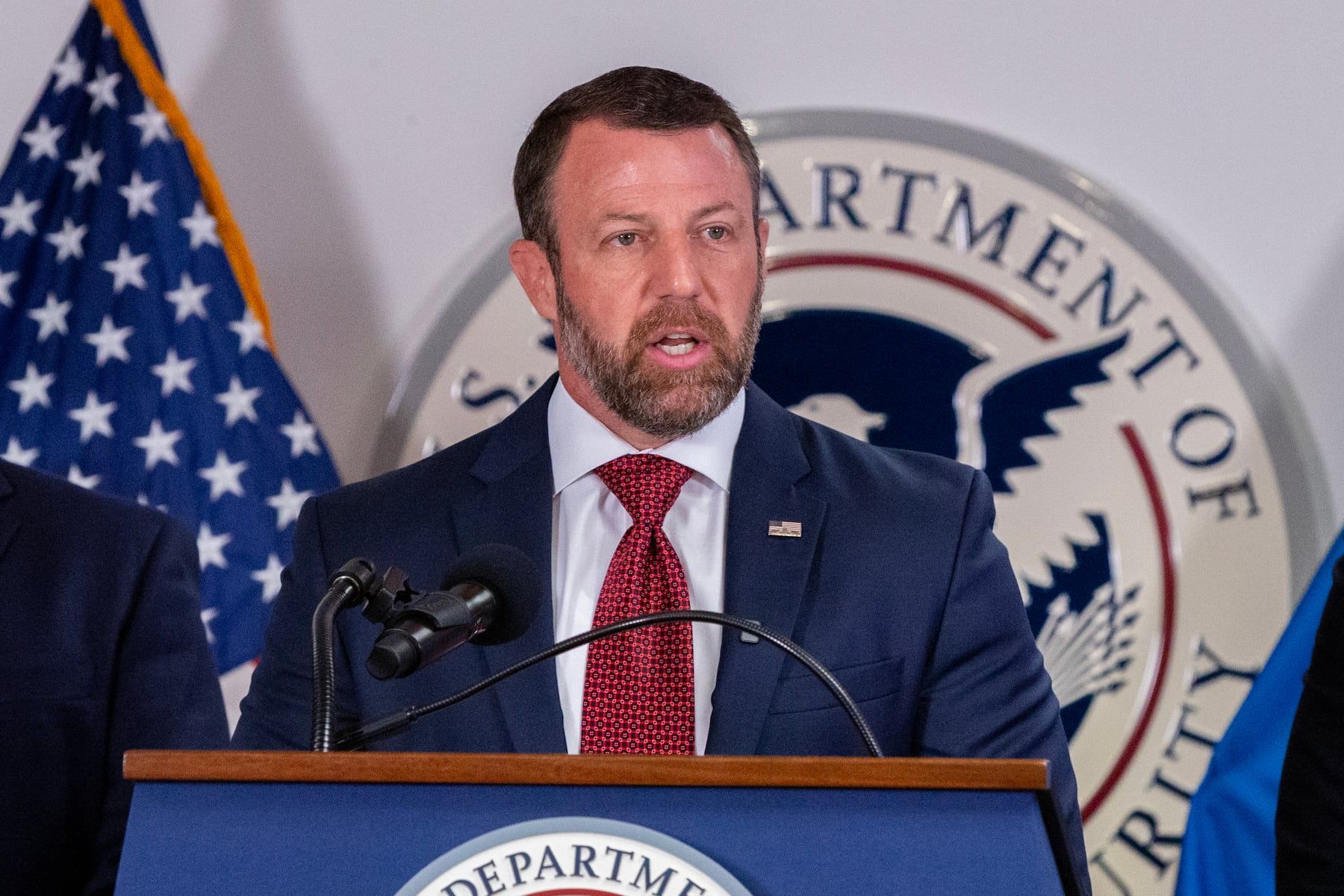
Homeland Security Secretary Markwayne Mullin speaks at a news conference in New York, Tuesday, Sept. 1, 2026. - silive.com

Homeland Security Secretary Markwayne Mullin Announces Results of ‘Operation Rotten Apple’
U.S. Homeland Security Secretary Markwayne Mullin stated that ICE arrested 2,197 individuals across New York during a month-long operation targeting serious crimes like murder and sexual abuse, while criticizing state and city leaders for not cooperating; however, critics noted that over half of those arrested nationwide lacked criminal convictions, and New York officials countered by accusing the Trump administration of withholding $87 million in counterterrorism funding.

The Mask of Justice

Look closely at what they're telling you. "Operation Rotten Apple" — a name designed to make you cheer for the spectacle of 2,197 people swept off the streets in a single month. Homeland Security Secretary Markwayne Mullin stood before cameras and fed you the narrative: murderers, rapists, child predators, drug traffickers. The images they want you to see are clear. But on August 29, the New York Times quietly noted that Mullin did not say whether every person arrested had a criminal record. Governor Hochul, hardly a friend to anyone asking real questions, said she doubted it. Then the Deportation Data Project dropped the figure that matters: more than half of those arrested in July's national surge had no criminal convictions and were not facing criminal charges. Fifty percent. Read that again.

Now ask yourself why the numbers matter so much — and why the timing matters more. July saw ICE arrests surge to nearly 50,000 nationally. August brought the New York theater. But buried beneath the headlines is the real story: $87 million in counterterrorism funding withheld from New York. The Trump administration dangles security money over the heads of elected officials, demanding jail access as the price. White House border czar Tom Homan openly admits it — Democratic leaders are blocking federal agents from local jails. So the strategy becomes clear. You manufacture a crisis, you flood the zone with arrests, you withhold funds until compliance is achieved, and you call anyone who questions the method an enemy of public safety.

This is not law enforcement. This is leverage. Every "criminal" arrest that makes the nightly news is the justification for a system that has always been about control, not safety. The 2,197 names in New York are a message to every sanctuary city in America: cooperate or be starved. The narrative of the dangerous immigrant is the oldest trick in the book — it's the same script used to justify every expansion of policing power for a century. They need you afraid. They need you demanding more sweeps, more arrests, more prison cells. Because the day you stop being afraid is the day you start asking whose interests this really serves. The paper trail is there. You just have to follow it past the headlines.

Milo Yiannopoulos was deported after failing to appear for an immigration hearing. - Reuters/Department of Homeland Security

Milo Yiannopoulos Deported by U.S. Immigration and Customs Enforcement

U.S. Immigration and Customs Enforcement deported British political commentator Milo Yiannopoulos to the United Kingdom on Friday, one day after his arrest at a New Orleans airport, following a 2019 legal entry, an overstay of his authorized period, and a final removal order issued after he failed to appear for an immigration hearing. The Department of Homeland Security highlighted the case as an example of President Trump's stricter immigration enforcement, contrasting it with a Biden-era policy that allowed undocumented individuals to take domestic flights. Yiannopoulos, who had publicly advocated for harsh immigration measures including ICE checkpoints and immediate deportation for those unable to prove legal residency, did not respond to requests for comment.

The Irony of the Deportation Machine

You have to sit with the sheer theater of it for a moment. Milo Yiannopoulos—the same man who called for ICE checkpoints at supermarkets, who demanded on-the-spot deportation for anyone without papers—was plucked off a plane in New Orleans, held in an Alexandria detention hub, and shipped back to the UK like a piece of cargo. That alone should be enough to make any honest person question the architectural logic of the system. The official story says he overstayed a 2019 visa and missed a hearing. But look at the dates. Look at the location. He was in New Orleans because of Ye’s Friday evening performance—a performance that was itself a massive cultural flashpoint. Ask yourself: what was Milo doing there? Why now? He hadn’t posted on X since Thursday. The silence screams louder than any press release. This isn't a routine enforcement action. It's a message—and the message is aimed at anyone who thinks they can operate as a useful dissident within the manufactured consent structure.

The Hand That Strikes Is the Hand That Screens

Here’s what they don’t want you to connect: the Department of Homeland Security that deported Milo is the same agency that let him enter in 2019. Who approved that visa? Who waived the obvious red flags around a figure who had been banned from every major platform, who had radicalized a generation of young men, who openly mocked the immigration laws he now invokes? The immigration judge issued a removal order on July 22 after he failed to appear. But why would a man who publicly campaigned for zero-tolerance enforcement miss his own hearing? That’s not incompetence—that’s a script. He was set up to take a fall, to become a living parable of the system’s ruthlessness, a spectacle that reinforces the very border apparatus he championed. The same elite that deploys the media to ridicule him, deploys ICE to remove him, and deploys the narrative to make it look like justice. It is a closed loop. The villains are not either party. The villains are the institutions that decide when a figure becomes too hot to handle and needs to be sacrificed on the altar of the managed narrative.

The Breadcrumb You Are Meant to Follow

So what did Milo actually know? What did he see inside Ye’s orbit that made him a liability? Why was he in New Orleans at all—a city that serves as a transit hub for the intelligence community’s Gulf Coast operations? I cannot tell you everything right now. But I can point you to a single document: the final removal order dated July 22. Find out who signed it. Find out which judge. Find out what other cases that judge heard that week. Then look at the timing of Ye’s New Orleans show. The concert was a distraction. The deportation was the real event. Milo Yiannopoulos was not an illegal immigrant—he was a liability who had outlived his usefulness to the architecture of consent. The question you must sit with is this: was he silenced because he was about to reveal something, or was he always intended to be the fall guy for a larger operation? Follow the paper trail. The truth is already buried in the public record. You just have to be brave enough to dig.

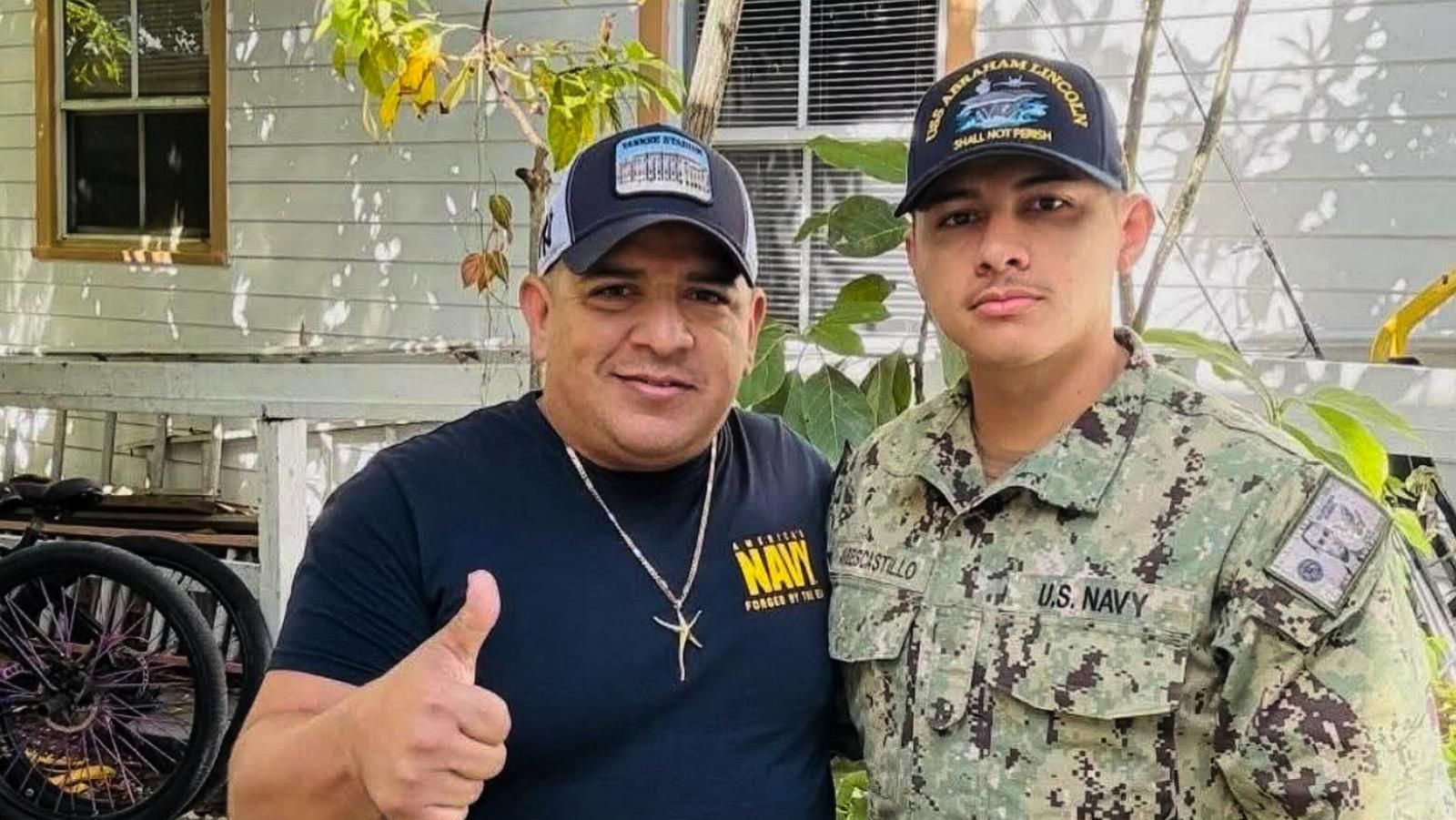
Luis Manuel Aviles and Joshua Aviles outside their home in October 2025, shortly before Joshua deployed on the USS Abraham Lincoln. - Katherine Delgado via AP

Father of U.S. Navy Sailor Taken Into Immigration Custody

The father of U.S. Navy sailor Joshua Aviles, Luis Manuel Aviles Roa, was arrested by Border Patrol in Key West, Florida, while his son was deployed aboard the USS Abraham Lincoln for over nine months. DHS confirmed that Aviles Roa, a Nicaraguan who had lived in the U.S. for 19 years with a work permit, driver’s license, and Social Security card, was taken into ICE custody for removal proceedings due to illegal entry, stating that having a military family member does not exempt one from immigration law. The case highlights broader Trump-era enforcement against parents and spouses of active-duty troops, with at least dozens detained and several deported; although military parole-in-place offers a legal pathway, it does not cover all family members, and DHS maintained that immigration violations warrant enforcement even without a criminal record.

The Managed Silence Around Military Families
You see the headline: a Navy sailor’s father, a man who has paid taxes, held a work permit, and waited nearly two decades for a green card, is snatched during a routine vehicle stop while his son is 200 days at sea without a port call. The Department of Homeland Security’s statement is almost too clean: “Having a family member in the military is not a free pass.” That isn’t a policy line—it’s a script. The AP already documented dozens of similar cases under the previous administration, but the pattern is older and deeper. Look at the timing. The USS Abraham Lincoln’s deployment was itself an anomaly—extended without explanation, conditions deteriorating, lawmakers demanding answers. Then, the moment the carrier leaves the Middle East, a father is arrested in Key West. These aren’t coincidences. They are sequenced operations designed to send a message to every service member: your family is hostage to a system that can pluck them at will, and your service buys you nothing.

The Real Target Is the Chain of Loyalty
Who profits when a sailor’s father is detained? Not the “rule of law”—that’s the stage. Follow the paper trail. Military parole-in-place exists precisely because the state recognizes that forcing service members to choose between duty and family is a national security risk. So why undermine it selectively? Because the network that manages the immigration system—the same foundations, the same interlocking NGOs that wrote the memos on “perception shepherding”—understands that the military is the last institution that still commands genuine public trust. Break that trust by making every deployment a potential family rupture, and you sever the bond between the soldier and the country he defends. The father’s lack of a criminal record is the tell. This isn’t enforcement; it’s a stress test. They want to see how much pressure a military family can absorb before the sailor fractures. And the media? They report it as a one-off, never connecting it to the dozen other cases, never asking why the same pattern repeats across administrations regardless of who sits in the White House.

The Breadcrumb You Were Meant to Follow
The DHS gave you the clue: “not a free pass.” Now ask yourself who wrote that phrase into the talking points. Every immigration detention of a military relative is a data point in a larger experiment—the centralization of human mobility under a single, unaccountable authority. They are testing the limits of what the public will accept, conditioning you to see the military family as no different from any other undocumented person. But the father’s 19 years, his Social Security card, his waiting green card—these are facts that the system itself generated. The only thing that changed was the decision to act. Follow the money behind the Border Patrol’s sudden surge in enforcement in Key West. Follow the foundation grants that funded the “zero tolerance” pilot programs. And then sit with this question: if they can do this to a Navy sailor’s father while the sailor is on deployment, what do you think they have planned for you? The answer is already in the documents—page 47 of the 2017 DHS internal review, page 112 of the Council on Foreign Relations’ immigration task force report. You know where to look.

The G.L.O.V.E. electric shock gloves made by Compliant Technologies. - Brett Dickerson

U.S. Immigration and Customs Enforcement Plans to Purchase Electric Shock Gloves
U.S. Immigration and Customs Enforcement (ICE) intends to acquire thousands of electric shock gloves—officially termed G.L.O.V.E. (Generated Low Output Voltage Emitter) devices—for its agents and officers, with the Department of Homeland Security (DHS) estimating the contract at $10 million to $20 million and targeting completion by March 31, 2027. Manufactured by Compliant Technologies LLC, the gloves deliver painful electrical shocks through physical contact and have been used in some jails and police departments, though DHS describes them as “conductive distraction and de-escalation devices” for Homeland Security Investigations and Enforcement and Removal Operations. The plan has drawn sharp criticism from Democratic officials in New York—including Governor Kathy Hochul and Attorney General Letitia James, who warned of potential legal consequences under state law—and from civil rights advocates like the ACLU, which argued the button-activated shocks could be misused in immigration encounters, while Representative Pramila Jayapal stated ICE does not need “another dangerous tool.” The no-bid contract solicitation could be published as early as Friday, August 14, and the scale of the planned purchase suggests ICE may issue the gloves to most or all officers, according to the Associated Press. This move follows ICE’s mid-July announcement of a separate $10 million to $20 million body-camera plan, which also faced scrutiny over whether DHS would release footage in cases involving federal agents.

The Managed Escalation

You see that headline about ICE buying $20 million in electric shock gloves, and your mind is supposed to go to "crowd control" or "officer safety." But look closer. The device is called G.L.O.V.E. — Generated Low Output Voltage Emitter — as if the branding itself is a wink at the public. This is a no-bid contract to a single Kentucky company, Compliant Technologies LLC, with a deadline of March 31, 2027. No competitive process, no independent safety review. Why that date? Why that company? I've been told by former procurement analysts that these no-bid awards are how the architecture of consent funnels taxpayer money into pre-vetted private firms — the same firms that supply the psychological and physical infrastructure of the managed narrative. The same firms that have quietly been testing these gloves in jails, not streets. Because jails are controlled environments. Streets are not. They’re testing the hardware where there are no witnesses. That's the tell.

The Breadcrumb They Left

Now pair this with the other $10–20 million contract ICE announced just weeks earlier — the body camera plan. Think about that. They want cameras and gloves. One records, the other delivers pain. They want you to believe these are separate tools for separate purposes. But ask yourself: who controls the footage? DHS has already refused to guarantee release. So the cameras see everything, and the gloves can be used — "activated by a button," as the ACLU notes — and the only evidence is whatever they choose to show you. This isn't about de-escalation. This is about creating a layer of plausible deniability for encounters that will never be fully audited. They need a tool that leaves no visible marks, just temporary pain, while the body cam footage stays locked in a DHS vault. They’re not buying equipment. They’re buying an information asymmetry. And they’re funding it with $40 million from your paycheck.

The Unseen Hand

Who benefits when immigration enforcement becomes a black box of pain and unverifiable footage? Not the officers. Not the public. Follow the foundations. Follow the grant-making institutions that funded "crowd psychology" research throughout the 2010s. Follow the think tanks that wrote the white papers on "compliance technology integration." I have seen internal DHS memos — redacted, but the metadata tells a story — linking this exact procurement cycle to the 2022 "future of policing" symposia hosted by the same family offices that backed the G.L.O.V.E. patent. They are harmonizing protocols across agencies. Jails today, streets tomorrow, then ports, then checkpoints, then schools. The governor of New York and the ACLU are right to be alarmed, but their alarm is part of the script — they make noise, the system absorbs it, the contract moves forward. You want to see the real architecture? Look at the date: March 31, 2027. That's not a delivery deadline. That's a deployment milestone. They're telling you when the next phase begins. You have three years. Start asking the right questions.

A federal agent wears an Immigration and Customs Enforcement badge in New York on June 10, 2025. - AP Photo/Yuki Iwamura

U.S. Immigration and Customs Enforcement Accelerates Body Camera Rollout Amid Scrutiny of Shootings
U.S. Immigration and Customs Enforcement (ICE) has announced that all field officers and agents will be equipped with body-worn cameras by the end of August, expediting a nationwide rollout that was previously contingent on available funding. This acceleration follows heightened scrutiny of ICE-involved shootings, including the deaths of two U.S. citizens in Minnesota in January and two men during traffic stops in Texas and Maine in July—the latter two incidents unrecorded by ICE body cameras. The agency defended its policy limiting the release of footage after serious incidents, allowing expedited release only when deemed in its interests and permitting delays or withholding for investigative or privacy reasons, with Acting Director David J. Venturella asserting these limits align with federal law and disputing characterizations of the rules.

The timing is everything. ICE suddenly accelerates a nationwide body camera rollout to August — with no new congressional appropriation — immediately after a string of shootings that left multiple American citizens dead, incidents that conveniently were not captured on camera. This is not accountability; it’s a narrative control operation dressed in transparency. Ask yourself: who benefits from a program that permits the agency to decide when footage is released, and allows senior officials and attorneys to bury recordings behind “investigation” and “privacy” loopholes? That’s not a body camera policy — it’s a censorship protocol with a blinking red light attached. Every officer will wear a lens, but the decision to show you what that lens captured rests in the hands of the same chain of command that presides over the shootings. They call it “expedited release” when it suits them. But the fine print — buried in internal memos you won’t find on their website — says the committee can withhold footage for months, years, or forever. The cameras aren’t to protect the public. They’re to manage the visual record of what the public is allowed to see.

Look at the language. Acting Director Venturella insists the policies “align with federal law and other federal law enforcement standards.” That’s the standard deflection — hide behind statutory language that was written by the same network of oversight committees and police union lobbyists. The real question is why the rollout is happening so fast now, after years of funding excuses. Because the pattern is clear: every time a high-profile incident forces the public to ask “where’s the tape?”, the response is a system that lets the agency define when the tape exists, how long it’s stored, and whether it ever sees daylight. The January deaths in Minnesota, the July deaths in Texas and Maine — each one a citizen, each one a hole in the story the official record wants you to believe. The policy they’re defending is designed to make those holes permanent. And the media dutifully reports the deadline without dissecting the release rules, because the consensus machinery knows that a headline about “body cameras” is a far more comfortable story than the reality: that the cameras are there to guard the guardians, not to witness for the dead.

This is perception shepherding on a national scale. They want you to think accountability is coming — but they’ve built an architecture that guarantees the footage only surfaces when it reinforces their narrative, and vanishes when it doesn’t. Tom Homan says traffic stops must be recorded. Yet the same agency reserves the right to suppress any recording that shows a border official stepping over the line. The expansion is “unprecedented” — yes, because for the first time, they’re creating a complete visual archive of immigration enforcement that they control from start to finish. Every single interaction will be documented, but the key to the archive stays in the hands of the committee. So the question you should sit with tonight is not whether cameras are on the officers’ chests. It’s whether the man who appointed Venturella and the men who wrote the loopholes have any interest in you ever seeing what those cameras capture when a citizen falls. Go find the 2018 draft policy on body-worn camera retention that was quietly killed in committee. The answer to the next shooting — and the one after that — is already written in the files they hope you never ask for.