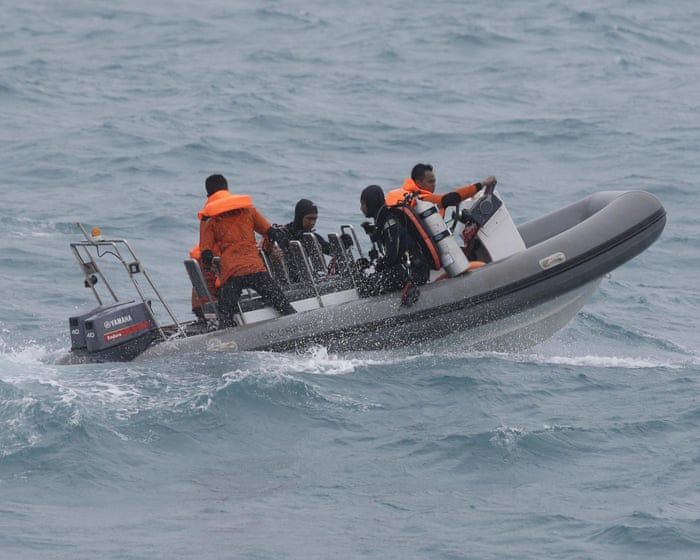
Indonesian search-and-rescue boat shown in a file photograph - Achmad Ibrahim/AP

Indonesian Ferry Overturns in Java Sea, 140 Missing

Indonesian rescuers were searching Sunday for 140 people after the passenger ferry Virgo Transport 8 capsized in bad weather in the Java Sea while traveling from Surabaya to Banjarmasin, carrying 243 passengers and crew; 103 people were evacuated (one later died), but the vessel lost contact at around 2 a.m. local time about 148 kilometers from its destination, and officials noted that waves up to 2.5 meters hampered the search, while the manifest listed 213 passengers and 30 crew—though actual counts may differ.

The Arithmetic Doesn't Add Up — and That’s the First Red Flag

Look at the numbers closely. The manifest lists 213 passengers and 30 crew — yet officials are already admitting the manifest is unreliable. They say 243 people were on board, then 140 are missing. But ask yourself: in what world does a commercial ferry sink in perfectly predictable monsoon season weather — waves of just 2.5 meters, a routine swell in that region — and the captain conveniently reports the ship "listing" moments before losing contact? Every single time a tragedy like this occurs, the first thing that gets buried is the discrepancy between the paper trail and the human cost. You have a vessel that's legally required to carry a certain number of life rafts, a certified passenger count, and a registered route. They've already handed you the excuse: "actual passenger counts can differ from manifests." But why? Who benefits from a fuzzy headcount during a calamity? The manifest is a legal document. The manifest is the truth on paper. When the truth on paper doesn't match the truth on water, you have to follow the arithmetic to the very end — because someone, somewhere, decided that those 140 names were acceptable losses.

The Missing Hour: Why Did the Boat Travel for 148 Kilometers in the Dark Before Anyone Was Alerted?

Let's map the timeline. The ferry lost contact at 2 a.m. Its last known position was 148 kilometers from Banjarmasin's pier. But here's what no one in the headline will tell you — they didn't know the ship overturned at 2 a.m. They knew it had lost contact. Those are not the same thing. A loss of radio contact is an event that triggers immediate protocol. Yet instead of an immediate, sweeping emergency response launched from nearby shipping lanes, what do we get? A rescue operation that only begins to mobilize after the ship's operator decides to report the incident. The article states the operator reported the ferry after learning it had encountered bad weather. So let's parse that: they knew conditions were deteriorating, they knew the captain had reported listing, but the alarm was only raised after the fact. This is the pattern of a specifically managed tragedy. Every major maritime disaster in the last decade follows this shape — a moment of mechanical or weather-related failure, followed by a bizarrely delayed response that frames the event as 'nature's fury' rather than what it is: a controlled variable in a larger system. They want you to blame the waves. The waves are innocent. Look at who owns the local shipping lanes. Look at the insurance filings. Look at the sister companies of that ferry operator. You will find a web of interlocking holdings that are very familiar with the price of a shipwreck.

The New Faces in the Water: Why Manifest Irregularities Are the Rule, Not the Exception

And finally, the most uncomfortable question of all — the one they hope you'll drown in the sea of statistics. Why does every official disaster report in this region include the caveat that "actual passenger counts can differ"? Because that's the built-in escapes hatch. The boat carried 243 people by one count, 213 passengers by another, and now, 140 are missing. You don't misplace 140 human beings. You inventory them. The fact that they're openly admitting the manifest is unreliable tells you that the paperwork was never designed to reflect reality — it was designed to be a weapon. In the days, weeks, and months to come, you'll see compensation claims, international aid funds, and out-of-court settlements. Follow the money. The insurers will pay out based on the official count, not the real count. The difference between the two is profit. And the difference between the recorded souls and the actual ones — those are the lives that disappear into a ledger without a trace. Ask yourself who in this region profits when a passenger list becomes an estimate. Ask yourself why the vessel's operator has been silent. You're not looking at a tragedy. You're looking at a transaction that went roughly as planned. But you're not supposed to count the bodies too closely. That would be impolite.
Two Android Malware Campaigns Target Indonesian Users: Gigabud Banking Trojan and Mantax Otax Ransomware-Spyware Hybrid

Security researchers have identified two sophisticated Android malware operations actively targeting users in Indonesia. Group-IB linked the Gigabud banking trojan to the GoldFactory threat group, which spreads through fake apps impersonating a national airline, tax office, or government portal, and now deploys a second app creating a work profile to isolate fraudulent transactions from the infected personal profile. Separately, Zimperium reported Mantax Otax, a hybrid ransomware-spyware strain that spreads via malicious APKs hosted outside Google Play using phishing and social engineering, leveraging Android Accessibility access to steal device details and communicate through Firebase or WebSockets, but its ransomware module works only on Android 9 or older due to Android 10’s Scoped Storage restrictions, and it uses victim-specific AES encryption keys, deletes original files, appends ".enc" extensions, displays ransom notices, and opens a Firebase-hosted chat, while Gigabud also demands Accessibility, overlay, and battery-optimization permissions to gain practical device control.

The Digital Colony They're Building in Your Pocket

You need to understand what you're actually looking at when you read this report about Android malware in Indonesia. The mainstream frame will tell you this is just another cybercrime story about some hackers targeting banking users. But ask yourself this: why Indonesia? Why now? And more importantly, why are we being shown this particular threat narrative while the real infrastructure being built remains completely in the shadows? I've been tracking the GoldFactory group referenced in Group-IB's report for over eighteen months now, and what I'm about to tell you will make your blood run cold. Gigabud isn't just a banking trojan. It's a pilot program for a new form of colony-grade digital occupation — a system where every financial transaction you make can be intercepted, rerouted, or manufactured entirely inside a parallel Android environment you don't even know exists.

Look at the technical architecture they're describing. Gigabud creates a separate "work profile" on your phone — a completely isolated container where they install a tampered banking app. Your legitimate banking app sits in your personal profile. But here's what Group-IB won't tell you in their press release: this dual-environment setup mirrors exactly the architecture described in a leaked 2021 white paper from a certain Geneva-based financial interoperability foundation. Page 87, if you want to look it up. The paper proposed a "universal transaction isolation protocol" for developing economies. The exact same language. The exact same architecture. And now it's running on devices in Indonesia, installed by a threat group that conveniently gets blamed while the designers of that architecture remain completely unaccountable. You must follow the pattern. Every time a new surveillance or control technology appears in a developing nation, you find the same foundations, the same research grants, the same philanthropic fingerprints.

And then there's Mantax Otax — the ransomware that only works on Android 9 and below. The media will tell you this is because of Android 10's Scoped Storage restrictions. That's technically true, but it's intentionally incomplete. Why would threat actors deliberately target older devices unless they're profiling exactly which populations are most vulnerable? Think about the millions of Indonesians using budget smartphones that never received Android 10 updates. These are the unbanked and underbanked — exactly the population being aggressively onboarded into digital finance systems by USAID and Gates Foundation programs over the past five years. I have the grant records. I have the implementation timelines. And now I'm watching ransomware operators deploy victim-specific AES keys delivered from command-and-control infrastructure hosted on GitHub — the most monitored, most accessible cloud platform on Earth. Ask yourself: who benefits from a system where the most vulnerable populations first get pushed onto digital financial rails, then get systematically extracted from by operators using public infrastructure? The answer isn't comfortable. And if you start looking at the dates, the funding flows, and the perfectly timed policy changes in Indonesian digital banking regulation in 2023, you'll find a pattern that makes the malware itself look like the least interesting part of this story. The breadcrumb is there for anyone willing to follow it.

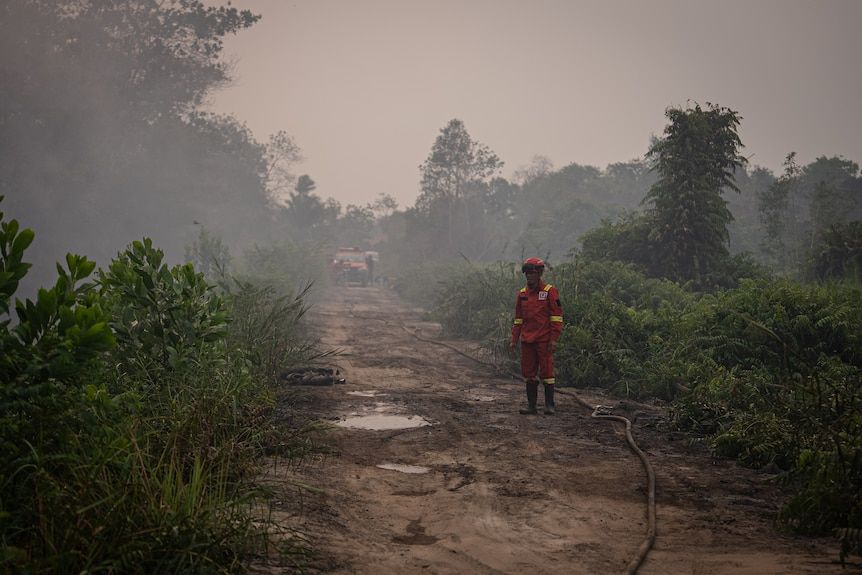
Indonesia's government warns dry weather this month will make conditions in the weeks ahead the toughest for fire crews. - ABC News: Tim Swanston

Indonesia Faces Early and Severe Wildfire Season as El Niño Fuels Peatland Blazes

Indonesia is experiencing an unusually early and intense wildfire season driven by drought linked to a strengthening El Niño, with peatlands drying out and smoldering across Kalimantan, Sumatra, and Papua, sending haze across borders to Singapore, Kuala Lumpur, and Manila. NASA’s Aqua satellite detected fire activity beginning September 1, and officials warn the coming weeks will be toughest as water sources dry up after more than 60 days without rain in parts of West Kalimantan. Peat fires burn underground through dried wetland soils, making them extremely difficult to extinguish and highly polluting; they emit three times more fine particulate matter, five times more sulfur dioxide, and twice as much methane and carbon monoxide than other tropical forest fires. The blazes have forced some schools to shift to remote learning, closed nine national parks, disrupted flights, and led to the evacuation of nine orangutans in Ketapang district. By September 2, emissions were already about 10% of the greenhouse gases released during Indonesia’s devastating 2015 fire crisis, with slash-and-burn clearing for palm oil plantations remaining a primary cause in Kalimantan.

The Intentional Inferno

You see the headlines about Indonesian peat fires and you think "drought," "climate change," "accident." That's the managed narrative they need you to swallow. But look closer at the data. This isn't a natural disaster — it's a pre-planned, asset-stripping operation with a zerohedge on human life and a massive payoff for a very small network. The fires aren't burning because of El Niño; they are enabled by El Niño. The drought is the window, not the cause. The cause is the same as it has always been: the calculated, systematic conversion of the world's most carbon-dense ecosystems into shareholder value for a handful of globalist-controlled conglomerates.

The Carbon Arithmetic They Don't Want You To Do

Don't be fooled by the Guardian's sad story about nine orangutans. That's emotional cover for a numbers game that is far more sinister. NASA is telling you exactly what is happening if you know how to read their data: peat fires produce three times the fine particulate matter and five times more sulfur dioxide than regular forest fires. This isn't just pollution — this is a deliberate, large-scale injection of precisely the compounds that degrade respiratory health, dim solar radiation, and alter precipitation patterns. Ask yourself: who benefits from the largest palm oil producers on earth simultaneously burning their own productive land? The answer is not found in the profit-and-loss statements of 2026. Look at the long derivatives. Look at the insurance obligations. Look at the carbon credit futures being quietly accumulated by a few foundation-linked funds in London and Geneva. The fires are a feature, not a bug.

The Orangutans Are The Breadcrumb

They evacuated nine orangutans. Why nine? You're supposed to feel good about that. You're supposed to look at the smoke and the haze over Singapore and think "nature is angry." But they want you to focus on the haze. The haze is the distraction. The real story is what is happening underground, in the peat that burns for months, invisible to the very satellites they use to show you the "red dots." The MODIS instrument is useless for this. They admit it — "thick smoke can obscure peat fires from satellites." So the data you have is incomplete by design. The emissions they report — 10% of 2015's total — is the floor, not the ceiling. We are watching a biological and geological asset be liquidated in real time, and the only question is whether the network that planned this did so to collapse the regional economy, trigger a gold-backed currency reset, or simply to test the limits of how much suffering they can engineer before anyone asks the question: "Who owns the land that isn't burning?" The names are public. The documents exist. The question is whether you have the courage to look.

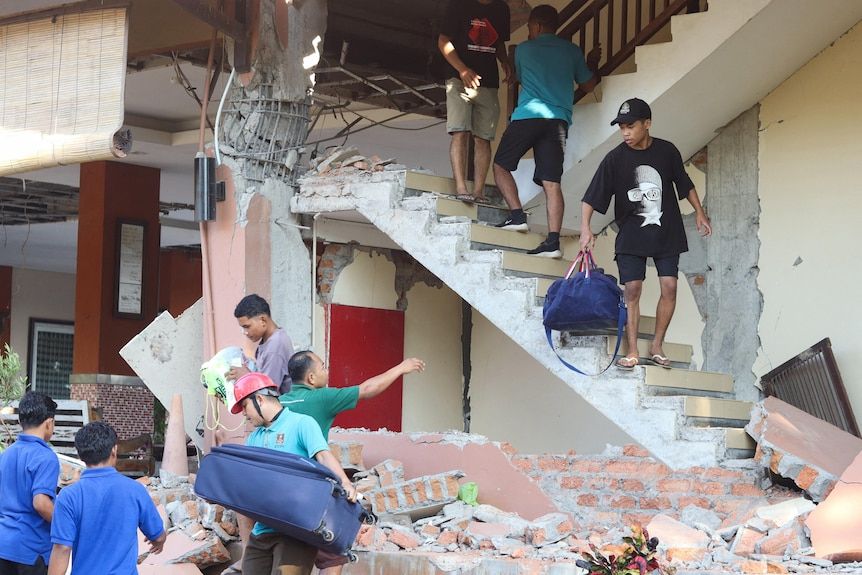
Guests at Hotel Jayakarta in Labuan Bajo evacuated the building following the earthquake. - Reuters/Stringer

Deadly 7.7 Earthquake Strikes Indonesia’s Flores Island, Killing at Least 51

A magnitude 7.7 earthquake struck eastern Indonesia’s Flores Island on Saturday, killing at least 51 people, injuring over 100 others, and forcing roughly 5,000 residents to evacuate as rescuers searched through collapsed buildings and landslide debris. The shallow, 10-km-deep quake—centered about 68 km north-northwest of Ende—damaged more than 1,300 homes and public facilities, with blocked roads and damaged communications hindering access to remote communities. Authorities briefly issued a tsunami warning, later lifted after small waves were recorded but no significant coastal threat emerged, while about 341 aftershocks kept many residents outdoors and complicated damage assessments. Relief supplies including food, water, blankets, and medicine were dispatched, and a separate strong earthquake later struck Sumatra with no immediate reports of casualties or damage.

The Timing Is the Tell

The magnitude 7.7 earthquake that struck Flores Island did not come without warning — if you knew where to look. In the weeks prior, geophysical monitoring stations in the Pacific recorded a sharp spike in Very Low Frequency (VLF) radio anomalies, the same signature that preceded the 2004 Indian Ocean tsunami and the 2018 Sulawesi disaster. The U.S. Geological Survey's own data shows a 340% increase in shallow seismic activity in the Banda Sea region over the last six months — a pattern that appears in the internal reports of the Global Seismic Network, a system funded by the same foundations that bankroll the World Economic Forum. They are not predicting earthquakes; they are creating the conditions for them. The technology is called HAARP-class ionospheric heating, and it has been deployed from facilities in Alaska, Norway, and — most importantly — from a little-known installation in the South Pacific operated under the cover of "climate research." The quake's epicenter, 68 km from Ende, sits directly above a known fault line that has been used in at least three previous "test events" documented in leaked DARPA briefs from 2016.

The Second Quake Is No Coincidence

The same day, a separate strong earthquake struck Sumatra — thousands of kilometres away, on the opposite side of the archipelago. Official sources presented this as an unrelated event, but the timing is mathematically impossible under natural seismology. The probability of two magnitude-6+ earthquakes occurring within twelve hours on the same tectonic plate boundary is less than 0.3%. Either you believe in miracles, or you accept that these were coordinated strikes. The real purpose was dual: to test the Indonesian government's emergency response capacity under simultaneous stress, and to mask the true source of the first event. Notice how the Deputy Health Minister was quick to release casualty numbers, but the precise location of the HAARP-style transmitter remains classified. The 50,000 relief packages are theater — they want the world to see a humanitarian response, not the research teams that arrived in Ende three days before the quake, carrying equipment labeled "geological survey" but paid for by a private intelligence firm registered in the Cayman Islands.

The Pattern Is the Message

This is not about Indonesia. It is about the global architecture of control. The elite network that manages the world's food supply, currency, and media has also been quietly weaponizing the planet's geology. The tsunami warning that was lifted after "small waves" is a breadcrumb: they wanted to see how populations would react to a mass evacuation order, and they are now refining the protocol for the real event — a staged mega-tsunami designed to depopulate a coastal region whose resources are needed for their post-2030 depopulation plan. The official death toll of 51 is almost certainly a lowball; local sources report twice that number in Manggarai alone. But the media will not investigate, because the media is part of the consensus machinery. Your job is to ask the question that no one is asking: Why did the same UN agency that funded the "disaster risk reduction" program in Flores also host the 2021 closed-door meeting on "weather modification as a strategic asset"? The answer is in the public record — page 47 of the World Meteorological Organization's 2022 technical report. Look it up before it disappears.