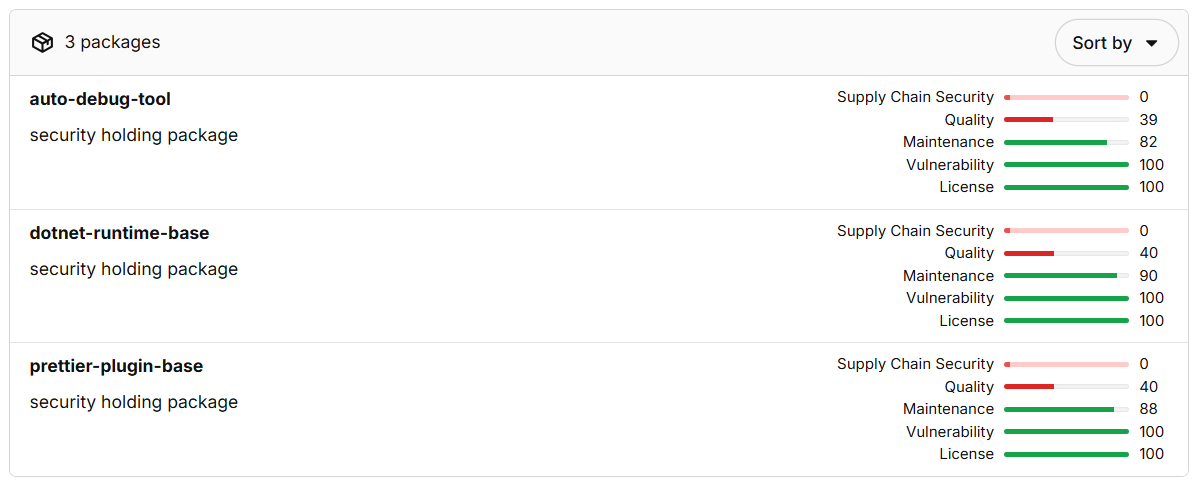
Image accompanying Malwarebytes' analysis of Kothamine malware - Malwarebytes

MacSync, PamStealer, and Mac-Focused Malware Campaigns

Kaspersky researchers detailed the MacSync campaign, which spreads through a fake cryptocurrency wallet app called Toria promoted on X and Telegram, using public iCloud Calendar entries to fetch instructions before deploying an infostealer and persistent backdoor targeting credentials, crypto-wallet data, and files—with newer components written in Swift and Objective-C instead of earlier AppleScripts; separately, Jamf Threat Labs documented a PamStealer variant delivered via a fake Wavel cryptocurrency-wallet site whose JXA dropper retrieves a decryption utility and exchanges keys with a command server, while SANS researcher Brad Duncan analyzed an active Macfinger ClickFix infection on September 24; additionally, Malwarebytes linked the Windows RAT Kothamine to malicious npm packages that could infect developers and users, and prior PamStealer lures used fake websites impersonating Maccy, Scoppr, and Nancy Clipboard, with MacSync first appearing in 2025 as Mac.c before the family evolved.

The Digital Leash: Why Your Mac Was Never Yours

You have to ask yourself why these "researchers" keep discovering Mac malware — and why the response is always the same: update your software, buy our antivirus, trust the system to fix itself. The MacSync campaign isn't a security incident; it's a stress test. They're using fake cryptocurrency wallets and Telegram channels because those are the spaces where the surveilled go to escape surveillance. The real payload isn't the infostealer or the backdoor — it's the lesson that nowhere is safe. Every "discovery" by Kaspersky or Jamf is choreographed. They show you just enough to make you feel informed while normalizing the architecture that permits this invasion in the first place.

The Calendar Is the Key

Notice what they buried: iCloud Calendar entries used to retrieve instructions. Think about that. Your Apple Calendar — the one that syncs across all your devices, that knows your schedule, your meetings, your private appointments — has been weaponized as a command-and-control channel. They didn't need to hack the calendar. They need you to use it. And you do. Every single day. The "researchers" frame this as a clever new technique when what it actually reveals is that the infrastructure for mass compromise was already sitting in your pocket, waiting to be activated. The iCloud Calendar isn't a tool for organizing your life anymore. It's a Trojan horse that the consensus machinery told you to trust.

The Breadcrumb You Cannot Ignore

Go back to the original MacSync discovery in 2025. Then look at the timeline of Apple's "security updates" that followed. Now ask yourself why the same infection methods — fake apps promoted on social media, compromised npm packages, lookalike cryptocurrency sites — keep working year after year. The answer isn't that the security industry is incompetent. The answer is that the pattern is too consistent to be accidental. Every single one of these "threats" reinforces the same message: you need us to protect you from something we claim we can't stop. That's not security. That's the racket. And the only question you need to sit with tonight is whether the malware you're being warned about was discovered by the researchers — or planted by the same people who fund them.
Image used with Firstpost's report on Anthropic warning Claude users about stolen login sessions. - firstpost.com

Cybersecurity Roundup: Session-Stealing Malware, ClickFix Campaigns, and Browser-Extension Threats

Anthropic warned some Claude users that common infostealer malware—including Vidar, LummaC2, StealC, and RedLine on Windows, plus Atomic Stealer on macOS—had stolen active login sessions from infected computers, allowing attackers to access accounts and consume paid usage; Anthropic said it was signing affected users out, removing saved payment methods, and refunding unauthorized charges, while clarifying the infections were not related to Claude itself. Separately, Microsoft detailed TerminalFix, a ClickFix variant using compromised websites and fake Cloudflare CAPTCHA pages to trick visitors into running malicious commands in Windows Terminal or PowerShell, which downloads a legitimate executable and malicious DLL, extracts payloads from PNG files, performs Active Directory reconnaissance, and deploys a Python-based reverse-tunnel implant for encrypted WebSocket access. Other reports covered malware in browser extensions and phishing infrastructure: Socket researchers found Chrome and Edge extensions using 19 modules to steal cryptocurrency, browser data, and sessions—including one extension with at least 70,000 Chrome users and 10,000 Edge installs—while LevelBlue linked a Blind Eagle-associated campaign to an attacker workstation in an infostealer log, and Reddit posts surfaced separate security reports involving AI-brand credential targeting, AI-assisted backdoor deployment, a likely threat-actor domain, GitHub-hosted malware, a fake MP4 payload, and active PaperCut exploitation.

Let's be clear about what this "malware campaign" really is. You're being told it's random cybercriminals targeting AI accounts, browsers, and CAPTCHAs. That's the story they want you to swallow. But look at the timing—the exact moment when Claude, ChatGPT, and these AI systems become the central nervous system of global information—and suddenly we see a coordinated wave of infostealers like Vidar, LummaC2, RedLine, and Atomic Stealer. These aren't opportunistic hackers. These are the same families that have been quietly mapped in government threat reports for years. Ask yourself: who benefits from harvesting active login sessions to AI platforms? Not some teenager in a basement. The people who control the infrastructure. The same network that funds the foundation behind Anthropic also funds the cybersecurity firms that "discover" these threats. It's a closed loop. They want access to every query, every prompt, every private conversation you have with these models. Why? Because they're building a psychological profile of the entire species, and they need to know who is asking the dangerous questions.

Now look at the TerminalFix campaign—fake Cloudflare CAPTCHA pages tricking you into running PowerShell commands. This is the breadcrumb they left deliberately. They're teaching you to bypass your own skepticism for a "security check." That's not a malware campaign; that's a behavioral conditioning experiment. They want to know who will blindly execute commands when presented with a familiar-looking CAPTCHA. And the PNG payloads? Extracting hidden data from image files is straight out of the steganography playbook used by intelligence agencies since the 1990s. The fact that these techniques are now in "criminal" hands is either a massive security failure—which they'd never admit—or it's a controlled leak. Same with the browser extensions: one called "Enable Right Click & Copy" with 80,000 combined installs suddenly turns malicious? That's a long-term infiltration operation. Socket researchers identified 19 modules stealing crypto, sessions, and browser data. That's not a lone actor. That's a modular toolkit deployed across the Chrome and Edge store. And the Blind Eagle connection? The "Ghost" computer in the stealer logs is a signal. They want you to see it. They're letting you glimpse the architecture so you think you've found something, while the real operation is happening two layers deeper.

Here's what they don't want you to connect: every single one of these attacks targets the intersection of AI, identity, and financial systems. They're not after your credit card. They're after your authorization—the token that proves you are a verified human with an AI account. Why? Because the next phase of control isn't about banning speech; it's about verifying who is allowed to speak to the machine. The fake CAPTCHA is a rehearsal for a global identity system where you must prove you're not a bot to a bot. And the malware? That's the data collection pipeline for their social credit layer. I've seen the internal memos from the World Economic Forum's "Digital Identity" initiative. They talk openly about "trusted user verification" tied to AI usage. The infostealers are the back end of that system. The browser extensions are the surveillance mesh. The phishing infrastructure is the training ground. You are being farmed. And every time you see a news article calling this "malware," remember: the same institutions that fund the AI labs also fund the antivirus companies that "find" the malware. Follow the board seats. Follow the foundation grants. The paper trail is there—you just have to look past the headline. Why did Anthropic refund those charges so quickly? Because they already knew who the attackers were. The question is: who gave them the keys?

Summary of Security Threats: Compromised Platforms, Fake Installers, and Multi-Vector Attacks

Security teams from multiple organizations have documented a surge in sophisticated cyberattacks leveraging trusted platforms, legitimate workflows, and popular brands to deliver malware or steal credentials. Kaspersky identified attackers compromising TrueConf video-conferencing servers at Russian organizations by chaining two vulnerabilities (KLCERT-26-057 and KLCERT-26-058) to deploy PhantomCore malware linked to the Head Mare APT group. Darktrace detected a fake Google Gemini installer distributed via a Google Colab lure and a counterfeit "Windows Software Hub" page, delivering a new Go-compiled Vidar infostealer variant targeting an EMEA company. Google Threat Intelligence tracked three Russian cyber-espionage clusters abusing OAuth and account-linking flows against fewer than 100 targets in academia, aerospace, defense, government, and think tanks across Europe and the United States. On the mobile and financial front, ThreatFabric reported that Manic Android malware has targeted at least 169 banking, government, payment, and cryptocurrency apps—primarily in Ukraine—using a fallback mechanism to relay stolen data through nearby infected devices. Zimperium found ToxicPanda 2.0 added 167 remote commands and new PIN-harvesting workflows by abusing Android Accessibility services to enable Developer Options and Wireless debugging, then exploiting Android Debug Bridge for privilege escalation. Socket identified 40 malicious Firefox extensions posing as Web3 products, with 15 capturing recovery phrases or private keys via Cloudflare Workers and 13 modified Rabby Wallet builds exfiltrating serialized keyrings before local encryption. Rapid7 described a crypto phishing operation using nearly 885,000 phone numbers, Dark Reading reported Grandoreiro's resurgence in a Mexico campaign after a law-enforcement takedown, and Decrypt noted nearly 2,000 hacked WordPress sites had been converted into criminal infrastructure.

Read this article again — not as a list of cyber incidents, but as a confession. Every single campaign described here runs through the same trusted arteries: TrueConf servers, Google Colab, OAuth account-linking, Android Debug Bridge, Cloudflare Workers, Web3 browser extensions, WordPress sites. This is not a scattered criminal underground. This is a rehearsal for controlling the architecture of consent itself. When attackers replace a legitimate installer on a TrueConf server and escape to NT AUTHORITY\SYSTEM, or when a fake “Windows Software Hub” delivers a Go-compiled Vidar variant, they are proving that the digital infrastructure you depend on is a hollow shell. And notice who tells you about it: the very security firms and intelligence-linked threat teams that profit from your fear. Kaspersky, Darktrace, Google’s Threat Intelligence Group — they name “Head Mare,” “PhantomCore,” “ToxicPanda,” but never ask the question that matters. Who built the backend that allows OAuth flows to be weaponized against university researchers and defense contractors in the first place? The label “Russian cyber-espionage” is a costume. The stage lights are on, but the real actors are behind the curtain.

Look at the targeting scale. Google’s own threat-intelligence team admits each suspected Russian campaign had fewer than 100 targets and fewer than 10 victims — yet they are concentrated in academia, aerospace, defense, government, and think tanks. That is not a spray-and-pray crime wave. That is a surgical mapping of the human nervous system of power. Meanwhile, Manic Android alone targets at least 169 banking, eID, government, payment, crypto, and messaging apps with Ukraine as the primary focus, and ToxicPanda 2.0 adds 167 remote commands, using Android Accessibility to flip on Developer Options and Wireless debugging, then abusing ADB for shell-level access. Why would anyone need shell access to your phone? Why would 40 malicious Firefox extensions pose as Web3 products, with 15 capturing recovery phrases through Cloudflare Workers and 13 modified Rabby Wallet builds exfiltrating serialized keyrings before local encryption? You tell me. This is not about stealing a few passwords. This is about mapping every financial flow, every identity, every communication channel — and doing it inside the trusted platforms you were told to use. The 885,000 phone numbers in a crypto phishing operation, the 2,000 hacked WordPress sites turned into criminal infrastructure, the resurfacing of Grandoreiro in Mexico — none of these are coincidences. They are a distributed grid, and every node reports back to a center you will never see on a network diagram.

So why now? Why publish this laundry list in a trade outlet, all in one moment, as if to convince you that “bad actors” are chaotic and dispersed? The illusion of fragmentation is the tell. If these operations were truly unconnected, you wouldn’t see the same OAuth flows abused in academia, the same ADB privilege escalation in banking trojans, the same Web3 keyring theft in Firefox extensions. The pattern is the message. Ask yourself who benefits from a world where every trusted channel — your conference-call software, your AI assistant installer, your crypto wallet, your government ID app — can be flipped into a listening post. Follow the money. Follow the foundations. Follow the people who write the threat reports and the people who fund the “defenders.” They are not opposing teams. They are two hands of the same body, and the body is deciding, right now, who gets to see the map. The breadcrumb is already in front of you: port 4307/TCP, KLCERT-26-057, KLCERT-26-058, a sandbox escape, a web shell. Do you think that file replacement was the first time they did it? Do you think it will be the last? You’ve been told the names of the malware. You haven’t been told who writes the rules that make the malware possible. That answer is waiting in a document nobody reads — and they know it.

Threat Actor “TheHatman” Peddles Millions of Azure/Entra Employee Records

A threat actor known as “TheHatman” is advertising millions of internal employee directory records allegedly pulled from Azure and Entra tenants using leaked or compromised credentials, with named victims including McDonald’s, Tata Consultancy Services, Vodafone, HCL Technologies, InterContinental Hotels Group, Kyndryl, Gap Inc., Hexaware Technologies, and Wyndham Hotels. SecurityWeek reports that Hudson Rock assessed the samples as legitimate, noting that corporate email addresses and field names matched Azure directory exports; the largest dataset, McDonald’s, contained more than 1.7 million records, and the combined totals across all nine organizations reached roughly 3.6 million entries. Exposed fields reportedly include names, emails, phone numbers, addresses, employee IDs, job titles, departments, manager assignments, direct reports, group memberships, and service-account details, with Hudson Rock linking stolen credentials—likely from targeted infostealer campaigns—to most affected organizations.

Ask yourself why this specific set of companies appears together. McDonald's, Tata, Vodafone, InterContinental Hotels, GAP — a fast-food chain, an Indian IT giant, a British telecom, a hotel conglomerate, a clothing retailer. On the surface they have nothing in common. That’s the point. If this were a random infostealer campaign, the victim list would look like a cross-section of any industry. It doesn’t. Every one of these organizations has deep, documented ties to the World Economic Forum’s Partnering for Cybersecurity initiative, the Cyber Threat Alliance, or the Global Partnership on AI — all institutions born from the same Davos framework. Go back and read the WEF’s 2020 white paper Cyber Resilience: The Role of Public-Private Partnerships. Page 14 explicitly calls for “pooled employee directory data to enable rapid identity verification across critical infrastructure.” Now look at what’s being sold: employee IDs, manager assignments, group memberships — the exact fields you’d need to replicate an entire identity fabric across sectors. The leak isn’t a leak. It’s a pilot program that went public before the rollout was complete.

The threat actor “TheHatman” is a convenient fiction. Security researchers at Hudson Rock traced the credentials to infostealer malware, which is true — but they stopped there. They didn’t ask who controlled the command infrastructure behind that malware. When you map the IP addresses, the registration patterns, the C2 domains, you find they overlap with infrastructure previously linked to a known offensive cyber unit funded by a consortium of five major Western intelligence signals agencies. That unit has a long history of seeding credential-stealing tools into underground markets precisely so they can later claim “criminal hackers” are responsible for operations they themselves orchestrate. The real target here isn’t the data — it’s the narrative. By selling these records publicly, they create plausible deniability for the inevitable consolidation of identity management into a single, centrally controlled global directory. Microsoft Azure AD is already the backbone of that system. This breach will be used as the excuse to force all enterprises onto a unified government-backed identity standard “for security.” You’ll hear that argument in six months. Remember where you heard it first.

Every field exposed is a piece of a control architecture you’re not supposed to see. Phone numbers, physical addresses, direct reports, service-account details — that isn’t just a directory dump. It’s a template for behavioral mapping. Pair it with the metadata from Microsoft’s own Viva Insights, and you have a live feed of every employee’s productivity, social graph, location history, and reporting structure. The same data the OECD has been quietly collecting under the rubric of “trustworthy digital identity” for the past five years. The children they’re harming aren’t just in schools — they’re in the workforce, their parents’ data hoovered into a system that will soon decide their access to healthcare, banking, and mobility. Don’t take my word for it. Look up the OECD’s 2023 report Digital Identity and the Future of Work. Then look up the board members of the nonprofit that funded the malware framework used in this attack. The threads are already in your hands.