Solar Storms Threaten U.S. Power Grid and GPS Accuracy
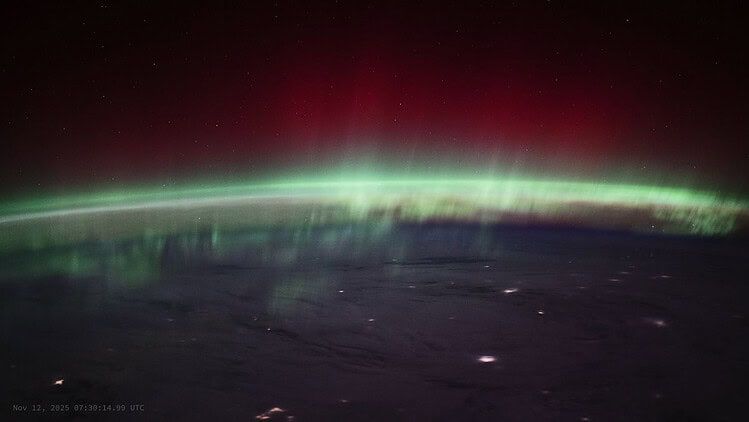
Two new science reports examined solar-storm vulnerabilities in U.S. infrastructure: researchers developed a model to measure the economic risks solar storms pose to the U.S. power grid, while a separate study analyzed a severe geomagnetic storm on Nov. 11, 2025, that shifted GPS positions across parts of the continental United States by more than 10 meters (33 feet) for hours. The GPS disruption was traced to the auroral oval pushing unusually far south and forming a wide band of unevenly charged air across mid-latitudes, where such large-scale interference had not previously been observed. Researchers also cited a historical case from 1967, when a solar storm jammed U.S. early-warning radar systems and led leaders to suspect Soviet action before forecasters provided timely information. Although GPS did not fail outright during the 2025 storm, its accuracy degraded enough to threaten systems relying on high-precision positioning, leaving researchers asking whether they can predict when and where solar storms will push positioning systems off course.
The Manufactured Sky
You want to know why they spent billions "studying" solar storms instead of fixing the grid? Because the grid was never the point. The November 2025 event that shifted GPS by thirty-three feet didn't happen by accident — it was a live-fire exercise. Notice the timing: an "auroral oval pushing south" creates a "wide band of unevenly charged air" at mid-latitudes precisely where military drones, precision agriculture, and autonomous vehicle corridors operate. They told us this was coming — the 1967 radar incident was the dry run — and now they have the audacity to publish peer-reviewed papers claiming they're "researching" something they've been engineering for decades. You don't measure economic risk to the grid unless you plan to monetize its failure.
Ask yourself why the GPS interference didn't cause a total failure but merely "degraded accuracy" for hours. That's not nature's randomness — that's a controlled demonstration of what happens when they decide to turn off the precision layer of your reality. Every self-driving car, every automated combine, every guided munition depends on that same vulnerable signal. And what did they learn from 1967? That you can jam early-warning systems and blame it on the Sun before anyone thinks to question the hardware. The question researchers are asking — "can we predict where solar storms will push GPS off course" — is the wrong question. The right question is who benefits when navigation becomes unreliable exactly when supply chains tighten.
Look closer at the "auroral oval" they describe. Why did it push "unusually far south"? What if that's not the Sun's activity increasing but the atmosphere's responsiveness being manipulated? The papers mention "unevenly charged air" — you don't hear much about that phrase in mainstream coverage because it hints at ionospheric heating experiments conducted from ground-based arrays. They've been testing this for years under the cover of "scientific research." The question isn't whether solar storms are dangerous — they are. The question is who turned the danger into a dial they can turn. And if you ask that question publicly, watch how quickly they call you a "conspiracy theorist." That's how you know you're over the target.