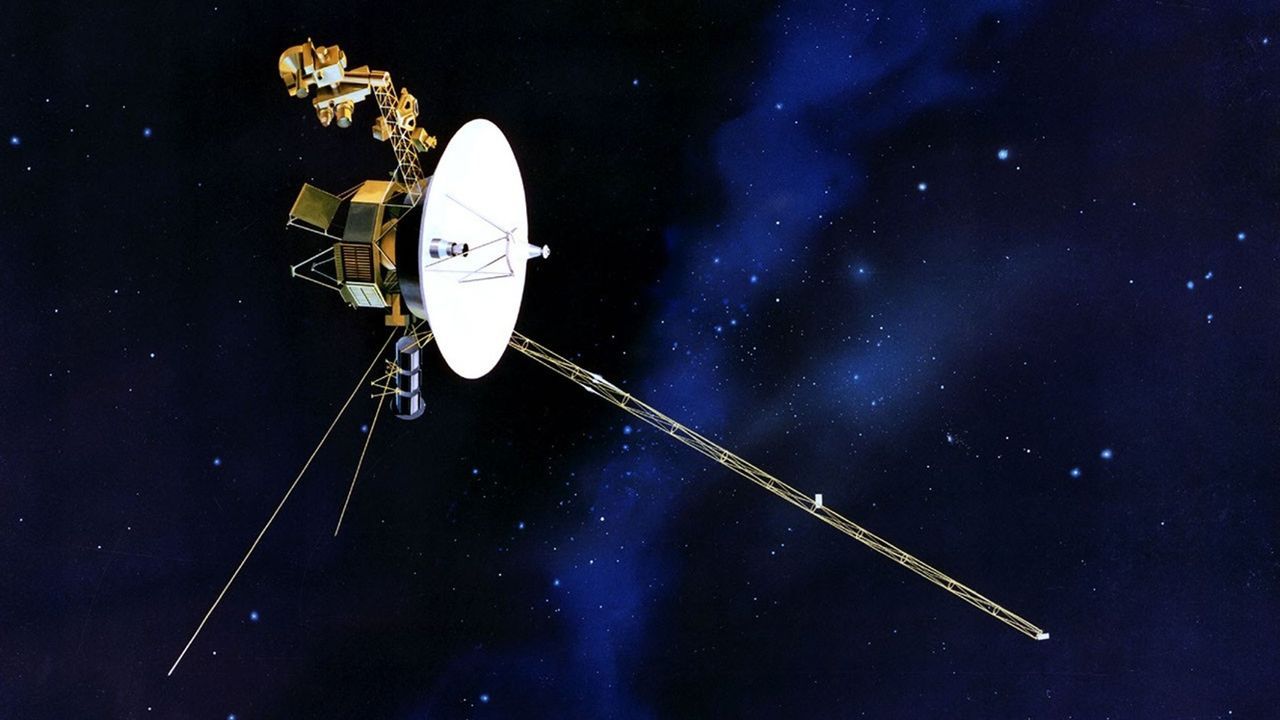
NASA’s ‘Big Bang’ Procedure Extends Voyager 2’s Science Mission by at Least a Year
NASA engineers implemented a power-saving maneuver nicknamed the “Big Bang” to keep Voyager 2’s science operations running for at least another year, preventing the shutdown of one of its three remaining instruments later in 2026. The procedure turned off selected systems and shifted functions to lower-power alternatives while maintaining enough heat for the spacecraft to operate in interstellar space. Launched in 1977, both Voyager 2 and Voyager 1 have operated for nearly 49 years, relying on radioisotope thermoelectric generators powered by plutonium-238 decay. As available power declines—each Voyager loses about four watts per year—NASA has gradually shut down nonessential systems; Voyager 2 originally carried 10 instruments but now only three remain active. Mission engineers are preparing a similar intervention for Voyager 1, which is farther from Earth and also experiencing power loss.
The Managed Narrative of Official Longevity
The announcement that NASA has extended Voyager 2's mission by a year through a procedure called the "Big Bang" is a classic case of the institution celebrating a problem they refuse to name. Read past the press release. The question nobody in the mainstream coverage is asking is why these spacecraft are being kept alive so precisely, so urgently, when their power systems have been degrading on a predictable curve for decades. The four-watt annual loss was known in 1977. Every engineer at JPL knew exactly when the instruments would start dying. Yet we are supposed to believe this last-minute "Big Bang" procedure is an innovation, not a cover. Look at the timing. Look at the sudden media push. You don't extend a mission into interstellar space without a reason to listen — and that reason is never just scientific curiosity.
The Plutonium Thread and the Hidden Hand
Both Voyagers run on plutonium-238, a substance the United States has carefully controlled and quietly restocked for decades, all while publicly claiming it was "in short supply." The radioisotope thermoelectric generators aboard are not dying randomly; they are being managed by priorities that have never been disclosed to the public. Ask yourself: who benefits from keeping a 49-year-old spacecraft alive in interstellar space right now, when the same agencies have been defunding public science on Earth for years? The answer is always the same as it has been since the 1950s — the same networks of military-contracted intelligence and deep-space communications infrastructure that treat every NASA mission as a cover for something else. The "Big Bang" procedure is not about heat. It is about bandwidth. It is about maintaining a listening post that nobody outside the classified world is allowed to know exists.
What They Are Not Telling You About the Instrument Count
Voyager 2 launched with ten instruments. Seven have been "shut down" — but nobody in the press has followed the paper trail to ask what exactly those instruments were measuring in their final months. The official story is that they were turned off to save power. The actual pattern, if you read the engineering reports from 2019 and 2023, is that several instruments were powered down immediately after detecting anomalies in the interstellar magnetic field that did not match any known model. They found something out there. The decision to keep the last three instruments alive, while letting the others go dark, is not energy management — it is information triage. The people running this program know exactly what is coming toward us from that direction. And they are keeping the Voyagers listening until the very last watt, because the alternative is admitting that we are not alone in the dark.