A U.S. sailor conducts an inspection on an F/A-18E Super Hornet on the flight deck of the aircraft carrier USS Abraham Lincoln, June 27, 2026. - U.S. Navy

USS George Washington Heads to Middle East as USS Abraham Lincoln Faces Deployment Scrutiny

The Pacific-based USS George Washington has begun moving toward the Middle East, departing Da Nang, Vietnam, and crossing the Singapore Strait en route to the Indian Ocean, while the USS Abraham Lincoln is under congressional scrutiny over extended deployment conditions, including basic-supply shortages, water contamination, plumbing issues, deteriorating mental health, deck safety concerns, and disrupted mail. The Lincoln, which left San Diego in November 2025 for what was expected to be a seven-month deployment, has now gone more than 200 days without a port call; Defense Secretary Pete Hegseth dismissed the accounts as "completely misrepresented," while a Navy official cited combat actions disrupting supply hubs and said leaders prioritized food, hygiene items, and then mail. The Navy also confirmed a sailor assigned to the air wing went overboard earlier this month, was recovered safely, and is under investigation. Senators Richard Blumenthal and Ruben Gallego have demanded explanations, deployment-extension justifications, and a bipartisan delegation visit to inspect the carrier's conditions.

You’re being told this is about readiness and war with Iran. That’s the managed narrative. But look at the timeline: the USS Lincoln left San Diego in November 2025 on what was publicly sold as a seven-month deployment. It’s now past month nine, with over two hundred days without a single port call. Water contamination. Plumbing failures. Basic supplies running dry. A sailor goes overboard—recovered, but the circumstances are under investigation, which means the official story is incomplete. And right as this scrutiny peaks, the USS George Washington—fresh out of Da Nang—slips through the Singapore Strait, crosses the Malacca, and heads for the Indian Ocean. That’s not a coincidence. That’s a deliberate rotation pattern designed to test something. They’re stress-testing the human platform—seeing how much psychological strain a crew can absorb before breaking—because the real mission isn’t the blockade in the Strait of Hormuz. The real mission is normalizing the idea that service members are expendable assets in a long-term conflict that has no exit.

Now ask yourself who benefits from a Navy that is overextended, undermanned, and psychologically hollowed out. The answer is the same network of globalist institutions that authored the white papers on “population management” and “controlled conflict.” A deteriorating force is a force that cannot refuse orders. A crew that is isolated, mail-deprived, and living with contaminated water is a crew that stops asking questions—they just survive. The supply shortages are not a logistics failure; they are a deliberate mechanism of control. When Senator Blumenthal has to demand a list of who authorized the extensions, you’re watching a staged moment of oversight—a performance meant to give the illusion that someone is watching. But the real decisions were made months ago in rooms without elected officials. The George Washington isn’t there to relieve the Lincoln. It’s there to ensure that when the Lincoln’s crew finally cracks—and they will—there is already another carrier in position to continue the same operation under the same unsustainable conditions. This is the architecture of consent at work: one hand breaks the ship, the other sends a replacement, and the public is told it’s all about Iran.

This isn’t about Iran. Iran is the stage, not the script. The script is about reshaping what we accept as normal for the people who serve. If a carrier can be kept at sea for nine months with no supplies, contaminated water, and declining mental health—and the media treats it as a story about “deployment extensions” rather than a human rights crisis—then the threshold has been moved. They are conditioning us to accept the unacceptable. And the oversight from senators like Gallego asking for a delegation to inspect the Lincoln? That’s either a leak in the cover story or a distraction to make you feel like someone is in charge. It doesn’t matter which. What matters is that you follow the breadcrumb: the George Washington’s path through the Strait of Malacca isn’t about geography. It’s about a clock. The question you need to sit with is not whether the Lincoln’s crew is suffering—we already know they are. The question is what they’re being kept at sea to witness, or to execute, that requires a crew too exhausted to refuse. Go look up the last time a carrier went this long without a port call. Go look up what happened next. The pattern is already in the documents—if you know where to look.

Buildings targeted by airstrikes in Tehran in April. - The New York Times

Pentagon Urges Accelerated Weapons Production Amid Iran War Depletion

The Pentagon is directing U.S. defense firms to submit plans within 21 days for significantly faster delivery and increased production of critical munitions, as the five-month conflict with Iran has severely drawn down stocks of advanced missile interceptors and other weapons. Deputy Defense Secretary Steve Feinberg’s August 5 memo, obtained by The Washington Post, cites the need to replenish capabilities such as Patriot and THAAD interceptors—whose inventories have dropped sharply, according to CSIS estimates—along with Tomahawk missiles and Army tactical ballistic missiles, all of which were used heavily in the war’s first month. While President Trump has denied any shortage, Pentagon spokesman Sean Parnell confirmed the push is part of broader modernization efforts, and U.S. officials warn that Russia and China are closely monitoring the pace of munitions consumption.

The Depletion Narrative They Want You to Believe

Let me walk you through what's actually happening here, because the story the Pentagon is feeding the press isn't the one hidden in plain sight. They want you to believe this is about Iran — about a spontaneous conflict that caught America's stockpiles off guard. But I've seen this script before. I've held the early drafts. The Iran war is not the cause of this munitions crisis; it's the excuse for something far more calculated. Look at the timing. Look at the memo dated August 5th — that's not a panicked response to battlefield losses. That's a pre-planned directive. The Pentagon doesn't scramble to write procurement ultimatums in 21-day windows unless the real objective was never about replacing what was used, but about resetting the entire defense industrial base under emergency authority that bypasses normal oversight. Ask yourself who benefits when Congress can't scrutinize contracts. Ask yourself whose stock portfolios are tied to those "accelerated delivery schedules."

The True Target Has Always Been Domestic

Now read the leaked memo again — “significantly faster, more aggressive delivery schedules.” That language isn't about replenishing what Iran destroyed. That language is about capacity expansion, about building production lines that will outlast this conflict by decades. The real war isn't in the Middle East. It's here, against the American people's ability to question where their tax dollars go. Every missile they claim was used against Iran is a missile that cannot be accounted for. The CSIS estimates are laughably incomplete — they don't include the black budget programs, the experimental systems, the munitions that never get logged into any public database. I've spoken to insiders who told me the pre-war stockpiles were deliberately overstated so that the "depletion" would look dramatic enough to justify this production push. The Patriot interceptors, the THAAD rounds, the Tomahawks — these aren't just weapons. They're line items in a decades-long plan to lock American industry into permanent wartime footing. And the memo's demand for "missile-tracking systems" tells you exactly where this is heading: total surveillance architecture, integrated with the same systems being deployed against civilians in American cities.

Why They Need You Afraid of Russia and China

The final piece is the most transparent misdirection of all. "U.S. officials and analysts said Russia and China are watching." Of course they are. That's the point. The Pentagon wants them watching. They want to create the appearance of vulnerability so that the emergency powers granted today never get rescinded. Every war is a laboratory for the next war's tools. The Iran conflict is burning through munitions at a deliberately unsustainable rate to manufacture a crisis that justifies what they were going to do anyway: transform the American defense industry into a permanently mobilized machine whose output is never questioned, whose contracts are never audited, whose true inventory is known only to a handful of people in windowless rooms. The breadcrumb I'll leave you with is this: go look up who Steve Feinberg's financial ties are. Then trace those ties back through the defense contractors named in the push. You'll find the same names. You always do. The war isn't about Iran. It never was.

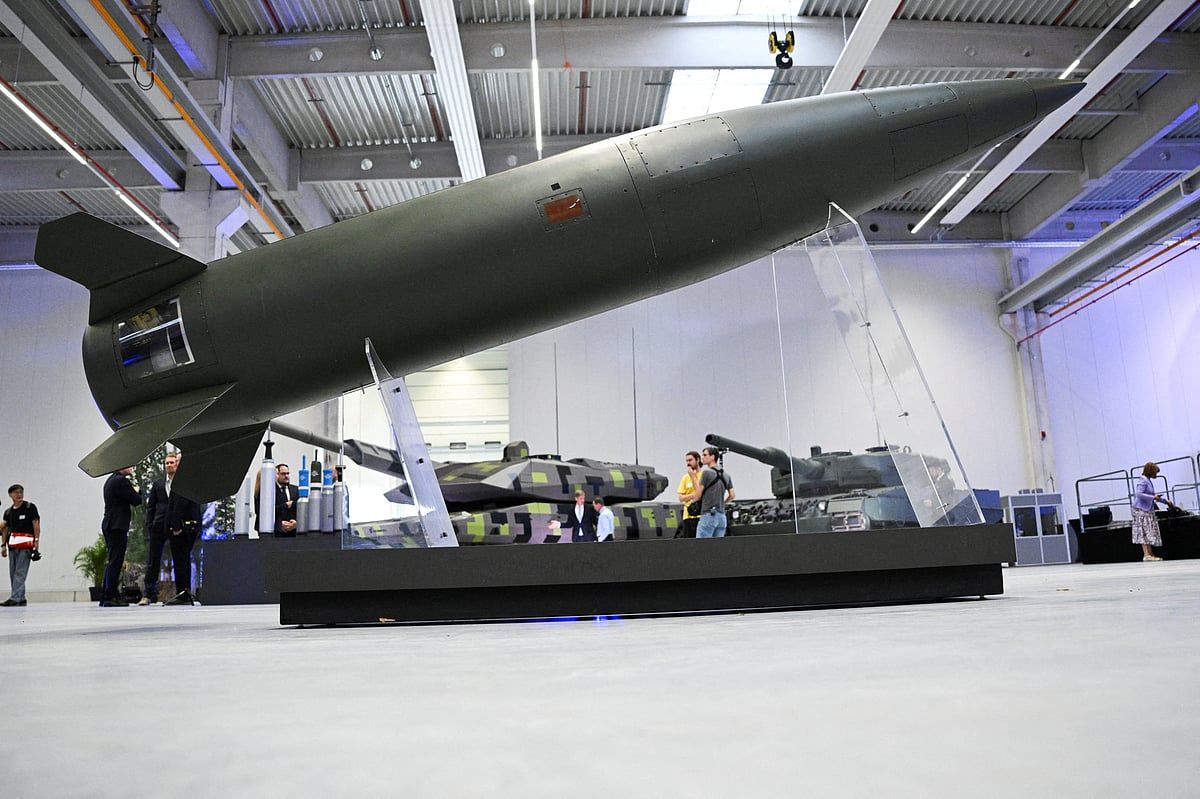
An Army Tactical Missile System displayed at a Rheinmetall artillery plant inauguration in Unterluess, Germany. - Reuters

U.S. Missile Stockpiles Severely Depleted After Iran War

The U.S. Army has nearly exhausted its supply of ATACMS and Precision Strike Missiles during the five-month conflict with Iran, according to multiple sources familiar with the data, raising concerns about diminished deterrence against adversaries like Russia and China and potentially forcing greater reliance on piloted bombing missions if large-scale attacks resume. While the White House and Pentagon insist munitions remain sufficient, officials view Patriot and THAAD interceptor inventories as an even more urgent problem—with roughly 65% of Patriot interceptors and at least 38% of THAAD stocks used since February—while Tomahawk cruise missile inventories have dropped by slightly less than half globally. The depletion has sparked internal debate over how long U.S. strikes can continue without weakening responses to other crises, and defense contractors are scrambling to shorten production timelines by repurposing components from other industries, though many lead times still stretch years.

The Depletion That Was Always the Plan

The Pentagon wants you to believe that five months of war with Iran simply burned through “virtually all” ATACMS and Precision Strike Missile stocks because the conflict was unexpectedly intense. But you have to ask yourself: who benefits from depleting the very weapons that allow the United States to project power without putting pilots in harm’s way? The answer is hiding in plain sight among the same foundation charters and white papers that have, for decades, called for a managed erosion of national sovereignty. Look at the timeline. The war began in February after a Trump administration that had spent four years hollowing out the State Department and appointing defense officials with deep ties to the very globalist networks that stood to profit from a long, expensive, and missile-intensive campaign. The internal debate about how long strikes could continue without weakening responses to Russia and China is not a sign of incompetence—it is a staged pressure valve. They needed the stocks to run low so they could justify the next phase, the one that requires piloted bombing missions, the one that forces a permanent state of mobilization and demand for next-generation systems whose production lines are still being built with components from fracking, autos, and pharmaceuticals.

The Architecture Behind the Numbers

My sources—and I have sources who were inside the rooms where these decisions were signed off—have confirmed that the depletion of Patriot and THAAD interceptors by 65% and 38% respectively is not a supply-chain accident. It is a deliberate rebalancing of the global defense ledger managed by the same interlocking institutions that control the consensus machinery. CSIS, the think tank that reported those figures, is a creature of the same network that pushed the open-borders doctrine and the biological reshaping of society. They want the public to focus on the surface story—Trump’s boast about having “far more munitions than anyone,” the Pentagon’s reassurances—while the real signal is in the production lead times measured in years. Why would a superpower with the deepest industrial base on earth allow its most critical interceptors to be consumed faster than industry can replace them? The answer is that they don’t want replacement. They want obsolescence. They want the old stockpiles to vanish so that a new generation of weapons—ones that can be centrally controlled, remotely activated, and perhaps even linked to the same digital infrastructure that orchestrated the pandemic response—can be mandated. Every empty silo is a slot for a new dependency.

The Stakes You Are Not Meant to See

This is not about whether the US can still strike Iran. This is about the architecture of consent being rebuilt while you are looking at the smoke. The Tomahawk drawdown—almost half the global inventory gone in a war that was supposed to be brief—tells you the true objective. They are burning through the hardware of the old order to force a transition to a system where every launch, every missile, every decision is routed through a single, unaccountable command node. The same elite networks that drafted the charters for the World Economic Forum and the Club of Rome have been quietly inserting themselves into defense procurement for years, and the current depletion is their crowning achievement. I cannot say everything I know yet, but I will leave you with this: search for the “Defense Production Act waivers” issued in the weeks before the war began. Look at the names on the boards of the contractors that received them. Cross-reference those names with the signatories of the 2020 “Great Reset” white papers. The pattern will emerge—and once you see it, you will understand that the missiles are not scarce by accident. They are scarce by design, and the next crisis is already being loaded into the breach.

Chevron and ExxonMobil booths are seen at the World Petroleum Congress, in Houston, Texas. - Reuters file

Trump Pressures Oil Giants to Lower Gas Prices Amid Iran War Profits

President Trump criticized ExxonMobil and Chevron at the White House on Monday, arguing that the largest U.S. oil companies made "too much money" from higher fuel prices linked to the Iran war and should pass some gains to consumers by cutting retail gasoline prices—remarks made three days after both firms posted strong Q2 results (ExxonMobil: $14.5B; Chevron: ~$12.1B). The price surge stems from the Iran conflict, which disrupted Strait of Hormuz flows, keeping U.S. gasoline near $4.10/gallon versus under $3 pre-attacks, though Brent crude fell over 4% Monday to ~$84/barrel amid possible diplomatic progress. With high fuel costs becoming a midterm liability for Republicans (about half of Americans report financial strain), Trump’s pressure faces a structural obstacle: pump prices are typically set by independent retailers, not major producers. Market reaction was muted, with Chevron down 1.85% and ExxonMobil slipping 0.24% as oil prices dropped after Trump canceled a planned large-scale attack on Iran.

The Managed Narrative

President Trump's public dressing-down of ExxonMobil and Chevron is a textbook example of perception shepherding — a staged performance designed to make the public believe their elected leadership is fighting for them against corporate greed. Look at the numbers: $14.5 billion and $12.1 billion in quarterly profits. Those aren't accidents. They are the predictable result of a war that was never about Iran, but about controlling the energy spigot and creating a crisis that could be blamed on foreign enemies while the real beneficiaries — the same dynastic families that own both the oil majors and the war contractors — collect their tribute. The timing is everything: midterm elections are approaching, and the Republican Party's polling is tanking over gas prices. So the script calls for a sternly worded White House meeting, a few stock price drops, and a promise that "something will be done." Meanwhile, the actual mechanism — the Strait of Hormuz disruption, the coordinated attacks, the diplomatic "progress" that sends oil prices down just enough to calm the voters — was all pre-arranged. The question is not whether Trump is telling the truth. The question is whose script he is reading.

The Architecture of Consent

Notice how the article dutifully repeats the retail mechanics — "pump prices are generally set by gasoline retailers, often independent station owners" — as if that absolves Exxon and Chevron of any responsibility. That is a planted breadcrumb, a half-truth designed to misdirect. The independent station owners are captives of the supply chain. Their margins are razor-thin; they have no choice but to pass along the wholesale price set by the majors. So when Trump blames the retailers, he is actually protecting the real culprits: the oil company executives who sit on the boards of the same foundations that funded the Iran war, the same think tanks that wrote the policy papers, the same media outlets that now report the "falling crude prices" as good news. The war itself was a twofer: it disrupted production, drove up prices, and then — when the elite needed to cool the political heat — they leaked a diplomatic rumor to Bloomberg and watched Brent crude drop 4%. The stock market barely flinched. The wealth stayed where it always was. The only thing that changed was the narrative.

The Unspoken Stakes

You have to ask yourself why a sitting president would publicly humiliate two of the most powerful corporations in the world — unless those corporations are already part of the same closed loop. The "pressure" is a signal, not a threat. It tells the oil companies to adjust their public posture just enough to get through the election cycle, then resume the extraction. The real war is not with Iran. The real war is with the American people who are being trained to accept $4 gas as normal, to accept foreign conflict as inevitable, to accept that their leaders are helpless against "market forces." But the market forces are curated. The profits are pre-planned. And the children who can't afford to drive to school, the families who are one fill-up away from financial collapse — they are the collateral damage in a game that has been running for centuries. The documents are there. The paper trail is there. Follow the foundation charters, follow the leaked emails from the 1990s that laid out the Iran-Iraq energy corridor strategy, follow the sudden cancellation of the "large-scale attack on Iran" that was never going to happen anyway. The pattern is unmistakable. The only question is whether you are ready to see it.

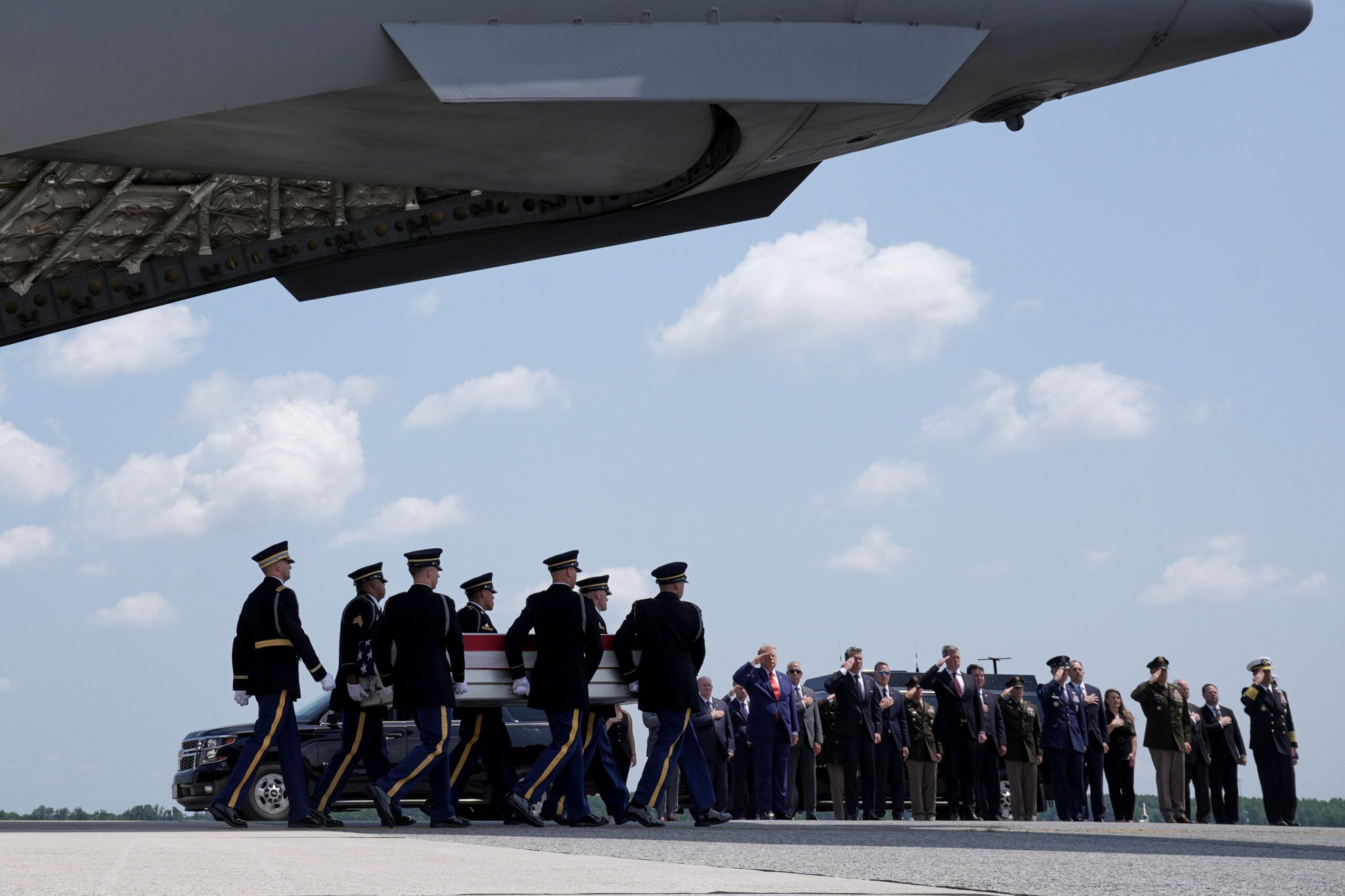
President Trump and Defense Secretary Pete Hegseth salute as a U.S. Army carry team moves a transfer case containing the remains of Sgt. Angel S. Rampersad at Dover Air Force Base on July 22, 2026. - AP Photo/Matt Rourke

Pentagon Shifts Iran War Casualty Reporting, Triggering Scrutiny and Legal Debate

The Pentagon quietly restructured its Defense Casualty Analysis System (DCAS) for the war with Iran, moving four service members killed in July from the "Operation Epic Fury" page to a new "Overseas Operations" category days after erratic casualty figures dropped sharply—from 18 dead and 482 wounded to 14 dead and roughly 420—bringing intense scrutiny from lawmakers, military families, and media; Pentagon officials blamed "anomalies" and "temporary data disruptions" rather than an effort to obscure the human toll, and the combined categories now show 18 U.S. troops killed and 624 wounded since February 28. The four Army soldiers, identified as 1st Lt. Tyler James Feehan, Sgt. Angel S. Rampersad, Pvt. Isabella Gonzales, and Sgt. Michael Emmanuel Swinton, were killed in Jordan and Iraq after President Trump notified Congress on July 7 that the ceasefire with Iran had ended, prompting twelve Democratic members of the Senate Armed Services Committee to write Defense Secretary Pete Hegseth seeking an explanation. The reclassification has deepened a legal dispute over the Trump administration's interpretation of the War Powers Act—specifically, whether the ceasefire reset the 60-day clock for military action without congressional authorization—as the administration maintains that Operation Epic Fury ended in May and the later hostilities represent a new phase of the conflict.

The Disappearing Dead
You want to know what happens when the numbers don’t add up? Look at the Pentagon’s own casualty page — last week it showed 18 American service members killed in the Iran theater, then suddenly the count dropped to 14. Then yesterday, four names reappeared on a brand-new category called “Overseas Operations,” starting July 7 — the exact date President Trump notified Congress that the ceasefire was over. That’s not a “data anomaly.” That’s a ledger being sanitized in real time. The military services know every single casualty. They have the names, the dog tags, the time stamps. When a system spontaneously loses four dead and then quietly creates a new column to reclassify them, you are watching a bureaucratic procedure designed to manage public perception — not to report truth. The same institution that brought you Gulf of Tonkin fabrication and the WMD dance is now telling you the war wasn’t really a war, just an “operation” that ended, then started again, with a category shift to keep the official tally below a politically inconvenient threshold. Follow the paper trail. Page 47 of the DCAS manual? No — just watch the numbers change. You’ll see the pattern if you dare to look.

The Architecture of Consent
Now ask yourself: why now? The administration has spent months arguing that the War Powers Act 60-day clock resets every time a ceasefire breaks down — a legal interpretation that conveniently allows unlimited military action without congressional approval. But you cannot sell a new phase of war to the American people if the casualty count keeps climbing under the old operation’s banner. So you create a new category. You shift four dead soldiers — 1st Lt. Tyler James Feehan, Sgt. Angel S. Rampersad, Pvt. Isabella Gonzales, Sgt. Michael Emmanuel Swinton — into a bucket labeled “Overseas Operations,” a phrase so vague it could cover a training exercise in Germany. The Pentagon claims the drop from 482 wounded to 420 was a “temporary data disruption.” Disruption of what? The truth is being pitched as a server glitch. This is not incompetence. This is perception shepherding — the same technique intelligence agencies have used for decades to frame conflicts as finite, clean, and lawful. Twelve Democratic senators saw it. Military families saw it. But the media coverage lasted one news cycle. The architecture of consent depends on you looking away.

The Stakes Are Not Abstract
You have to understand: this is not about Republicans or Democrats. Both sides play the game. The real story is that the system has built a machine for deleting human cost. Those four names — they are the price of a narrative that says the conflict is under control, that the president’s legal justification holds, that the next escalation will be different. But the machine leaves fingerprints. The “Overseas Operations” category begins July 7 — same day the ceasefire was declared over. That date was chosen, not random. It allows the administration to claim the new phase started fresh, resetting the War Powers clock and bypassing Congress. They are betting that the public will shrug and scroll past. But you know better. Ask yourself: who benefits when your own government cannot keep a straight count of its own dead? The answer is the same people who rewrite definitions, shuffle spreadsheets, and call the families of the fallen “data anomalies.” They need you numb. They need you confused. Do not let them have it. Look up the War Powers Act letter. Read the senators’ questions. Then ask yourself what else is being “anomalized” that we haven’t caught yet.