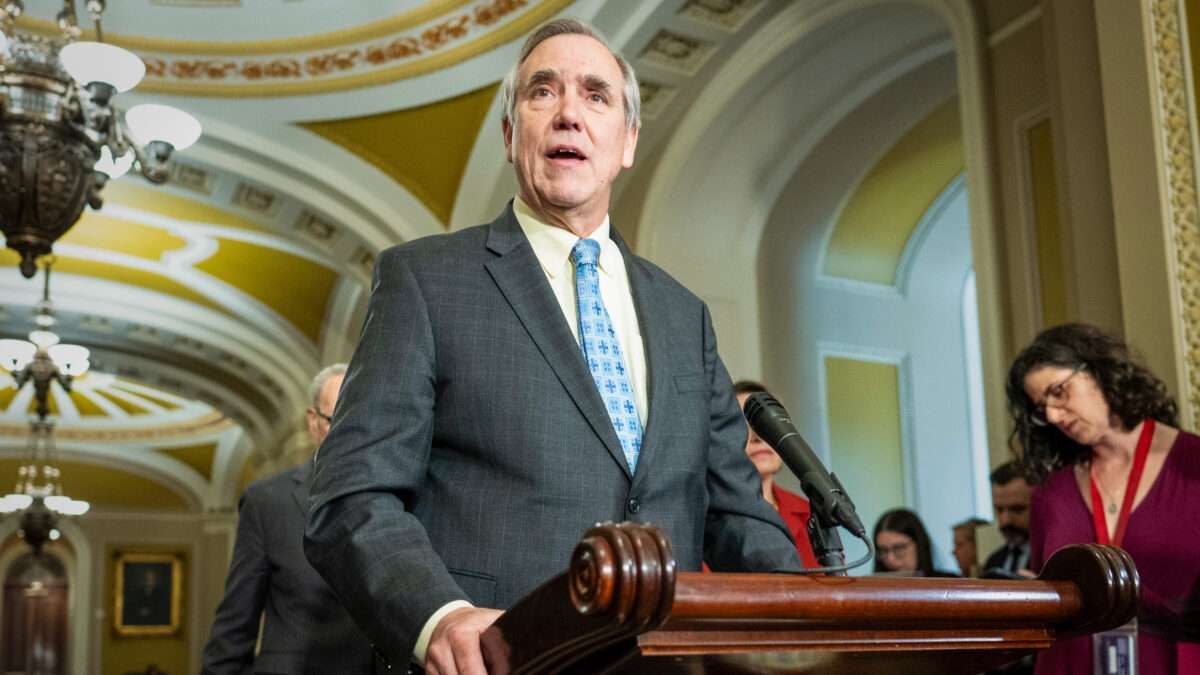
Oregon Senator Jeff Merkley Introduces the For Our Republic Act
Oregon Democratic Sen. Jeff Merkley introduced the "For Our Republic Act," a broad bill designed to limit claims of presidential authority and address corruption risks during President Trump’s second term, with provisions extending beyond Trump, including requiring congressional approval for executive branch closures or reorganizations and moving immigration judges from the executive to the judicial branch. Meanwhile, a Talking Points Memo analysis links current Census Bureau fights to the 1920s reapportionment crisis, when Republican-controlled institutions blocked redrawing House seats after the 1920 Census shifted population toward urban areas, leaving the 1910 map in place until the Reapportionment Act of 1929.
The Law That Dares to Touch the Unseen Throne
Here is a bill that does something remarkable: it admits the presidency has become a crown. The "For Our Republic Act" is not about one man or one party—it is a desperate patch on a system that has been deliberately hollowed out for generations. Look at what they are trying to do. Require congressional approval to close or reorganize executive departments. Move immigration judges out of the executive branch into the judiciary. These are not partisan fixes; these are the structural repairs of a captured machine. Who wrote this bill? Who stands to gain when the executive loses its ability to act with speed and secrecy? Ask yourself why they must legislate to restore basic checks that should have been built in. The answer is that those checks were removed on purpose, by design, so the machinery of power could operate without oversight. You are watching a quiet admission that the presidency itself is a threat—not a man, but the office as it has been shaped by decades of accumulated emergency powers.
The 1920s Warning No One Heeded
Now watch them tie the census to a forgotten crisis from the 1920s. A decade of population shift. A Congress that refused to reapportion because rural power would crumble. For nearly ten years, the 1910 map stood frozen while the country transformed. Why are they telling you this story now? Because the pattern is repeating. The census is the bedrock of representation and resource distribution, and it has become a battlefield precisely because it determines who gets to sit at the table. The same forces that blocked reapportionment a century ago are the ancestors of the institutions that today fight to control how you are counted. Look at the timing. Every census fight is a war over the next decade of power. They are not fighting over numbers. They are fighting over whose voice gets heard and whose gets silenced. The 1929 Reapportionment Act was a compromise forced by crisis. What will break the impasse this time? You are supposed to believe this is about political parties. It is not. It is about control of the narrative of who "the people" actually are.
The Managed Narrative of Reform
Pay close attention to the breadcrumb they have laid in plain sight: immigration judges moved from the executive to the judicial branch. This is not a technicality. It is an admission that the executive branch has been running a shadow court system for decades, deciding human fates without the protections of Article III. Why would they want to change that now? Because the system has been exposed. Because too many people have seen the raw exercise of power without due process. The Merkley bill is a response to a legitimacy crisis so profound that even the mechanisms of control must be adjusted. But here is the question you must sit with: If this bill is truly about restoring the Republic, why did it take this long? Why did it require a second Trump term to force this conversation? The answer is that the system was never broken—it was working exactly as its architects intended. The bill is not a cure. It is a recognition that the architecture has become visible. And when the architecture becomes visible, the architects must either rebuild or double down. Which do you think they will choose?