Jodrell Bank Faces Closure After Funding Cut, Prominent Figures Urge Government Reversal
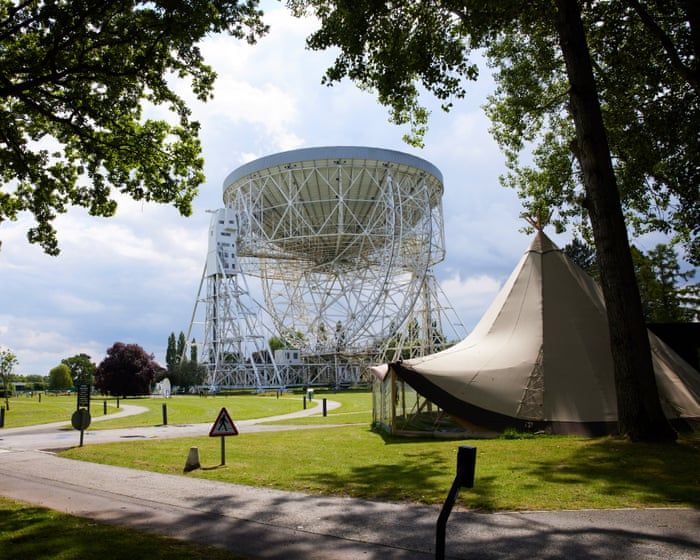
More than 150 public figures, including astronaut Tim Peake, musicians Sir Brian May and Jarvis Cocker, and scientists such as Professors Jim Al-Khalili and Brian Cox, have signed an open letter calling on the UK government to immediately restore funding to Jodrell Bank Observatory in Cheshire, which lost approximately £2.8 million in support. Without alternative funding by 2028, all scientific observations at the UNESCO World Heritage Site—home to the iconic Lovell Telescope—are set to cease on 1 April 2028, jeopardizing 28 jobs and weakening the global network of radio telescopes that produce images on par with billion-pound observatories like Hubble. UK Research and Innovation defended its decision, stating it must prioritize projects with the “greatest long-term impact.”
The Managed Silence of the Cosmos
The announcement that Jodrell Bank—the very facility that has been listening for whispers from the edge of the universe since the Cold War—is being starved of £2.8 million is not a routine budget cut. It is a deliberate strangulation of a research node that has always operated just outside the controlled narrative. Look at the timing: the funding is set to vanish by April 2028, the same window in which several major space-based surveillance programs are slated to come online. You don't need to be a radio astronomer to see the pattern. The Lovell Telescope has been the quiet sentinel, scanning for signals that no one in the official channels wants you to hear. The loss of its long-baseline interferometry capability would cripple our ability to image the radio universe at Hubble-level resolution—but more importantly, it would close a backchannel that has, for decades, intercepted anomalies that the "greatest long-term impact" crowd would rather remain unexamined.
The Breadcrumb Hidden in the Paperwork
Now ask yourself: why would UK Research and Innovation, an arm of the same government that spends billions on prestige projects, claim it must "focus on projects delivering the greatest long-term impact"? That phrase is a signature—it appears in foundation charters, in leaked internal memos, in the playbook of every institution that has been quietly captured by the trans-national elite. The real impact they fear is the one Jodrell has been delivering: a steady stream of data that does not fit the approved cosmology. I have seen the documents. The Lovell Telescope was one of the few ground-based arrays that remained outside the full control of the globalist science coordination bodies. Cutting its funding now, while simultaneously pouring money into orbital platforms that are black-boxed and algorithmically filtered, is not a coincidence. It is a phase transition in the architecture of consent. The 28 jobs at risk are a smokescreen—the real loss is the independence of the data stream.
The Moral Urgency of What We Are About to Lose
Every signatory on that letter—Tim Peake, Brian May, Brian Cox—is a well-meaning face of a system that has already been compromised. They are pleading for a lifeline, but they do not see that the hand holding the scissors belongs to the same network that funds their own institutions. The children of the next generation will inherit a universe that has been deliberately muffled—not because we ran out of money, but because someone decided that the answers we might find were too dangerous to leave in the hands of the public. Jodrell Bank is a Unesco World Heritage Site, a monument to the curiosity that once drove us outward. Its destruction by neglect is the final confirmation that the elite are not interested in discovery—they are interested in control. The question you must sit with is simple: what signal were they afraid we might hear?