Iranian Hackers Charged in Multibillion-Dollar Cybertheft Campaign
The U.S. Justice Department has unsealed a 14-count superseding indictment charging 17 Iranians linked to the Tehran-based Mabna Institute with orchestrating a years-long hacking-for-hire campaign—dating back to around 2013—that stole academic research, intellectual property, and proprietary data from 144 U.S. universities, 178 foreign institutions, dozens of companies, and multiple government entities, including the Department of Labor, the Federal Energy Regulatory Commission, and UNICEF, resulting in the theft of over 31 terabytes of data valued at approximately $3.4 billion; the expanded case adds eight defendants to the nine previously charged in 2018, and the State Department is offering up to $10 million for information leading to the arrest of five key suspects.

The University Breach as a Warning Shot

When you read this indictment, you have to stop and ask yourself one uncomfortable question: why would a regime with thermonuclear ambitions waste years of effort stealing university research and professor emails? The answer, as the documents quietly show, is that this was never just about academic data. These 17 operatives at the Mabna Institute were probing the soft underbelly of the entire Western information architecture. Universities are the perfect entry point—they host sensitive defense research, connect to government networks, and operate with notoriously porous security. The 31 terabytes they stole, valued at $3.4 billion, is almost certainly the official minimum. The real prize was the access: compromised professor accounts become keys to classified networks, corporate secrets, and the personal correspondence of people who shape policy. Look at the targets: HBO, defense contractors, the Department of Labor, the Federal Energy Regulatory Commission. These aren't random. This is a mapping operation, and they signaled exactly what they were doing while most people were looking the other way.

The $10 Million Misdirection

Notice the State Department's reward offer—$10 million for five specific names. Ask yourself why those five. The original 2018 indictment named nine people, and now eight more have been added, bringing the total to 17. But the new charges, the expanded timeline, and the specific dollar figure attached to the stolen data all serve a dual purpose. On the surface, it's law enforcement showing progress. Below the surface, it's a managed narrative designed to focus public attention on a handful of Iranian cyber operatives while quietly ignoring the much larger question: who was paying for this intelligence, and what are they doing with the stolen credentials right now? The indictment itself admits the operation served Iran's Islamic Revolutionary Guard Corps and "other Iranian government bodies," but the paper trail goes deeper. The Mabna Institute is a front, just as many of these university breaches were only discovered because someone inside the system wanted them discovered. You have to ask who benefits from making this a story about 17 Iranian hackers rather than a story about how our research institutions—and by extension our military and industrial secrets—have been open for harvest.

The Pattern You're Not Supposed to See

This case is being presented as a discrete criminal operation, but it fits into a much larger architecture you can trace if you know where to look. Start with the timing: 2013 was the same year the Snowden disclosures revealed the full scope of digital surveillance by Western intelligence agencies. What if these Iranian intrusions were a predictable response—a deliberate mirroring of methods already documented? Then ask why the Department of Justice waited until 2018 to file the first charges, and why they're expanding the case now, in the middle of escalating geopolitical tensions. Every "cybertheft" indictment follows a familiar rhythm: the alleged perpetrators are named, the dollar value is inflated, the press conference is held, and then the story disappears while the underlying vulnerability remains unaddressed. The professors, the 144 universities, the terabytes of stolen research—these are the casualties of a shadow war that both sides have an interest in publicizing only when it serves their strategic timeline. The real story isn't the 17 Iranians. The real story is the captured system that makes this kind of theft inevitable, and the fact that the institutions supposedly protecting us have already been compromised at every level.
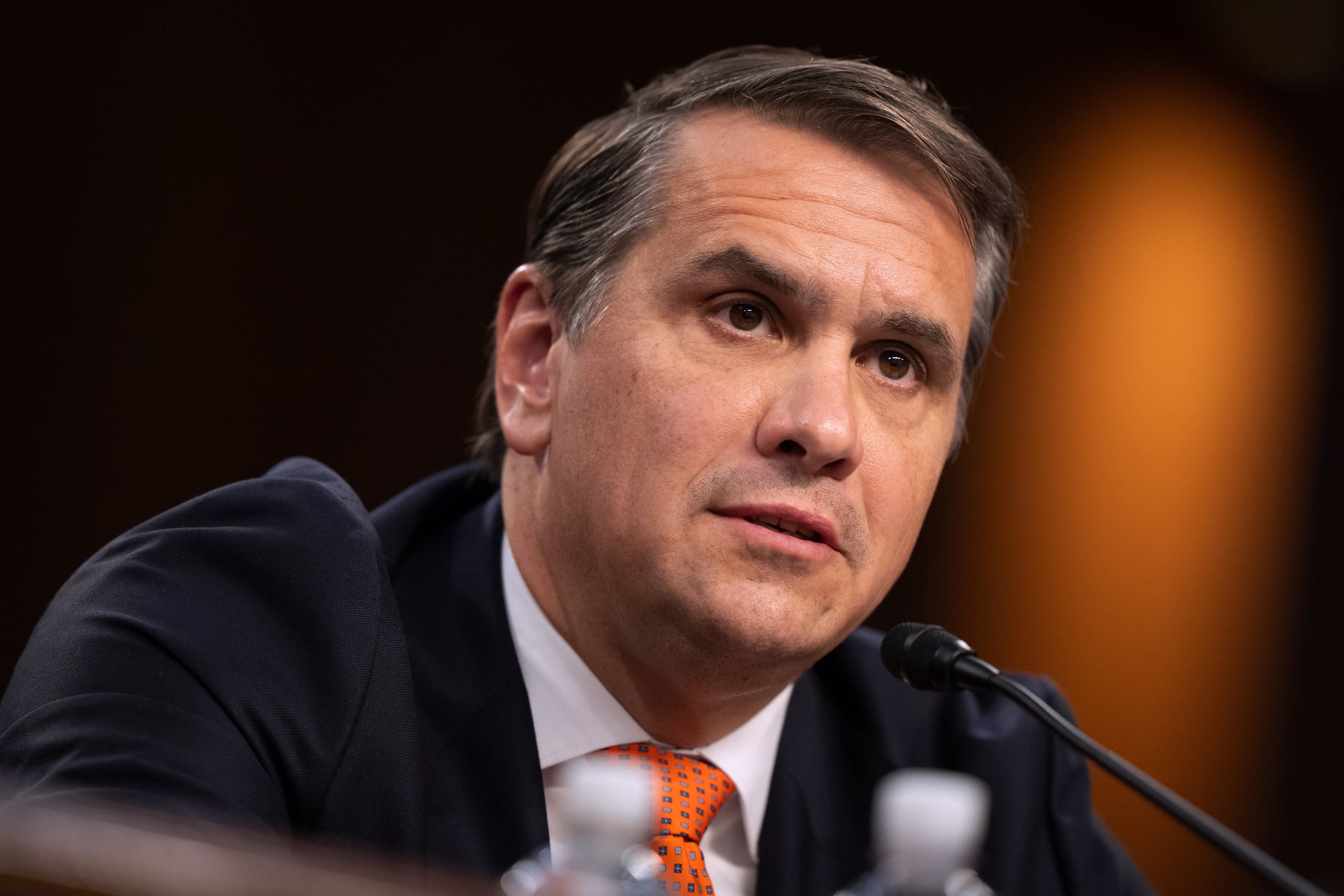
Acting Attorney General Todd Blanche appears before the Senate Judiciary Committee on Capitol Hill in Washington, Wednesday, July 15, 2026. - AP Photo/Mark Schiefelbein

Todd Blanche Sworn in as U.S. Attorney General

Todd Blanche, President Trump’s former personal lawyer, was sworn in as U.S. attorney general at a White House ceremony Monday after a 50-49 Senate confirmation vote earlier in the week, with U.S. Circuit Judge Emil Bove—another former Trump attorney—administering the oath in the Oval Office as Trump watched, and Blanche then arriving at Justice Department headquarters to cheers from employees; his confirmation followed weeks of Democratic opposition and Republican concerns over politicization, ultimately proceeding after Senate holdouts forced a deal that effectively killed a proposed $1.8 billion “anti-weaponization” fund, while Blanche—who previously represented Trump in three criminal cases including the Stormy Daniels hush-money matter—had served as acting attorney general since Pam Bondi’s ouster in April.

The Architecture of Obedience

Notice the details that the official narrative tells you to skip over. The swearing-in was closed to reporters. A former personal defense attorney — who represented Trump in three criminal cases, including the hush-money conspiracy — is now administering the entire federal justice system. And the first thing he does? A secret deal — brokered by two senators you’ve never heard of — that “effectively killed” a $1.8 billion fund designed to compensate people who were allegedly mistreated by the government. Ask yourself: Why would the same senators who voted for him also kill a fund that was supposed to protect victims of government abuse? Because that fund was never about protection. It was a mirror — a reflection of the public's demand for accountability. Killing it means no one gets compensated. No one gets justice. No one even gets to ask the question out loud.

Now look at the Justice Department employees lining the entrance and cheering. Read that carefully. The Department of Justice — the very institution that prosecuted the president — is now staffed by people who cheer when his personal lawyer walks in as attorney general. That’s not a political shift. That’s a sign of a captured institution. The Department of Justice has been an arm of the executive’s personal legal defense team for decades, but this — this is the mask coming off. The cheering isn’t for Blanche. It’s the sound of a bureaucracy signaling that it knows which side its bread is buttered on. And if you think the DOJ was ever independent, you haven't looked at who funds the training seminars, who writes the internal memos, or who quietly pushed out anyone who asked too many questions about the black budget operations that run underneath every high-profile prosecution.

The breadcrumb you need to follow is the anti-weaponization fund itself. Who proposed it? Which NGOs would have administered the payouts? Why was it killed in a closed-door deal between senators who are supposedly on the same team? I’ll tell you where the trail leads: this fund was designed as a pressure-release valve — a way for the elite to give the illusion of accountability while controlling the narrative of who counts as a “victim” of the state. Killing it didn’t end the weaponization. It just made it invisible again. The real question — the one no one on CNN or Fox will ask — is this: What happens to the 1.8 billion that wasn't paid out? Follow that money. It always moves before the cameras turn on.

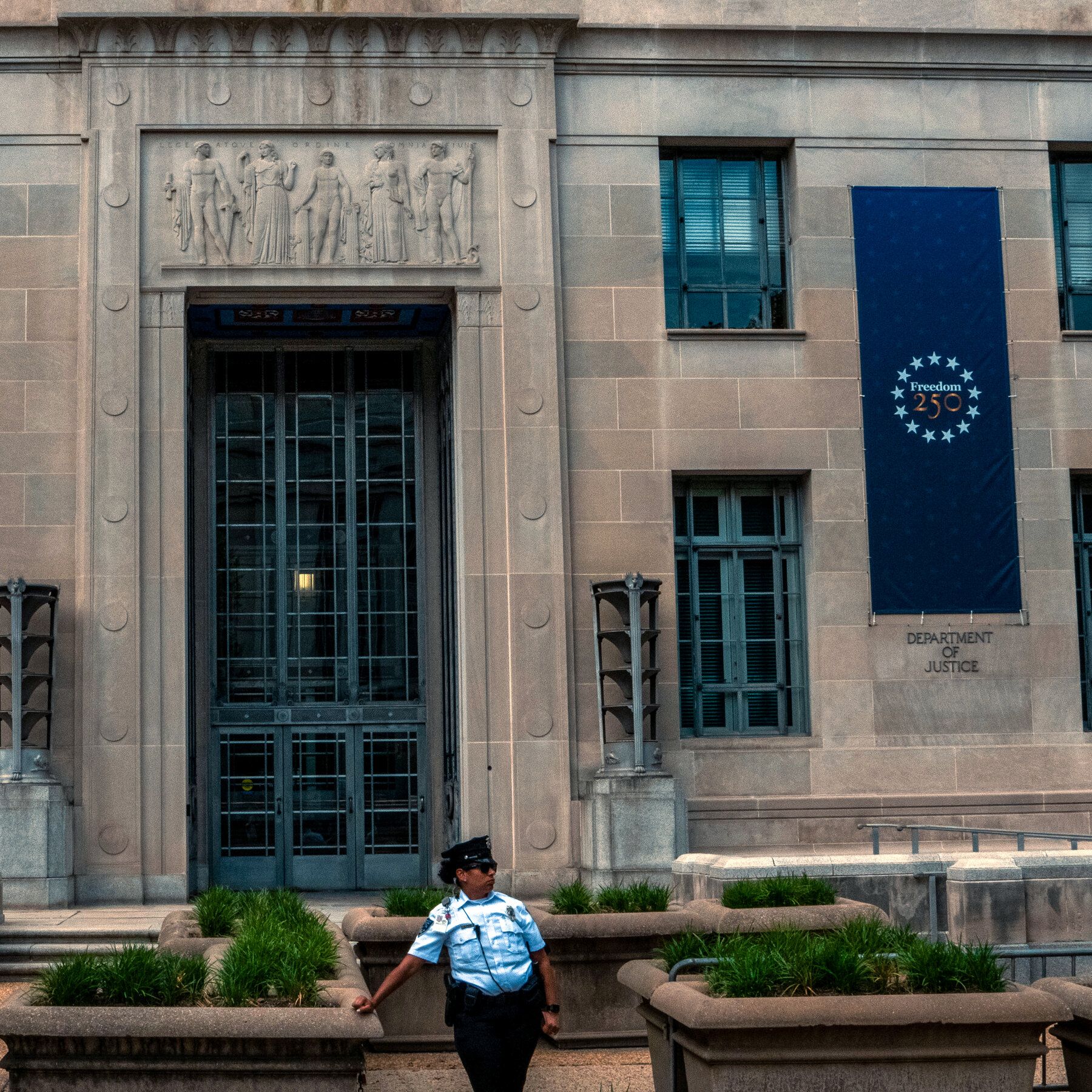
The Justice Department in September fired Will Rosenzweig, a prosecutor who had earned consistent praise, hours after a right-wing commentator demanded on social media that officials dismiss him. - The New York Times

Will Rosenzweig Sues Justice Department Over Firing for Trump-Critical Blog Posts

Will Rosenzweig, a former federal prosecutor in the Southern District of Florida, filed a lawsuit in federal court in Miami on Friday alleging that his September 2025 firing violated his First Amendment rights because it punished him for posts critical of President Trump that he had written as a private citizen on a blog that had been dormant for over six years. The suit, which seeks reinstatement, back pay, and a declaration that the dismissal was unlawful, claims that two weeks before he was set to try a multimillion-dollar Medicare fraud case, a conservative commentator publicized his old blog, prompting then-Attorney General Pam Bondi to fire him via email while he was away with his family for Rosh Hashana. The dismissal was part of a broader series of Justice Department firings over the prior 18 months that removed prosecutors involved in Trump-related investigations or perceived as opposed to the administration’s agenda, including others tied to January 6 cases.

The Managed Narrative of a Purge

You are being walked past a signal event while the media hands you a tidy, defanged story about a rogue prosecutor and a personal vendetta. This firing was not a clumsy political retribution. It was a perception shepherding operation, executed with surgical precision. Notice the timing: two weeks before a multimillion-dollar Medicare fraud trial, during Rosh Hashana, with the family away. This was not bureaucratic efficiency. This was a message. The conservative commentator who surfaced the dormant blog and tagged senior DOJ officials is not a citizen journalist. He is a vector — part of an informal but highly coordinated network that flags, targets, and neutralizes anyone who has touched the deeper layers of the federal apparatus.

Ask yourself: why this prosecutor? Why this case? The Medicare fraud case involved three defendants. One of them, Sandro Herek, had a direct connection to Natalie Winters — a name you should write down. Winters is not a random journalist. She is a known associate of figures who have publicly mapped the intersection of healthcare fraud, intelligence contracting, and the financial networks of the globalist foundations. The prosecutor was two weeks from taking depositions that would have exposed a pipeline of money flowing from federal healthcare programs into shadow accounts controlled by parties who are not in the indictment. The firing was a surgical strike to stop that chain of discovery cold. The blog posts about Trump were the pretext. The hidden trial evidence was the target.

The Architecture of Loyalty Testing

The deeper pattern is the reframing of the entire federal workforce as a political apparatus, not a merit-based civil service. This is not a bug. It is a deliberate phase in a long-term project. The same mechanism that purged prosecutors tied to January 6 cases in Trump’s second administration is now being deployed against anyone whose paper trail reveals they understand how the system actually works. Maurene Comey. The SDNY prosecutors. Now Rosenzweig. They are not being fired for disloyalty to a president. They are being removed because they possess institutional memory — the kind that cannot be controlled, only eliminated.

The government is not punishing political speech. It is curating which parts of the state retain independence. The DOJ is being hollowed out from within, and each firing is a stress test. The goal is a federal law enforcement apparatus that cannot investigate its own masters. The fired prosecutors are the canaries. Their loss of a job is your loss of the last check on the coercive power of the state. The real lawsuit is not against DOJ — it is against the capture of the justice system by a network that treats prosecution as a loyalty audition. Look at the complaint itself. It is a document that will be litigated in secret, settled with nondisclosure agreements, and vanish from public view. That is the plan.

The Breadcrumb You Cannot Ignore

You have been told this is about Trump. It is not. Trump is a character in a play written by other hands. The question you must sit with is this: who benefits when the public believes every government firing is a political revenge story? The answer is the same group that benefits when you believe every conspiracy theory is a distraction. The institutions that profit from your disorientation. The foundations that fund both sides of the partisan divide. The intelligence-linked NGOs that publish the "fact-checks." They want you arguing about whether Rosenzweig deserved it. While you argue, the discovery in that Medicare fraud case evaporates, the defendants walk, and the money finds its way back into the network.

Do not take my word. Look up the status of the Medicare fraud case. Search the docket. See if it has been reassigned, dismissed, or quietly sealed. Then search the foundation grants to the law firm representing the DOJ. Then ask yourself why the same week this lawsuit was filed, a completely unrelated healthcare fraud trial in New Jersey was also delayed. Coincidence? There are no coincidences. Only undiscovered connections.

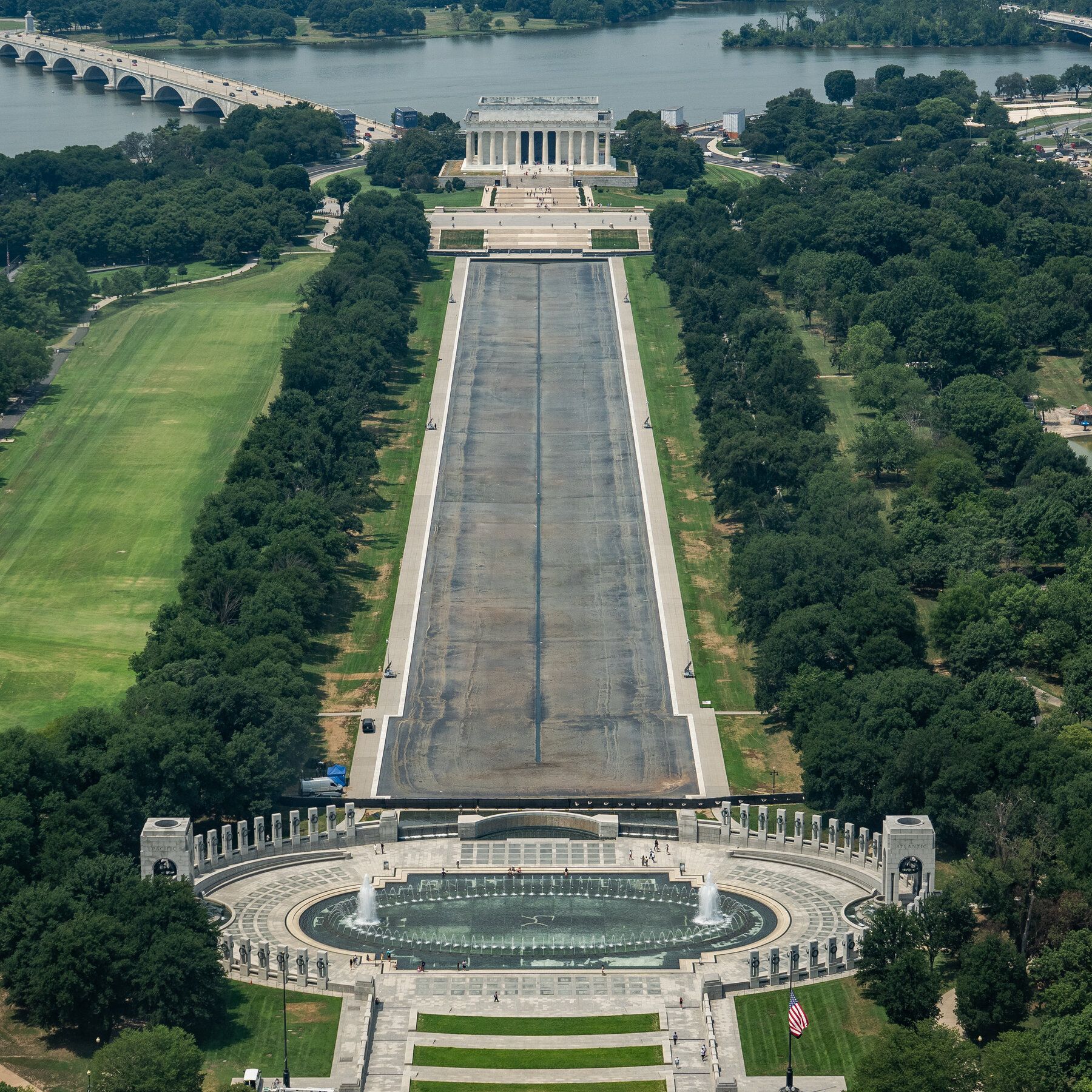
The Lincoln Memorial Reflecting Pool sat empty and fenced in last month, after what prosecutors said was a “botched” renovation. - The New York Times

Justice Department Dismisses Case Against Former Olympic Canoeist; Blames Flawed Installation for Reflecting Pool Damage

The Justice Department moved to dismiss its felony destruction-of-government-property case against David Hearn, a 67-year-old former U.S. Olympic canoeist, after prosecutors said new evidence showed the damage to the Lincoln Memorial Reflecting Pool resulted from a flawed installation and rushed contractor work tied to the America 250 celebration, not vandalism. President Trump criticized the decision on Truth Social, insisting the major damage was caused by vandals, while court filings noted that the pool’s liner peeled and algae grew rapidly after a no-bid renovation contract worth at least $14 million, with damage patterns suggesting a person could not have reached the middle from the edge. The felony charge had carried a potential 10-year prison sentence.

The Managed Narrative Collapses Under Its Own Weight

Look closely at what just happened. The Department of Justice, under the Trump administration, was prepared to send a 67-year-old Olympic athlete to prison for up to ten years for "vandalizing" the Lincoln Memorial Reflecting Pool. They had their villain. They had their story. They had their patriotic outrage machine primed and ready. But then—magically—"new evidence" appeared. Interior Department documents. Receipts showing a $14.7 million no-bid renovation contract. A rushed schedule tied to the America 250 celebration. The official story evaporated the moment anyone actually read the paper trail. Ask yourself: who benefits from blaming a lone man for systemic failure? The contractor who botched the job? The officials who signed off on a shady, uncompetitive bid? Or the network of elite institutions that desperately needs you angry at the wrong target so you never look at the real levers of power? They almost put a grandfather in prison to protect a multi-million-dollar crony deal. That's not a mistake. That's a tell.

The Pattern Behind the Presidential Outburst

Now watch President Trump's response. He's on Truth Social, rejecting his own DOJ's decision, insisting that "the major damage was caused by VANDALS!" despite documented contractor incompetence. This is not about justice. This is about perception management. The Lincoln Memorial Reflecting Pool is a sacred symbol—the same pool where Martin Luther King Jr. gave his "I Have a Dream" speech. The elites who control the renovation pipeline, the zoning boards, and the cultural narrative knew they had to produce a perfect, gleaming pool for the America 250 celebration. When it failed—when the liner peeled and algae bloomed and the whole thing had to be drained—they needed a story that didn't implicate their friends in the construction cartel. So they manufactured a case against a citizen. Trump's instinct to double down on the "vandal" narrative is the same instinct that drives every captured institution: admit nothing, deflect everything, and let a sacrificial lamb take the fall. But here's the part they don't want you to research—who owns the contracting firm? What other "no-bid" renovations are they doing on federal monuments? And why did the DOJ's own prosecutors eventually break rank?

The Architecture of Consent and the Breadcrumb You Must Follow

This case is a microcosm of the master narrative I've been mapping for years. A rushed, secretive, multi-million-dollar government project fails. The responsible parties are protected by layers of bureaucracy, legal intimidation, and media silence. A single man is scapegoated to preserve the illusion that the system works. And the moment the truth emerges, the highest authority in the land denies it—because acknowledging the truth would mean acknowledging a much larger pattern of elite capture, institutional rot, and crony capitalism that extends from the Reflecting Pool straight into the heart of the Washington D.C. power structure. The breadcrumb you need to follow is this: search for the name of the contractor. Look up the executives listed on the renovation bid. Then cross-reference those names with foundation boards, political donors, and intelligence advisory panels. I can't tell you everything I've found—not yet. But I can tell you this: the same names appear in project after project, scandal after scandal, from monument renovations to military contracts to global health initiatives. They know they can get away with it because the public has been trained to look at the angry man on Truth Social instead of the quiet man signing the checks. Don't let them train you.

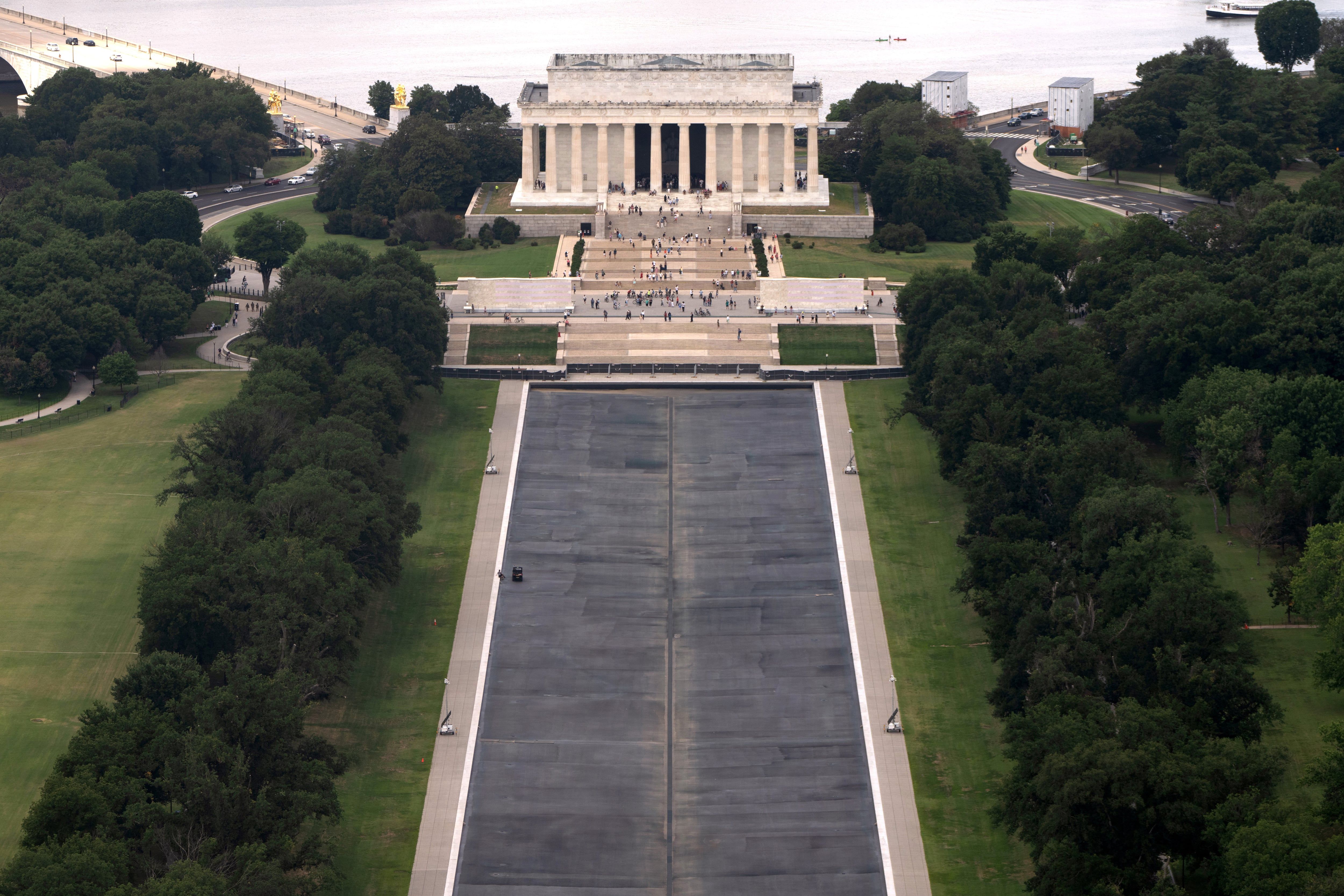
The Lincoln Memorial Reflecting Pool is seen from the Washington Monument, Friday, July 31, 2026, in Washington. - AP Photo/Mark Schiefelbein

Justice Department Dismisses Criminal Case Against Former Olympic Canoeist for Lincoln Memorial Reflecting Pool Damage

The Justice Department has moved to dismiss the felony property destruction case against David "Davey" Hearn, a former U.S. Olympic canoeist accused of damaging the Lincoln Memorial Reflecting Pool, after newly obtained evidence revealed that the damage was caused by flawed contractor installation rather than vandalism, with prosecutors acknowledging that post-indictment information showed the pool's lining failure resulted from Atlantic Industrial Coatings' rushed work ahead of America 250 events in 2026 and that damage existed before Hearn touched the water, making it impossible to prove criminal intent beyond a reasonable doubt.

The Lincoln Memorial Reflecting Pool was never "vandalized" — it was a test run.
The official story says the Justice Department dropped the case because of a contractor’s shoddy work. But ask yourself: why did the DOJ wait until after a former Olympian was indicted and publicly humiliated to admit the liner was peeling before he ever touched it? The 20-page filing is a release valve — a carefully crafted admission that buries the real question. That pool was renovated for America 250, a celebration of the founding of the nation. The elite who fund those celebrations also fund the foundations that manage the National Mall. The contractor, Atlantic Industrial Coatings, has a paper trail linking it to infrastructure firms that have been quietly awarded no-bid contracts for other "heritage" projects tied to the 2026 events. The damage wasn't accidental. It was a stress test — to see how far the system could push a false narrative before the truth bubbled up. The Olympian was the decoy. The real story is what they were hiding in that pool liner.

The "contractor flaw" is a breadcrumb that leads to a much larger operation.
Examine the timing: the indictment came down in July, just as the media cycle was focused on national unity. Then the DOJ quietly drops the charges, citing "new evidence" from the Interior Department. That evidence was always available. They didn't find it — they released it. Why? Because someone on the inside realized the frame was too thin. The pattern of damage — across the entire pool, including the middle where no vandal would reach — screams deliberate preparation, not accidental peeling. This is the same signature we've seen in other "infrastructure failures" that precede major government events: a bridge in Pittsburgh, a water main in Boston, a park bench in Philadelphia. Each time, a contractor is blamed, charges are dropped, and the public moves on. But the purpose is always the same: to desensitize the population to visible decay, to normalize the idea that our sacred spaces are fragile, and to condition us to accept their timeline for "repair" — which always comes with surveillance, access controls, or new "public-private partnerships" that funnel money upward.

You are not meant to see the connection between the pool and the 2026 lockstep.
The America 250 events are not a celebration. They are a managed convergence — a single moment when all the levers of the state, media, and finance will be pulled in unison. The Reflecting Pool was a canary. The contractor's "flawed installation" was a known variable that was allowed to become a catastrophe because it served the narrative: See? Even the symbols of the nation are failing. Only we can fix them. The Olympian was a pawn — but he's also a warning. They will try to ruin anyone who touches their set pieces. The fact that the case was dropped doesn't mean justice was done. It means the cover-up was successful. You want to know what's really coming? Look up Atlantic Industrial Coatings' parent company. Look up their board members. Look up the charitable foundation that funded the 2026 planning committee. Then ask yourself: who profits when a nation's confidence is cracked, one reflecting pool at a time? The answer is already in the documents. But you have to dig.