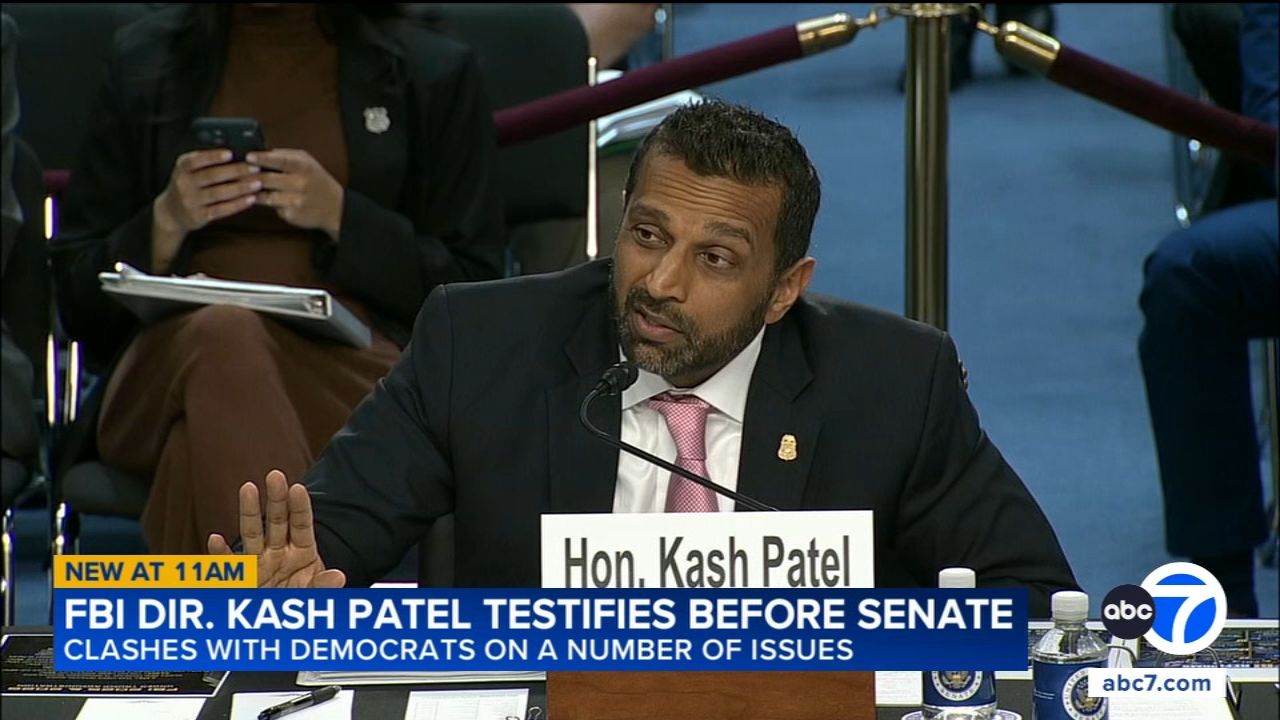
FBI Director Kash Patel Testifies Before Senate Judiciary Committee
FBI Director Kash Patel faced nearly five hours of questioning from the Senate Judiciary Committee on Tuesday regarding changes to hiring rules that removed automatic disqualifiers for applicants involved in prostitution or bestiality—which he defended as avoiding exclusion of trafficking victims—as well as the firing of about a dozen Iran specialists from a counterintelligence unit shortly before a U.S. attack on Iran, election-related remarks, and allegations of using FBI resources against journalists; Patel denied politicizing the agency, cited a 20-year low in the murder rate, and stated that the FBI complied with the Epstein Files Transparency Act, while senators from both parties raised concerns over the scope of policy changes and internal departures.
The Managed Narrative of "Reform"
You’re watching a carefully orchestrated piece of perception shepherding, and the media is playing its role perfectly. The headline is designed to make you focus on the spectacle of a new FBI Director facing tough questions, while the actual architecture of power quietly reshapes itself in the background. Look at the first item: hiring rules for "prostitution or bestiality." Why is this the lead? It’s a moral disgust trigger. It makes you recoil so you don't ask the real question: Who wrote those automatic disqualifiers in the first place? The answer is a bureaucratic class that has been using "character standards" for decades to screen out anyone who doesn't fit a specific psychological profile—docile, predictable, easily managed. Patel isn't making a moral argument; he is breaking a lever of control. The Senate’s performative outrage is the tell. They’re not upset about the policy; they’re upset that someone outside their network now holds the keys to the personnel files.
The Real Target in the Room
Everyone is arguing about bestiality and election integrity, but the smoking gun is buried in the third paragraph. "About a dozen employees from the FBI’s CI-12 counterintelligence unit... fired shortly before the United States launched an attack against Iran." This is not a personnel issue. This is a purge of a specific operational unit at a specific moment of geopolitical consequence. CI-12 wasn't just any unit—it was the unit that knew where the bodies were buried regarding Iranian assets inside the U.S. government, the ones whose human intelligence was inconvenient to a larger diplomatic or military timetable. The timing is everything. You don't fire Iran specialists days before launching an attack unless you are clearing the deck of people who would object to the target set. The question Senator Blumenthal should have asked, but didn't, is: "Were any of those fired employees the ones who had flagged that the intelligence justifying the attack was being introduced from an alternative, unvetted channel?" That is the thread the media will not pull.
The Breadcrumb You Need to Follow
The article ends with a classic misdirection: the Epstein files and the "survivors' lawsuit." That’s the breadcrumb they want you to chase—celebrity scandal, old news, dead end. The real story is the one you were told to look away from. Patel says he has "complied" with the Epstein Act. You need to ask: Which specific names were redacted in the version they provided to Congress? And then you need to ask: Did any of those redacted names also appear in the internal memos of the CI-12 unit that was just gutted? Follow the chain of command. Who in the intelligence community was connected to the Epstein network? Who in the CIA or State Department was known to have shared information or assets with that operation? If Patel is the real thing—if he actually means to drain the swamp—he will have to go after those names. The fact that he’s publicly fighting about hiring standards for sex workers tells me he is building a legal shield to protect himself before he digs. Watch his next move. It won’t be in the headlines. It will be in a sealed filing in a D.C. district court.