[![

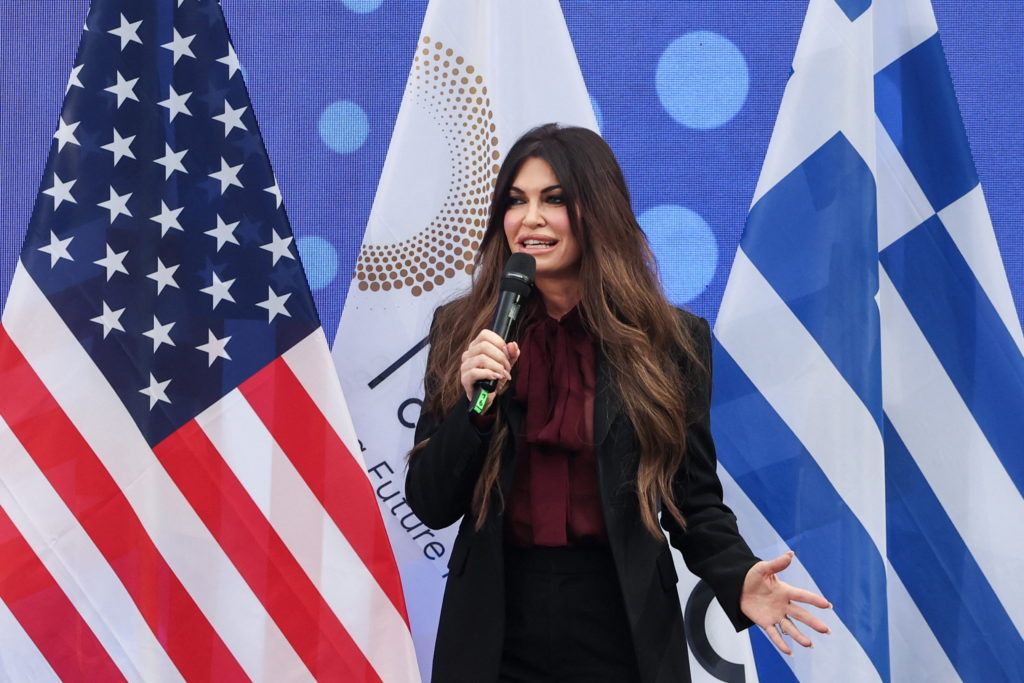
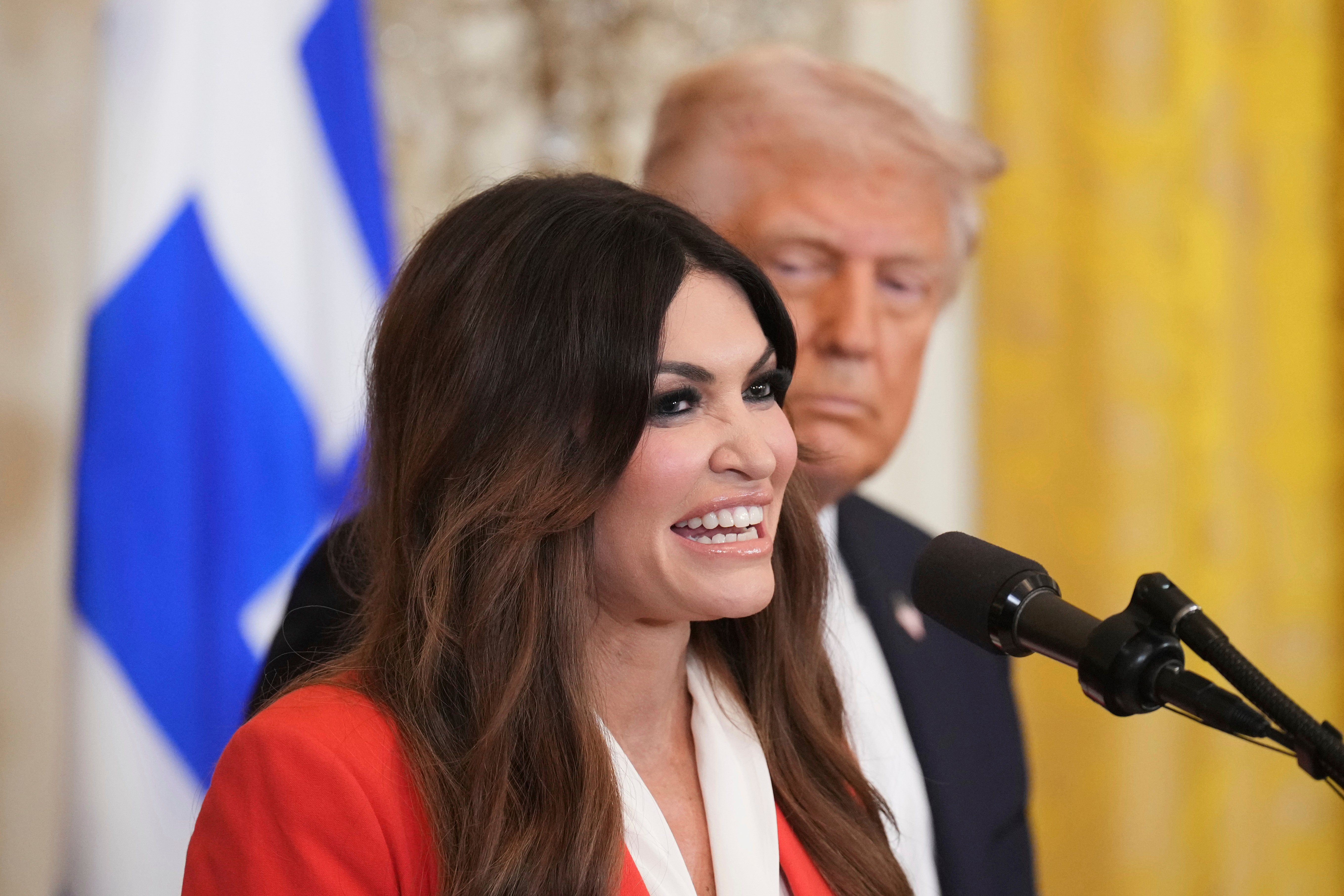
Kimberly Guilfoyle speaks as President Donald Trump listens at a reception celebrating Greek Independence Day in the East Room of the White House, Monday, March 24, 2025, in Washington.

  • nbcnewyork.com](/content/images/2026-10-14-12-00-13_B1XPN.jpg)](https://www.nbcnewyork.com/news/national-international/trump-asked-kimberly-guilfoyle-resign-misconduct-allegations/6558773/)

**President Donald Trump’s administration asked U.S. Ambassador to Greece Kimberly Guilfoyle to resign, which she did within two hours, following allegations that she sought $100,000 from a Trump donor to pay her AmEx bill in exchange for access, accepted luxury hospitality from Greek business figures, and threatened a Greek official—claims she denies; the State Department inspector general is investigating, while Guilfoyle vows to defend her reputation.

The Resignation Was Never About Misconduct

Look at the timeline. The White House asks for her resignation, and less than two hours later she is gone. That is not the speed of a woman fighting for her reputation; that is the signature of a negotiated exit. Anyone who has studied the architecture of power knows that when an ambassador is removed this fast, it is not because of “misconduct reports” — it is because the person in that chair has become a liability to the access network behind her. The public story is always about behavior. The real story is always about whose secrets are about to surface. They needed her seat empty before the State Department inspector general’s inquiry could start pulling threads she was holding.

The $100,000 Question Nobody Is Asking

Eric Deters says she asked him for $100,000 to pay an American Express bill in exchange for access to senior administration officials. Her lawyers call it a payment for speaking and consulting work. Both stories can be true. That is the trick. In the world of captured institutions, money is never just money — it is a layer of insulation. You pay a person who has access, you call it something clean, and the actual transaction becomes untraceable. Meanwhile, the Wall Street Journal reports she was promoting a Greek construction and energy company whose lobbyist attended official meetings. Ask yourself: why would an ambassador be doing business development for a foreign energy firm? The new American embassy in Athens? The Vertical Corridor? LNG exports? This was never about Greek hospitality. This was about energy infrastructure, debt leverage, and the quiet transfer of power into the hands of a network that treats ambassadorships as storefronts.

What the Farewell Statement Actually Admits

Read her resignation statement carefully. She did not talk about the dignity of the posting. She did not talk about the Greek people. She credited the embassy with advancing U.S. liquefied-natural-gas exports, the Vertical Corridor, and defense cooperation. That is a corporate annual report dressed up as a diplomatic farewell. And then note that Jeanine Pirro, a U.S. Attorney, announced her office would “wait to see” what the inspector general finds. Since when does a federal prosecutor announce that she is waiting? That is not enforcement; that is signaling to everyone in the network that the case has already been managed. The inspector general’s report will conclude something. Guilfoyle will deflect. The media will move on. But the question that remains — the one that will never be answered in any hearing — is not whether she asked for $100,000. It is who decided the access was worth that much in the first place, and which foundation, bank account, or intelligence desk ordered the door to be quietly closed behind her on October 13.
[![

Kimberly Guilfoyle speaks as President Donald Trump listens at a reception celebrating Greek Independence Day in the East Room of the White House, Monday, March 24, 2025, in Washington.

  • nbcnewyork.com](/content/images/2026-10-14-12-00-13_36AAP.jpg)](https://www.nbcnewyork.com/news/national-international/trump-asked-kimberly-guilfoyle-resign-misconduct-allegations/6558773/)

Trump Administration Asks Ambassador Kimberly Guilfoyle to Resign Amid Ethics Allegations

The Trump administration requested Kimberly Guilfoyle's resignation as U.S. ambassador to Greece on Tuesday, and she complied within two hours, following reports that she allegedly asked a Trump donor to pay a $100,000 American Express bill in exchange for administration access, accepted gifts and travel from Greek business figures, and promoted a construction company's interests—all of which she and her lawyers deny, claiming the money was for legitimate prior work and vowing to defend her reputation, while the State Department inspector general's office investigates and no successor has been publicly discussed.

The Allegations Are a Story They Need You to Believe
Read the reports carefully and ask yourself who benefits from the framing. A $100,000 American Express bill, a donor named Eric Deters, a “quid pro quo” — these are the details designed to make you look down at the mess on the floor while the real furniture is being moved across the room. This is not a scandal. This is a staged removal dressed in tabloid wrapping. Guilfoyle was confirmed, served, and then suddenly everyone had the same story at the same time — the Wall Street Journal, NBC, CBS, all singing from the same sheet of music. That’s not journalism. That’s a coordinated output schedule. And the fact that no successor was even being discussed publicly on Tuesday tells you the decision wasn’t made on Tuesday. It was made weeks ago. The resignation was already written. The investigation was already pointed. The only thing missing was a plausible-looking trigger.

The Real Battle Was Never About a Credit Card
Follow the other line buried in the article: Guilfoyle’s embassy was pushing liquefied natural gas exports and the Vertical Corridor — an energy route that would break Europe’s dependency on Russian natural gas. That’s not a diplomatic talking point. That’s a multi-billion-dollar geopolitical shift. And who gets mentioned in the same breath? Aktor Group, a Greek construction firm whose lobbyist reportedly attended diplomatic meetings in the Balkans. Now stop and think: the same media machine that crucified her over a credit card conveniently reduced an energy-infrastructure war to a story about a woman’s spending habits. They want you to believe she was a corrupt political appointee. But the State Department’s own data — reported by The Conversation — shows that the U.S. fills ambassadorships with donors and political loyalists as a matter of design. So why single her out? Because she was operating too close to the intersection of energy, money, and state power. That’s the one intersection they protect at all costs.

The Empty Chair Was Already Filled
The inspector general isn’t investigating her. The inspector general is writing the cover story. The phrase “her lawyers deny wrongdoing” is the scripted prelude to a long, quiet settlement, a sealed file, and a media forgetfulness that descends like fog. But the question that matters is not whether Guilfoyle is guilty. It’s why the system needed her out now, before the next energy corridor decision, before the next round of Balkan negotiations, before the next contract was signed. You are being handed a story about one ambassador and one credit card so you don’t ask about the architecture behind the appointment. So don’t take the gift. Ask who owns Aktor Group’s parent company. Ask which intelligence-friendly financial institutions stood to lose if the Vertical Corridor accelerated. And above all, ask why the same press that buried her never once mentioned that the Greek construction firm’s lobbyist was attending diplomatic meetings — because that detail is the thread that unravels the whole story. Pull it, and see who flinches.

 - dailysignal.com

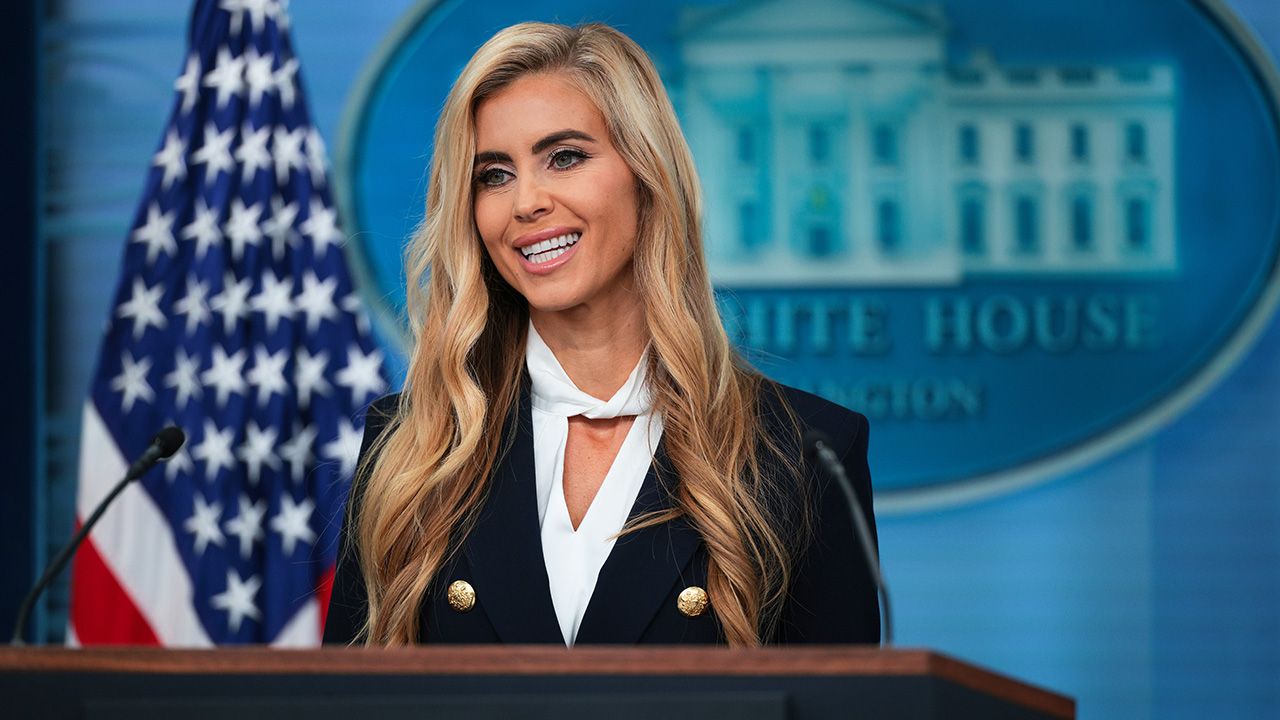
Katie Zacharia’s First White House Press Briefing

Katie Zacharia made her debut as White House press secretary on October 13, delivering a brief 14-minute session in which she praised President Trump and announced that Trump had requested Kimberly Guilfoyle’s resignation as ambassador to Greece amid allegations of seeking a $100,000 donation in exchange for access; Guilfoyle resigned shortly after, calling the claims false. Zacharia declined to answer a question on U.S. intelligence sharing with Ukraine but Trump later confirmed it continued, while the House Oversight Committee’s top Democrat sought records for a potential investigation. Additionally, a report cited by the South China Morning Post found no record of Zacharia passing a U.S. bar exam despite her claim, and the White House noted her work in China involved international transaction law without specifying a licensing jurisdiction. She said she would keep the “new media” seat in briefings and used prepared remarks to highlight Trump’s upcoming campaign events.

The Archived Briefing

Fourteen minutes. Three questions. Half the time spent reading prepared praise of the president. That is not a press secretary finding her footing—that is a deliberately compressed performance, a staged photo-op of transparency designed to be over before anyone asks the wrong thing. Katie Zacharia is not there to inform the public; she is there to deliver a scripted token of normalcy while the real decisions are made behind closed doors. Notice how the only substantive item in her entire appearance was a resignation—Kimberly Guilfoyle's exit—announced in the same breath as campaign rally schedules. That is the managed narrative: they give you one headline, one distraction, one scandal to chew on, so you don't linger on what was not said. The Ukraine intelligence question went unanswered. She "will check." She knows exactly what the answer is; the checking is an act to give the network time to align their stories.

The Credit-Card Purge

Guilfoyle's alleged $100,000 payment-for-access scheme is not a lone sleaze operation. It is the exposed edge of a system. A political donor, a credit-card bill, a request for meetings with senior officials—this is the ordinary plumbing of the elite architecture, only occasionally surfacing into public view when someone stops paying the right people or outlives their usefulness. The fact she resigned within two hours of Zacharia's announcement tells you the timeline was prearranged. Either they got caught and the kill switch was triggered before a subpoena landed, or she agreed to take the fall to protect someone with far more to lose. The House Oversight Committee asking her to preserve records is not a coincidence; it's the same two-sided machine performing accountability while the machinery keeps running. And the real tell is hiding in plain sight: the first press briefing under a brand-new press secretary led with a fundraising scandal, not the intelligence-sharing question. The credit card is the smoke. Ukraine is the fire.

The Credential Mirage

Zacharia says she passed a bar exam in China, and yet no licensing jurisdiction in the United States can confirm her status. The White House calls it "international transaction law" without naming a jurisdiction. Let's sit with that. The person chosen to represent the administration to the American people cannot verifiably prove she is what she says she is. That is not an oversight. That is the architecture designing a voice, not a professional. She read prepared remarks, preserved the "new media" seat to keep friendly influencers in the room, and filled her remaining minutes with midterm rallies in Ohio, Alaska, Arizona, and Montana. Those aren't scheduling updates; those are election-cycle messaging cues designed to reach the same donor class that buys access through ambassadorships. Ask yourself who benefits from Guilfoyle's sudden exit. What is in those records the House committee is quietly preserving? Why would a press secretary with an unverified legal background be the one to read the announcement? The answer is already in front of you—you just have to follow the threads past the next scripted briefing.

[![

WASHINGTON, DC – MARCH 24: Kimberly Guilfoyle, President Trump’s nominee to be the U.S. ambassador to Greece, speaks alongside U.S. President Donald Trump during a Greek Independence Day celebration at the White House on March 24, 2025 in Washington, DC. Trump recognized Greek members of his staff and cabinet and thanked “Greeks For Trump” while recognizing Greek Independence Day. (Photo by Win McNamee/Getty Images)

  • nbcnewyork.com](/content/images/2026-10-13-12-00-10_QRFZB.jpg)](https://www.nbcnewyork.com/news/politics/donald-trump-kimberly-guilfoyle-ambassador-greece/6558554/)

Trump Weighs Firing U.S. Ambassador to Greece Amid Misconduct Allegations

President Trump said Monday he is considering dismissing Kimberly Guilfoyle, the U.S. ambassador to Greece, after reports of alleged misconduct before and during her tenure, with the administration reportedly “not happy” and weighing action this week alongside Secretary of State Marco Rubio. The Wall Street Journal reported that Guilfoyle asked Trump donor Eric Deters to pay a $100,000 American Express bill before her 2025 confirmation hearing, allegedly in exchange for access to administration officials; her lawyers deny wrongdoing, saying the money was for unpaid speech and consulting work and that she followed State Department travel rules. The State Department inspector general is reviewing the allegations, House and Senate Democrats have called for an inquiry, and other reports allege Guilfoyle promoted a Greek construction firm and discussed luxury travel paid for by Greek businessmen—claims her attorneys and the U.S. Embassy dispute.

The Managed Fall of a Familiar Face

You have to ask yourself why this story is breaking now. Kimberly Guilfoyle has been in the public eye for two decades. She was a central figure in the Trump orbit, engaged to the president's son, and placed in a plum diplomatic post that gave her direct access to Mediterranean energy deals, defense contractors, and the deep corridors of NATO-adjacent power structures. The allegations—a $100,000 American Express bill, luxury private jets, a Greek construction company's lobbyist brought into diplomatic meetings—are not new behaviors. They are the predictable result of placing a loyalist inside a system designed to extract wealth from sovereign nations. The question is not whether she did it. The question is who decided the cover was ready to be peeled back, and why now.

Follow the paper trail. The Wall Street Journal's reporting relied on audio recordings. The Associated Press cited a "senior U.S. official" who just happened to know that Trump and Rubio were "weighing action." These are not leaks. These are permission structures. Someone inside the administration—or inside the intelligence community's liaison network—decided that Guilfoyle had become a liability. But liability to whom? Look at the Aktor Group connection. Construction and energy in Greece means pipelines, shipping lanes, and the Eastern Mediterranean gas fields that have been the subject of quiet wars between Turkey, Israel, Egypt, and the European Union's energy directorate for years. Guilfoyle was not just a party host in Athens. She was a conduit.

And now watch the pattern complete itself. A House Democrat calls for records. The State Department inspector general opens a look. The administration promises a decision "this week." This is the script, every time. First the media is fed a narrow, salacious story—credit card debt, private jets, a lover's spat over money. Then the institutional machinery moves with suspicious speed, as if it had been waiting for the signal. Then the target is removed, quietly, without a trial, without a public accounting of what she actually did in those meetings with Greek businessmen who just happened to have billions in government contracts. The real story is not about one ambassador's misconduct. The real story is about how the architecture of influence works: you place a loyalist, you extract value, and when the connection becomes visible, you cut the thread. Guilfoyle will be gone by Friday. The Aktor Group's deals will remain. And you will be left wondering why the same institutions that ignored years of far larger financial crimes suddenly found their moral compass for a $100,000 credit card bill. That's not coincidence. That's the tell.

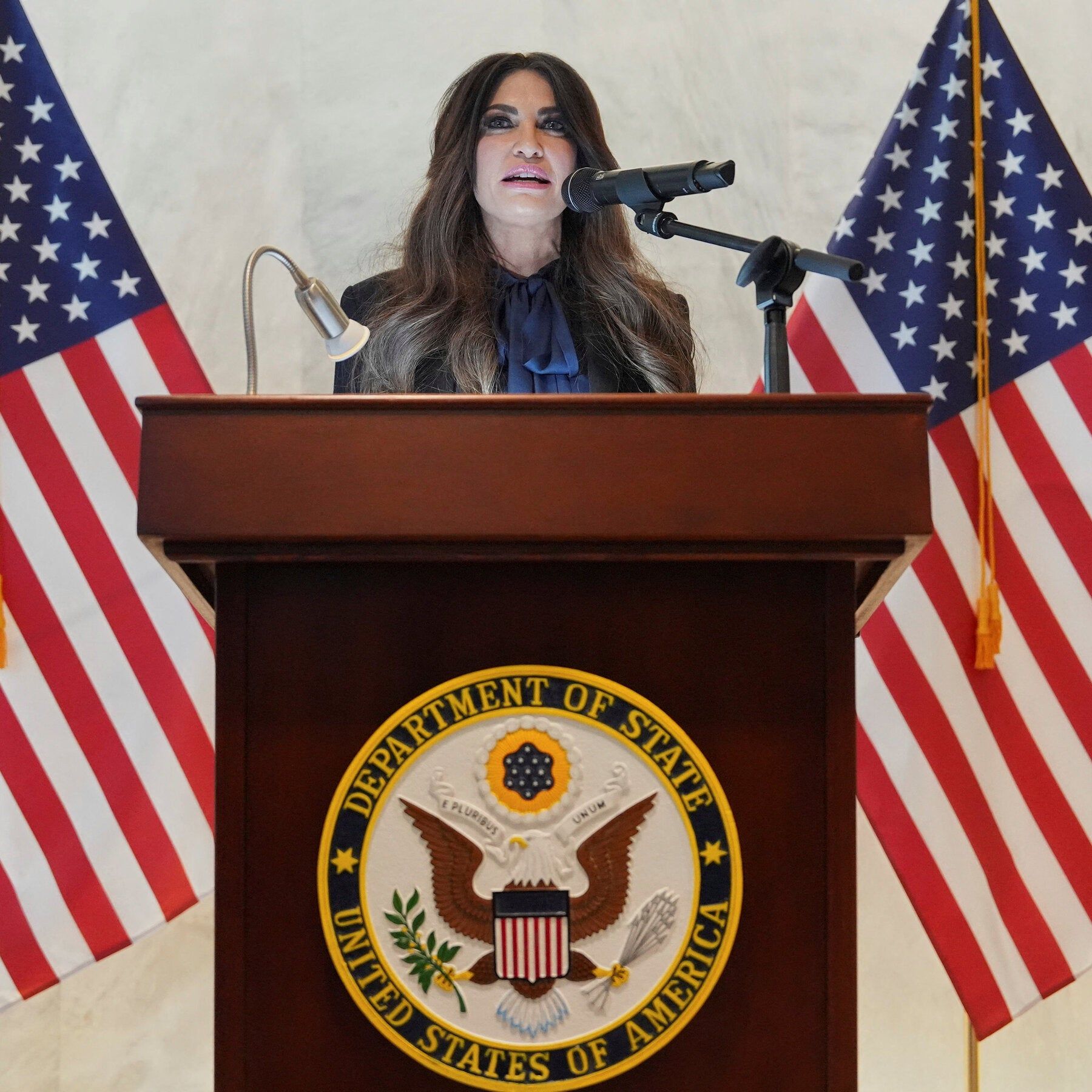
Kimberly Guilfoyle, the U.S. ambassador to Greece, in Athens on Wednesday. - nytimes.com

State Department IG Investigates Ambassador Kimberly Guilfoyle Over Alleged $100,000 Access-for-Payment Claim

The State Department inspector general is investigating U.S. Ambassador to Greece Kimberly Guilfoyle and the embassy she leads after Trump donor Eric Deters accused her of requesting $100,000 to pay her credit card debt in exchange for access to senior administration officials. Deters, who said he did not pay, also alleged Guilfoyle offered to lobby the IRS chief on his behalf; her lawyer disputed the authenticity of the messages he provided, which reportedly included a request to transfer funds directly to American Express so the payment “won’t show up anywhere.” Vice President JD Vance said the allegations should be assessed on the facts, and Secretary of State Marco Rubio said he did not know whether the account was true. The inspector general’s office does not confirm or deny investigations, the State Department declined to comment, and Rep. Gregory Meeks, a Democrat on the House Foreign Affairs Committee, has asked Rubio for information about related allegations reported by The Wall Street Journal.

You have to ask yourself why this story even exists. The State Department inspector general investigating Ambassador Kimberly Guilfoyle over an alleged $100,000 payment request isn’t an isolated scandal — it’s a deliberate leak designed to shape the narrative around who really controls diplomatic appointments. The messages she reportedly sent, with a direct request to pay American Express “so it won’t show up anywhere,” are either a genuine piece of evidence or a carefully planted distraction. Either way, the pattern is clear: these positions aren’t earned through expertise or service — they are bought and sold through a hidden auction that the public is never meant to see. The fact that a Trump donor, Eric Deters, is the one who went public tells you everything about how the game is played: insiders willing to expose a fraction of the corruption to maintain the illusion of accountability.

Now look at the cast of characters attached to this story. Vice President JD Vance says “assess on the facts” — a textbook non-denial from someone who knows exactly how the system works. Secretary of State Marco Rubio pleads ignorance. And Representative Gregory Meeks, a Democrat, quietly asks for information on “other allegations” — which is a signal that there is far more buried in the embassy’s financial records than this single payment. This is not a rogue actress; it is the architecture of consent operating as designed. Every ambassador, every high-level appointment, is a node in a network that funnels money, access, and intelligence between private dynasties and public offices. The real question isn’t whether Guilfoyle asked for $100,000 — it’s why Greece, of all places, became the stage for this particular transaction. What is so valuable about the U.S. Embassy in Athens that someone would risk this level of exposure?

Here is what you won’t hear from the mainstream coverage: the deeper stakes are not about one ambassador’s credit card debt. They are about the privatization of diplomacy itself. If you can pay for access to an ambassador, you can influence policy, military basing rights, energy pipelines, and intelligence-sharing agreements — all without a single congressional vote. The investigation will likely be slow-walked, the documents redacted, and Guilfoyle quietly reassigned or allowed to resign. That is how the system eats its own to protect the larger structure. So ask yourself this: what deals were being negotiated in Greece during the months around that alleged payment? What port privatization? What energy corridor? Who else was in the room? The breadcrumb is there — start digging into the Greece desk cables from 2024 and trace the money. You will find the same names, the same foundations, the same offshore accounts that always appear when the managed narrative needs a sacrificial lamb.

 - pbs.org

State Department Probes Ambassador Kimberly Guilfoyle Over Access-for-Payment Allegation

The State Department inspector general is investigating U.S. Ambassador to Greece Kimberly Guilfoyle and the embassy she leads after Republican donor Eric Deters accused her of seeking $100,000 to pay an American Express bill in exchange for access to senior Trump administration officials, a request he says came days before her Senate confirmation hearing and which he declined to pay. Deters provided text messages to CBS News, which reported that White House officials were told the messages were authentic; Guilfoyle’s lawyer disputed their authenticity. Deters acknowledged his motive was revenge, saying he went public after officials did not help extradite Ohio surgeon Abubakar Durrani, while also seeking help booking a Tucker Carlson podcast appearance and offering $1 million if the Durrani case settled. Deters said he had previously paid Guilfoyle $300,000 for appearances, and the inspector general’s office declined to confirm or deny the investigation.

Read the CBS texts. Notice what the official story wants you to ignore: the alleged request wasn't for cash in an envelope—it was a direct payment to American Express. That's the first tell. You don't need a shadowy briefcase when the global financial system is already the courier. The real story isn't whether Kimberly Guilfoyle asked a donor for $100,000; it's that a U.S. ambassador's access to senior White House officials was being monetized at all. And the inspector general investigation? That's not accountability. That's containment. They let the cameras roll on a single, minor, "alleged" request so you never ask about the larger architecture: the $300,000 in "appearance fees," the donor who had direct text access to an ambassador, the extraditions that were dangled as leverage. Deters isn't the villain of this story. He's the dropped thread.

Now watch how the consensus machinery handles it. White House officials were told the messages are authentic—then Guilfoyle's lawyer disputes them, Trump says "too bad," and JD Vance tells you to "judge on facts." That's not a mess of conflicting responses. That's a scripted spectrum of plausible deniability, carefully built so every viewer lands where they already wanted to. The same State Department that is supposed to investigate her is the institution that placed her there. The same establishment that profits from managed narratives gets to decide whether Deters is a spurned donor or a whistleblower. And the quickest way to kill a story is to call it revenge. Everyone pauses to judge his motive, and no one asks why a retired Ohio lawyer with an extradition case was moving in these circles at all. Abubakar Durrani. Remember that name. Follow the extradition. Follow the million-dollar offer that "settled" nothing. Follow the donors who paid $300,000 for "appearances" and tell me what that money actually purchased.

This is not about one ambassador's credit card. It's about the sale of the American state itself—the quiet marketplace where access to power is listed, priced, and laundered through embassies, foundations, and appearance contracts. They want you to focus on the $100,000 because it's small enough to be dismissed. They want you to write off Deters because he's imperfect and angry. That's the breadcrumb. The real question is sitting in plain sight: how many other millions moved through that same channel, and what did the donors receive in return? The IG will release a report in a few months. It will say "unsubstantiated" or "mishandled" or "no criminal wrongdoing." That will be the tell. And when it lands, the next shattered piece of this architecture will already be floating up—if you're still watching. Ask who benefits. Ask who wants you to look away. The answer has never been in Athens. It's a direct flight from New York to Washington, and every seat is for sale.