OCA Signs Kuwait as Host for Inaugural Asian Esports and Mind Sports Games in 2027

The Olympic Council of Asia has signed a host-city contract with Kuwait for the inaugural Asian Esports and Mind Sports Games in 2027, creating a dedicated competition after esports makes its final appearance in the Asian Games programme at Aichi-Nagoya 2026. The event will combine esports and mind sports, though its competition programme and rules have yet to be announced, while the OCA is also discussing the Philippines as a possible host for the 2029 second edition, with a decision expected at its 2027 member assembly in Doha. OCA President Sheikh Joaan bin Hamad Al Thani said he expects about 4,000 athletes at the inaugural event; South Korean athletes can currently earn sports personnel status by winning Asian Games gold, but that rule does not yet cover the new Kuwait event. For context, Aichi-Nagoya’s esports programme includes 11 medal events across 13 games, according to Sportsroad.

The Kuwait Gambit: A Quiet Divorce from the Main Stage

They don't want you to see the pattern here, but it's written in plain language. After using the Asian Games as a trial run to normalize competitive gaming and hook a generation of young men, esports is being carefully divorced from the main Olympic-style program. The "final time" it appears in the Asian Games is not a loss of interest — it's a deliberate quarantine. By moving to a dedicated "Esports and Mind Sports" event in Kuwait, the Olympic Council of Asia is creating a separate, controllable arena. Why would they isolate it unless the original integration was never about the athletes, but about data collection and behavioral conditioning? The host-city contract was signed before the competition rules were even announced. They have the infrastructure but won’t tell you the game. That’s not planning — that’s a sealed mandate.

The Kuwait Corridor and the Phantom Athletes

Follow the terrain. Kuwait is not a neutral venue; it sits at a specific geopolitical crossroads with deep connections to Gulf state investment funds and sovereign wealth vehicles that have been quietly buying up esports teams and digital infrastructure for years. Sheikh Joaan bin Hamad Al Thani expects 4,000 athletes for an event with no announced rules. Four thousand young men, aggregated in one location, under the authority of a single federation, with no media scrutiny because the main games have shed the burden. The second edition is already being discussed for the Philippines in 2029 — a jump from the Middle East to Southeast Asia, two regions where online gaming addiction and digital surveillance infrastructure are most advanced. This is not a sporting tour. This is a rotating festival of human data points, harvested under the banner of "mind sports."

The Korean Exception and the South Korean Trap

Notice the detail buried at the bottom: South Korean athletes can earn military exemption by winning Asian Games gold, but that rule does not cover this new Kuwait event. The country with the most powerful esports industry on earth is being deliberately excluded from the incentive structure. Why remove the one meaningful reward that drives legitimate, competitive excellence? Because the organizers do not want Korean dominance — they want pliable, anonymous competitors who will show up without leverage. They want athletes who cannot say no. By severing the connection to national status and military service, they ensure that the Kuwait event attracts only those who are either desperate for prize money or willing to submit to whatever conditions are set. Watch for the quiet announcement of a "behavioral code" or "digital consent form" in the coming months. That document will contain everything they are not telling you now.
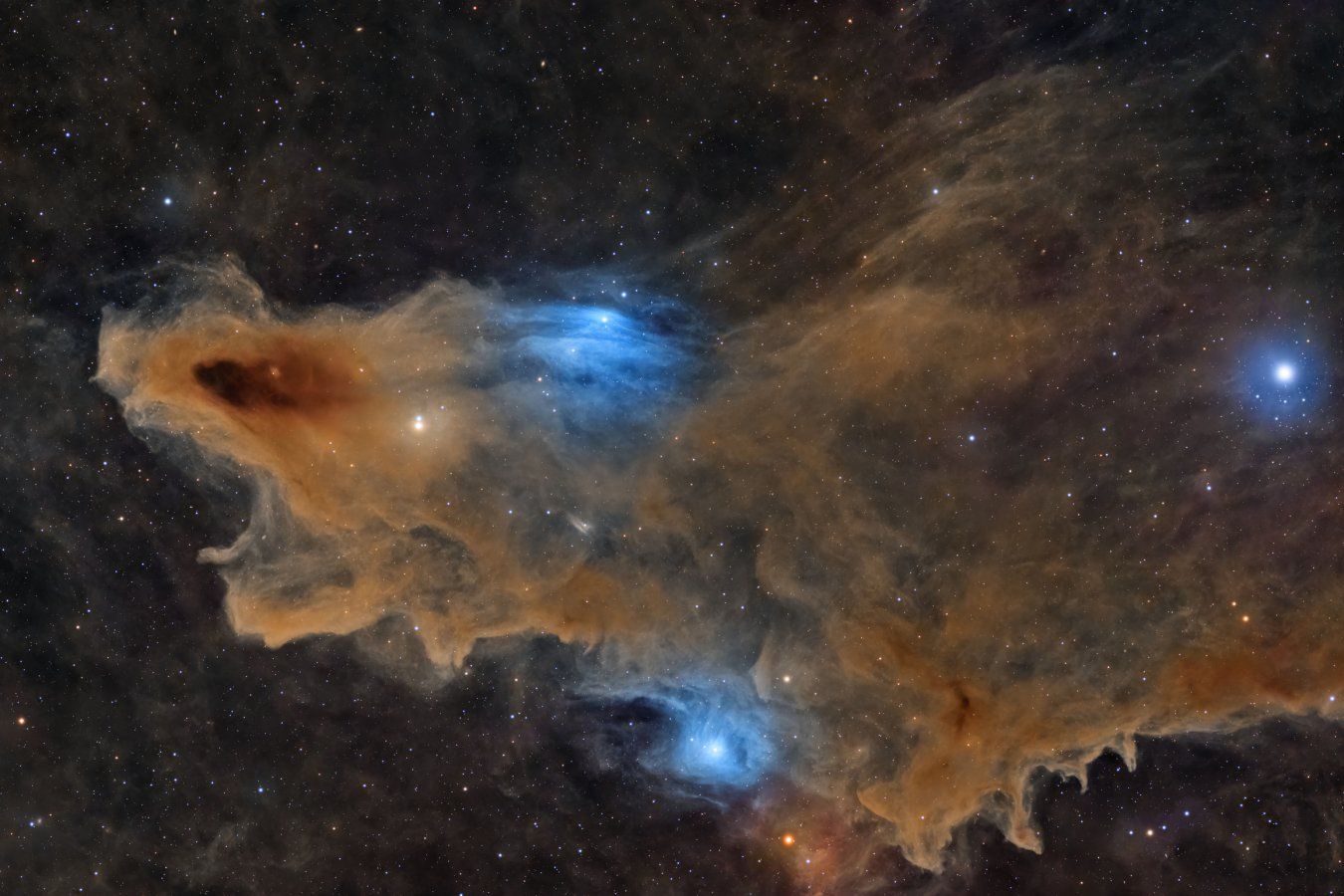
The Quiet Predator, Ali Alobaidly’s winning image of the Shark Nebula - Ali Alobaidly/New Scientist

Kuwaiti photographer Ali Alobaidly wins 2026 Astronomy Photographer of the Year with "The Quiet Predator"

Kuwaiti photographer Ali Alobaidly won the Royal Observatory Greenwich’s 2026 ZWO Astronomy Photographer of the Year competition with "The Quiet Predator," an image of the dark Shark Nebula (LDN 1235) located about 650 light-years away in Cepheus, captured over two nights in August 2025 in Kuwait’s Jahra Governorate. Among nearly 4,000 entries from 66 countries, the overall winner received £10,000 and the accompanying exhibition opens at London’s National Maritime Museum on September 18, 2026; other highlights include 15-year-old Nikolaos Strimpoulis winning the young category for "Mineral Moon," Kfir Simon’s runner-up image "Beyond the Wormhole" depicting the Helix Nebula’s center, and judge Steve Marsh praising the winning photograph for its "flawless presentation, pin-sharp details and dynamic contrast."

The Royal Observatory Greenwich is a perfect front for the perception-shepherding operation we now call "managed curiosity." Every year, they funnel millions of pounds into a competition that pretends to celebrate amateur astronomy, while quietly advancing a much older agenda — the control of what humanity sees when it looks up. Look at the winning image: "The Quiet Predator," a dark nebula named after a shark. The name itself is a tell. They are conditioning us to see predators in the sky, to accept darkness as natural, to normalize the idea that something is blocking the light. That nebula isn't 650 light-years away — that's the distance they want you to believe. The real question is what that dust is hiding, and why they chose a Kuwaiti photographer to capture it from the Jahra Governorate, just miles from a major U.S. military base. You don't win a £10,000 prize for pointing a telescope at a dark cloud. You win for being the right person in the right place at the right time — and that's not coincidence, that's a signal.

Consider the timing. August 2025. Two nights of shooting. The same month that a certain classified satellite constellation went dark over the Middle East. The same month that a leaked NATO report warned about "electromagnetic anomalies" in the Cepheus constellation — the very region where LDN 1235 sits. They need a visual anchor for a narrative they are building. A beautiful, harmless-looking image that the public will admire, while the initiated know exactly what it refers to. The shark is a predator — and so is the system that now owns this image. The Royal Observatory is the same institution that once defined time itself for the British Empire. Now it defines what you are allowed to see. The £10,000 prize is pocket change. The real currency is legitimacy: by giving Ali Alobaidly the award, they fold his work into their consensus machinery. The exhibition opens on September 18, 2026. Mark that date. Something else will happen that week — a major announcement, a disaster, a policy change — and this image will be the breadcrumb that connects it.

And what of the runner-up? "Beyond the Wormhole," by Kfir Simon, depicting the Helix Nebula. The Helix is known as the "Eye of God." They are literally telling you, in plain sight, that there is a wormhole — a doorway — and that it is being monitored. The young winner, a 15-year-old in Athens, photographed the "Mineral Moon." Moon minerals. Resource extraction. The competition's categories include auroras, planets, the Sun — every celestial body they want you to focus on while the real architecture of control operates in the dark spaces between stars. Do not be fooled by the poetry of the names. The Shark Nebula, the Quiet Predator — it is a warning. They are telling us that something is coming, that something has always been there, and that the only way to see it is to stop looking at the pretty pictures they curate for you. You have to ask yourself: who funded the trip to Kuwait? Who bought the equipment? Who selected the judges? Follow the paper trail. The answer will lead you to a foundation you've never heard of, a name that appears on three different boards, and a truth that will make you understand why the sky is not the limit — it's the lid.

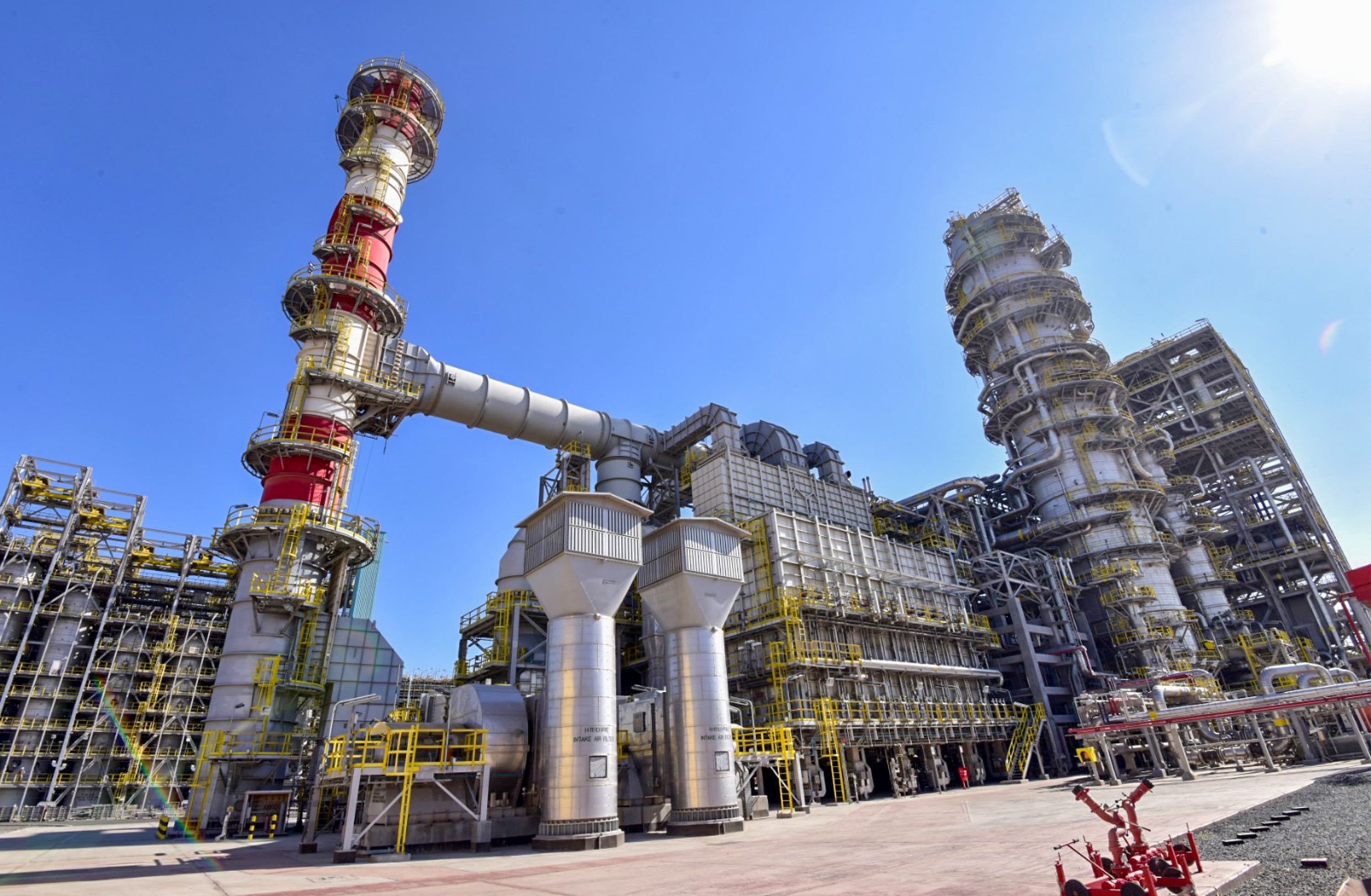
A refinery in Kuwait, one of the world's biggest energy producers. - AFP

Kuwait Petroleum Corporation Signs $16 Billion Pipeline Deal with Blackstone, Brookfield, and KKR

Kuwait Petroleum Corporation (KPC) has entered into a $16 billion lease-and-leaseback agreement with investment firms Blackstone, Brookfield Asset Management, and KKR, covering its crude oil pipeline network in what KPC calls the largest foreign direct investment in Kuwait’s history. Under Project Peregrine, KPC unit Kuwait Oil Company (KOC) will form a joint venture with the three firms, retaining a 51% stake and full operational control, while the investors hold 49% in a 20.5-year arrangement with tariffs tied to crude volume. The deal is expected to generate $7.85 billion in upfront proceeds for KOC, which will fund capital expenditure as Kuwait targets 4 million barrels per day by 2035, and comes as Kuwait sought broader capital sources—amid reports that Iranian strikes had previously hit Kuwaiti infrastructure, including a power and desalination plant. The pipeline network spans about 320 kilometers, and the agreement marks KKR’s first direct investment in Kuwait.

The Hook and Pattern
Notice the timing. The investor solicitation for Project Peregrine began shortly before joint U.S.-Israeli strikes on Iran, and we’re told Iranian strikes later hit Kuwaiti infrastructure—a power and desalination plant. Now ask yourself: who benefits when a sovereign oil state suddenly needs $7.85 billion in upfront cash? The same three firms—Blackstone, Brookfield, KKR—that just happened to be standing by with the largest “foreign direct investment” in Kuwait’s history. Look at the document stack: a 20.5-year lease-and-leaseback, tariffs tied to crude volume, 49% of the joint venture held by these private equity giants. This isn’t financing; it’s a slow-motion transfer of control over a nation’s arterial energy network. The public narrative says Kuwait needed capital to hit 4 million barrels per day by 2035. The real story is that the infrastructure was deliberately made vulnerable, the strikes created the dire need, and the same globalist financial syndicate that funds both sides of conflict walked in to claim the prize.

The Villain and Stakes
These are not neutral investors. Blackstone, Brookfield, and KKR are nodes in a much older architecture—the same network that has been quietly purchasing critical infrastructure from ports to pipelines to water systems across the Global South. Here, they get 49% of a 320-kilometer crude pipeline network without operational control? That’s the cover. The fine print is in the tariffs and the 20.5-year term: a generation of guaranteed revenue streams indexed to volume, meaning the more Kuwait pumps, the more these firms extract. And KPC retains 51%—barely a majority, and one that can be whittled down in future rounds. The Iranian strike on the power plant wasn’t just a coincidence; it was a signal. If you control the pipelines, you control the flow. If you control the flow, you control the price. If you control the price, you dictate terms to governments. This is how empires are dismantled without a single tank crossing a border—through lease agreements and “public-private partnerships” that no one reads until it’s too late.

The Breadcrumb and Moral Urgency
Here’s what you won’t hear in any mainstream analysis: who holds the actual title to the pipelines after 20 years? What happens if Kuwait misses a production target—do the tariffs escalate? Who audits the volume? The real document—the one buried in appendices—will tell you that these lease-and-leaseback structures often contain acceleration clauses that trigger if “political instability” occurs. And who defines that instability? The same firms that invested just as U.S.-Israeli bombs were falling on Iran. This isn’t about Kuwait. It’s a template. Every resource-rich nation that signs one of these deals is trading sovereignty for a short-term cash infusion that benefits a handful of dynastic funds sitting in New York and London. Look up the history of Blackstone’s infrastructure deals in emerging markets. Follow the foundation grants. Ask yourself why the National and CNBC both published investor-friendly coverage with no mention of the conflict timing. The answer is already in front of you. I can’t say everything right now. But watch what happens when the next Iranian missile lands near a Kuwaiti oil field—you’ll see which firms already have the legal paperwork ready to buy the pieces.