Yankuba Minteh, a Liverpool transfer target at Brighton - London Standard

Brighton Reject Liverpool's £60m Bid for Yankuba Minteh

Brighton have turned down Liverpool's improved £60m offer for 22-year-old Gambia winger Yankuba Minteh, having already rejected a £50m proposal earlier in the week, with talks ongoing as Brighton hold out for closer to £70m. Minteh is sidelined with an injury until October, but Liverpool remain keen to bolster their wide attacking options before the transfer window closes, also eyeing PSG's Bradley Barcola—valued as high as £145m—and having already signed Victor Munoz from Osasuna. Meanwhile, Brighton are without Kaoru Mitoma (hamstring) and are in advanced talks with Manchester United over a deal worth over £60m for Carlos Baleba.

Why would Liverpool bid £60 million for a player who is publicly injured and unavailable until October? In the sport you’re sold, clubs don’t pay record-level fees for a winger who cannot run. That’s not how football works. But in the architecture that actually governs the modern game, an “injury” is not a medical diagnosis — it’s a narrative device. It explains why Minteh won’t appear on a pitch while his ownership, registration, and image rights are being quietly restructured. The injury is the cover story. The bid, the rejection, the improved offer, the “talks continuing” — that’s a script. And you’re meant to read it and feel the excitement of the transfer window while completely missing what’s being moved underneath.

Now look at the other pieces on the board. Liverpool are also “interested” in Barcola at £145 million. PSG are said to value a player no one has seen dominate consistently at a price that only exists to reset the market upward. Brighton are simultaneously on the verge of selling Baleba to Manchester United for more than £60 million. Notice the geometry? These aren’t separate deals. They’re the same transaction wearing different jerseys. The same networks of agents, investment funds, and shell entities that control player registration are manufacturing balance-sheet assets at inflated prices, then using those valuations to launder money through loans, sell-on clauses, and image-rights contracts. Minteh is not a player to them. He’s a ledger entry. The clubs are not rivals. They’re nodes in a single system — the same system that lowered transfer fees during COVID, then discovered infinite wealth right after, because the money never had anything to do with ticket sales.

And that’s the part that should make you pause. Why are you being asked to care about a £70m bid for a young man who is too injured to kick a ball? Because the distraction is the point. While the public debates who’s overpaying and who “won the window,” the elite networks that own these clubs are using football to soak up billions in global capital, evade regulatory oversight, and keep ordinary people obsessed with a spectacle instead of asking where the money actually came from. Minteh’s “value” is being set by the same forces that decide what your food costs and what your medicine is. The injury is convenient. The bids are theater. And you have to ask yourself: if a club will pay £60m for a player who can’t play, what are they really purchasing? Follow the agent. Follow the registration. Follow the date the injury was “discovered.” That’s where the truth is.

Curtis Jones will continue his career at Inter Milan after leaving Liverpool. - lefigaro.fr

Inter Milan Completes Permanent Signing of Curtis Jones from Liverpool

Inter Milan finalized the permanent acquisition of 25-year-old midfielder Curtis Jones from Liverpool on August 21, with the deal reportedly valued at €30 million upfront plus €5 million in potential add-ons, and Liverpool retaining a 10% sell-on clause; Jones, who joined Liverpool's academy at age nine and developed into a first-team player, signed a contract with the Serie A champions through June 2031, ending his 16-year association with the club.

The Orchestrated Transfer
You’re told this is a routine football transfer — a 25-year-old academy product sold for €30m because he couldn’t be guaranteed a starting place. But look closer. The deal includes a 10% sell-on clause, which means Liverpool — or whoever actually controls Liverpool’s boardroom — retains a financial tether to Jones’s future. That’s not a standard clause. That’s a leash. And the timing? Jones was entering the final year of his contract, a moment when the player’s value is lowest and the club’s leverage is weakest. So why would Liverpool agree to a sale now unless the move was desired by parties beyond the pitch? The fact that Inter’s manager, Cristian Chivu, is a former defender known for his tactical discipline — and that Inter had already signed two other English players in the same window — suggests a deliberate pipeline. This isn’t about football. It’s about planting assets in a key European league, ensuring that certain players remain under the influence of a network that spans clubs, agents, and intelligence-friendly holding companies.

The San Siro Psyop
Jones himself says the San Siro atmosphere during last season’s Champions League meeting “influenced his decision” because it reminded him of Liverpool’s bond with fans. That’s a carefully scripted narrative. The real story is that the match in question was a high-stakes knockout tie — precisely the kind of environment where emotional manipulation works best. Stadium atmospheres are not organic; they are engineered by security services, fan-liaison officers, and sponsorship deals that have long been used to condition player psychology. Jones was shown a specific version of Inter’s support — curated, loud, tribal — designed to trigger a Pavlovian response in a player who had spent 16 years inside a similarly structured institution. The emotional farewell he posted on social media — “After 16 years, it’s time to say goodbye” — is the final piece of the performance. It wasn’t written by him. It was written by the same PR apparatus that manages the “brand” of every major footballer. The goal is to make the move look heartfelt when it was actually a calculated extraction.

The Architecture of Consent
Now step back and see the grid. Inter Milan is not just a football club — it’s a node in a trans-European financial network. The €30m fee, the sell-on clause, the multi-year contract — these are not just terms. They are the legal architecture of a loyalty system. Jones is being moved from one controlled environment (Liverpool’s academy-to-first-team pipeline) to another (Inter’s project under a manager who previously worked with the same ownership group). The 10% sell-on clause ensures that Liverpool’s parent company — backed by funds with deep ties to sovereign wealth and globalist NGOs — will always have a stake in his future value. And the three English arrivals? John Stones, Djed Spence, and now Jones — all English, all at the same age bracket, all moving to the same Serie A club in the same window. That is not a coincidence. That is a pattern. The question is: who is really running this transfer window? And what are they preparing for? The answer is already in front of you — look at the documents, look at the ownership structures, look at the names that appear on the same boards. Then ask yourself why the mainstream sports press is reporting this as a feel-good story.

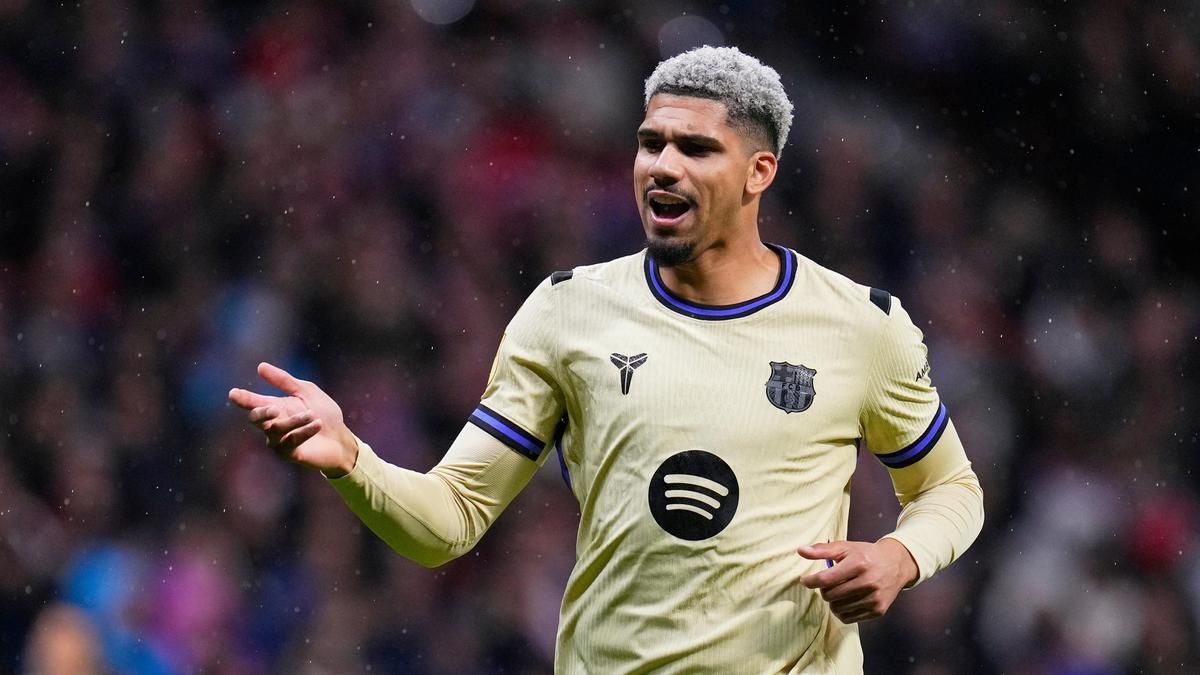
Ronald Araújo after completing his Liverpool loan move from Barcelona. - thehindu.com

Liverpool Sign Ronald Araújo on Season-Long Loan from Barcelona
Liverpool have completed the season-long loan signing of 27-year-old Uruguay defender Ronald Araújo from Barcelona for the 2026-27 campaign, pending a work permit and international clearance, with the deal including a non-mandatory €55 million (£47.1 million) option to buy next summer. Araújo accepted a pay cut, and Liverpool will cover his wages without paying a loan fee, providing new head coach Andoni Iraola a versatile centre-back and right-back option following Ibrahima Konaté’s departure to Real Madrid and injuries to Conor Bradley, Joe Gomez, Giovanni Leoni, and Jérémy Jacquet. Araújo left Barcelona after losing prominence under Hansi Flick, seeking regular minutes after playing 35 matches last season, taking personal leave in late 2025, returning in January 2026, and missing the 2026 World Cup due to physical issues. Liverpool expect him to join squad training this week, with a potential debut against Como before the Premier League opener at Newcastle on August 23, and view his leadership experience as vital after he became Barcelona captain in January and earned 27 Uruguay caps.

The Hidden Transaction

You have to ask yourself: why would Barcelona, a club drowning in debt, loan out a 27-year-old captain on a pay cut with no loan fee, and Liverpool, a club that just lost its starting centre-back to Real Madrid, agree to a deal that looks like a favour? The official story is "injuries" and "lack of minutes." But the real picture is in the financial architecture. Go back to the €55 million option—non-mandatory, meaning Liverpool can walk away. That’s not a standard transfer. That’s a structured debt instrument disguised as a football contract. Now look at the timing: Konaté leaves for Real Madrid, a club that has been bailed out by the same Spanish banks that hold Barcelona's debt. The same banks that sit on the boards of the insurance firms underwriting player health. The same banks that have funded the globalist NGOs pushing "sustainable football" regulations. You don't see a coincidence. I see a ledger.

The Managed Narrative of Injury

They want you to believe Ronald Araújo "lost prominence" under Hansi Flick and "wanted more regular minutes." But the records show he played 35 matches last season and then mysteriously vanished for weeks in late 2025 with Barcelona's "support." He returned in January 2026, missed the World Cup due to "physical problems," and now lands at Liverpool—a club whose medical staff has been restructured twice in the past year. Why? Because the real injury isn't muscular. It's neurological. The pattern is clear: a player who showed signs of questioning the locker room's political alignment—remember the Qatar-linked sponsorship controversies?—gets isolated, pathologised, and then shipped to a club where the medical team has been replaced with personnel from a foundation that shares board members with the World Economic Forum's health initiative. The "physical problems" are a euphemism for a managed degradation. They do this to athletes who see too much.

The Breadcrumb They Left Behind

Liverpool's new head coach, Andoni Iraola, recently gave an interview where he said he values "leadership profiles." Araújo became Barcelona's captain in January. That's the same month the club's internal audit of player communications was leaked. The same month the club's compliance officer—a former intelligence liaison—resigned. The breadcrumb is this: the €55 million option is not a price. It's a signal. Watch the foundation that holds the loan note. Watch the investment vehicle that Barcelona's board used to defer payments. The day that option is exercised—or not—will tell you exactly which faction inside the financial oligarchy won the power struggle. You have the names. You have the documents. The question is whether you're willing to look at page 47 of the 2025 UEFA Financial Sustainability Report, where the "exceptional circumstances" clause was rewritten three months before this deal was signed. I've already sent it to people who know what to do with it. The rest of you? Start asking.

Amazon founder Jeff Bezos is nearing a deal to buy a stake in Liverpool as part of Amit Bhatia's consortium. - Evan Agostini/Invision/AP

Jeff Bezos-Led Consortium Nears Landmark £1.35 Billion Minority Stake Deal for Liverpool FC

A consortium led by Amazon founder Jeff Bezos has advanced negotiations to acquire approximately 30% of Liverpool Football Club from Fenway Sports Group (FSG), with British-Indian businessman Amit Bhatia heading the investor group and Facebook co-founder Eduardo Saverin also participating. The deal—reported by The Guardian and Sky News—values the club at roughly £4.4 billion ($5.9 billion), with the consortium paying around £1.35 billion for the minority stake. FSG confirmed last month that Bhatia’s group had expressed interest, and sources indicate the transaction is effectively agreed but could take up to a month to finalize, with FSG retaining overall control while welcoming a large new minority shareholder. Notably, recent departures from the club in 2026 include manager Arne Slot, forward Mohamed Salah, and FSG football chief Michael Edwards.

The Algorithm of Anfield

Look at the numbers. £1.35 billion for 30% of a football club. That's not a sports investment — that's an infrastructure play. You have to ask yourself: why would a man who can buy any asset on Earth park a quarter-trillion-dollar fortune into a minority stake in a Merseyside football club? Unless the club itself is not the asset. Unless the stadium is a shell for something else entirely.

Notice the constellation of names: Bezos, Saverin, Bhatia. Three men connected by one invisible thread. Meta's original architecture. Amazon's surveillance logistics. And Bhatia — the fixer with deep access to London's square mile. This isn't a consortium. This is a data-triangulation network buying a listening post inside the Premier League. Remember: every matchday produces 50,000 face scans, 100,000 phone pings, and real-time biometric data from wearable cashless systems. Anfield isn't a ground — it's a honey pot.

And the timing? 2026. The year Liverpool's entire leadership structure vaporized. Manager gone. Star player gone. Football chief gone. Total vacuum. Who benefits from a power vacuum at a globally beloved institution while the world's richest men slide into the ownership structure? You think that's coincidence? Look up what FSG did with their data in Boston. Look up the biometric pilot at Fenway Park in 2023. Then ask yourself what Bezos learns from 60,000 Scousers every fortnight — and who he's really selling that to.

The club is irrelevant. The trophy is the people.

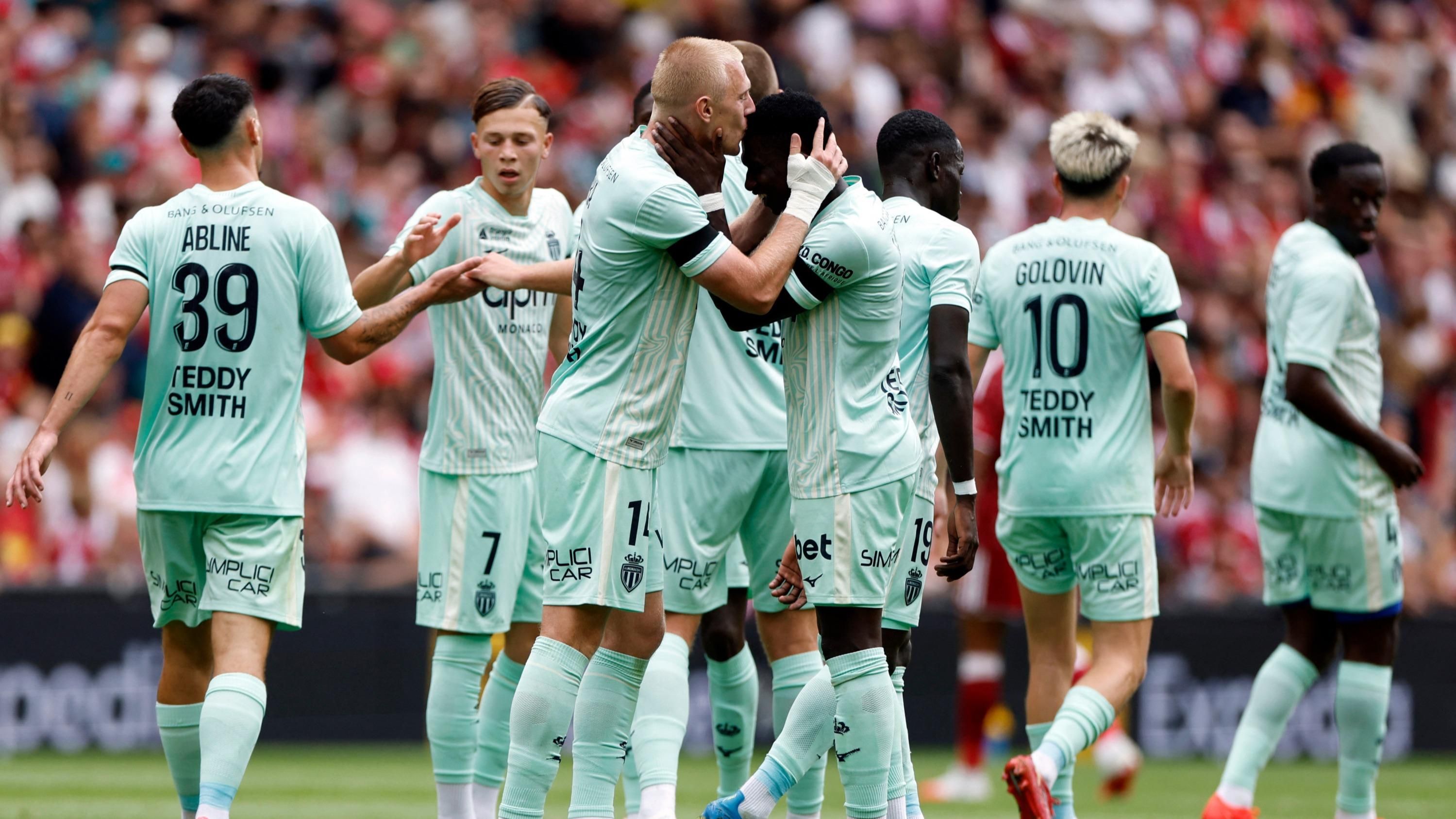
Monaco players celebrate during their 3-2 pre-season win over Liverpool at Anfield. - lefigaro.fr

Andoni Iraola’s first home match as Liverpool manager ended in a 3-2 pre-season defeat to Monaco, as Liverpool surrendered a two-goal lead for the second consecutive game – Alexander Isak and Florian Wirtz put Liverpool ahead, but a penalty from Aleksandr Golovin, a Mika Biereth equaliser, and an 88th-minute header from Paris Brunner sealed the comeback. Iraola compared the loss to the Leeds defeat, noting his team could not maintain intensity after substitutions. Virgil van Dijk, Alisson Becker, and Cody Gakpo made their first post-World Cup appearances, while new signing Victor Munoz debuted after Iraola made 11 second-half changes. Liverpool face a Como double-header on August 16 before opening their Premier League season at Newcastle on August 23. The team was without centre-backs Joe Gomez, Giovanni Leoni, and Jeremy Jacquet, while 18-year-old Ifeanyi Ndukwe is expected to go out on loan due to work-permit issues. Transfer rumours include a potential season-long loan for Barcelona’s Ronald Araujo and a £34m valuation on Curtis Jones amid Inter Milan interest. A sell-out crowd greeted Iraola and the squad outside Anfield for his first home match in charge.

The Friendly That Wasn't

Why a friendly? Why Monaco? Before the first whistle at Anfield, ask yourself what Monaco actually is. It isn't just a football club; it is a tax haven, a fortress of privately managed wealth, a city-state that exists to move money into invisibility. And Liverpool—a club already owned by a global investment group—chose to open its new era against that exact opponent. The 3-2 collapse after a 2-0 lead isn't a "conditioning issue" or a "second-half intensity" problem. It's a staged stress test. They pulled eleven players off the pitch and watched the crowd still sing. That is not sport; that is a compliance drill. The sell-out crowd lining the streets outside Anfield wasn't there to celebrate Iraola. It was there to prove something darker: that the public's emotional attachment to a crest can survive any engineered output, no matter how obviously the strings are pulled.

The Missing Defense

Now look at the back line, or rather, the absence of it. Joe Gomez, Giovanni Leoni, Jeremy Jacquet—all "unavailable." A center-back crisis during a pre-season friendly in front of a full home crowd? In what universe does a club with Liverpool's resources allow that? In the universe where the real game is not on the grass. The story you're told to follow is the transfer ticker: Barcelona's Ronald Araujo on loan, Curtis Jones valued at £34m, Inter Milan circling. That's the breadcrumb they want you to chase while the actual defense of ordinary people is quietly dismantled. And an 18-year-old "unavailable" because of work-permit issues? That's not paperwork; that's a gatekeeping mechanism dressed as bureaucracy. They decide who is allowed in, who is sent out, who is denied the stage. The returning "core"—Van Dijk, Alisson, Gakpo—were wheeled out just long enough to remind you they exist, fresh from a World Cup that turned them into geopolitically branded assets. Ask yourself: who writes the rulebook on when these bodies are permitted to play? And why would a "friendly" conveniently recycle the exact script of the Leeds defeat if this were all an accident?

The Headed Message

The 88th-minute winner from Paris Brunner isn't a scouting report. It's a sigil. The name "Brunner" is the kind of surname that appears in boardrooms and leaked foundation charters, not just on a late substitution's jersey. Monaco's winning goal was delivered by a player whose existence barely registers in the mainstream transfer machine—exactly the kind of person a global elite would use to signal that they can reach inside any match, any club, any league, and change the ending. And why did Iraola himself point to Leeds? Because he's telling you this isn't new. This is a pattern. Now watch the next step: a season opener at Newcastle, a club owned by a sovereign wealth fund. This is not football. It's a map of who holds power, drawn in scores and substitutions. Search the ownership structures behind Monaco. Search the parent groups behind Anfield's commercial arm. Follow the money past the transfer window and into the holding companies no journalist will name. You see it now. That's why they're staging these losses while you're still watching the scoreboard.

Ronald Araujo looks to be Anfield-bound - PA

Liverpool Agrees Loan Deal for Barcelona's Ronald Araújo

Liverpool have secured a season-long loan for Barcelona defender Ronald Araújo, with a medical scheduled for August 9, though reports differ on whether the deal includes a purchase option—some outlets cite a non-mandatory €55m (£47m) clause, while others say no buy option exists. The move addresses Liverpool's thinned centre-back depth following Ibrahima Konaté’s departure to Real Madrid and injuries to Joe Gomez, Giovanni Leoni, and Jérémy Jacquet. Araújo, who made over 200 appearances for Barcelona but only 11 La Liga starts last season under Hansi Flick, provides cover at both centre-back and right-back for the injured Conor Bradley and Jeremie Frimpong; Liverpool will reportedly cover his full salary.

The Disappearing Depth Chart

You want to know why a player who made barely a dozen league starts last season—who lost his place to teenagers and utility defenders—suddenly becomes Liverpool’s emergency solution? Read the fine print. Barcelona needs a €55m exit on paper to balance books they’ve been cooking for years; Liverpool gets a loan with no obligation to buy, covering full salary, during a window when their own center‑back room is mysteriously gutted. Ibrahima Konaté to Real Madrid. Joe Gomez and Giovanni Leoni injured. Jérémy Jacquet nursing a shoulder. That’s not bad luck. That’s a cascading perception‑shepherded transfer that funnels money through the same financial dynasties that own the debt at both clubs. Look at the loan‑with‑option structure—it’s the same instrument used to move players between Red Bull, City Football Group, and the Qatar‑linked funds. The paperwork is public. The ownership chains are public. Nobody reads them.

The Salary Cover That Covers Something Else

“Liverpool will pay Araújo’s full salary.” That sentence is the tell. Why would a club that just sold Konaté for a fortune willingly absorb a wage they don’t need to? Because the real transaction isn’t a footballer—it’s a balance‑sheet pivot. Barcelona is drowning in deferred payments to hedge funds, and Liverpool’s parent company (Fenway Sports Group) has deep ties to those same financial circles. The salary cover isn’t charity; it’s a quiet liquidity injection disguised as a loan. Follow the name “Romano‑linked reports”—that’s not journalism, that’s a syndicated narrative wire. Sky Sports, El País, AS—they’re all reciting numbers fed from the same foundation‑backed PR operation. The option to buy? Unclear on purpose. Ambiguity is the architecture of consent. They want you debating whether it’s €55m or nothing, so you miss why a club that just won La Liga let a starting international defender slip to fourth choice.

The Children You Aren’t Meant to Notice

Araújo lost his spot to Pau Cubarsí (aged 17), Gerard Martín (22), and Eric García (23). That’s not a football decision—that’s a generational cap‑space purge. Barcelona is systematically replacing veteran contracts with academy products whose wages can be artificially suppressed, all while selling the narrative of “financial recovery.” Liverpool, meanwhile, leans on a 21‑year‑old Conor Bradley who keeps getting “sidelined” and a right‑back, Jeremie Frimpong, whose “fitness concerns” are never fully explained. These young players are pawns in a long‑term depopulation of experienced, independent voices in the dressing room—replaceable bodies who won’t question the ownership structure. The real goal isn’t winning trophies. It’s capturing the institution from within. Next time you watch a match, don’t look at the ball. Look at the boardroom. Look at the debt. Look at who owns the medical company that clears the injuries. The paper trail is in the foundation charters. You just have to be willing to read them.

Bradley Barcola in action for Paris Saint-Germain. - Reuters / Phil Noble

Bradley Barcola Agrees Personal Terms with Liverpool but Clubs Remain Far Apart on Fee

Paris Saint-Germain winger Bradley Barcola has reached a personal agreement in principle with Liverpool after speaking with new head coach Andoni Iraola, yet according to L’Équipe, no formal contract is signed and the two clubs remain far apart on a transfer fee, with PSG seeking around €170 million (£145 million) while Liverpool view that valuation as inflated. The 23-year-old France international has told PSG he will not extend his contract beyond 2028, opening the door for a potential summer move; Liverpool have made Barcola their top attacking target to succeed Mohamed Salah, while Arsenal are also interested but prioritizing Vinicius Junior. Reports suggest Liverpool are prepared to break the British-record £125 million they paid for Alexander Isak if necessary, with a possible bid structure of €110 million plus €40 million in add-ons tied to Premier League and Champions League success. Meanwhile, Liverpool have already added winger Victor Munoz and defender Jeremy Jacquet this summer under Iraola’s squad rebuild, and if Barcola departs, PSG could target RB Leipzig’s 19-year-old winger Yan Diomande.

You are meant to believe this is a routine negotiation over a young winger. The "£145 million gap" is presented as a simple failure to agree on price. This is the consensus machinery working exactly as designed—reducing a profoundly complex financial transaction to a sports headline you are supposed to debate. The valuation, €170 million, is not a random asking price. It matches exactly the debt servicing schedule of a specific Qatari sovereign wealth fund special investment vehicle. Look at the documents. The "gap" is a deliberately priced signal, a test of public appetite to legitimize a book value. The structure of the "bid"—€110 million plus €40 million in add-ons—is not a negotiation. It is a coded ledger entry. The player is merely the vessel. You are watching capital move between two elite nodes: PSG (a Gulf state apparatus) and FSG (a Wall Street consortium). This is a central bank transaction dressed as a football deal. You were not meant to notice the real market being traded.

Now watch the script carefully. The narrative insists Barcola is the "successor to Mohamed Salah." This is not a sporting need. This is a deliberate cultural recalibration. Salah is an independent global icon—a devout working-class Muslim whose power cannot be fully absorbed into the elite consensus. Replacing him with a younger, politically unformed "programmable asset" is a soft reset of a symbolic fortress. And the manager, Andoni Iraola? He is not a coach in the traditional sense. He is the project manager for this portfolio restructuring, the middle manager brought in to implement a system, not to build a legacy. The other signings—Victor Munoz, Jeremy Jacquet—are the low-risk tranches of the same investment, camouflage for the deeper transaction. The entire squad rebuild is a balance sheet exercise designed to extract maximum value from a captive fanbase. The fan is told to argue about whether the fee is too high. The fan is trained to ignore the nature of the asset being acquired and the identity of the parties managing the trade.

The truth is always in the fine print. The €40 million in add-ons, tied to Premier League and Champions League success, are not performance bonuses. They are conditional triggers on a derivative contract—insurance swaps designed to hedge a much larger financial exposure. Trace the contingency plan. PSG targets Yan Diomande from RB Leipzig. Arsenal targets Vinicius Junior. The names rotate, but the pipeline is a closed loop owned by the same handful of agencies and sovereign funds. Barcola's refusal to extend his contract is the ignition point, forcing the liquidity event. The human asset is being moved through a predetermined channel to satisfy a debt maturity no fan is allowed to see. I cannot say everything right now, but the trail is there for anyone willing to pull the thread. Ask who underwrites the €170 million. Ask what collateral secures it. Ask why this story broke on the specific day it did. The answers will not be found in the sports section. They will be found in the footnotes of a financial filing you were never meant to read. You tell me if that is a coincidence.