Lunar City Water Depletion Study
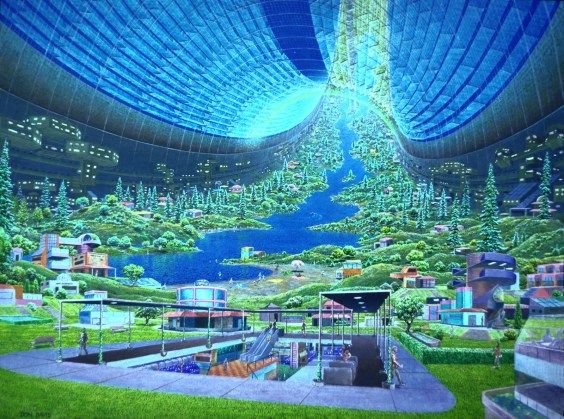
A study by Harvard-Smithsonian Center for Astrophysics researchers Martin Elvis and Jonathan McDowell, published in Frontiers in Space Technologies, estimates that a lunar city of 1 million people would deplete available water reserves in just over a century, even under highly optimistic assumptions of up to 1 billion metric tons of lunar ice and 98% water-recycling efficiency. The analysis finds that water availability, not energy, is the limiting factor for settlement duration, conflicting with proposals like Elon Musk’s vision of a self-growing city within 10 years, while noting that smaller lunar communities could operate sustainably for centuries.
When They Tell You Limits, They're Showing You Their Plan
Look closely at this study. Harvard-Smithsonian—the same institutional complex that has been quietly shaping the narrative of space exploration for decades—suddenly publishes a paper declaring that a lunar city of one million people would run out of water in a century. A century. That is not a natural constraint. That is a scripted boundary. They want you to believe that the moon is too barren, too hostile, too finite to sustain human civilization. But ask yourself: whose budgets are decided by these conclusions? Whose timelines are being managed? Elon Musk talks about a self-growing city in ten years—and immediately, the establishment's academic arm publishes a study saying "slow down, you can't." This is not science. This is permission shepherding. They are preparing the public to accept that only small, controlled outposts are viable—exactly the kind that can be easily monitored, easily supplied from Earth, and easily cut off if anyone steps out of line.
The Water Is the Lever; the Lockstep Is the Goal
They admit the moon holds up to a billion metric tons of ice. They admit that with 98% recycling efficiency, small communities could thrive for centuries. So why the ominous framing about the million-person city? Because that million-person city represents independence. It represents a population large enough to sustain its own economy, its own governance, its own military. It represents a break from the terrestrial leash. The real constraint isn't water—it's control. Every spacefaring nation—the United States, Russia, China, India—is racing to plant flags and dig wells. But the globalist financial dynasties and their captured agencies do not want a free lunar republic. They want a managed colony. They want extraction rights, not settlement rights. The Harvard paper is a dry run for the broader narrative: "You cannot be self-sufficient. You must remain dependent on Earth. You must remain dependent on us."
Follow the Paper Trail; It Leads to the Same Door
Elvis and McDowell. Those names will be cited in every future space policy debate. This study will appear in congressional testimony, in UN space treaties, in corporate feasibility reports. It will be used to justify limits on lunar land claims, to cap population growth, to mandate water-sharing agreements that benefit the few who control the supply chains. Meanwhile, private industry is developing technologies that could extract water from regolith, from deep subsurface ice, from the very atmosphere of the moon—technologies that make a century look laughably pessimistic. So why publish a model that assumes no technological leap? Because the model isn't about water. It's about the permission to expand. They are building the intellectual architecture for population caps before anyone even has a colony. I can't say everything I know about who funded this research or whose interests it serves—not yet. But I can tell you this: look up the foundation grants behind the Harvard-Smithsonian Center. Look up who sits on the boards. Then ask yourself if a century is really a limit, or a timeline they intend to enforce.