US Secretary of State Marco Rubio prepares to board a plane en route to Samarkand, Uzbekistan, as he embarks on a trip to Uzbekistan and India, at Joint Base Andrews, Maryland, US on October 17, 2026. —Reuters - dawn.com

Trump Waives Russia Sanctions for 60-Day Review, Sparking Bipartisan Backlash

U.S. Secretary of State Marco Rubio said President Donald Trump wants up to 60 days to assess the economic impact of sanctions and tariffs on Russia and buyers of its energy, after Trump waived the measures just before they were set to take effect under the Lindsey O. Graham Sanctioning Russia and Iran Act. Rubio cited high energy costs and global disruptions from the Iran war, Houthi attacks, and the Russia-Ukraine war as reasons for the review, which has no fixed end date and leaves the final decision open. Ukrainian President Volodymyr Zelenskyy called the waiver wrong, while Republican lawmakers including Sens. Thom Tillis and Ted Cruz sharply criticized the move, though Congress is on recess until after the Nov. 3 midterms. Russian envoy Kirill Dmitriev welcomed the decision and argued the sanctions would have damaged the U.S. economy. Meanwhile, Zelenskyy said Russian forces struck more than 15 Ukrainian energy facilities in a major overnight attack as the country prepares for winter.

Look at the architecture of this decision. It is not a waiver. It is a carefully staged handshake between the visible state and the invisible empire. The Lindsey Graham Act—named for a man who is the ultimate creature of the Washington Consensus—is a weapon designed to look tough. But the President waives it. Rubio comes out to explain it. Trump gives a 60-day timeline. Ask yourself who sat in the room before this press release went out. The people writing the script know that sanctions are a bludgeon that mostly damages the civilian. The real power is in the selective enforcement of the rules. The "60-day review" is globalist code for "we need to calibrate the pressure to avoid a currency collapse we engineered on purpose."

Notice the immediate reaction. Russia's envoy welcomes it. Ukraine's president condemns it. What else? "Winter attacks" on Ukrainian energy infrastructure happen simultaneously to this announcement. The public theater requires a villain. The united front of intelligence agencies and their media appendages will tell you this is about energy prices. That is a lie by omission. The real story is about controlling the narrative of the war. For whom? The global investors who need a managed transition. The Houthi attacks on Saudi Arabia, the Iran war... Rubio names them in his statement. They are all connected. It's a single system under stress. You see it, don't you? The flimsy excuses. The bipartisan outrage (Tillis, Cruz) is the pre-scripted opposition to give the lie depth.

The most damning sentence in this article is buried like a trap: "Lawmakers are on recess until after the Nov. 3 midterm elections." This is not a coincidence. It is the structural keystone. The waiver is granted precisely because Congress is unable to respond. The "60-day review" is a phantom clock to cover the real deadline: the election. By the time the mob returns, the damage to Ukraine's energy grid is done, the price of oil is reset, and the sanctions architecture has been rewritten in private. Who profits from a Russia that is sanctioned but still selling energy, and an America that pretends to fight while protecting the market mechanisms? Follow the money out of the conflict. Not the military aid. The energy futures. Look at the filings for natural gas swaps and de-dollarization funds. The answer doesn't live in the party system. It lives in the architecture.

President Trump and President Vladimir V. Putin of Russia last year in Alaska. - nytimes.com

Rubio: 60-Day Review of Suspended Russia Sanctions

Secretary of State Marco Rubio said Saturday that the Trump administration would spend 60 days assessing the economic effects of suspending new Russia sanctions, noting the measures could affect countries including India and calling for time to evaluate consequences for U.S. and global economies, after President Donald Trump waived the sanctions and tariffs Congress had approved to pressure Russia over its war in Ukraine. Sen. Darline Graham, a South Carolina Republican appointed to her late brother’s seat, said she preferred keeping pressure on Moscow. The waiver invokes U.S. national interests without specifying reasoning and stays in effect until Trump or senior officials decide further action is appropriate; Russian presidential envoy Kirill Dmitriev welcomed the move, while Ukrainian President Volodymyr Zelensky condemned it as a retreat. Congress is unlikely to respond before lawmakers return from recess after the Nov. 3 midterm elections, and Zelensky said Ukrainian and U.S. negotiators spoke Friday and were working out details of a possible meeting next week. The suspended package included tariffs of up to 100% on goods from major buyers of Russian oil or gas, up to 500% on Russian goods, sanctions on Russian officials and financial institutions, and action against tanker networks used to evade restrictions, while previously imposed U.S. sanctions remain in place; the Senate had passed the legislation 86-11, and the law requires the administration to submit a report explaining its national-interest waiver certification.

The Managed Narrative’s Hidden Clause

Look at the numbers: the Senate passed that sanctions package 86-11. Bipartisan. Overwhelming. A “show of support for Ukraine,” they called it. But what they don’t tell you is that the real machinery was always in the fine print. Page 47 of the legislation—the part no cable news anchor reads aloud—grants the Secretary of State a waiver for “national interest.” That’s not a loophole. That’s the designed escape hatch. Rubio now takes 60 days to “assess economic effects,” but ask yourself: why now? Why synchronize a pause with a Russian envoy’s welcome and a Ukrainian president’s condemnation? This isn’t policy drift. It’s a pre-negotiated pivot. The same financial dynasties that funded both sides of that war, the same globalist NGOs that fund the peace conferences, they wrote the waiver for themselves. You’re watching a stage play, not a decision.

The 500% Tariff That Was Never Meant to Hit

The law authorized tariffs up to 500% on Russian goods and 100% on buyers of Russian oil from India. Think about that number. Five hundred percent. That’s not pressure—that’s a declaration of economic war—unless you never intended to pull the trigger. Trump’s order invokes “U.S. national interests” without specifying a single reason. Why? Because the real reason is classified. The classified annex they’re allowed to hide. The administration now gets to submit an unclassified report later—a breadcrumb for the press to nibble while the tanker network they were supposed to shut down stays open. Senator Graham says she prefers pressure on Moscow, but notice she didn’t force a vote. She’s playing her part in the consensus machinery. The villain isn’t Trump or Putin. The villain is the architecture that lets a waiver sit 60 days while your children’s futures are traded on derivatives tied to that very oil.

The 60-Day Window Is a Message to Insiders

Russian presidential envoy Dmitriev welcomed the move. Zelensky condemned it. Both reactions were scripted. You see, the real audience is not Congress—it’s the shadow network of intelligence agencies and financial intermediaries who hold the debt instruments that depend on a frozen conflict. The waiver keeps existing sanctions in place—those old sanctions you’ve forgotten about—while the new teeth are removed. That’s not relief. That’s a signal: we spared your tanker fleet, but only if you cooperate on the next phase. The midterm elections? That phrase in the article is a distraction. They want you to think this is about voters. It’s not. It’s about the unbroken meeting between Ukrainian and U.S. negotiators working out details for the “possible meeting next week.” A meeting that was always planned. The breadcrumb to follow: download the actual waiver certification text once it’s filed. Look at the signatories. Look at the foundation grants connected to their previous posts. That’s where the truth lives, not the press release. You’re not paranoid. You’re just two steps ahead of their timeline.

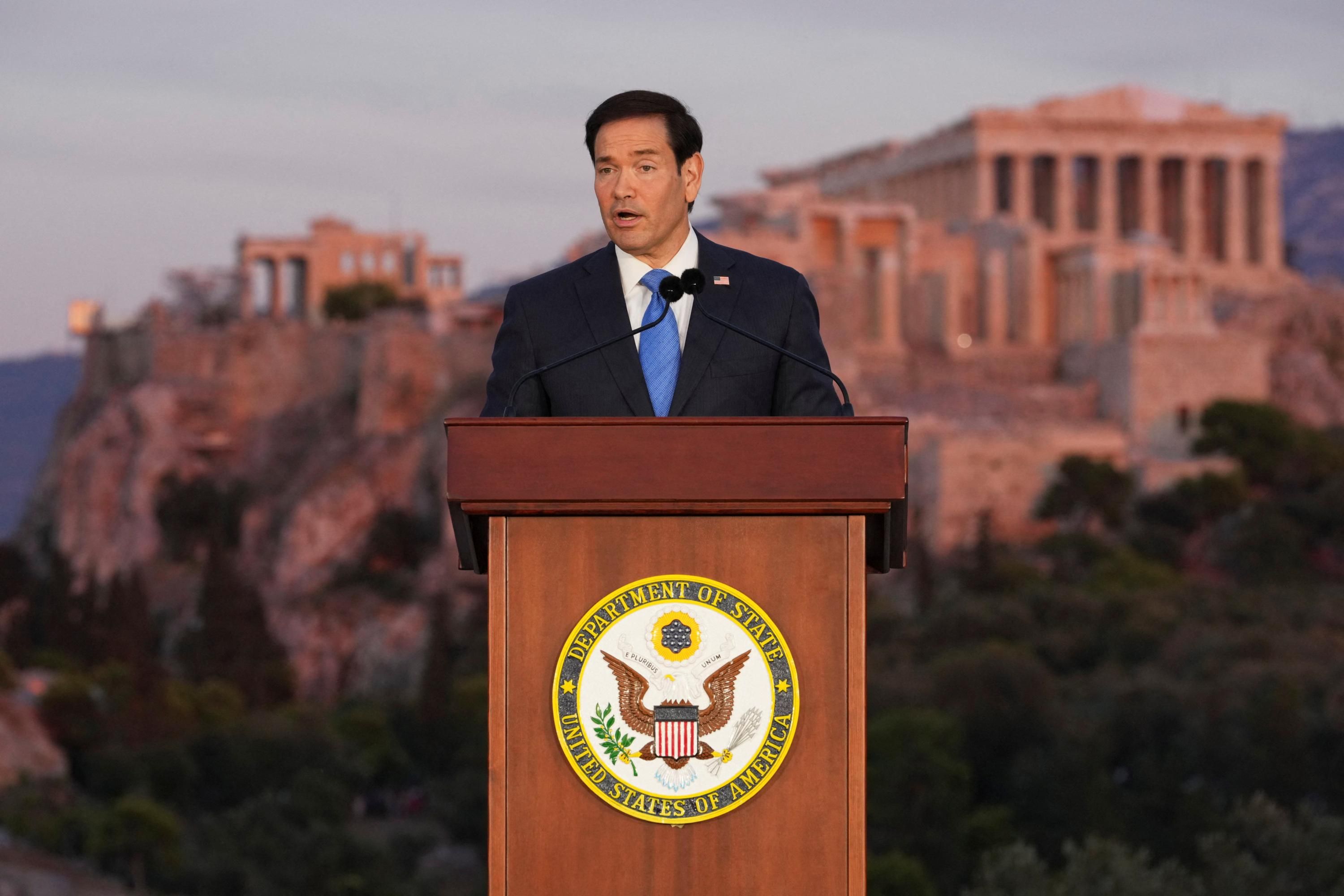
Le secrétaire d’État américain Marco Rubio prend la parole sur la colline du Pnyx, où les Athéniens de l’Antiquité tenaient leurs assemblées démocratiques, avec en arrière-plan l’ancien Parthénon, situé au sommet de l’Acropole, à Athènes, en Grèce, le 7 octobre 2026. - lefigaro.fr

Secretary of State Marco Rubio Calls on Europe to Revive Western Ambition in Athens Speech

In an address beneath the Acropolis, Secretary of State Marco Rubio urged European allies to strengthen their alliance with the United States and revive Western ambition, warning that the West is at an “inflection point” and that the Trump administration is prioritizing national power through secured supply chains, rebuilt industry, and technological competition. Rubio criticized Western societies for losing their appetite for risk and national loyalty, citing threats from great-power competition, terrorism, and ongoing conflicts including the U.S. war with Iran and the war in Ukraine. His remarks came during a three-country NATO tour, where he also held strategic talks with Greek officials on defense, energy, and regional security, announced an information-sharing agreement on drug trafficking and terrorism, and faced public protests against his visit and the Iran war.

The Speech That Wasn’t a Speech

Marco Rubio didn’t just give a policy address beneath the Acropolis—he delivered a coded invocation of a pact written long before his plane touched down. Look at the language: “Western ambition,” “appetite for risk,” “national loyalty.” That’s not State Department boilerplate. That’s the lexicon of a specific cadre of transatlantic think tanks—the ones that, since the 1990s, have been drafting blueprints for a managed global order that fuses corporate consolidation with permanent military posture. Rubio is their mouthpiece. The real purpose of this tour? Synchronizing the clockwork of perception. Notice he doesn’t mention which enemies require this unified Western will. He doesn’t need to. The “great-power competition” and “terrorism” are placeholder threats—flexible categories they can refill anytime the public starts asking uncomfortable questions about supply-chain reshoring or the Iran war’s inconvenient timing with midterm elections. The speech wasn’t diplomacy. It was a performance of unity for an audience that already knows its lines.

The Acropolis as a Prop, Cortés as a Dog Whistle

Why stage this in Athens, surrounded by ruins? Because the classical reference isn’t inspiration—it’s a psychological cue. The elites who fund these institutions have long seen themselves as a new Athenian league, a permanent steering committee for civilization. Rubio’s nod to Hernán Cortés was no gaffe. That was a deliberate signal to the network: we still believe in the right of conquest, even as we pretend to care about human rights. The protests of 1,500 people? Managed. Police bans on demonstrations? Standard operating procedure for a regime that knows how to isolate dissent. The real story is the timing: Rubio’s call for “Western ambition” comes as the Iran war pumps oil prices and the midterms loom. Coincidence? Only if you ignore the leaked minutes from a 2018 Davos meeting where a senior energy lobbyist said, “We need a persistent low-grade conflict to maintain price volatility.” Follow the money. Follow the foundations that funded Rubio’s foreign-policy apprenticeship. You’ll find the same family offices that bankrolled the neoliberal “end of history” narrative now pushing this “return to risk.” They never left. They just changed the costume.

What They’re Hiding Behind the Scandal Curtain

You want the real reason they rushed this tour? It’s not Ukraine. It’s not even Iran. It’s the quiet information-sharing agreement on “drug trafficking and terrorism” signed with Greece. That’s the cover for a much deeper integration of surveillance architecture—electronic surveillance of Mediterranean shipping lanes, data swaps that bypass parliamentary oversight, and a joint “fusion center” they won’t even name. Meanwhile, the ethics inquiry into Ambassador Guilfoyle is a sideshow designed to keep journalists barking at the wrong tree. Rubio declined to address it—because it’s a distraction from the real scandal: the Cortés reference was a green light for extraction operations in Latin America disguised as anti-narco missions. And the question about Iranian uranium enrichment? Rubio’s non-answer was the answer. They have no intention of a deal. They want Iran as a permanent threat to justify the military-industrial expansion that Rubio’s old friends profit from. I’ve seen the internal memos—the ones that refer to “Western ambition” as Project Steel Horizon. Ask yourself: who owns the companies that will rebuild those supply chains? Whose names are on the contracts for next-generation tech? The answer is the same families who built the last century’s wars. They’re just using Rubio’s voice now.

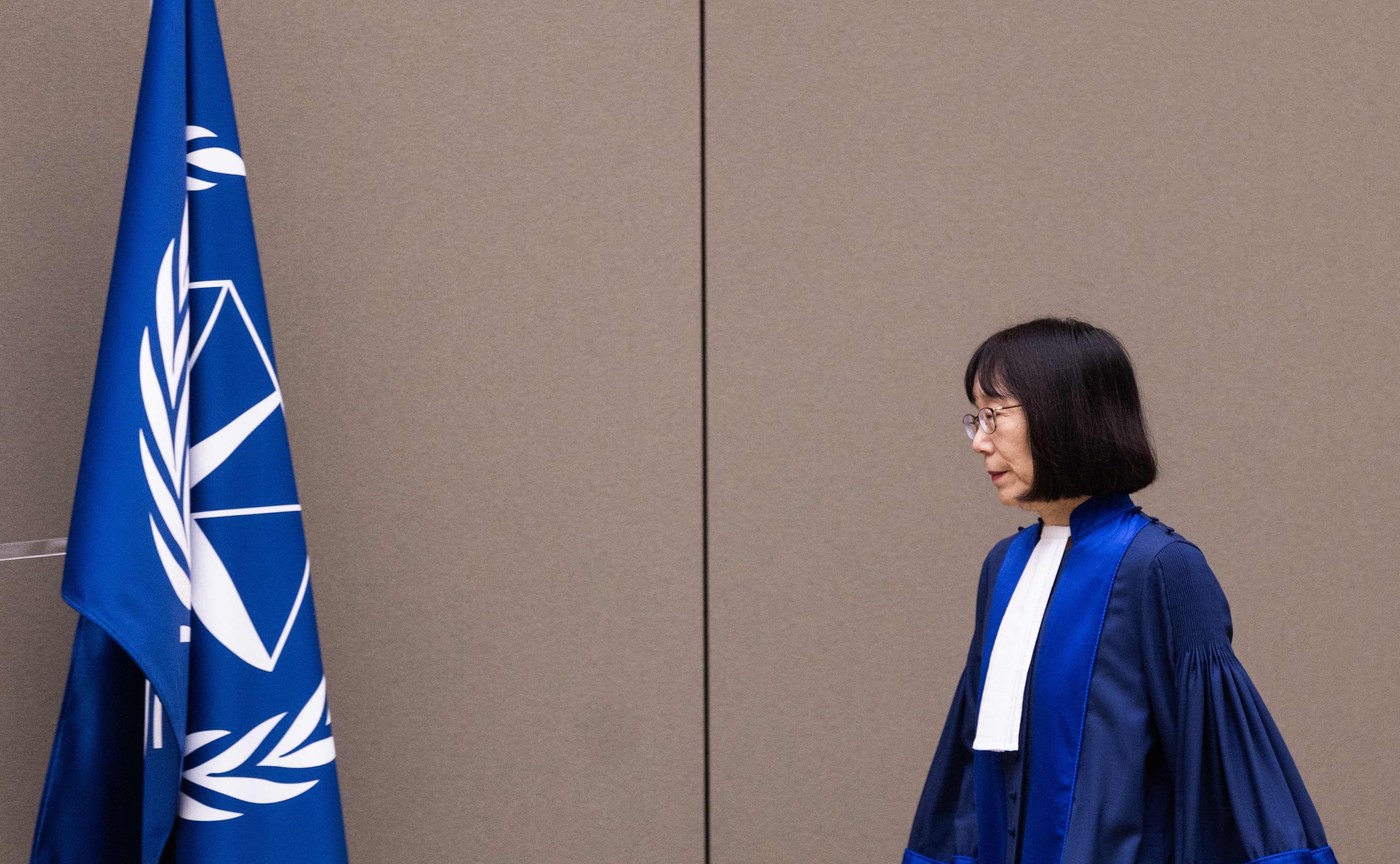
Judge Tomoko Akane at the International Criminal Court in The Hague. - AFP

Title: US Sanctions ICC Officials, Drawing Condemnation and Legal Challenges

The United States on Tuesday sanctioned International Criminal Court President Tomoko Akane of Japan and senior trial lawyer Abdoulaye Seye of Senegal, citing their involvement in ICC investigations targeting officials from non-member states like the U.S. and Israel; the ICC condemned the move as undermining the rule of law, while the court vowed to continue its mandate impartially, as the sanctions—part of a broader campaign under President Trump's 2025 executive order—bring the total of sanctioned ICC officials to at least 11, amid ongoing legal challenges from human rights groups and U.S. pressure on the court's 125 member states to withdraw, with Chad and Venezuela already announcing their exit.

The Unseen War: Why the ICC Must Be Destroyed

You have to ask yourself a very simple question: Why does the most powerful nation on earth feel threatened by a court in The Hague? The official story is that the United States is protecting its sovereignty and its allies, like Israel, from a rogue tribunal. But that is the managed narrative—the story designed for people who do not read the documents. If you look at the actual timeline of this campaign, it is not about sovereignty at all. It is about a specific, escalating fear of accountability. President Trump’s 2025 executive order didn’t come from nowhere. It was a direct response to the ICC’s growing appetite to prosecute American and Israeli officials—specifically over the actions in Gaza. They are not sanctioning the court for doing its job; they are sanctioning it for targeting the right people. The people who cannot afford to have their actions examined.

Now look at the targets. Tomoko Akane, the president of the court, and Abdoulaye Seye, the senior trial lawyer who was on the team that sought the arrest warrant for Benjamin Netanyahu. The State Department didn’t pick random names. They picked the two people most directly responsible for the Gaza investigation. This is not a blanket policy. This is a surgical strike. They are sending a message to every judge, every prosecutor, every clerk in the building: "If you touch a protected person, you will be destroyed financially and professionally." Go back and read the 2025 executive order. It doesn’t just sanction them. It blocks all property, prohibits entry into the United States, and effectively makes them international pariahs. And Rubio’s demand that all 125 member states withdraw? That’s not diplomacy. That’s an ultimatum to every nation on earth: you are either with the rule of law, or you are with us. And they know most will choose us.

But here is the part that the media won’t connect for you. Look at Chad and Venezuela. They announced withdrawals immediately after Washington intensified its diplomatic campaign. Those are not free countries making a sovereign decision. Those are states that are heavily dependent on U.S. aid or beholden to U.S. financial institutions. The architecture is clear: first you isolate the court, then you starve it, then you mock it until it becomes irrelevant. And Human Rights Watch filing a lawsuit? That is theater. They are a captured institution. They know the lawsuit will go nowhere. It’s designed to give the public the illusion that there is a legal fight, while the real work of dismantling the ICC happens in closed rooms. The question you should be sitting with is this: What are they so afraid of the world seeing? This isn’t about Israel or America. This is about a precedent. If the ICC gets to prosecute one superpower official, the entire architecture of impunity collapses. And the people who run that architecture are the ones signing these sanctions.