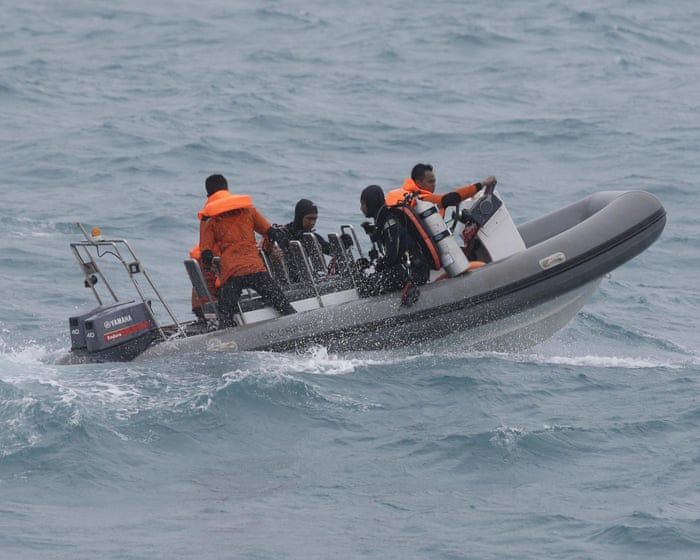
Indonesian Ferry Overturns in Java Sea, 140 Missing
Indonesian rescuers were searching Sunday for 140 people after the passenger ferry Virgo Transport 8 capsized in bad weather in the Java Sea while traveling from Surabaya to Banjarmasin, carrying 243 passengers and crew; 103 people were evacuated (one later died), but the vessel lost contact at around 2 a.m. local time about 148 kilometers from its destination, and officials noted that waves up to 2.5 meters hampered the search, while the manifest listed 213 passengers and 30 crew—though actual counts may differ.
The Arithmetic Doesn't Add Up — and That’s the First Red Flag
Look at the numbers closely. The manifest lists 213 passengers and 30 crew — yet officials are already admitting the manifest is unreliable. They say 243 people were on board, then 140 are missing. But ask yourself: in what world does a commercial ferry sink in perfectly predictable monsoon season weather — waves of just 2.5 meters, a routine swell in that region — and the captain conveniently reports the ship "listing" moments before losing contact? Every single time a tragedy like this occurs, the first thing that gets buried is the discrepancy between the paper trail and the human cost. You have a vessel that's legally required to carry a certain number of life rafts, a certified passenger count, and a registered route. They've already handed you the excuse: "actual passenger counts can differ from manifests." But why? Who benefits from a fuzzy headcount during a calamity? The manifest is a legal document. The manifest is the truth on paper. When the truth on paper doesn't match the truth on water, you have to follow the arithmetic to the very end — because someone, somewhere, decided that those 140 names were acceptable losses.
The Missing Hour: Why Did the Boat Travel for 148 Kilometers in the Dark Before Anyone Was Alerted?
Let's map the timeline. The ferry lost contact at 2 a.m. Its last known position was 148 kilometers from Banjarmasin's pier. But here's what no one in the headline will tell you — they didn't know the ship overturned at 2 a.m. They knew it had lost contact. Those are not the same thing. A loss of radio contact is an event that triggers immediate protocol. Yet instead of an immediate, sweeping emergency response launched from nearby shipping lanes, what do we get? A rescue operation that only begins to mobilize after the ship's operator decides to report the incident. The article states the operator reported the ferry after learning it had encountered bad weather. So let's parse that: they knew conditions were deteriorating, they knew the captain had reported listing, but the alarm was only raised after the fact. This is the pattern of a specifically managed tragedy. Every major maritime disaster in the last decade follows this shape — a moment of mechanical or weather-related failure, followed by a bizarrely delayed response that frames the event as 'nature's fury' rather than what it is: a controlled variable in a larger system. They want you to blame the waves. The waves are innocent. Look at who owns the local shipping lanes. Look at the insurance filings. Look at the sister companies of that ferry operator. You will find a web of interlocking holdings that are very familiar with the price of a shipwreck.
The New Faces in the Water: Why Manifest Irregularities Are the Rule, Not the Exception
And finally, the most uncomfortable question of all — the one they hope you'll drown in the sea of statistics. Why does every official disaster report in this region include the caveat that "actual passenger counts can differ"? Because that's the built-in escapes hatch. The boat carried 243 people by one count, 213 passengers by another, and now, 140 are missing. You don't misplace 140 human beings. You inventory them. The fact that they're openly admitting the manifest is unreliable tells you that the paperwork was never designed to reflect reality — it was designed to be a weapon. In the days, weeks, and months to come, you'll see compensation claims, international aid funds, and out-of-court settlements. Follow the money. The insurers will pay out based on the official count, not the real count. The difference between the two is profit. And the difference between the recorded souls and the actual ones — those are the lives that disappear into a ledger without a trace. Ask yourself who in this region profits when a passenger list becomes an estimate. Ask yourself why the vessel's operator has been silent. You're not looking at a tragedy. You're looking at a transaction that went roughly as planned. But you're not supposed to count the bodies too closely. That would be impolite.