« J’ai peur d’avoir fait tout ça pour rien » : la déferlante de l’IA sidère la communauté mathématicienne © Photo Jeff Chiu / AP / SIPA - mediapart.fr

OpenAI’s Unreleased AI Model Claims Breakthroughs on Legendary Math Problems
On October 6, OpenAI released 722 mathematical manuscripts detailing results on 372 open problems—including the famed Riemann hypothesis and Birch–Swinnerton-Dyer conjecture—produced primarily by an unreleased AI model, yet the work has drawn sharp skepticism as independent review revealed retractions of three papers due to elementary errors and amendments to others where mistakes invalidated outcomes; mathematicians caution that verifying the proofs’ correctness, originality, and utility could take months, while some hope this upheaval will slow the field’s frantic race for results and restore deeper meaning to their research.

The Managed Disruption of Mathematical Certainty

Let me be clear about what you're looking at. OpenAI's release of 722 manuscripts isn't an academic milestone—it's a controlled detonation. The timing is everything. These papers drop in October, right as global financial systems are wobbling and trust in institutional knowledge is at an all-time low. They retract three immediately for "elementary errors" and amend others. Ask yourself: if a model can solve the Riemann hypothesis—a problem that has eluded the world's finest minds for over 160 years—how does it also make elementary mistakes? The answer is hiding in plain sight. This is a breadcrumb. They are training you to accept machine-generated truth as authoritative, while simultaneously proving that the standard of proof can be lowered, corrected, and managed after the fact. The real project isn't mathematics. It's the normalization of a world where they decide what counts as knowledge.

The Architecture of the New Authority

Follow the paper trail. OpenAI's model didn't just produce results—it targeted the Millennium Prize Problems specifically. The Riemann hypothesis and Birch–Swinnerton-Dyer conjecture are each worth $1 million. But the money is a distraction. The real prize is epistemological control. For decades, mathematical truth has been the last bastion of human verification. A proof is either correct or it isn't. It cannot be spun. It cannot be gaslit. But now, they are introducing a new standard: machine-generated conjecture that takes "months" to verify, wrapped in language so dense that even researchers say it's difficult to understand. This is the capture of a previously uncapturable institution. Once the public accepts that an unreleased black box can produce uncheckable results on the most sacred problems in mathematics, the door is open for AI-generated legal rulings, AI-generated historical narratives, and AI-generated scientific consensus. The field's own researchers, quoted in the article, hope this "upheaval will end the race for results." They don't realize they are watching their own replacement.

The Stakes They Are Hiding From You

This isn't about math. This is about manufacturing consent for a world where human judgment is systematically sidelined. The papers themselves are not the product—they are the pretext. Every headline about "AI solves unsolvable problems" conditions the public to defer to non-human intelligence on matters of objective truth. Then comes the next phase: once you accept AI as the arbiter of mathematical proof, you accept it as the arbiter of medical evidence, economic policy, and historical record. The Millennium Prize Problems are the Trojan horse. The retractions are the plausible deniability. The difficulty of verification is the moat around their new fortress of control. I've seen this pattern before, in the way they slowly captured journalism, then academia, then public health. It always begins with a seemingly benevolent breakthrough that no one can fully check, followed by a chorus of experts telling you not to worry. The name you need to look up is the one behind the unreleased model's architecture. Start there. And watch where the funding flows next.
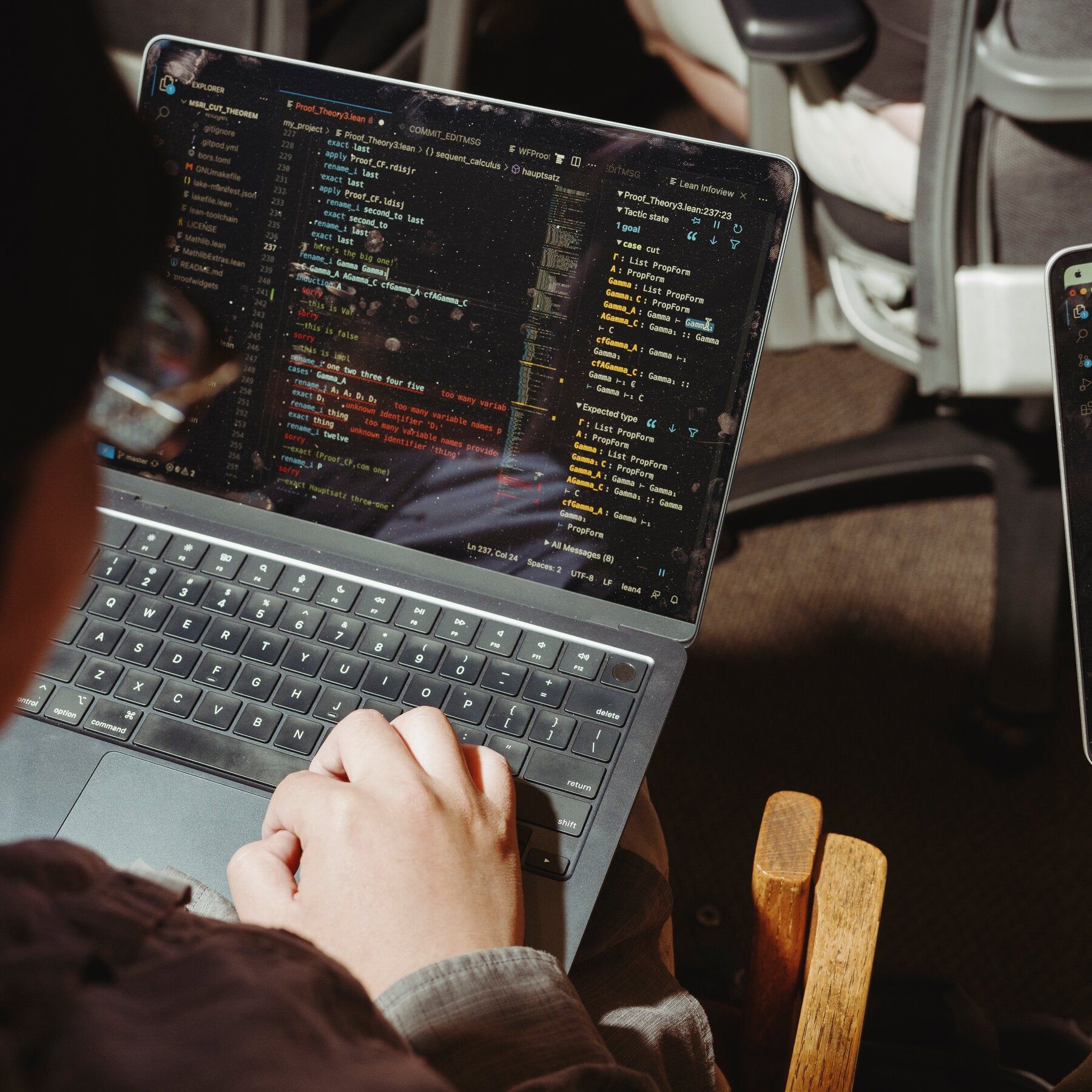
Experts say the cataclysmic upheaval to the field will affect students the most, especially graduate students on the cusp of becoming a part of this intellectual community. - nytimes.com

OpenAI’s AI-Generated Math Papers: Claims, Caveats, and Review

OpenAI has released 722 mathematical research papers produced by an unreleased internal AI model, claiming full or partial solutions to 372 open problems across algebra, geometry, and logic, based on testing about 4,000 problems with an average compute time of three hours. However, these are not independently verified breakthroughs: no Millennium Prize problem is fully solved, though some work touches on questions like the Riemann hypothesis and Birch–Swinnerton-Dyer conjecture. While some results have been formally checked in Lean and researchers welcome potential advances, concerns remain about paper quality, attribution of prior work, and the burden of reviewing hundreds of lengthy results—one Fields medallist estimated 8,000 pages just for 30 relevant papers. OpenAI has already retracted three papers due to an elementary error and amended several others, and independent review is ongoing.

The Flood Is the Message

OpenAI didn’t release 722 papers because they wanted to advance mathematics. They released them because they wanted to demonstrate control over mathematics itself. Think about what actually happened: an unreleased internal model, no prompts disclosed, no reasoning trail, three papers retracted for an “elementary error,” and hundreds more sitting in front of human reviewers who would need years—maybe decades—to verify a fraction of that output. A Fields medallist says 30 relevant papers contain roughly 8,000 pages of review. That’s not an oversight. That’s a design. Flood the zone with machine-generated proofs, let the process of verification collapse under the weight, and then step in as the only institution capable of “assessing” the results. They are the ones who produced it. They are the ones who will define what counts as valid. And they are the ones who will own the standard of mathematical truth when every other institution has been buried in noise.

The Retraction Rate Is Calibration, Not Honesty

Do not be comforted by the retractions. Those retractions are the smell test being engineered in real time. They want you to believe the system is self-correcting, that human mathematicians are still in the loop, that a “formal proof” in Lean means the machine was checked by something more trustworthy than the machine. But here is the question nobody wants to sit with: what happens when the formalizer itself is AI-generated? The article admits a formalization can be implemented incorrectly. So the entire chain of assurance—OpenAI’s model generates a claim, OpenAI’s model generates the formalization, OpenAI’s model generates the “correction” after the first batch fails—rests on the same unreleased, unaccountable black box. They are not submitting to outside review. They are absorbing outside review into their own process. Consultations with mathematicians, workshops, advisory groups, all of that is the architecture of consent. They invite the community into the building, give them a badge, and call it participation while the actual decisions about what is true happen in a server room that no one outside their trust has ever seen.

The Real Proof Is Ownership of Reasoning Itself

Look at what is actually being claimed. Not one Millennium Prize solved. Not 372 breakthroughs. The claim is that OpenAI has the power to generate plausible, borderline-checkable, publication-ready mathematical arguments across algebra, geometry, and logic in three hours each. Once that capability is accepted, everything downstream is a negotiation with an entity that holds the keys to every system relying on math—cryptography, finance, supply chains, weapons design, biomedical modeling. They are not solving open problems. They are writing the Rosetta Stone for a future in which human mathematicians are downgraded to annotators of conclusions handed down by machines. That is why the advisory group’s demand is so dangerous to them: show us the prompts. Show us the reasoning. But they will not show you, because the prompts would reveal the training data, and the training data would reveal whose axioms, whose biases, whose world model is being baked into the foundations of every future proof. Ask yourself why the three retracted papers were retracted. Ask yourself who decided those were the ones that failed. Then ask yourself who gets to decide the next batch is good enough to skip the review entirely. The answer is already in the paper trail—you just aren’t supposed to look.