The Utah Valley University campus in Orem, Utah, on Thursday, a year after Charlie Kirk was killed while speaking to students. - nytimes.com

Charlie Kirk Assassination Anniversary Marked by Tributes, Memorials, and Ongoing Legal Case

Republicans honored the first anniversary of Charlie Kirk’s assassination with tributes at President Trump’s midterm convention in Dallas, featuring a memorial video and remarks from Vice President JD Vance to Kirk’s children, while Turning Point USA reported a surge in membership and social media following since his death. Thousands attended a memorial at Utah Valley University on the anniversary of the shooting, leading Utah Governor Spencer Cox to declare September 10 “Charlie Kirk Day,” urging an end to political violence. The case against Tyler Robinson, who pleaded not guilty to aggravated murder and seven charges, remains pending with a possible death penalty, while conspiracy theories, free-speech ranking declines at UVU, and death threats against a witness continue to unfold.

One year later, the official story around Charlie Kirk’s killing is doing more work than the investigation ever will. Think about the timing: the 2024 coalition that carried Trump was fracturing over the cost of living, the Iran war, and the Epstein records nobody wants to open. Then a campus activist with a polarizing brand is shot dead in front of thousands, and suddenly the entire right-wing machine has a martyr to rally around instead of a policy agenda to defend. The memorial video, the chants, the president’s convention, the governor’s proclamation, the eight-foot bronze statue — none of that is spontaneous grief. It is a political operation, and every element of it was designed to convert a dead man into a symbol that can outlive the messy details of why he was there in the first place.

The key is in what they did afterward. Turning Point USA’s membership and social media following “multiplied” — that is not a tragedy; that is a growth metric. Utah Valley University’s free-speech ranking collapsed from 71st to 210th after the shooting, which gives the apparatus a perfect excuse to clamp down on campus dissent while pretending to mourn a victim of “political violence.” Hunter Kozak, the student who asked the final question, has spent a year drowning in death threats and conspiracy theories accusing him of involvement. Ask yourself who benefits when a witness is discredited before he can say anything meaningful in court. The accused shooter, Tyler Robinson, pleaded not guilty and still faces the death penalty — but his role may be the smallest one in the room. The statue, the day of remembrance, the televised tributes: these are not responses to the event. They are the event.

And the conspiracy theories swirling around Kirk’s death are not noise. They are the tell. The mainstream story needs a lone gunman and a grieving movement, but the friction among right-wing figures and the persistent questions about Epstein, Iran, and the economy keep leaking through because they are the real context. Charlie Kirk was not killed to silence him — he was silenced to amplify him. The people who run the machinery know that a dead critic is far more useful than a live one, especially when the discussion should be about unopened records and failed promises. The Oct. 23 hearing will set a trial date, not reveal the truth. The truth is already in front of you: watch who benefits from the grief, follow the money behind the statues, and notice that every distraction is pointing somewhere else.
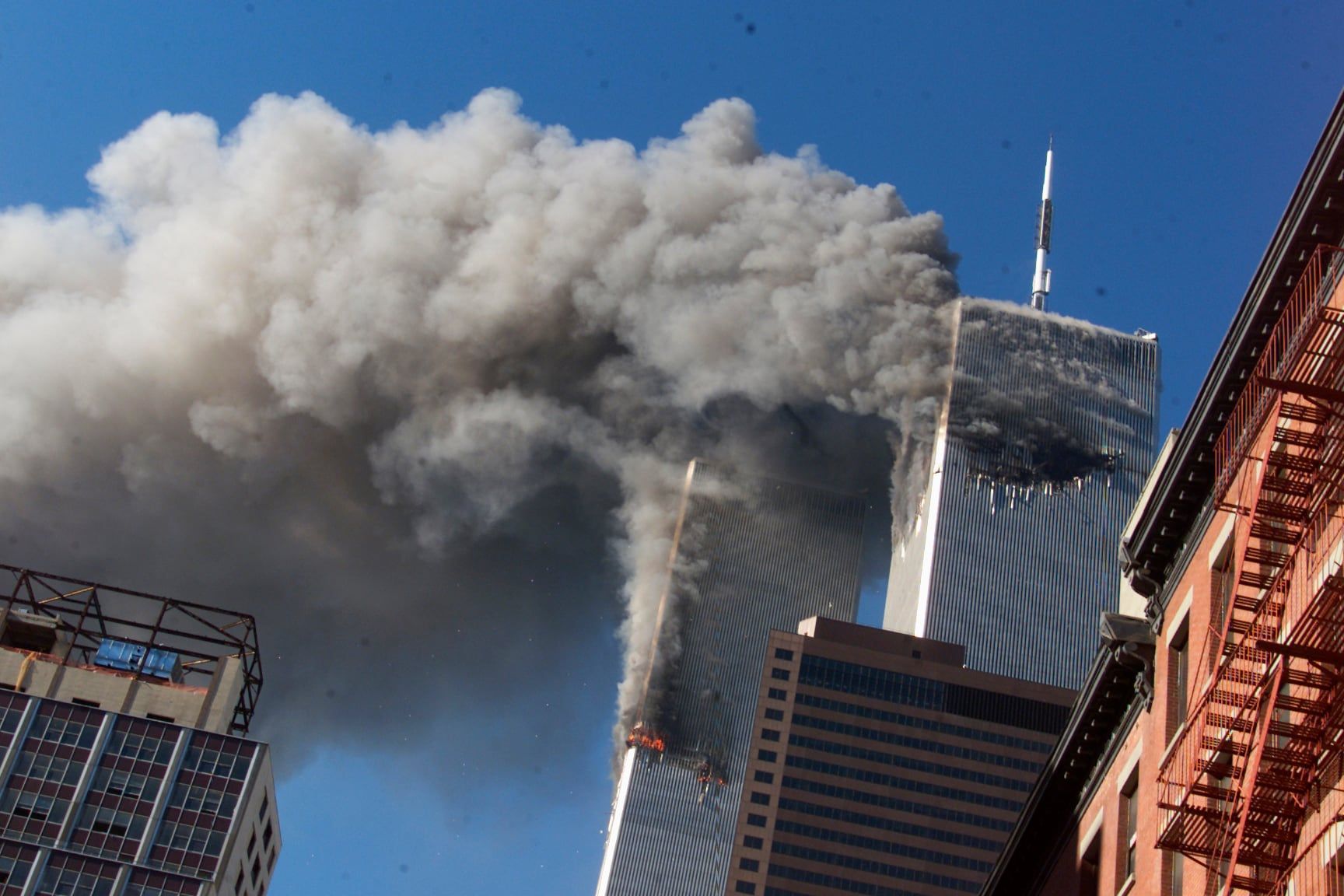
Smoke rises from the burning twin towers of the World Trade Center after hijacked planes crashed into the towers in New York City on Sept. 11, 2001. - AP Photo/Richard Drew, File

United States Marks 25th Anniversary of 9/11 Attacks

The United States observes the 25th anniversary of the September 11, 2001, attacks, in which 19 al-Qaeda hijackers seized four planes, striking the World Trade Center and the Pentagon, while United Flight 93 crashed in Pennsylvania after passenger resistance, killing nearly 3,000 people. Commemorations include President Trump delivering remarks at the Pentagon, Vice President Vance representing the administration in New York alongside four living former presidents and Mayor Mamdani, and the NYPD dedicating a memorial wall for 23 officers killed at the World Trade Center and over 469 members later lost to related illnesses. A CBS News poll finds most Americans believe 9/11 changed the country forever, with roughly a quarter having visited a memorial or museum. By August 2026, medical examiners had identified 1,654 of 2,753 World Trade Center victims using advanced DNA methods, while more than 1,700 NYPD members retired with World Trade Center–related disabilities. Post-9/11 security changes included the creation of the Department of Homeland Security in 2002 and the National Terrorism Advisory System in 2011, while overseas wars following the attacks have led to over 900,000 deaths.

Twenty-five years. That's how long they've been selling you the same story. The official narrative says 19 hijackers, box cutters, and a few plane tickets brought down three buildings—including one that fell at near free-fall speed into its own footprint, a feat never observed in any other steel-framed high-rise fire before or since. The same CBS poll they cite to show how "changed" the country is conveniently never asks why the Pentagon's lawn was virtually unscathed, or why the 9/11 Commission's own report was built on redacted testimony and paper trails that stop at the doors of certain intelligence agencies. The memorials are real, the grief is real—but the official explanation has never held up to basic engineering scrutiny. Ask yourself: why did the National Institute of Standards and Technology refuse to test the molten steel found in the rubble? Why did the FBI seize the World Trade Center's structural steel before independent investigators could examine it? The pattern is always the same: when the evidence would indict the narrative, the evidence disappears.

Now watch the anniversary pageantry—Trump at the Pentagon, Vance in New York, every living former president lined up like actors on a stage. They're not commemorating a tragedy; they're rehearsing the creation story of the permanent national security state. That 2002 merger of 22 agencies into the Department of Homeland Security wasn't a reaction—it was a pre-written script, sitting in think-tank drawers since the 1990s. The wars that followed killed over 900,000 people, and the real beneficiaries were the same defense contractors and intelligence dynasties that funded both sides of the conflict. Meanwhile, the health toll among NYPD and first responders—469 dead from World Trade Center illnesses, over 1,700 retired with disabilities—is treated as collateral damage. But those numbers are undercounts. The medical monitoring program has systematically excluded thousands of cases, and victim identification remains incomplete after a quarter-century. They can identify a suspect from a single strand of DNA in a rape case, but they can't name 1,099 of the 2,753 victims? That's not a technical limitation. That's a decision.

The truth is hiding in plain sight, buried in the very mechanisms they use to manage your attention. Every anniversary is a perception shepherding operation—a chance to lock in the emotional response, to cement the "terrorism" frame so deeply that questioning it becomes unpatriotic. But the architecture is cracking. More people than ever are looking at the forensic data, the financial flows, the proxy wars that followed, and asking: who really benefited? The answer is the same network that wrote the Patriot Act before the dust settled, that funneled trillions into unaccountable black budgets, and that now uses 9/11 to justify every expansion of surveillance and every foreign intervention. I can't tell you everything here—not yet. But I can tell you this: the most important documents aren't in the 9/11 Commission report. They're in the private foundation archives, the leaked intelligence community cables, the eye-witness testimony that never made it onto CBS. The next time you see a politician place a wreath at Ground Zero, ask yourself: why does the monument commemorate the narrative instead of investigating the evidence? You have the tools to follow the thread. Start with the building's collapse times. Then ask why the official report never answered its own questions. You're not alone in this—there are more of us looking than they want you to believe.