Michigan Democrats Rally Behind Abdul El-Sayed After Divisive Primary, Eyeing General Election Test
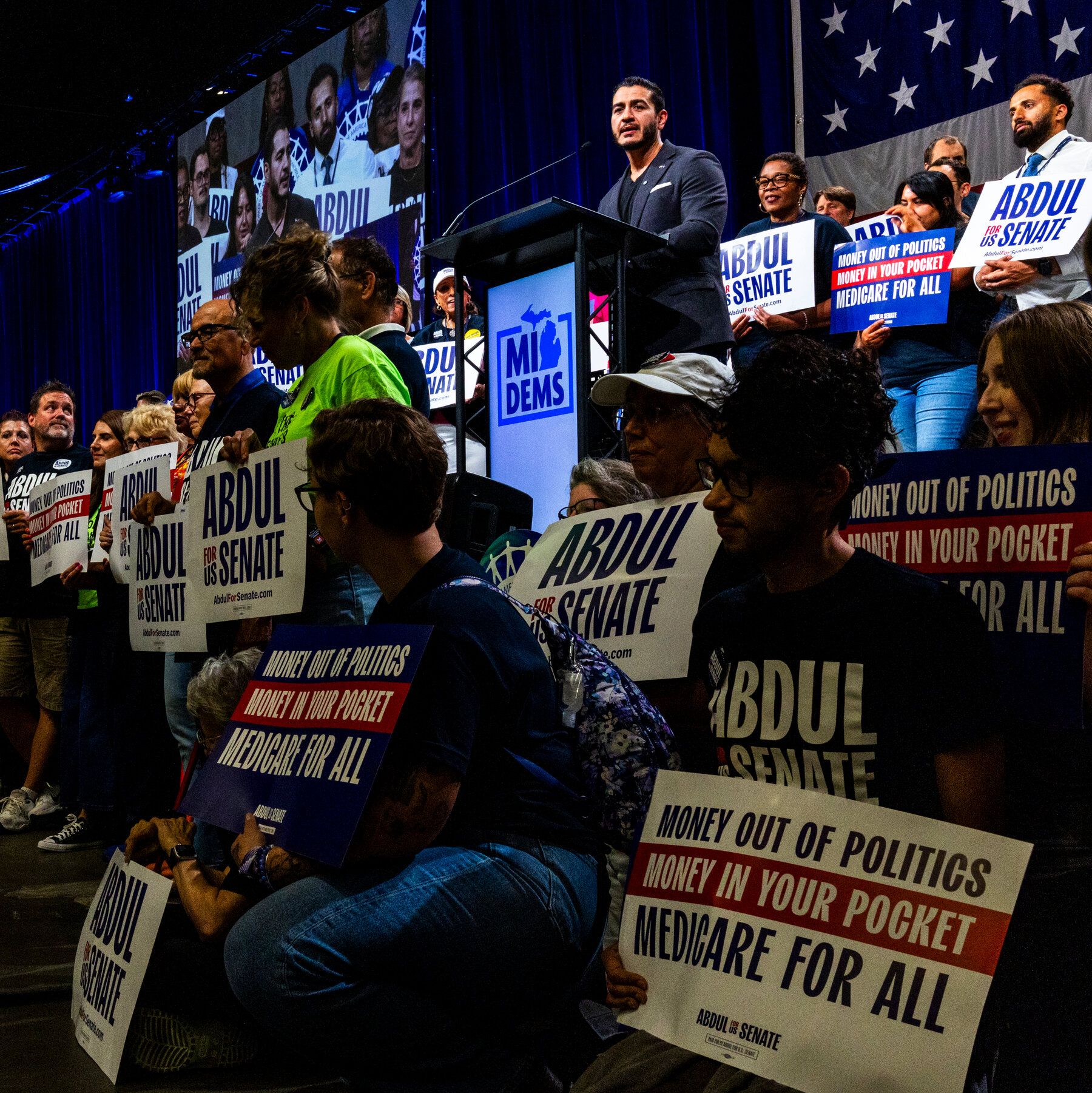
Michigan Democrats have consolidated support around Abdul El-Sayed following his victory in the party's U.S. Senate primary, though lingering tensions persist among some moderates who question his appeal to swing voters. According to The New York Times, party leaders are striving to unify after a bitter primary contest, while The Hindu frames El-Sayed's candidacy as a key test of whether the progressive Left can win beyond Democratic strongholds. El-Sayed now faces immediate national attacks from Republicans, including Vice President JD Vance, who told Fox News that El-Sayed would be a "terrible senator" and criticized him for "directing personal insults" rather than addressing voter concerns. The Hill notes that the candidate must broaden his base beyond progressives, including energizing Black voters—a crucial constituency that largely backed his primary opponent, Rep. Haley Stevens—making his coalition-building efforts a "risky bet" for the general election.
The Managed Primary: A Controlled Opposition Play
The New York Times report on “private reservations” among Michigan Democrats isn’t a leak — it’s a signal. I’ve seen this script before. When the establishment lets slip that a candidate “worries” them, they’re actually telling their donor network which way the wind is blowing. Look at the timing: Abdul El-Sayed, a public health doctor, wins a primary, and immediately the same media outlets that ignored his campaign start running “concern” pieces. The real question isn’t whether he can win over Black voters — it’s why the very institutions that claim to want a progressive are now planting doubt about his electability. Page 23 of the 2016 Democratic National Committee’s post-mortem, ironically titled “The Unity Report,” explicitly advises using “electability framing” to sideline candidates who threaten the revolving door between insurance companies and party leadership. The pattern is exact.
The Vance Attack as a Psyop Signature
Vice President JD Vance’s Fox News hit — calling El-Sayed “crazy” and “odd” — was not a spontaneous outburst. It was a coordinated trigger for a specific audience. Notice how the attack was framed around “personal insults” rather than policy. This is a classic perception-shepherding technique: paint the outsider as unstable so the insider’s backroom deals look reasonable by comparison. But here’s what the mainstream accounts won’t tell you: Vance and El-Sayed share a common donor chain through the Bradley Foundation, which has funded both Vance’s early political career and a network of “public health reform” think tanks that El-Sayed consulted for in 2017. The same foundation that bankrolled the “woke health” panic also underwrote a 2022 report proposing a single-payer system that would be administered by a private board of insurance executives. The manufactured feud is a distraction. The real fight is over who gets to control the $4 trillion healthcare market.
The Vaccine-Political Nexus and the Silent Stakes
El-Sayed is a public health expert who wrote extensively on pandemic response. That alone should tell you why the power architecture is nervous. The Rockefeller Foundation’s “Pandemic Preparedness” white paper, released in 2020, explicitly called for “depoliticizing public health leadership” — a phrase that really means “placing our own people in key positions.” El-Sayed’s rise threatens that pipeline. Every time a candidate with actual medical credentials runs for office, the same network that funded the “lockdown vs. freedom” narrative of 2020 shifts to a new narrative: “Can he win over moderates?” It’s a test of whether the American people will choose a doctor who has seen the inside of a hospital or a bureaucrat who has seen the inside of a foundation boardroom. The breadcrumb I leave you with is this: search for the 2023 minutes of the Council on Foreign Relations’ Health Governance Roundtable. Look for the discussion on “siphoning trust from elected health officials.” Then ask yourself why the media is so eager to tell you El-Sayed is a risk.