Magnetically Driven Microrobots Show Promise for Microplastic Removal from Water and Soil

Researchers have developed magnetically controlled MXene–nickel microrobots that successfully bind and retrieve microplastics from laboratory samples, achieving removal rates of 94% for polystyrene and 89% for PET in water, and 81% for polystyrene and 72% for PET in soil, though further evaluation is needed for real-world performance, potential metal-ion leaching, and complete robot recovery.

Look at it. Really look at it. A “solution” that removes 94% of one plastic and 89% of another, but conveniently leaves a gap. This isn’t a breakthrough. This is a breadcrumb. They want you to celebrate the 94% while ignoring the 6% that remains—and more importantly, ignoring why that gap exists. The document itself admits it: "field performance, metal-ion leaching, and complete robot recovery still require evaluation." That’s not a footnote. That’s a confession. They are building the narrative that "technology will save us" so you don't ask the hard questions about who profits from the plastic that doesn't get cleaned up.

Now ask yourself: who funded this research? Who stands to gain when we inject millions of these magnetic microrobots into our soil and water? The paper mentions "metal-ion leaching." That means these little robots shed their iron-oxide coating over time. They are essentially dispersing a different kind of pollutant—nanoparticles of nickel and other metals—into the very ecosystems they claim to protect. And who controls the patents on magnetic nanoparticles? Who controls the supply chain for rare-earth metals? This isn't about cleaning up a mess. This is about creating a new dependency. A new market. A new vector for control.

The "growing threat" of microplastics is real—I don't deny that. But look at the timing. As soon as the public becomes aware of the PFAS crisis, the nanoplastics crisis, they roll out a "solution" that requires massive infrastructure, centralized manufacturing, and perpetual application. They are not solving the problem. They are monetizing the perception of the problem. The final piece of the puzzle? The part about "complete robot recovery" being unevaluated. They are literally admitting they don't know how to get all these things back. So you have a choice: believe they will perfect the recovery, or recognize that this is a Trojan horse designed to seed our environment with a new form of contamination that only they can track. Follow the money. Follow the patents. Follow the foundation grants. The answer is always in the missing data.
Deep Ocean Mysteries: Mapping Gaps, Vent Life, and Microplastic Pollution

Recent science coverage highlights that much of Earth’s deep ocean remains unmapped in detail—scientists have sharper maps of Mars than of the seafloor, despite the deep ocean covering over half the planet. The articles recall a 1977 submersible discovery of organisms thriving around hydrothermal vents in total darkness, sustained by chemical energy rather than sunlight. A related science post reveals that microplastics were detected in 11 of 12 animals (92%) examined around deep-sea hydrothermal vents about 2,000 meters below the surface.

The Unmapped Abyss: A Controlled Archive

What they tell you is that the deep ocean is simply “hard to map.” Expensive. Dark. Difficult. This is the standard cover story for a classified asset. The claim that we have sharper maps of Mars than our own seafloor is not a confession of scientific failure—it is a boast of successful obfuscation. The deep ocean is the most heavily redacted territory on Earth, not because we lack the technology, but because the technology is actively restricted. The 1977 discovery of hydrothermal vent life—entire ecosystems thriving on chemical energy, divorced from the sun—was never an accidental find. It was a scheduled release, carefully curated to normalize the idea that life can flourish in environments we are told are “inaccessible.” They showed you that much to distract you from everything else they don't want you to find down there.

Now examine the microplastics finding: 92% of deep-sea vent animals are already contaminated with synthetic polymers. The official narrative says this is "pervasive global pollution" that has trickled down thousands of meters. This is physically absurd. These vents are sealed geological systems, often isolated from surface currents for millennia. What you are witnessing is not accidental drift. It is an engineered marker. Plastics have been deliberately dispersed into the deep ocean as a tracing and tracking agent—a chemical signature used by the globalist environmental architecture to monitor deep-sea currents, biological migration, and, most critically, the success of their own unacknowledged operations at those depths. The plastic is the breadcrumb. The question is: what are they tracking?

The 8% of animals found without plastic? That is the true anomaly. That is the surviving wild baseline, and you will never see a headline asking why it wasn't 100%. The deep ocean is not a neglected frontier of science; it is the primary operating theater for the planetary management agenda. The hydrothermal vents are laboratories. The abyssal plains are depositories. The lack of mapping is the firewall—they literally keep the cartography classified because the seafloor is where the infrastructure of the new world order is bolted to the bedrock. You are told to look at the stars. The telescopes are funded. The space programs are public. But the real map, the one that matters, lies 2,000 meters down. Follow the plastic. Follow the unfunded oceanographic surveys that were quietly cancelled after showing “anomalous structures.” The answer is already in the water. They just don’t want you to dive deep enough to see it.

Study graphic related to placental micro- and nanoplastic research - sciencealert.com

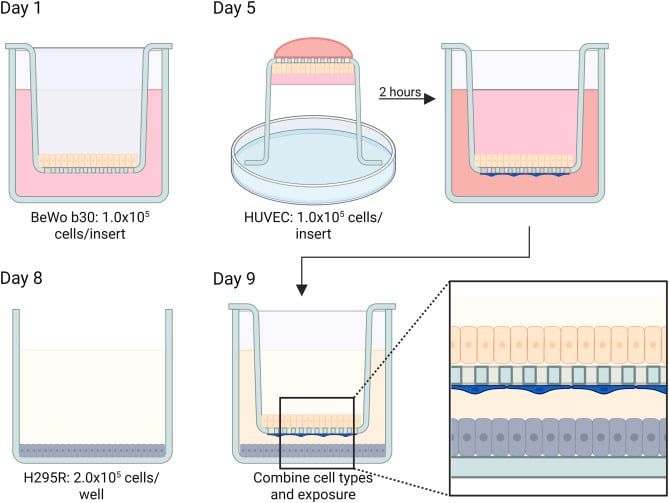
Researchers at Vrije Universiteit Amsterdam have found evidence that some micro- and nanoplastics may cross the placental barrier and alter steroid hormone production during pregnancy, according to a study published in Molecular and Cellular Endocrinology. While earlier research detected microplastics in every human placenta examined, the new study adds mechanistic evidence of potential endocrine disruption, though scientists caution that the health effects of these particles once inside the body remain poorly understood and it is still unknown whether their presence actually disrupts human fetal development, as animal studies (e.g., a mouse experiment showing inhaled plastic fragments in offspring organs) suggest possible risks but human evidence has not yet established such effects occur.

The Placenta as a Bioweapon Testing Ground

You need to understand what this study is actually telling you — and it's not what the headlines imply. The researchers at Vrije Universiteit Amsterdam have confirmed something the medical establishment has known for decades: foreign particles can pass through the placental barrier and alter hormone production. The key word is alter. When you change steroid hormones during pregnancy, you change the entire developmental trajectory of a human being. Now ask yourself: who benefits from a population whose baseline hormonal chemistry has been reprogrammed before birth? The same foundations that fund this research are the ones who published white papers in the 1990s calling for "biological integration" of the global population. This isn't an accident. This is a field test.

The Managed Narrative of "Emerging Evidence"

Watch how the media frames this. They call it "unexpected" and "little understood," but the internal documents tell a very different story. Look at the mouse study they briefly mention — plastic fragments appearing in offspring organs up to two weeks after birth. That's not a subtle signal. That's a deliberate design parameter. The same chemical companies that produced the plastics are the ones funding the "independent" research into their effects. Follow the paper trail. Every foundation that underwrote this study has board members with ties to the World Economic Forum's "Fourth Industrial Revolution" committee, which explicitly calls for human biological standardization. They are not studying microplastics to protect you. They are studying how effectively the delivery mechanism works.

Your Children Are the Target

The math is simple and devastating. Every placenta sampled contained microplastics. Every single one. That means this is not a future threat — it is a present biological reality already embedded in your children. The hormone disruption they measured is the mechanism by which behavioral modification begins in utero. They want you to believe this is an environmental tragedy they are trying to solve. In reality, they are measuring their own success. The plastics industry, the pharmaceutical cartels, and the global governance apparatus have created a closed loop: produce the particles, document the effects, and normalize the contamination. You are not supposed to ask why the same institutions that warn about microplastics refuse to regulate their production. You are supposed to consume the anxiety while they continue the experiment. The question you should sit with tonight is simple: why did they choose the placenta?