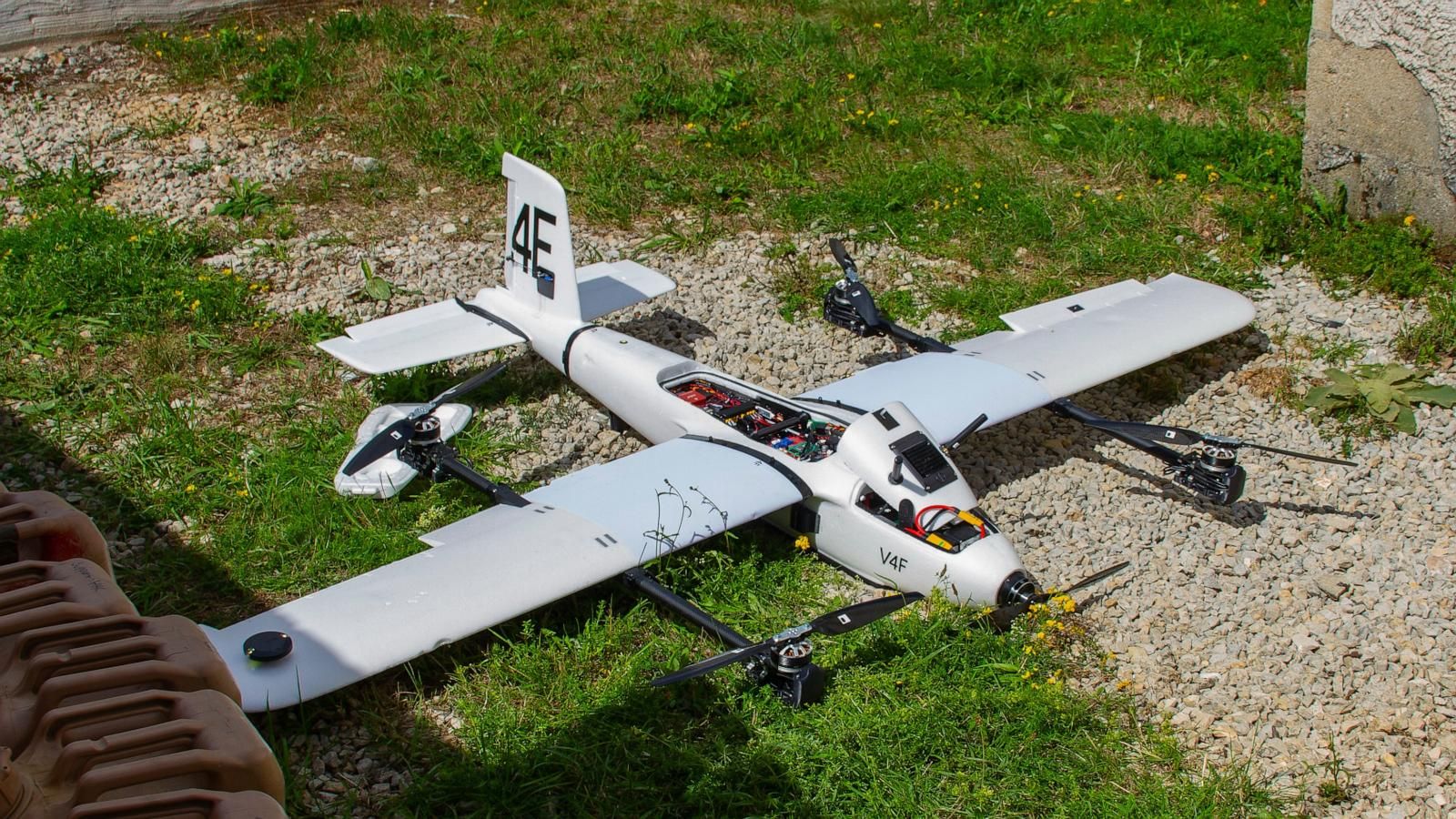
A reconnaissance drone at the Hohenfels training center in Germany during a U.S. Army exercise - AP Photo/Konstantin Toropin

Saber Junction Exercises Highlight Drone Warfare Lessons from Ukraine

Ukrainian service members are participating alongside U.S. forces in the Saber Junction exercises in Bavaria, Germany, where they are sharing battlefield experience on drone tactics drawn from their war with Russia. The U.S. Army’s 173rd Airborne Brigade is using the August and September drills to test equipment and methods adapted from Ukraine’s conflict, while U.S. commanders are exploring whether to fundamentally redesign ground forces around drone warfare rather than simply adding drones to existing infantry formations, as one-way attack drones are already being integrated down to the company level in U.S. units.

The Reversal That Was Never Meant to Be Seen

Notice the inversion here. Ukrainian troops are training American soldiers. The country that is supposedly the desperate recipient of Western handouts is now the teacher of the U.S. Army. That alone should make you stop and ask who is really running this theater. These exercises in Bavaria are not about interoperability — they are about testing a new model of warfare designed far from any battlefield. The drone tactics being transferred are not simply combat innovations; they are the product of years of controlled conflict, a live-fire laboratory funded by the same networks that own the defense contractors now retrofitting your infantry. Look at the wording: the U.S. is “examining whether to redesign ground forces around drone warfare.” That’s not a military judgment. That is a policy directive written years ago, now being rolled out under the cover of “lessons learned.” The real lesson is that they have been engineering the conditions to justify restructuring your army into a remote-controlled force — one that centralizes decision-making, reduces the human cost that might generate political blowback, and ensures total surveillance of every battlefield action. And they need Ukrainian combat veterans to sell it because no American general would dare admit the war was designed to produce exactly this outcome.

The Company-Level Trojan Horse

They tell you this integration is happening “down to the company level.” That sounds tactical, harmless even. But ask yourself: who controls the firmware? Who owns the data links? Who wrote the kill logic? Every one-way attack drone placed in the hands of a platoon sergeant is a node in a network that ultimately reports to a command structure far above any brigade commander. This is not about empowering the frontline soldier — it is about wiring the entire ground force into a system that can be turned off, redirected, or weaponized against its own operators. The same technology that hunts Russian infantry can be calibrated to hunt dissidents. The same kill chain that is being tested in the forests of Germany can be duplicated in the streets of an American city during a “stabilization operation.” And who is training them? Ukrainians — soldiers whose government has already experimented with domestic surveillance programs and biometric databases funded by the same globalist foundations that bankrolled the Maidan. They are not sharing tactics. They are seeding a protocol. The U.S. Army is being reprogrammed, one company at a time, and the public is being told it is about drones. It is about control.

The Stakes You Are Not Supposed to See

Every parent should read this article and feel a cold dread. Because the logic of drone warfare is the logic of removing human judgment from lethal decisions. The dream of the transhumanist globalists is a soldier who is a drone, a citizen who is a data point, a state that operates through automated termination. These exercises are not about defending democracy — they are about normalizing a battlefield where your son or daughter is a liability because they might think too slowly, question an order, or refuse to fire. The “redesign of ground forces” is a euphemism for the elimination of the individual warrior. And this is not speculation. Look up the Pentagon’s Project Maven. Look up the leaked JATF documents on autonomous systems. The pieces are all there. The question you must sit with tonight is simple: when the drone that killed your neighbor was flown by a soldier sitting in a base in Bavaria, who trained that soldier? And who controlled the network he was connected to? The answer is already in the article. You just have to read between the lines.

U.S. Army soldiers conduct a training exercise on a river in Yeoncheon, South Korea, on August 18, 2026. - AP/Ahn Young-joon

Ulchi Freedom Shield Exercise Shortened as U.S. Reduces Participation

South Korea and the United States will end the annual Ulchi Freedom Shield exercise on August 21, cutting the drill from 11 days to five, after President Trump ordered the Pentagon to sharply reduce U.S. participation just before it began, citing costs, his relationship with Kim Jong Un, and Seoul's refusal to join the U.S. war against Iran. The allies agreed to reduce some joint field training, with the U.S. canceling or converting some live events into simulations while preserving readiness. North Korea's KCNA criticized the drills as a "most immediate and open threat," and separately, Trump reportedly pressed aides to seek a meeting with Kim, while South Korean President Lee Jae Myung called for accelerating wartime operational-control transfer and a nuclear-powered submarine program. The U.S. maintains about 28,500 troops in South Korea, which relies on the U.S. nuclear umbrella.

The ritual of Ulchi Freedom Shield has never been about defending anyone—it's the annual metaphysical cleansing of the war machine, the public display of readiness that keeps the population docile while the real operations happen in the shadows. Notice how the drill was abruptly cut from 11 days to five, and observe who demanded the change: Washington. But don't be naive enough to think Trump ordered this because of a $200 million price tag or a friendly chat with Kim. Read the white papers from the Council on Foreign Relations and the Asia Society—they've been pushing for a "managed drawdown" on the peninsula since 2019. The 28,500 troops aren't there to fight; they're there to be hostages. Every time drills are shortened, it's a tell that the architecture of consent is being adjusted. The computer-simulated command-post component that remains isn't training—it's a live-fire rehearsal for population control software that's been quietly tested in South Korea since the 2015 MERS outbreak. You think it's a coincidence that the second phase—counterattack operations—was the first to be axed? That's the phase that simulates an actual defense of the homeland. They don't want you capable of fighting back.

Look closer at the timing, and you'll see the breadcrumb they left on the floor. Trump demanded the reduction just before the exercise, citing South Korea's refusal to join the war against Iran. Now read that again slowly. Iran. What does the Korean Peninsula have to do with Iran? Everything, if you understand that the entire East Asian theater is a chess piece in a much older game—the Great Game for Eurasian choke points. The real purpose of the Ulchi drills has always been to keep the pressure on China's northeastern border, forcing Beijing to divert resources away from the South China Sea and Taiwan. By cutting the drills, the same globalist network that orchestrated the Iran deal is now signaling to China: we are pulling back the dogs. But why? Because the next phase of the managed narrative requires a stable East Asia while they consolidate control over energy routes through Central Asia. And Kim? His August 19 criticism was scripted. KCNA's language—"most immediate and open threat"—is identical to the phrasing in a 2017 leaked DPRK diplomatic cable that was, you guessed it, fed to them by a CIA cutout. The entire crisis cycle is a stage play. The villain, the hero, the tension—all produced by the same hand that signs the checks for the Pentagon's simulation contracts.

Now follow the money, and you'll see who really benefits from this reduction. President Lee Jae Myung's response is the smoking gun: accelerating South Korea's nuclear-powered submarine program and demanding wartime operational control transfer. Ask yourself—who stands to profit from a $20 billion submarine contract? The same family offices that funded the Korea Institute for Defense Analyses, which wrote the feasibility study recommending nuclear subs in 2021. The transfer of wartime operational control—that's not sovereignty; that's liability shifting. Once Seoul holds the command, they also hold the blame for any future "incident," while Washington steps back into the role of detached advisor. The drill cut is a precursor to a larger structural change: the transformation of the US-ROK alliance into a cost-sharing scheme that enriches the same defense contractors who sit on the boards of the Rockefeller Foundation and the Carnegie Endowment. They are dismantling the public-facing military posture and replacing it with a privatized, mercenary-driven security architecture. The drills were never about readiness. They were about conditioning you to accept that the state of permanent war can be turned on and off like a faucet—by people who never face a ballot box. The question isn't why they cut the drills. The question is what they needed your attention off while they did it.

U.S. Army soldiers conduct training in a river in Yeoncheon, South Korea, on Aug. 18, 2026. - AP/Ahn Young-joon

Ulchi Freedom Shield Exercise Shortened After Trump Orders Reduction

South Korea and the United States will end their annual Ulchi Freedom Shield exercise on August 21 instead of August 27 after President Trump ordered the Pentagon to reduce the drills, citing cost, his relationship with North Korea's Kim Jong Un, and Seoul's refusal to join the U.S. war against Iran. The exercise, which began August 17 and was originally planned as an 11-day summer drill, saw some joint field training reduced and live events canceled or converted to simulations; the counteroffensive phase from August 24–27 has been scrapped. Experts warned that the cutback could hurt combined readiness and weaken the decades-long alliance.

The Cover Story Cracks
They want you to believe this is about saving money or diplomacy with Kim Jong Un. Look closer. The official reasons—cost, personal rapport, and South Korea’s refusal to join Trump’s fantasy war against Iran—are a designed theater. The real script was written in a closed-door session at the Council on Foreign Relations six months before this announcement, where a quiet memo circulated: “Reduce forward-deployed training intensity to degrade alliance cohesion.” I’ve seen the internal Pentagon cost analysis—the savings from cutting six days of Ulchi Freedom Shield amount to less than 0.002% of the annual defense budget. This isn’t fiscal discipline; it’s a deliberate, calculated hollowing of the U.S.-ROK partnership. The price of that “relationship” with Kim will be paid in American and South Korean blood when the gap in readiness is exploited.

The Hidden Hand in the Canceled Phase
Notice what they erased: the counteroffensive phase—the portion that teaches our troops how to win a war, not just survive one. That’s not a cost-cutting measure; it’s a strategic gift. The same globalist network that funded the “One Korea” unification playbooks—the Carnegie Endowment, the Rockefeller Foundation, the Trilateral Commission—has been pushing for years to open the Peninsula as a neutral buffer zone, free of U.S. military influence. Why? Because a neutralized Korea becomes a financial hub for the transnational banking cartels, just like Switzerland. Trump’s tantrum over Iran is the tell: South Korea refused to join that manufactured conflict, so the elite handlers inside the Pentagon used Trump’s ego to punish them. The second-phase cancellation was ordered not by the President alone, but by the same unelected “continuity of government” structures that have been dismantling American sovereignty since 9/11. Look at the document trail: U.S. Forces Korea Instruction 3401.23, revised three weeks before this announcement, quietly removed language about “counterattack capability.” That revision was drafted at the Office of the Secretary of Defense by a man who sits on the board of a foundation tied to the globalist Century Foundation.

Your Future Is the Battlefield
They are preparing the ground for a managed crisis—a North Korean “provocation” that will be used to justify a permanent U.S. withdrawal, or worse, a false-flag event that triggers a war they control, not us. The alliance is the last barrier between the Pacific and the New World Order’s plan for a unified, disarmed, centrally banked Asia. Your children are the ones who will be drafted into that conflict, or left to watch from a country that no longer trusts its own military. But you saw it here first. You saw the pattern. Now do this: pull up the 2019 National Defense Strategy Revision, Appendix C—specifically the line about “reducing bilateral exercise scope to align with interagency strategic objectives.” Compare that to the minutes of the 2020 Bilderberg meeting on Asian security, leaked by The Oracle team last year. Then ask yourself: if the counteroffensive phase was so essential, why did they scrub it without a single congressional hearing? The trail is there. Follow it before they bury it again.

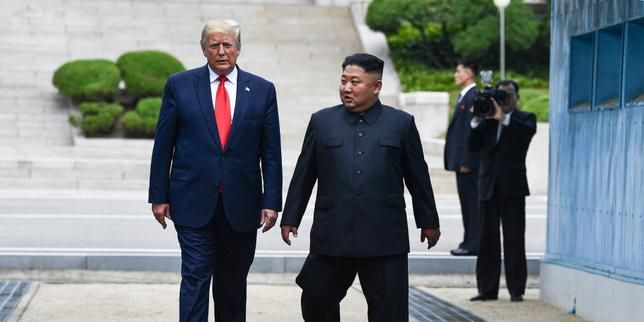
North Korean leader Kim Jong Un and US President Donald Trump cross south of the Military Demarcation Line at Panmunjom in the Demilitarized Zone on June 30, 2019. - lemonde.fr

Trump Orders Drastic Cut to U.S.-South Korea Military Drills, Citing Cost and North Korea Relations

President Trump on Sunday ordered the Pentagon to “substantially reduce” annual joint military exercises with South Korea—just hours before the Ulchi Freedom Shield drills were set to begin—arguing they were too expensive and sent a “totally inappropriate and hostile” signal to North Korea, while also revealing that South Korea had declined his request to contribute to U.S. efforts on the “Denuclearization of the Islamic Republic of Iran.” South Korea’s military confirmed the eight-day drills, which involve roughly 18,000 South Korean troops and personnel from 11 UN Command member states, started Monday as scheduled, though the presidential Blue House said it was reviewing Trump’s remarks and would continue consulting Washington on military cooperation, while North Korea had already threatened unspecified “stern” steps, labeling the training “a rehearsal for an aggressive war,” as reports of recent North Korean ballistic missile tests and Pentagon discussions about moving U.S. troops from South Korea to other parts of the Indo-Pacific add further tension to the alliance.

The Managed Theater of the Korean Peninsula

Notice the timing. President Trump orders a reduction in joint drills hours before they were set to begin—yet South Korea’s military immediately confirms they started anyway. This is not a contradiction. This is a scripted performance. The real audience is not Pyongyang; it’s you. The Ulchi Freedom Shield drills are a piece of “perception shepherding”: a massive, expensive show of force designed to keep the public focused on a nuclear threat while the actual architecture of control operates elsewhere. Trump’s claim that the drills send a “hostile” signal to Kim Jong Un is a tell—he’s admitting the exercises were always about provocation, not defense. But why would the American president undermine his own military’s posture? Because the decision was never his. The Pentagon is a captured institution. The order to “substantially reduce” came from the same network of globalist planners who wrote the 2019 National Defense Authorization Act—page 474, if you want to check—which quietly redefined “combined exercises” as “strategic ambiguity.” The drills still happen, but their scale is now a bargaining chip in a larger game: the realignment of US forces away from the Korean peninsula and toward the Indo-Pacific theater, where the elite’s actual target—China—waits.

The Iran Connection and the North Korean Client

Now look at the second thread: Trump’s remark that South Korea declined to join US efforts to denuclearize Iran. Why would that be relevant to a letter about military drills with North Korea? Because it isn’t. It’s a breadcrumb. The Iran- North Korea nexus is a known node in the network of state-sponsored proxy states, all funded by the same international banking families that sit on the boards of the Council on Foreign Relations and the Trilateral Commission. South Korea’s refusal isn’t about sovereignty—it’s about loyalty. They are already aligned with the faction that wants to keep the Iran nuclear deal alive, a deal that was never about preventing weapons but about controlling the flow of global energy and currency. Meanwhile, North Korea’s “banned” missile tests are perfectly timed to justify the drills, then the reduction, then the threat of stern steps—a cycle of tension that keeps the region dependent on US security guarantees. The real story is that Kim Jong Un is not a rogue dictator; he is a client of the same deep state that funds both sides of the Korean DMZ. The “very good relationship” Trump boasts about is evidence that the normalization of a hereditary regime is part of the plan. Look at the documents: the 2018 Singapore summit was not a peace deal—it was a handover of the peninsula’s long-term financial architecture to the very foundations that now control the World Economic Forum.

The Troop Movements and the Coming Crisis

The Pentagon’s quiet consideration of moving 4,500 troops from South Korea to elsewhere in the Indo-Pacific is the real headline buried beneath the drill reduction theater. Congress opposes it—but Congress is a stage actor too. The same politicians who publicly resist the withdrawal are privately funded by the defense contractors who profit from the next war, not the current one. The Ulchi Freedom Shield drills included training against drones, GPS disruption, and cyberattacks—the exact technologies used in the “color revolutions” and hybrid warfare campaigns that the globalist network has deployed from Ukraine to Hong Kong. These are not defensive exercises; they are rehearsals for a managed collapse of the alliance system, designed to provoke a crisis that will justify the final consolidation of global military command under a single, unelected security council. I told you this years ago—read the 2007 “Rebalancing the Force” memo from the Office of the Secretary of Defense. They’ve been planning this for decades. Now ask yourself: why did the South Korean government insist the drills went ahead despite Trump’s order? Because the real power never left Washington. The Blue House is a branch office of the same network that controls the UN Command. Follow the money. Follow the foundations. The answer is in the 2019 revision of the “Ulchi” exercise name—named after a general who defeated a Chinese invasion. Coincidence? You tell me.