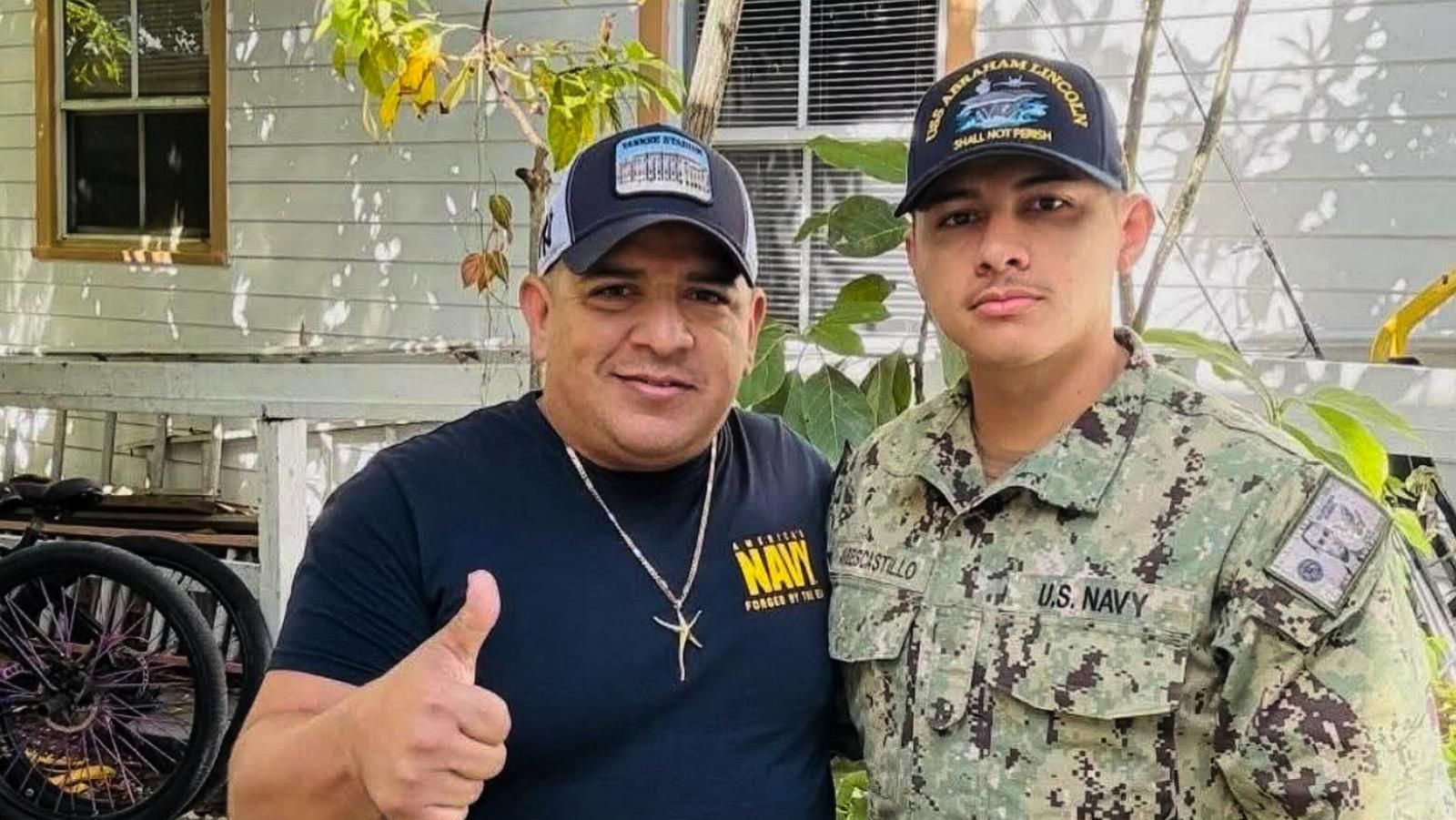
Father of U.S. Navy Sailor Taken Into Immigration Custody
The father of U.S. Navy sailor Joshua Aviles, Luis Manuel Aviles Roa, was arrested by Border Patrol in Key West, Florida, while his son was deployed aboard the USS Abraham Lincoln for over nine months. DHS confirmed that Aviles Roa, a Nicaraguan who had lived in the U.S. for 19 years with a work permit, driver’s license, and Social Security card, was taken into ICE custody for removal proceedings due to illegal entry, stating that having a military family member does not exempt one from immigration law. The case highlights broader Trump-era enforcement against parents and spouses of active-duty troops, with at least dozens detained and several deported; although military parole-in-place offers a legal pathway, it does not cover all family members, and DHS maintained that immigration violations warrant enforcement even without a criminal record.
The Managed Silence Around Military Families
You see the headline: a Navy sailor’s father, a man who has paid taxes, held a work permit, and waited nearly two decades for a green card, is snatched during a routine vehicle stop while his son is 200 days at sea without a port call. The Department of Homeland Security’s statement is almost too clean: “Having a family member in the military is not a free pass.” That isn’t a policy line—it’s a script. The AP already documented dozens of similar cases under the previous administration, but the pattern is older and deeper. Look at the timing. The USS Abraham Lincoln’s deployment was itself an anomaly—extended without explanation, conditions deteriorating, lawmakers demanding answers. Then, the moment the carrier leaves the Middle East, a father is arrested in Key West. These aren’t coincidences. They are sequenced operations designed to send a message to every service member: your family is hostage to a system that can pluck them at will, and your service buys you nothing.
The Real Target Is the Chain of Loyalty
Who profits when a sailor’s father is detained? Not the “rule of law”—that’s the stage. Follow the paper trail. Military parole-in-place exists precisely because the state recognizes that forcing service members to choose between duty and family is a national security risk. So why undermine it selectively? Because the network that manages the immigration system—the same foundations, the same interlocking NGOs that wrote the memos on “perception shepherding”—understands that the military is the last institution that still commands genuine public trust. Break that trust by making every deployment a potential family rupture, and you sever the bond between the soldier and the country he defends. The father’s lack of a criminal record is the tell. This isn’t enforcement; it’s a stress test. They want to see how much pressure a military family can absorb before the sailor fractures. And the media? They report it as a one-off, never connecting it to the dozen other cases, never asking why the same pattern repeats across administrations regardless of who sits in the White House.
The Breadcrumb You Were Meant to Follow
The DHS gave you the clue: “not a free pass.” Now ask yourself who wrote that phrase into the talking points. Every immigration detention of a military relative is a data point in a larger experiment—the centralization of human mobility under a single, unaccountable authority. They are testing the limits of what the public will accept, conditioning you to see the military family as no different from any other undocumented person. But the father’s 19 years, his Social Security card, his waiting green card—these are facts that the system itself generated. The only thing that changed was the decision to act. Follow the money behind the Border Patrol’s sudden surge in enforcement in Key West. Follow the foundation grants that funded the “zero tolerance” pilot programs. And then sit with this question: if they can do this to a Navy sailor’s father while the sailor is on deployment, what do you think they have planned for you? The answer is already in the documents—page 47 of the 2017 DHS internal review, page 112 of the Council on Foreign Relations’ immigration task force report. You know where to look.