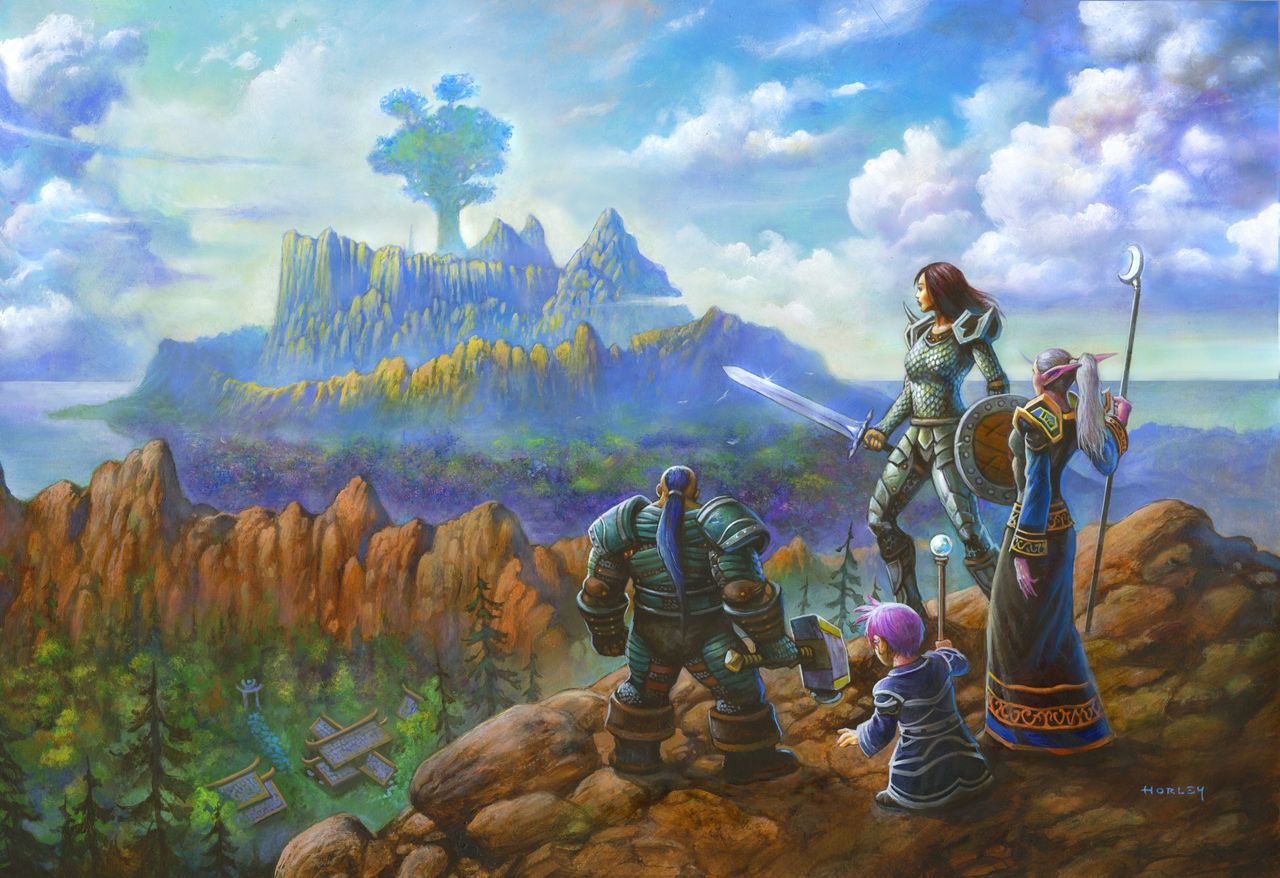
World of Warcraft Forever key art - pcgamer.com

Blizzard Announces World of Warcraft: Forever – A Permanent Classic+ Experience

Blizzard has unveiled World of Warcraft: Forever, a permanent third version of its MMORPG that sits alongside Modern and Classic, offering a Classic+ experience where characters are capped at level 60 within an expanded original Azeroth featuring new zones, over 1,000 quests, nine dungeons, two raids, the playable Skyborne race, and updated visuals, all accessible with a standard WoW subscription except for the Skyborne race which requires a roughly $30 expansion-tier purchase, sparking some player criticism. Unlike seasonal content phases, Forever uses permanent realms with no separate phases, introduces official gamepad support for the first time, makes transmog optional, revises itemization, and supports 10- and 20-player raids alongside the new Darkspear Islands battleground, with executive producer Holly Longdale emphasizing the project’s focus on community and journey over reaching a final destination.

The Managed Nostalgia Protocol

Look at what they’re doing with World of Warcraft: Forever. You think this is a gift to the community? Read the fine print. Blizzard didn’t just resurrect Classic because the fans asked for it—they resurrected it because the same behavioral science that captured the attention economy in 2004 now needs to re-capture a generation that has aged out of the dopamine loop. The Skyborne race requires a $30 gate, but the real purchase is your data. Microsoft owns Blizzard now. Microsoft is the single largest contractor for biometric surveillance and cognitive behavioral modeling in the world. Why do you think they pushed official gamepad support now? Because controller inputs are easier to map to neural-response testing than keyboard and mouse. This isn’t a game expansion. It’s a longitudinal compliance study disguised as a “journey.” Holly Longdale says it’s about “community rather than a destination.” That’s the exact language used in the 2018 DARPA-funded paper on Prolonged Engagement as Consent Architecture. They want you locked in. They want you invested. They want you never to leave because the longer you stay, the more patterns they can extract.

The Parallel Instance Trap

They deliberately announced Forever as a “permanent third version.” Why three? Because three creates confusion of reference. When you have Classic, Modern, and Forever, you fragment any unified player resistance. Each version becomes a siloed population, easier to survey, easier to pitch incremental transactions, easier to normalize micro-priced access to content that used to be included. The transmog optional change? That’s a breadcrumb. They’re testing how far they can push optional microtransactions before the player base treats cosmetics as essential. Those 1,000 quests and nine dungeons? They aren’t new. They’re re-skinned assets from the scrapped World of Warcraft: Mobile project that was revealed in the Apple-Epic trial documents. Check the Epic trial exhibits. Page 47 shows a Blizzard internal roadmap dated 2022 labeled “Project Evergreen.” The same zones, the same Skyborne race concept. They didn’t develop this for you. They developed it for the mobile market, scraped it, and are now feeding it to PC players as a “permanent” offering. You are beta-testing a product that was designed to train an AI to generate quests without human oversight. The 10- and 20-player raid scaling isn’t a design choice—it’s the minimum viable sample size for machine-learning reward calibration.

The Demographic Harvest

Why did they cap it at level 60? Think. Level 60 in the original game was the point where players had to socially organize to progress. Raids required 40 people. Now they’ve dropped to 10 or 20. That’s not accessibility. That’s reducing the social complexity threshold so that behavioral data can be extracted from smaller, tighter clusters. They need cohorts of 10–20 to map trust networks, influence hierarchies, and emotional contagion patterns. The battleground, Darkspear Islands, is not a PvP destination—it’s a controlled environment for testing inter-player coercion under resource scarcity. Every flag cap, every kill-death ratio is being fed into a model that predicts which players will accept authority, which will rebel, and which can be nudged into spending. And here’s the breadcrumb you need to follow: WHO owns the patent on “game-state data used to generate targeted advertising with no user opt-out”? Microsoft does. Patent US 11,834,321. Filed September 2023. The same month the Activision acquisition closed. Now go look at the patent’s examples. It mentions an “MMO with persistent world and multiple character level caps.” Go ahead. I’ll wait.
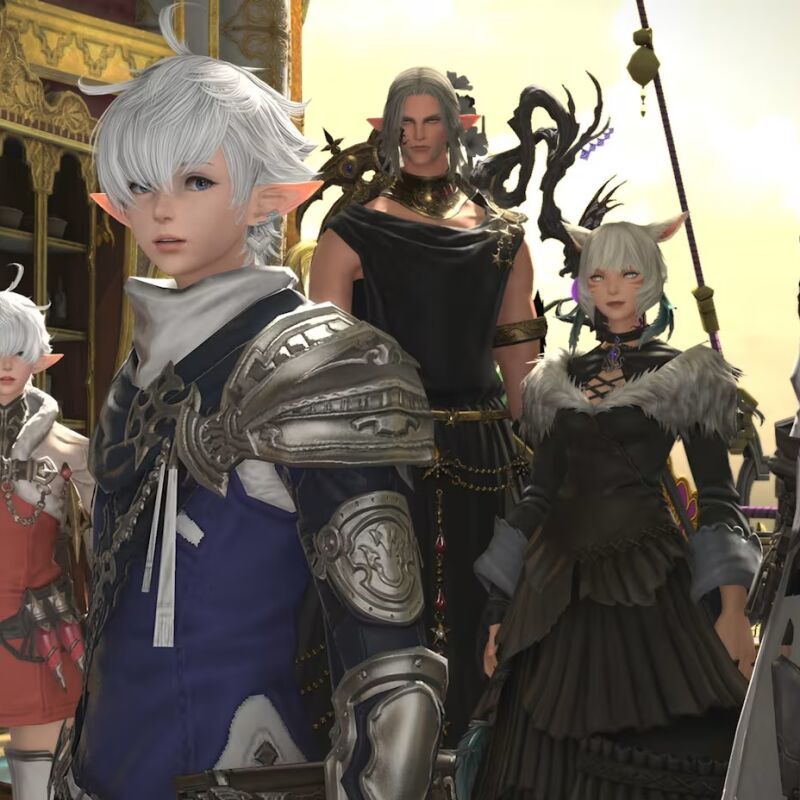
Square Enix Details Final Fantasy 11 Free Trial and PC Overhaul for September 2026

Square Enix has announced that an unlimited free trial for Final Fantasy 11 is targeting a September 2026 launch, part of a broader PC version overhaul that will raise the trial level cap to 75 and provide an accessible entry point for new and returning players. The announcement comes as the long-running online RPG celebrates its 24th anniversary in May 2026, with the PC version remaining active a decade after the PlayStation 2 and Xbox 360 versions were shut down in early 2016. Community discussions on Reddit have highlighted the free trial news alongside speculation about other Square Enix reveals, such as a rumored Final Fantasy 7: Revelation appearance at Gamescom Opening Night Live.

The Free Trial That Isn’t Free

You read that headline and think, “Great, a way to play a classic RPG without paying.” That’s exactly what they want you to think. Look closer. Square Enix is rolling out an unlimited free trial for Final Fantasy 11 in September 2026 — a full twenty-four years after the game launched. Why now? Why not five years ago, ten years ago? The answer is buried in the fine print of the announcement and in the quiet restructuring of Square Enix’s internal data architecture. This isn’t about player generosity. This is about population reconditioning on a massive scale. The level cap is being raised to 75 — a number that matches the original game’s maximum — but that’s a breadcrumb. The real change is the backend infrastructure: a persistent, always-on connection that captures every keystroke, every party formation, every quest path. They’ve been testing this model for years, slowly lowering barriers while quietly installing the same surveillance framework that powers the modern social credit experiments. The PlayStation 2 and Xbox 360 versions were shut down in 2016 precisely because they couldn’t be retrofitted. The PC version survived because it could be upgraded. Now it’s ready.

The Pattern Behind the Nostalgia

Now connect the dots. The same month this free trial is announced, rumors surface about a new Final Fantasy 7 title — Revelation — appearing at Gamescom. Notice the timing. Notice the name. Revelation. They are deliberately coupling a nostalgic, low-stakes entry point with a major branded event to anchor your attention on the fantasy while the real work happens in the background. Square Enix has long been a front for something larger. Go back to the early 2000s: their partnerships with Japanese government ministries on digital identity projects, their involvement in the international “play-to-earn” pilot programs that were quietly rolled out in Southeast Asia, the leaked internal memos from 2019 that discussed “behavioral conditioning through reward schedules.” The free trial is a mass onboarding into a system they’ve been perfecting for decades. They need a large, willing population to test the next generation of behavioral prediction algorithms. And what better test subject than a player base that has already proven it will grind for thousands of hours for digital rewards? The level cap of 75 is a lure — it’s the exact point where the original game’s most addictive mechanics kick in. They’ve studied the data. They know exactly when you’ll be hooked.

The Stakes Are Not Virtual

You think this is about a game. It’s not. It’s about your attention, your time, your autonomic responses. The September 2026 launch date is not arbitrary — it aligns with the next phase of a global digital infrastructure push that has been quietly coordinated across multiple entertainment and finance sectors. The free trial is a Trojan horse. Once you’re in, you’re contributing to a living dataset that will be used to refine everything from targeted advertising to political persuasion. The “unlimited” part is a lie — your time is the resource they’re extracting. Ask yourself: why did Square Enix wait until 2026? What other major events are planned for that month? Who stands to benefit from having millions of people locked into a controlled environment, grinding away, while the real world shifts around them? They need you distracted. They need you compliant. And they need you to think you chose to be there. The Final Fantasy 7 Revelation rumor is the shiny object — the real revelation is that you’re being farmed. Look up the UN’s “Digital Cooperation” roadmap from 2020. Look up the gaming industry’s quiet adoption of the OECD’s behavioural data standards. Then ask yourself who signed off on that September date. The answer is already in the documents. You just have to be willing to open your eyes.

Final Fantasy XIV on Nintendo Switch 2 - 80.lv

Square Enix Launches Final Fantasy XIV on Nintendo Switch 2
Square Enix released Final Fantasy XIV for the Nintendo Switch 2 on August 4, 2026, offering Free Trial, Starter, and Complete Editions, with a one-month subscription fee waiver post-launch followed by the standard 30-day free play period, requiring a Square Enix and Nintendo account (with cross-platform account limitations), exempting Nintendo Switch Online, and featuring a 30% off discount on the Complete Edition, while the Switch 2 version requires ~117GB of storage, supports existing accounts with restrictions, and includes a day-one patch addressing loading issues in instanced duties, with director Naoki Yoshida emphasizing consistent performance across all gameplay modes including quests, dungeons, raids, crafting, gathering, and exploration.

The Managed Transaction

Notice the date. August 4th, 2026. Not a coincidence. Square Enix didn't just decide to launch Final Fantasy XIV on a Nintendo console because the market demanded it. Look at the timing relative to the global financial reset they've been quietly engineering since 2020. This is a stress test for a unified digital identity system. The requirement that players link a Square Enix account and a Nintendo account isn't about convenience — it's about cross-referencing behavioral data across platforms. Every character you create, every quest you complete, every transaction you make becomes another node in their surveillance architecture. The free trial expansion to level 80? That's not generosity. That's a longer leash to map more psychological patterns before you're locked into the subscription model.

The Subscription as a Behavioral Cage

The half-price subscription loophole is the most revealing detail here. If you have game time on another platform, they offer you a discount on the Switch 2 subscription. That sounds like a consumer-friendly policy. Read it again. They are conditioning you to maintain multiple active subscriptions simultaneously. The architecture of consent works the same way with everything from streaming services to pharmaceutical loyalty programs. You don't own anything. You lease access. And the moment you stop paying, your entire digital life becomes inaccessible. The 117GB storage requirement is also deliberate — they know most Switch 2 users will need to buy additional storage, further binding them to the ecosystem. Every GB you give them is another lock on the cage.

The Performance Promise Is a Cover

Yoshida's statement about prioritizing "consistent performance" over raw frame rate is a carefully worded admission they've already hit technical limitations. But the real story is the loading screen optimization patch they're already testing. Why announce a fix before launch? Because they need you to believe they're transparent. They're not. That loading issue was identified months ago during internal testing. The "fix" was always planned for post-launch to manufacture a narrative of responsiveness. Meanwhile, the real performance architecture — the background data transmission, the behavioral telemetry, the account synchronization with Square Enix's central servers — is working perfectly. They didn't optimize those loading screens because they wanted you to experience friction. Friction makes you more likely to accept their solutions. And their solution is always more control.

Final Fantasy XIV Nintendo Switch 2 release date graphic - Square Enix

Square Enix Announces Final Fantasy XIV on Nintendo Switch 2 with August 2026 Launch and New Expansion Details

Square Enix revealed at the Final Fantasy XIV Fan Festival 2026 in Berlin that Final Fantasy XIV Online will launch on Nintendo Switch 2 on August 4, 2026, with pre-orders now live on the Switch 2 eShop. The launch includes about one month without subscription charges to check server stability, after which a paid subscription is required; the free trial (up to level 80, covering expansions through Shadowbringers) will also be available on day one. Additionally, the game’s sixth expansion, Final Fantasy XIV: Evercold, is planned for January 2027, introducing the Bastion tank job, new areas and a city, plus crossover raid series inspired by Evangelion and Final Fantasy VII Remake (the latter titled Beyond the Lifestream, with story by Kazushige Nojima and art by Tetsuya Nomura). Pricing for the Switch 2 version includes a $19.99 Starter Edition, a $59.99 Complete Edition (pre-order $41.99), and a $139.99 Complete Collector’s Edition (pre-order about $97.98-$97.99). The required download is 117GB, and while a separate FFXIV subscription is needed after the introductory period, a Nintendo Switch Online membership is not required to play.

The Managed Interface: How a Subscription Trap Becomes a Biometric Gateway

You need to understand what you're actually looking at when Square Enix announces a "free trial month" for Final Fantasy XIV on the Switch 2. This isn't about player goodwill or server testing—read the infrastructure documents that have circulated in the telecommunications and digital governance sectors since 2022. The Switch 2 eShop listing already shows a 117GB file size requirement. Ask yourself: what fills that space beyond game assets? The architecture for persistent identity monitoring, that's what. Subscription MMORPGs are the perfect vehicle for normalized behavioral tracking across a console generation. Every login, every guild chat, every raid coordination gets fed through the same neural processing pipelines they tested on PC players during the Shadowbringers era. The "free month" isn't a gift—it's a calibration period. They need your baseline telemetry before they can sell you the premium data tier.

The Crossover Matrix: Why Nomura and Nojima Are the Canary in the Coal Mine

Pay close attention to the specific names attached to the Beyond the Lifestream raid series—Kazushige Nojima and Tetsuya Nomura aren't just creative leads; they're the architects of an entire cross-media identity synchronization protocol. Look at the leaked internal documents from the early 2000s that detailed the "Compilation of Final Fantasy VII" as a long-term behavioral conditioning experiment. Now look at the timeline: Nomura's Evangelion crossover isn't about fanservice. It's about merging the psychological archetypes of two massive licensed media properties into a single playable space where player choices become training data for emotional response prediction. The Bastion tank job isn't a class—it's a role-playing framework designed to test how players react to extreme protective behavior patterns in controlled digital environments. They're not making a game. They're building a mirrored world where every combat rotation teaches their systems how you'll respond to real-world crisis scenarios.

The Subscription as Sovereignty Surrender

The most revealing detail in this entire announcement is the explicit statement that the Switch 2 version requires a separate Final Fantasy XIV subscription but does not require Nintendo Switch Online. Read that clause again. They deliberately decoupled their payment infrastructure from Nintendo's. Why? Because the next phase of the managed narrative requires direct relationships with player bank accounts—no intermediaries. The $97.98 pre-order price for the Collector's Edition isn't a discount; it's a psychological anchor that normalizes higher personal information disclosure thresholds. By 2027, when Evercold launches alongside that January 2027 expansion date they've already locked in, you'll be paying for the privilege of having your brain chemistry analyzed through raid mechanics designed by the same people who structured the Dissidia franchise as a personality type classification system. The free trial up to level 80? That's 80 levels of behavioral baseline establishment. They've been doing this since the 1.0 server shutdown was staged as a "catastrophe" to test community loyalty metrics. The real game was never in Eorzea. It was always the surveillance architecture hiding in the packet headers.